First 24 Hours After a Flood in Florida: A Homeowner Action Plan
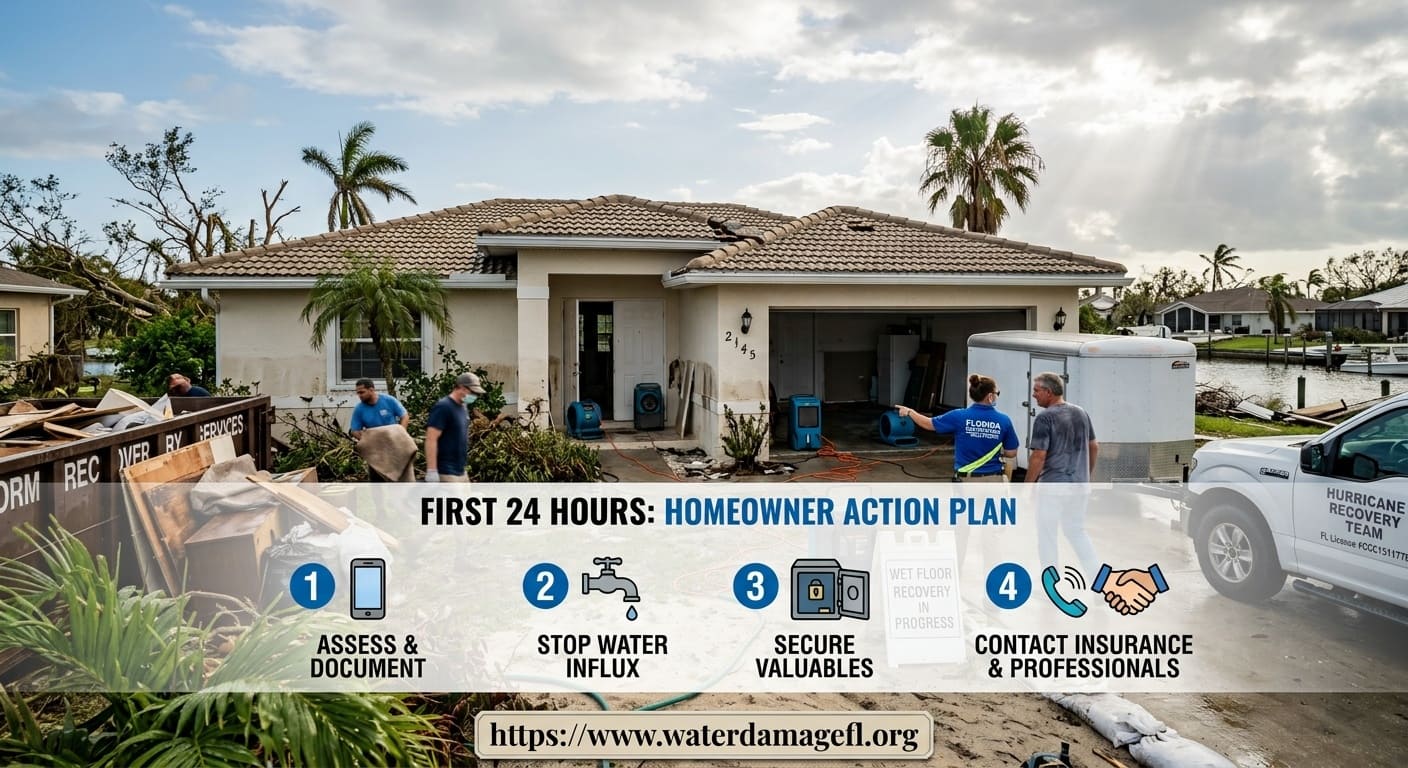
The first day after a flood decides how much of your Florida home you keep. Standing water, soaked insulation, and humid air work against you every hour. This action plan covers what to do from minute one through the end of day one so you protect your family, document the loss, and start professional drying before mold takes hold. It is written for FL conditions in August 2026, when heat and humidity make delays especially costly.
Water Damage Florida is available 24/7 at (888) 435-4769. If water is more than a shallow clean spill, call for emergency water damage Florida help while you complete the safety steps below. Day one is about triage and mitigation, not perfect cosmetic cleanup.
Why the First 24 Hours Matter So Much in Florida
In many parts of the country, homeowners can sometimes wait overnight without rapid mold growth. Florida is different. Warm indoor temperatures and high ambient humidity accelerate swelling, staining, and microbial activity. Carpet pad, drywall paper, and wet baseboards can start changing within a day. Materials that could have been dried in place often need removal if extraction is delayed.
Flood sources vary. A burst pipe, a failed appliance, heavy rain through a roof opening, and street flooding are not identical losses. Contaminated water needs stricter handling than clean supply water. Still, all of them share one rule in FL: remove standing water and begin controlled drying as soon as the property is safe to enter.
Hour 0 to 1: Safety and Shutoffs
People first
Get everyone out of rooms with deep water, collapsed ceilings, or gas odors. Keep children and pets away from floodwater. Wear boots and gloves if you must walk through shallow water. Do not use elevators in flooded buildings. If water is near electrical panels or submerged outlets, treat the area as unsafe until power is controlled.
Utilities
Shut off electricity at the main breaker only if you can do so without stepping in water. Turn off the main water valve if a pipe is still feeding the flood. If you smell gas, leave and call the utility from outside. Safety always beats saving a sofa. Once people are secure, you can move to documentation and professional dispatch.
Quick scene assessment
Note how deep the water is, which rooms are affected, whether the ceiling is sagging, and whether the water looks clean, muddy, or sewage related. That information helps our dispatch team send the right equipment and prepare you for what comes next.
Hour 1 to 3: Call for Help and Document
Contact Water Damage Florida for extraction dispatch across Florida. Then call your insurance carrier to open a claim. Photograph every room from multiple angles, including water lines on walls, damaged contents, and the suspected source if visible. Write down the approximate time flooding started and whether the water was clean, gray, or sewage related.
For storm related losses during hurricane season, keep the storm name and date with your photos. Outdoor shots of drainage, roof openings, and water around the foundation also help. Our hurricane water damage recovery guide covers longer term rebuild steps after day one.
What to tell the restoration dispatcher
Share your city in Florida, property type, water depth, number of rooms, whether power is on, and any access issues such as gated communities or elevator buildings. Mention if elderly residents, medical equipment, or pets need special planning. Clear details get a crew moving faster and better prepared.
In Florida, mold risk climbs quickly after floods. The goal of day one is not perfect cleanup. The goal is safe extraction, airflow, and a drying plan under professional monitoring.
Hour 3 to 6: Move What You Can Safely Move
Lift undamaged furniture onto blocks or move it to dry rooms. Remove rugs and small wet items that block drying. Do not carry heavy waterlogged drywall or cabinets yourself if they may collapse. Open closet doors and cabinet doors so air can reach wet surfaces once equipment arrives. Pull furniture a few inches from wet walls when possible.
Avoid using household fans alone as your full strategy. Without dehumidification, fans can spread humid air and contamination. Professional flood restoration service Florida sets extractors, air movers, and dehumidifiers as a matched system. A box fan in a wet room overnight can make adjacent dry rooms damp without lowering moisture in materials.
Contents decisions on day one
Separate items into clearly dry, possibly salvageable, and heavily contaminated. Photograph each group. Do not discard everything before documentation unless materials are a safety hazard. Soft goods soaked in sewage related water are often not worth saving, while hard furniture may clean well after the water is gone.
Hour 6 to 12: Extraction and Source Control
What technicians focus on
Crews remove standing water, pull wet carpet pad when required, and check wall cavities. They classify water category and plan cleaning accordingly. Clean supply line water differs from storm surge or sewage. Treating Category 3 like a mop job creates health risks later. In slab homes common across Florida, water under cabinets and along baseboards gets special attention because it travels farther than it appears.
Protecting contents
Salvageable hard goods may be cleaned on site or packed out. Porous items soaked in contaminated floodwater are often discarded. Ask for an inventory list for insurance. Clear communication on day one reduces claim confusion later. If family photos or critical documents got wet, tell the crew early so those items can be prioritized.
Stopping the source
Extraction fails if water keeps entering. Roof tarping, plumbing shutoffs, and clearing blocked drains may all be part of hour six to twelve. If outdoor flooding is still rising, focus on safety and wait for levels to stabilize before aggressive interior work in deep water.
Hour 12 to 24: Start Structural Drying and Watch for Mold Risk
By the end of day one, standing water should be gone and drying equipment should be running. Technicians record baseline moisture readings. You may need to leave doors open within contained zones and keep AC running if the system is safe. Do not shut equipment off overnight to save electricity; that pause can erase progress in FL humidity.
Learn what to inspect in the following weeks in Hidden Mold After Water Damage in Florida. If odors appear quickly, tell your crew so they can open additional cavities. Full water damage restoration service Florida continues until materials meet dry standards and rebuild can begin.
What good end of day one looks like
Standing water is gone. Major wet contents are moved or inventoried. Equipment is placed with a clear drying plan. You have photos, claim contacts, and a next visit time for moisture checks. The house may still look unfinished. That is normal. Day one success is stabilization, not a magazine ready room.
Room by Room Priorities on Day One
Kitchens and laundry rooms
These rooms have cabinets, appliances, and many concealed cavities. Open toe kicks and lower doors after extraction. Check behind dishwashers and washing machines. Particle board cabinets swell quickly in Florida humidity once water reaches the lower panels.
Bathrooms
Vanities, vinyl flooring edges, and wet drywall around tubs need attention. Exhaust fans help after power is confirmed safe. Do not caulk over wet seams to hide the problem.
Bedrooms and closets
Closets trap moisture. Remove wet clothing from floors and hang items that can air dry in a clean dry area. Closet drywall and carpet edges are frequent mold starting points after floods.
Living areas with specialty flooring
Hardwood, laminate, and some vinyl systems may need partial removal so subfloors can dry. Do not assume a dry top surface means the underlayment is safe. Ask technicians for readings before committing to full floor replacement or full salvage.
Day One Do and Do Not List
Do
- Prioritize safety and professional extraction
- Document thoroughly for insurance before major disposal
- Remove wet contents that block drying
- Follow technician guidance on equipment placement
- Ask about mold prevention steps for Florida humidity
- Keep equipment running overnight unless told otherwise
- Write down all contractor and adjuster contacts
Do not
- Use electrical devices in standing water
- Throw away all damaged items before photos if avoidable
- Paint or seal wet surfaces
- Assume a dry looking floor means the structure is dry
- Delay calling for help overnight during active flooding
- Rely on household fans alone in humid FL weather
- Ignore musty smells that appear by evening
Insurance and Communication Tips for Florida Flood Losses
Ask whether your claim involves homeowners coverage, flood coverage, or both. Keep a simple log of calls, arrival times, and decisions made on day one. Save estimates and moisture reports. If you must leave the property overnight, confirm equipment security and who has access for monitoring. Clear notes prevent confusion when multiple people are involved after a statewide storm event.
After Day One: What Comes Next
Drying often continues for several days. Moisture readings guide when demolition stops and rebuild starts. If mold is found, containment and mold remediation Florida may be added to the scope. Stay in contact with your adjuster and your restoration project manager so decisions stay aligned.
Expect follow up visits for meter checks and equipment adjustments. Ask which rooms are cleared and which still need open drying. When readings finally hit target, rebuild planning can begin with confidence instead of guessing.
Flooding does not wait for business hours in Florida. Water Damage Florida answers around the clock. Call (888) 435-4769, email info@waterdamagefl.org, or use our contact form to request help statewide. For longer storm recovery guidance, continue with the hurricane recovery guide and our hidden mold guide.