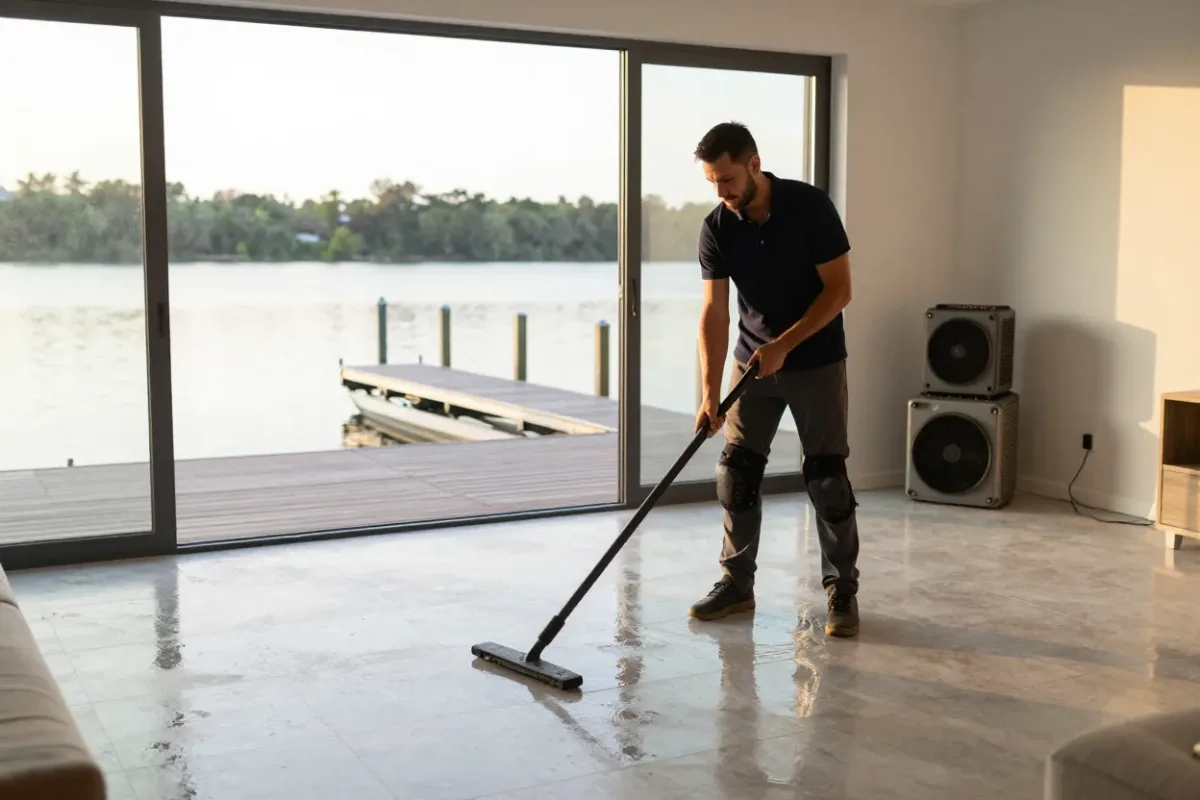
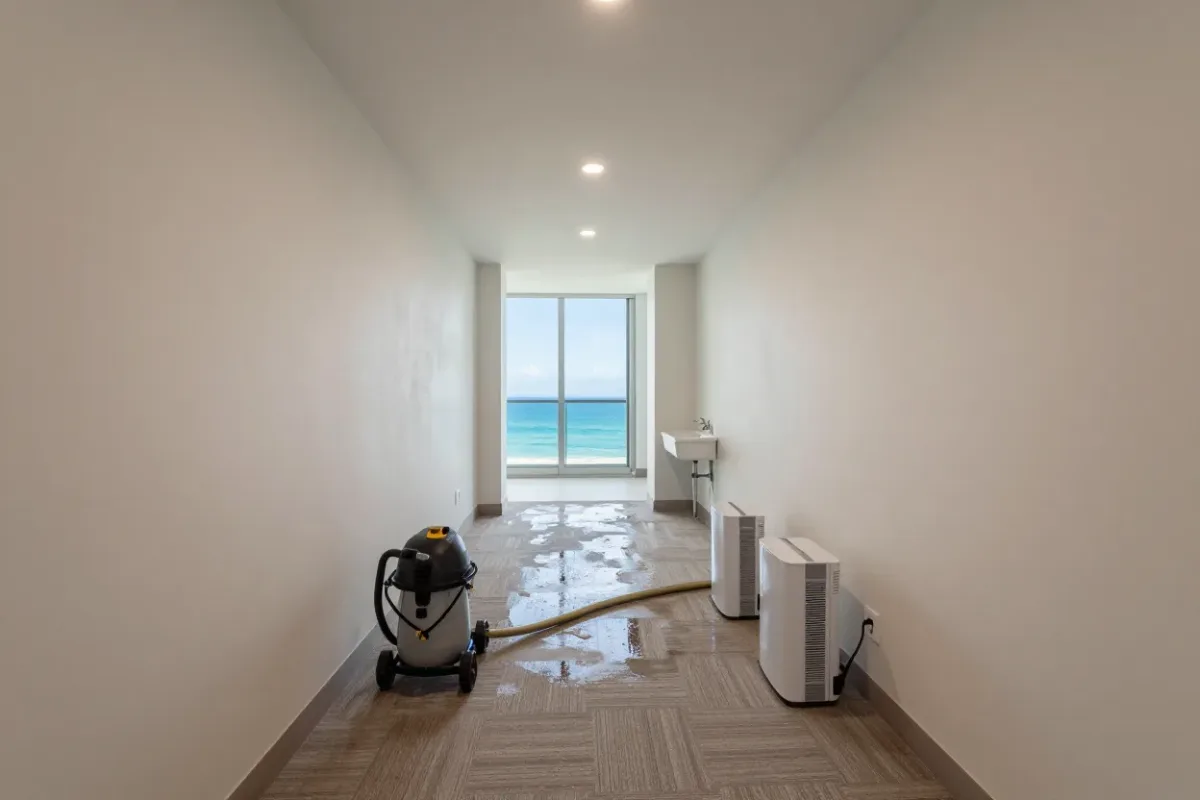
Fort Lauderdale is threaded with water. The New River, the Middle River and the Tarpon River, the Intracoastal Waterway and the finger-isle canals that earned the city its "Venice of America" nickname all run directly alongside homes, and the whole city sits only a few feet above sea level. That is a beautiful place to live and a demanding one to keep dry. Water Damage Florida provides water damage restoration in Fort Lauderdale around the clock, from a barrier-island condo to a downtown high-rise to an inland ranch house in Melrose Manors.
The city's recent history explains the urgency. In April 2023, roughly two feet of rain fell on Fort Lauderdale in about a day, flooding homes, closing the airport and causing damage in the billion-dollar range; heavy flooding returned in June 2024. Between those events, seasonal king tides push salt water into low streets in Victoria Park, the southeast isles and Middle River Terrace with no rain at all. Whether your water came from the sky, the tide or a pipe, call (888) 435-4769 and we will get moving.
Emergency Water Damage Service, Beach to Inland
Fort Lauderdale emergencies come in every form the city's geography allows. A tidal check valve fails and the tide backs up through a storm drain into a Colee Hammock street. A supply riser lets go in a downtown tower and water travels down through half a dozen units. Wind-driven rain gets past a beachfront slider in Central Beach. A cloudburst turns an Edgewood driveway into a channel that runs straight into the garage. Each one needs the same immediate steps: isolate the source, get the water out and start drying before the humid air takes over.
We arrive with extraction equipment sized for the job, from portable units for a single condo to submersible pumps for a flooded garage or ground floor, plus enough air movers and dehumidifiers to begin drying on the first visit. In multi-story buildings we follow the water down the stack rather than stopping at the unit that called. Moisture readings and photographs are recorded from the first hour so your insurance claim starts with facts. Our emergency water damage page describes how those first hours run.
Restoration for Waterfront Homes, Towers and Historic Neighborhoods
Fort Lauderdale's housing runs from the city's older historic residential areas to canal-front homes in Rio Vista and Harbor Beach, inland single-family streets in Coral Ridge and Imperial Point, and glass towers downtown and on the beach. Restoration has to respect the difference. An older home with plaster walls and original wood floors dries and repairs differently from a concrete-block ranch with tile over slab, which differs again from a high-rise unit with shared walls, chases and a building envelope you cannot open.
In every case the method is the same: after extraction we map the moisture with meters and thermal imaging, remove what cannot be dried, and dry the rest in a closed, dehumidified space with readings logged daily until each material hits its dry standard. Only then do cleaning, treatment and rebuild begin. Coastal humidity makes shortcuts expensive; a wall that was declared dry by touch rather than by meter is the wall that grows mold in August. See our water damage restoration service page for the full scope.
Flood Cleanup After King Tides, Cloudbursts and Surge
The city government identifies three ways Fort Lauderdale floods, and we see all of them. Tidal flooding happens when king tides and seasonal high tides push salt water into low-lying streets, particularly in Victoria Park, the southeast isles, Middle River Terrace and barrier-island streets; the city maintains hundreds of tidal check valves to keep the tide from backing up through storm drains, but water still finds its way into garages and ground floors. Rainfall flooding, like the April 2023 event and the June 2024 floods, simply overwhelms drainage. Compound flooding, when heavy rain lands on a high tide, is the worst of both. Storm surge from Hurricane Irma in 2017 reached beachfront areas but stayed within a block or two of the ocean.
Tide water, river water and street runoff are all handled as contaminated. Flood cleanup means removing saturated drywall, insulation, carpet and cabinet bases, cleaning and disinfecting slabs and hard surfaces, and running air filtration through the drying period. Salt water adds corrosion, so anything electrical or metal that stood in it should be inspected. Keep people and pets out of flood water and, if the panel is dry and reachable, cut power to affected rooms. Our flood restoration page and the first 24 hours after a flood guide have more.
Water Damage Repair in Fort Lauderdale
Repair follows verified drying and puts rooms back the way they were. In a canal-front home that is often the lowest section of drywall and baseboard, base cabinets, flooring and paint through the ground floor. In a condo it may be the ceiling and one wall below a plumbing loss, plus coordination with the association on common areas. In one of the city's older homes it can mean careful work around original plaster, trim and wood floors that are worth preserving and usually can be when drying started early.
We write the repair scope from the mitigation record: photos, moisture logs and the list of materials removed. That keeps water damage and pre-existing conditions separate and gives your adjuster a clear document to work from. In multi-unit buildings we plan around building rules for hours, elevator use and protection of lobbies and corridors so the project does not stall waiting on approvals.
Mold Removal Near the Water
Salt air, high dew points and homes built right up to the water give mold every advantage in Fort Lauderdale. After a tide or rain event, the usual locations are the back of the lowest drywall in garages and ground floors, the interior of base cabinets, the insulation in exterior walls and the drywall behind tile in bathrooms. In towers, it is the shared walls and chases where water from a unit above traveled unseen. A leak that was "handled" with a fan and a weekend is the most common origin of the mold calls we get.
Our mold removal follows a set order: find and fix the moisture, contain the area with plastic and negative air, remove affected porous materials, HEPA-vacuum and clean what remains, and dry the space fully before rebuilding. We do not paint over growth. The mold remediation page explains our statewide approach, and our guide to hidden mold after water damage is worth reading if you own a home that has ever taken on tide water.
What Causes Water Damage Here
Low elevation, tidal waterways on every side, intense rainfall and a large stock of condominiums produce a distinctive set of water damage calls in Fort Lauderdale. The most common include:
- King tides and seasonal high tides backing salt water into low streets, garages and ground floors in tide-prone neighborhoods
- Extreme rainfall that overwhelms storm drains, as in April 2023 and June 2024
- Compound flooding when heavy rain coincides with a high tide
- Supply risers, water heaters and washing machine hoses failing in condo and apartment towers, with water traveling to units below
- Roof, flashing, window and sliding-door leaks in wind-driven rain and named storms
- Storm surge along the beachfront during hurricanes
- Seawall and dock-side drainage issues that keep the ground against canal-front homes saturated
- Air conditioning condensate overflows in homes and units that cool nearly year-round
- Sewer and storm-drain backups during prolonged rain
The Restoration Sequence We Follow
Every Fort Lauderdale job, from a single wet closet to a flooded ground floor, runs through the same eight steps. Skipping the verification steps is how a rebuilt wall ends up wet again.
- Source, category and moisture mapWe identify where the water came from, classify it (tide and street water are always contaminated), and map its extent with meters and thermal imaging, including adjacent units in multi-story buildings.
- Water removalPortable and truck-mounted extraction handles floors and carpet; submersible pumps clear garages, elevator pits and flooded ground levels.
- Demolition of what cannot be driedSaturated drywall, insulation, carpet, pad and swollen cabinetry are removed and bagged so the structure behind can breathe.
- Drying and dehumidificationDehumidifiers and air movers run in a closed space with daily readings until each material reaches its dry standard, however long that takes.
- Cleaning and treatmentSurfaces that contacted salt water, river water or sewage are cleaned and treated, with HEPA air filtration running during the work.
- DocumentationPhotos, moisture logs, equipment records and a written scope are compiled for you, your association if applicable, and your insurance carrier.
- RebuildDrywall, trim, cabinetry, flooring and paint are restored to match the surrounding space.
- Final verificationA closing set of moisture readings and a walkthrough confirm the job is complete.
Fort Lauderdale Neighborhoods We Serve
We respond throughout the City of Fort Lauderdale, from the barrier island across the Intracoastal to the inland neighborhoods, with equipment suited to canal-front homes, downtown and beachfront towers, and older single-family streets alike.
Fort Lauderdale Neighborhoods
- Victoria Park
- Rio Vista
- Colee Hammock
- Tarpon River
- Sailboat Bend
- Coral Ridge
- Harbor Beach
- Poinsettia Heights
- Imperial Point
- Lake Ridge
- Edgewood
- Melrose Manors
- Middle River Terrace
- Central Beach
Nearby Communities
Our Broward crews also serve the municipalities that border Fort Lauderdale, and many of them have their own pages with local detail:
Immediate Steps for Fort Lauderdale Homeowners
Here is what you can safely do before our crew arrives. If any step would put you in contact with flood water or electricity, skip it.
- Isolate the source if it is insideClose the fixture valve or the main. In a condo, call the building engineer or management right away so the riser can be shut and the units below warned.
- Do not enter water that may be energizedStay out of any flooded room where outlets, cords, an appliance or the panel could be in the water. Switch off breakers only from a dry panel you can reach on dry floor.
- Assume tide and street water are contaminatedKeep children and pets out of it, avoid skin contact, and do not run fans across it.
- Move belongings up and outLift rugs, electronics and furniture legs off the wet floor, and pull stored items out of the bottom of closets and cabinets.
- Document before you cleanPhotograph the water line, the source and each affected room, including the garage, before anything is moved or discarded.
- Keep the AC on and the house closedConditioned air slows mold growth; opening windows to humid coastal air does the opposite.
- Call us with the detailsReach Water Damage Florida at (888) 435-4769 and tell us the source, how deep the water got, how long it has been wet and whether neighbors or other units are affected.
For named storms, our hurricane water damage recovery guide covers the days after landfall in detail.
Fort Lauderdale Water Damage FAQs
King tide water got into my garage but not the house. Is that a problem?
Often yes. Salt water that sat against the garage slab and walls wicks into the lowest drywall and any stored items, and salt continues to corrode metal after it dries. A moisture survey tells you what, if anything, needs to be removed or treated, and it is far cheaper than discovering mold at the base of the wall later.
My canal-front home floods a little every fall. Should I do anything differently this time?
Repeated wetting is the biggest concern, because materials that never fully dry between events fail cumulatively. We can dry and verify the affected areas properly after this event and identify materials at the base of walls that would be better replaced with something more tolerant of the next tide.
Do you work in downtown and beachfront high-rises?
Yes. We coordinate with management and the building engineer, trace water through the stack, protect elevators and corridors, and document each unit separately so owners and the association each have a clean record for their claims.
What happened to homes in the April 2023 flood, and can that kind of damage be fully repaired?
Roughly two feet of rain in about a day sent water into homes across the city. Rain flooding of that scale saturates everything at floor level, so the work is removal of wet materials, thorough drying and rebuild. It is fully repairable when the drying is done properly and verified with readings before the walls are closed.
Can plaster walls and original wood floors in an older home be saved?
Frequently, if drying starts quickly and the water was clean. Plaster and solid wood tolerate controlled drying better than drywall and engineered products. Flood water is another matter; porous materials it touched usually come out regardless of age.
Do you cover the cities around Fort Lauderdale?
Yes. Our crews work throughout Broward County, including Oakland Park, Wilton Manors, Plantation, Davie, Hollywood, Pompano Beach and Lauderdale-by-the-Sea, and statewide through our service areas.