Pompano Beach is a large coastal city in northeastern Broward County with about three miles of Atlantic beach, the Hillsboro Inlet at its north end and the Intracoastal Waterway separating the barrier island from the mainland. Inland, it spreads west across older residential neighborhoods, an airpark and industrial districts toward the Turnpike. The city's own flood information is direct about the situation: the entire city can be considered flood-prone, and a large share of its buildings sit inside FEMA Special Flood Hazard Areas. Water Damage Florida provides water damage restoration in Pompano Beach 24 hours a day, from the oceanfront to the westernmost subdivisions.
The city documents four distinct ways water gets into homes here: canal overflow when the Pompano Canal and Cypress Creek Canal receive upstream stormwater, tidal flooding when high tides reduce how fast drains can empty, rapid rainfall that overwhelms storm drains, and hurricane storm surge on the oceanfront. Add the ordinary pipe and appliance failures that happen in any home and you have most of our Pompano Beach call log. Call (888) 435-4769 at any hour and we will get a crew moving.
Emergency Water Damage Response in Pompano Beach
Pompano Beach emergencies follow the map. East of A1A, the calls are about surge and tide: salt water in a ground-floor garage, a lobby or a first-floor unit in a beachfront building. Along the Intracoastal and the canals, it is a high tide or a full canal pushing water across a seawall or up through a drain into a yard and then a home. Inland, in the older residential neighborhoods, the typical call is a burst pipe, a water heater, a roof leak or a street that flooded in a cloudburst and sent water through the garage.
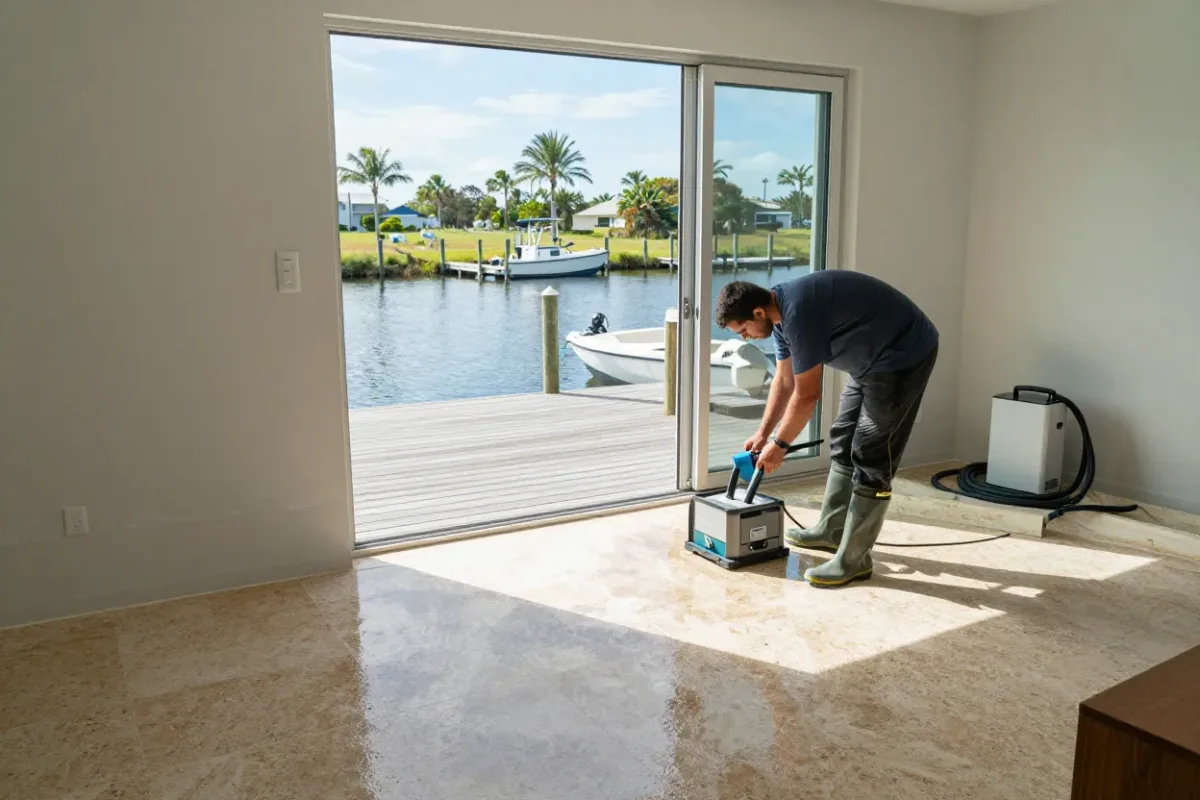
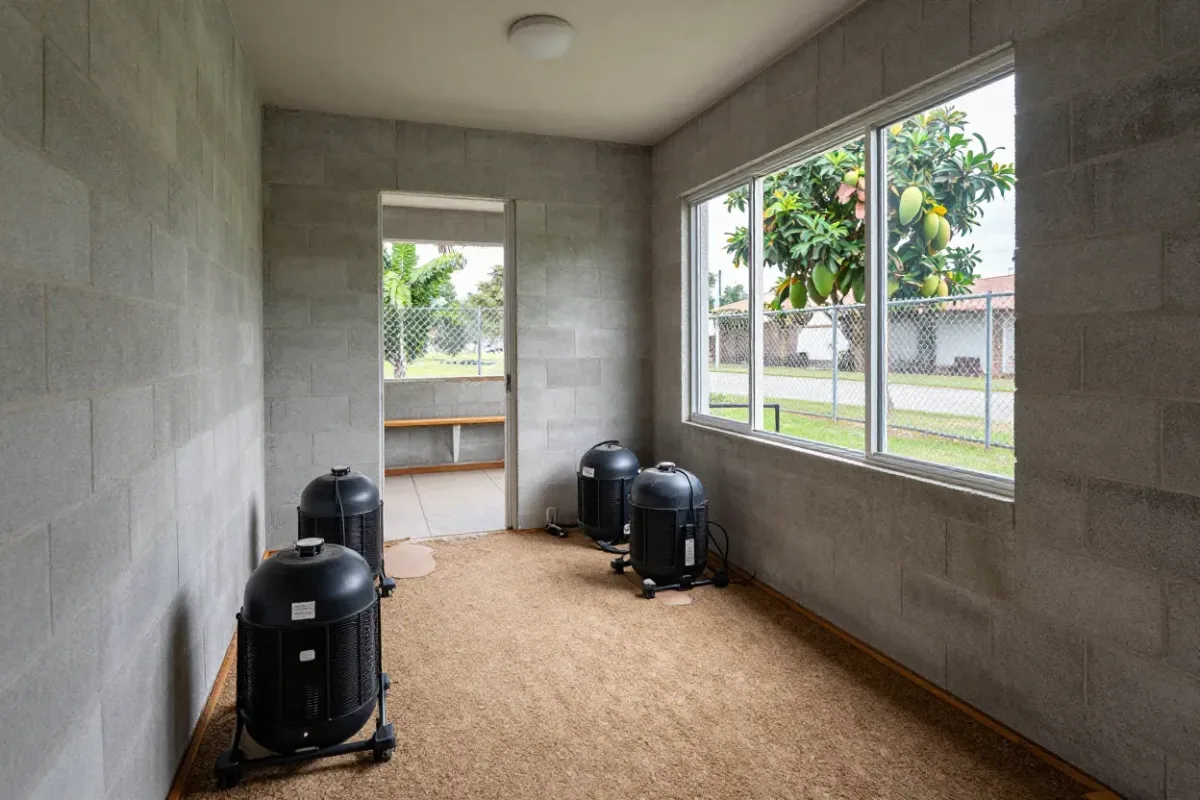
We arrive with pumps for deep water, extractors for floors and carpet, and the air movers and dehumidifiers needed to start drying on the first visit. In condominiums we follow water through the stack and check the units below the one that called. Moisture readings and photographs are recorded from the first hour, because a claim built on a documented moisture map moves faster than one built on memory. Our emergency water damage page walks through those first hours.
From Beachfront Condos to Older Inland Subdivisions
Pompano Beach has dozens of officially recognized neighborhoods, ranging from beachfront condos to older inland subdivisions, and restoration has to match the building. A ground-floor condo unit after salt-water intrusion is a removal-heavy job: drywall, cabinets and flooring come out, the slab and block are cleaned, and the unit is dried in coordination with the association. An older inland block home with tile or terrazzo over slab often keeps its floors if we arrive early, with the work concentrated on the lowest drywall, baseboards and cabinets.
In every case we map the moisture with meters and thermal imaging after extraction, remove what cannot be dried, close the space and run dehumidifiers and air movers with readings logged daily until each material reaches its dry standard. Then we clean, treat where the water category requires it, and rebuild. On this coast, salt air and humidity punish shortcuts; a wall closed up damp is a wall that will be opened again. The water damage restoration service page lays out everything this includes.
Four Kinds of Flooding, One Cleanup Standard
The city's own flood page names the four mechanisms, and each shows up in our work. Canal overflow: the Pompano Canal and Cypress Creek Canal carry stormwater from upstream, and when they rise, canal-front yards and streets flood first. Tidal flooding: high tides reduce how quickly storm drains can discharge, so rain that would normally clear stays in the streets, and in the fall the city issues king-tide advisories because low-lying streets flood on sunny days with no rain at all. Rapid rainfall: a cloudburst overwhelms the drains everywhere. Storm surge: properties east of A1A are the most exposed, and Hurricane Irma in 2017 brought near-hurricane winds and beachfront surge to this coast.
Whichever mechanism delivered it, flood water is contaminated, and tide and surge water is also corrosive. Cleanup means removing saturated drywall, insulation, carpet, pad and cabinet bases, cleaning and disinfecting slabs and hard surfaces, flushing silt from garages and ground floors, and running air filtration through the drying period. Electrical components and metal fixtures that stood in salt water should be inspected before use. Keep everyone out of the water, and see our flood restoration page and the first 24 hours after a flood guide.
Water Damage Repair in Pompano Beach
Repair begins when the moisture logs confirm the structure is dry. In a canal-front or beachfront property that took tide or surge water, the scope is typically the lowest course of drywall and baseboard, base cabinets, flooring and paint through the ground floor, with attention to anything metal that salt water touched. In an inland home after a plumbing loss, it may be one wall, one closet or one section of floor. In a condo, it can include the ceiling and shared wall below an upstairs unit, coordinated with the association.
We define the repair scope from the mitigation file, so what the water damaged and what was pre-existing remain clearly separated for your adjuster. Because so much of Pompano Beach sits inside mapped flood hazard areas, many homeowners carry separate flood coverage; we keep flood-related and non-flood-related damage distinguishable in the record so both claims have what they need.
Mold Removal Near the Inlet and the Canals
Homes on tidal water in constant salt air and humidity give mold an easy start whenever a wall stays damp. After a tide or canal event, the common sites are the back of the lowest drywall in garages and ground floors, the inside of base cabinets, and the insulation in exterior walls. After a plumbing leak, it is the wall shared by a bathroom and a bedroom, the air handler closet or the back of a kitchen cabinet. In condos, it is the shared walls and chases where water from an upstairs unit traveled unseen.
Mold removal follows a set order: fix the moisture source, contain the area with plastic and negative air, remove affected porous materials, HEPA-vacuum and clean what remains, and dry the space fully before rebuild. We do not paint over growth. The mold remediation page explains our statewide approach, and our guide to hidden mold after water damage is worth reading before you close up any wall that took tide water.
What Puts Water Into Pompano Beach Homes
An oceanfront barrier island, an inlet, the Intracoastal, two major canals and a city that considers itself flood-prone from end to end produce a predictable set of water losses:
- Storm surge on properties east of A1A during hurricanes
- King tides and high tides flooding low-lying streets, backing up drains and reaching garages and ground floors, even on sunny fall days
- Overflow from the Pompano Canal and Cypress Creek Canal when upstream stormwater raises their levels
- Rapid rainfall that overwhelms storm drains across the city
- Supply lines, water heaters and washing machine hoses failing in beachfront condos and inland homes
- Roof, window and sliding door leaks in wind-driven rain
- Air conditioning condensate overflows in air handler closets
- Corroded plumbing fittings in homes and buildings exposed to salt air
- Seawall and dock-side drainage issues that keep the ground against canal-front homes wet
The Steps We Take on Every Loss
Whether it is a tide in a beachfront garage or a burst line in an inland subdivision, every Pompano Beach job runs through the same eight stages, and nothing is rebuilt until the readings say dry.
- Source, category and moisture mappingWe find the source, classify the water (tide, canal and surge water are always contaminated), and map its reach with meters and thermal imaging, including neighboring units in multi-unit buildings.
- Pumping and extractionSubmersible pumps clear deep water from garages and ground floors; extractors remove it from carpet, pad and hard floors.
- Tear-out of unsalvageable materialsSaturated drywall, insulation, carpet, pad and cabinetry are removed and bagged so the block and framing behind can dry.
- Drying and dehumidificationDehumidifiers and air movers run in a closed space, with readings logged daily until each material reaches its dry standard.
- Cleaning, disinfecting and silt removalSlabs, block and hard surfaces are cleaned and treated, silt is flushed out, and HEPA filtration runs throughout.
- DocumentationPhotos, moisture logs, equipment records and a written scope are compiled for you, your association if applicable, and your insurance carrier, with flood and non-flood damage kept distinct.
- ReconstructionDrywall, baseboards, cabinets, flooring and paint are restored to match the surrounding space.
- Final verificationA last set of readings and a walkthrough with you close out the job.
Pompano Beach Neighborhoods We Serve
We serve the whole City of Pompano Beach, from the barrier island and the Hillsboro Inlet across the Intracoastal to the older inland neighborhoods and the subdivisions toward the Turnpike.
Pompano Beach Neighborhoods
- Old Pompano
- Cresthaven
- Palm Aire
- Hillsboro Shores
- Harbor Village
- Garden Isles
- Santa Barbara Shores
- Collier City
- Cypress Bend
- Leisureville
- Avalon Harbor
- Snug Harbor
- Terra Mar
Nearby Communities
Our northeast Broward crews cover the coastal and inland communities around Pompano Beach as well, and several have their own pages:
What to Do Before We Get There
The following steps are safe for a homeowner or resident and reduce what has to be replaced. Skip anything involving flood water or electricity.
- Shut off the source if it is insideClose the fixture or appliance valve, or the main. If the water is coming from the tide, a canal or the street, there is nothing to shut; move on to the next steps.
- Assume tide, canal and street water are contaminatedKeep people and pets out, avoid skin contact, and do not run fans across it.
- Stay away from electricity in wet areasDo not enter water that could reach outlets, cords, appliances or the panel. Only switch off breakers if the panel is dry and you can stand on dry floor to reach it.
- Raise what you can from dry floorLift rugs, electronics and furniture, and empty the bottoms of closets and cabinets in wet rooms if you can do it without entering the water.
- Record the water linePhotograph the high-water mark on walls and garage doors, the source if visible, and every affected room before cleanup.
- Keep the house closed and cooledConditioned air slows mold growth; opening windows to salt air and humidity does the opposite, provided the system is safe to run.
- Call Water Damage FloridaReach us at (888) 435-4769 with the source, how deep the water got, how long it has been wet and whether other units or neighbors are affected.
Ahead of and after a named storm, our hurricane water damage recovery guide covers what the first week looks like.
Pompano Beach FAQs
The city says the whole of Pompano Beach is flood-prone. Does that change how you work?
It changes how we document. Because so many properties sit in mapped flood hazard areas, homeowners often have separate flood coverage with its own adjuster and requirements. We record water lines, sources and material removal carefully and keep flood-related and non-flood-related damage distinguishable.
Water came up through a drain in my yard on a sunny fall day. Is that a tide?
Very likely. The city issues king-tide advisories because high tides reduce drain outflow and push water back into low-lying streets and yards with no rain at all. If that water reached the house or stood against the walls, a moisture survey will tell you whether anything needs drying.
My canal-front home is on the Pompano Canal. What happens when it overflows?
Canal water carries upstream stormwater and whatever it picked up along the way, so it is treated as contaminated. Porous materials it touched are removed, hard surfaces are cleaned and treated, and the structure is dried and verified before rebuild.
Salt water got into my beachfront building's ground floor. What has to go?
Drywall, insulation, carpet, pad and most base cabinets that salt water reached are removed rather than dried. The slab, block walls and tile floors get cleaned and treated instead. Anything electrical or metal that stood in salt water should be inspected, because salt keeps corroding after it dries.
Do you handle plumbing leaks in the inland neighborhoods, not just flooding?
Yes. Most of our work on any given day is interior losses: supply lines, water heaters, air handlers and shower pans. Clean water allows far more material to be saved, especially tile and terrazzo in older homes, when we arrive early.
Do you serve Lighthouse Point, Deerfield Beach and Lauderdale-by-the-Sea?
Yes. The same crews cover Lighthouse Point, Deerfield Beach, Hillsboro Beach, Lauderdale-by-the-Sea, Sea Ranch Lakes, Oakland Park, Margate and Coconut Creek, and we work statewide through our service areas.