Orlando is an inland city, well away from storm surge, but it is also one of the wettest urban landscapes in Florida: a flat expanse of lakes, wetlands and porous limestone where rain drains slowly and lake levels can climb into surrounding streets. Hurricane Ian made that clear in 2022, when more than a foot of rain overflowed lakes across the city and left neighborhoods from Orlo Vista to the east side dealing with water that had never reached them before. Water Damage Florida provides 24/7 water damage restoration throughout Orlando, from downtown high-rises and the historic lakefront districts to the master-planned communities of Lake Nona and MetroWest.
Our Orlando crews handle everything from a single burst supply line to whole-ground-floor storm flooding: emergency extraction, structural drying, cleaning, mold removal and repair. Call (888) 435-4769 and we will help you take the right first steps while a crew is on the way.
Emergency Water Damage Response in Orlando
Most Orlando emergencies start inside the house. Two-story homes are common across Orange County, and a failed water heater, washing machine hose or upstairs bathroom line will run through the floor system and into ceilings and walls below before anyone notices. Add the region's afternoon thunderstorms, which can deliver several inches of rain in an hour and find every weak point in a roof or window flashing, and the result is a steady stream of urgent calls year-round rather than only during hurricane season.
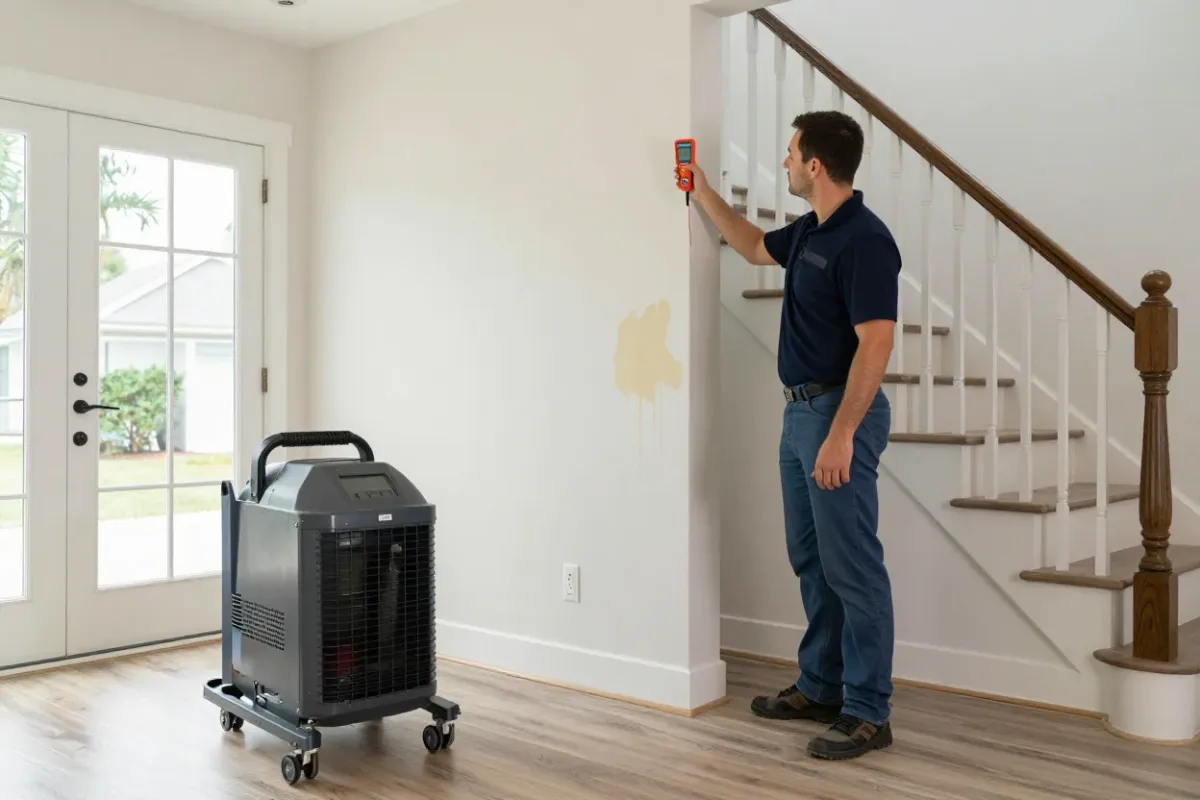
When you call, we dispatch a crew with extraction equipment, moisture meters and enough drying gear to start the same day. In a two-story loss we open ceilings where water is trapped, pull wet insulation, and set drying equipment on both levels. We photograph and log moisture readings from the first visit so you have documentation for your insurance carrier from day one.
Water Damage Restoration for Orlando Homes
Restoration means taking a wet, damaged home all the way back to a finished, dry one. After extraction we identify every affected material, from the obvious soaked carpet to the drywall behind the baseboards and the subfloor under laminate. Orlando's housing spans early-twentieth-century frame bungalows in College Park and Lake Eola Heights, mid-century block ranch homes in Conway and Dover Shores, and newer wood-frame two-story construction in Baldwin Park, Lake Nona and the southwest suburbs. Each dries differently, and we set the drying plan accordingly.
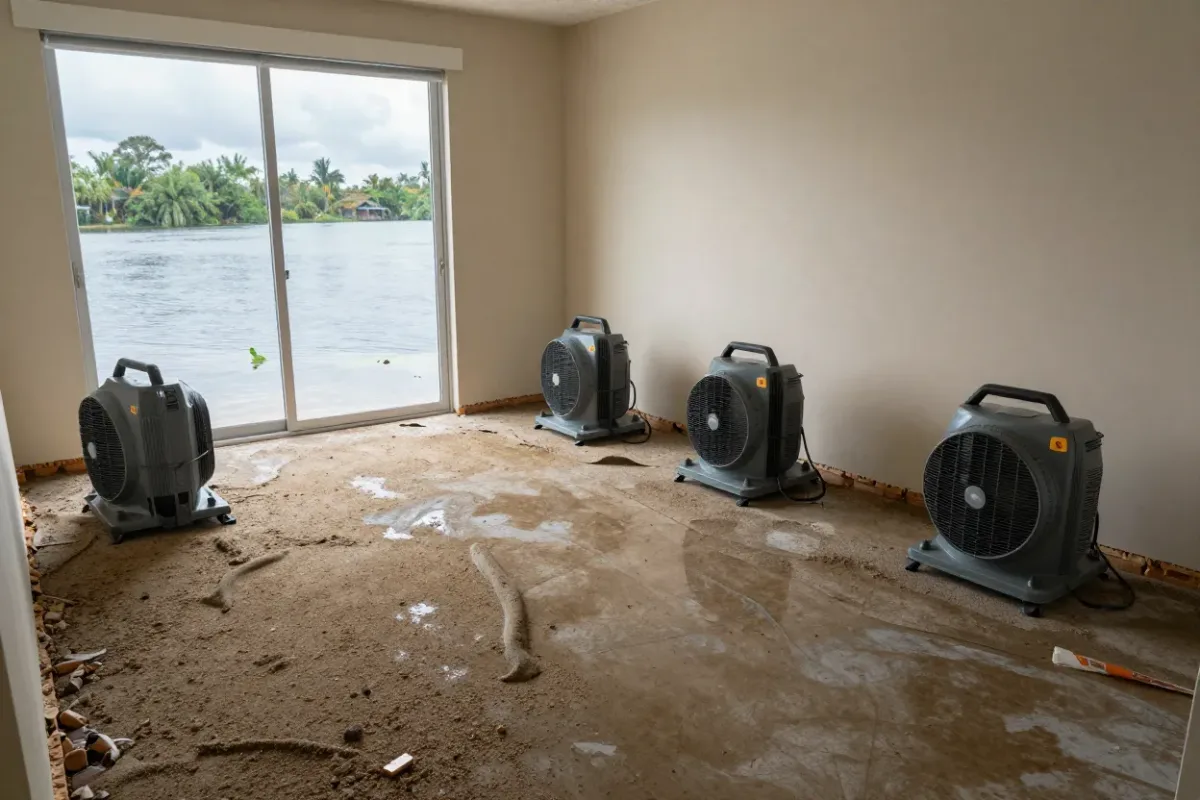
Central Florida's humidity is only slightly lower than the coast's, so we dry with the home closed and the air conditioning running, using commercial dehumidifiers and air movers monitored daily. When readings show the structure is dry, we clean, treat surfaces where the water category requires it, and rebuild. Our water damage restoration service page explains each phase in more depth.
Flood Cleanup in Orlando After Lake and Storm Flooding
Flooding in Orlando comes from rain, not the sea. Lakes such as Lake Conway, Lake Underhill and the chains of smaller lakes throughout the city rise when the ground is already saturated, and stormwater retention ponds in newer subdivisions can back up into streets and garages. Hurricane Ian in September 2022 brought roughly fourteen inches of rain to the city, overflowed many lakes, and made that month the wettest on record; hundreds of residents had to be rescued from flooded homes. Milton in 2024 and Irma in 2017 also brought heavy rain and damaging wind to the city.
Rain-driven flood water that has crossed a yard or street carries soil, fertilizer, and whatever the storm drains held, so we treat it as contaminated. Flood cleanup removes saturated carpet, pad, drywall and insulation, cleans and disinfects the slab and framing, and dries the shell before any rebuild begins. If lake or street water is in your home now, keep out of it, avoid the electrical panel if it is wet, and call us. Our flood restoration service page covers how we approach large-volume losses.
Water Damage Repair in Orlando
Repair starts only after the drying log shows every material is back to normal. In Orlando that typically means replacing the lower section of drywall and baseboards, repairing ceilings opened below an upstairs leak, reinstalling flooring, refinishing cabinets and repainting. In the older lakefront neighborhoods we take extra care with plaster, original hardwood floors and built-ins, which can often be saved when drying starts within the first day or two.
We build the repair scope from the mitigation record so it lines up with what your adjuster has already seen. Homeowners association rules in communities like Baldwin Park and Lake Nona sometimes govern exterior work and contractor hours; we account for those requirements in scheduling.
Mold Removal and Cleanup in Orlando
Orlando homes have plenty of places for moisture to hide: the ceiling cavity under a second-floor bathroom, the wall behind a washing machine, the air handler closet, and the slab edge in a block home where water wicked up behind the baseboard. When these stay damp, mold follows. We also see growth in homes that flooded during Ian and were cleaned up quickly but never fully dried behind the walls.
Our mold cleanup process corrects the moisture problem first, then contains the work area, removes affected porous materials, HEPA-vacuums and cleans what remains, and verifies the area is dry before closing it back up. For a wider look at how we handle growth after water losses, see our mold remediation page and our guide to hidden mold after water damage.
Common Causes of Water Damage in Orlando
Because Orlando is inland, storm surge is not a factor, but almost everything else on the Florida list is. The losses we handle most often across Orange County include:
- Upstairs plumbing failures in two-story homes: supply lines, toilet fill valves, tub overflows and water heaters
- Air conditioning condensate overflows from clogged drain lines and rusted drain pans in attic and closet air handlers
- Roof leaks and wind-driven rain through vents, flashing and skylights during summer thunderstorms and tropical systems
- Lake and retention pond overflow into low-lying streets, garages and ground floors after prolonged heavy rain
- Stormwater and sewer backups when city drainage is overwhelmed
- Slab leaks in mid-century block homes and irrigation line breaks against foundations
- Refrigerator, dishwasher and washing machine leaks that run unnoticed under flooring
- Sinkhole-related settlement in the region's porous limestone, which can crack plumbing and let water in
Our Water Damage Restoration Process in Orlando
Whether the loss is a small leak in Thornton Park or a flooded ground floor in Lake Nona, the sequence is the same and every step is documented.
- Inspection and source controlWe confirm the source is stopped, classify the water, and map the wet area with moisture meters and thermal imaging, including ceilings and the floor below an upstairs loss.
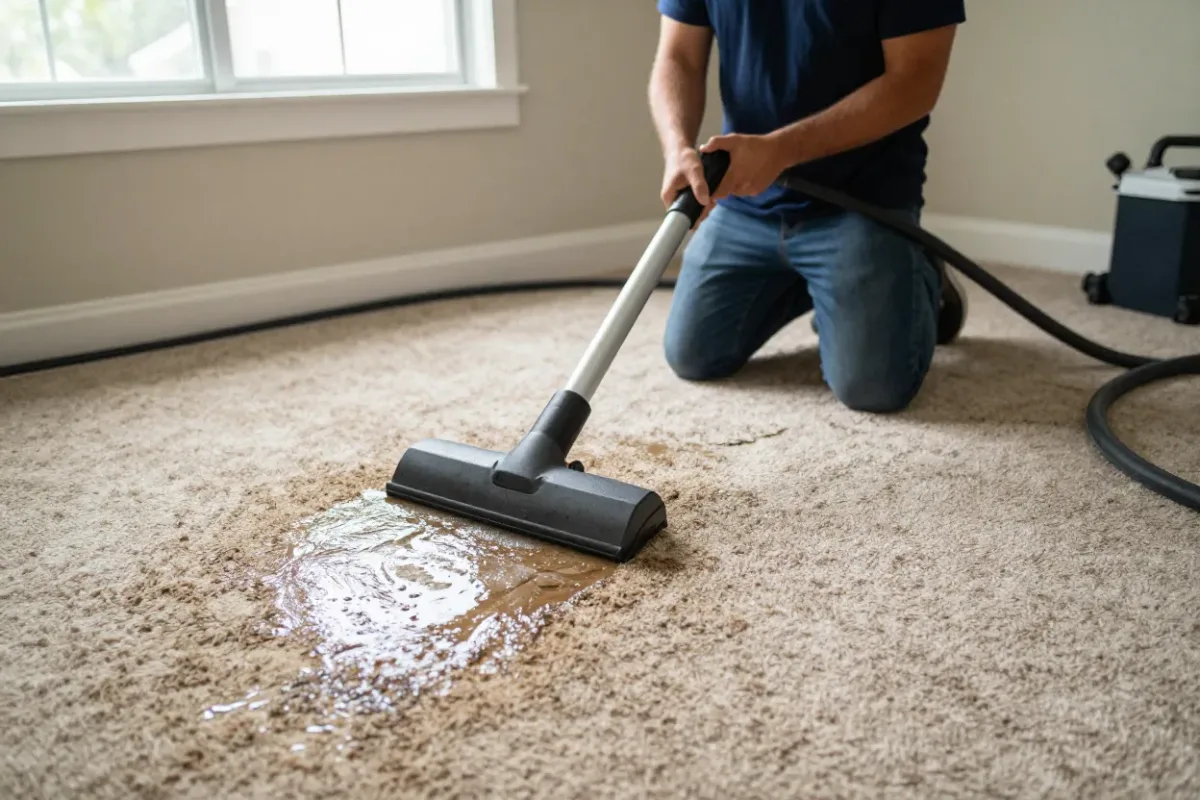
- Water extractionStanding water and saturated carpet are extracted with portable or truck-mounted equipment before drying starts.
- Removal of unsalvageable materialsWet carpet pad, saturated drywall and insulation, and swollen laminate are removed and bagged so the structure can dry.
- Drying and dehumidificationAir movers and commercial dehumidifiers run inside the closed home, with readings logged daily until each material reaches its dry standard.
- Cleaning and antimicrobial treatmentSurfaces that contacted contaminated water are cleaned and treated; air scrubbers run during the work when needed.
- Documentation for your claimPhotos, moisture logs and a written scope are compiled for your records and your insurer.
- Repair and rebuildDrywall, ceilings, trim, flooring, cabinetry and paint are restored to match the rest of the home.
- Final walkthroughA closing moisture check and walkthrough confirm the home is dry, repaired and ready.
Orlando Areas We Serve
We serve the entire City of Orlando and the surrounding Orange County communities. From the historic districts ringing Lake Eola to the newer neighborhoods along the 417 and 528 corridors, our crews know the housing types and drainage patterns they are walking into.
Orlando Neighborhoods
- Downtown Orlando
- Thornton Park
- Lake Eola Heights
- South Eola
- Parramore
- College Park
- Baldwin Park
- Audubon Park
- Colonialtown North
- Colonialtown South
- Delaney Park
- Conway
- Dover Shores
- Lake Nona
- MetroWest
- Callahan
Nearby Communities
Our Orlando crews also respond to the cities and communities that surround it. Several nearby cities have their own local pages:
What to Do Right Now if You Have Water Damage in Orlando
These steps are safe for most homeowners and will limit the damage before our crew arrives.
- Shut off the waterClose the fixture valve or the main shutoff, usually near the front hose bib or water meter in Orlando homes. If a water heater is the source, turn off its supply valve and its power or gas.
- Kill power to wet areas if it is safeIf the panel is dry and reachable, switch off breakers for the affected rooms. Never stand in water to reach a panel or an outlet.
- Relieve a sagging ceiling carefullyIf an upstairs leak has pooled in a ceiling, stay out from under the bulge and do not poke it yourself; we handle controlled drainage when we arrive.
- Keep out of lake or street flood waterIt carries contaminants and can hide debris; keep children and pets away.
- Lift and separateMove furniture, rugs and boxes off wet floors and put foil or plastic under legs that must stay put.
- Document before cleanupPhotograph the source, the water line and every affected room.
- Leave the AC on and call usCool, dry air slows mold while you wait. Call (888) 435-4769 and tell us the source, how long it has been wet, and whether a second floor is involved.
Our first 24 hours after a flood guide expands on these steps for storm losses.
Orlando Water Damage FAQs
Orlando is far from the coast. Why is water damage still so common here?
Because the land is flat, low and full of lakes and wetlands sitting on porous limestone. Heavy rain has nowhere to go quickly, lakes rise into streets, and the humid climate means anything that gets wet stays wet. Add a large stock of two-story homes with upstairs plumbing and year-round air conditioning, and interior leaks are frequent even in dry weather.
My street flooded from a lake during a storm. Is that water dangerous?
Treat it as contaminated. Lake and street runoff picks up soil, fertilizer, fuel residue and anything in the storm drains. Porous materials it soaks should be removed, and hard surfaces need cleaning and disinfection, not just drying.
Water came through the ceiling from an upstairs bathroom. What has to come out?
It depends on how long it ran. A quick, clean leak may only need the ceiling opened for drying. A leak that ran for hours usually means removing wet ceiling drywall and insulation and drying the floor framing above before closing it up. We map the wet area first and tell you exactly what we found.
How long does drying take in an Orlando home?
Most residential losses dry in a few days once equipment is running, but ceilings, hardwood and thick materials take longer. We do not remove equipment on a schedule; we remove it when daily readings show the materials are dry.
Do you work with homeowners associations in Lake Nona and Baldwin Park?
Yes. Many Orlando communities have rules on contractor hours and exterior work. We follow them and keep the association informed when the loss affects shared walls or common property.
Can you help after a sinkhole or settlement cracks a pipe?
We handle the water damage and drying that result. Sinkhole evaluation and structural repair are separate specialties, and we will tell you plainly if what we see needs a structural or geotechnical professional.