Winter Garden's terrain is unusual for Florida. Orange County's highest point is in the city's southwest corner, and its lowest ground is only a few miles away near Lake Apopka along the northern edge. Between them the land falls steadily, and the many smaller lakes on the way down, Johns Lake, Black Lake and Lake Roberts among them, are where the water collects. That slope is part of the city's appeal and part of its water damage story: a subdivision on a hillside sheds rain fast, and the homes at the bottom of that hill receive it.
The city is a fast-growing suburb about fourteen miles west of Orlando, with a restored historic downtown on Plant Street, bisected by the West Orange Trail, and a large stock of subdivisions built from the 1990s onward south of State Road 50 and around Johns Lake, plus the Horizon West growth area on its southern flank. Water Damage Florida provides 24/7 water damage restoration across all of it. Call (888) 435-4769 any time water shows up where it should not.
Emergency Water Damage Service in Winter Garden
Winter Garden's emergency calls follow its housing. In the subdivisions south of State Road 50, a water heater, washing machine hose or refrigerator line fails and a slab-on-grade home has water across three rooms before anyone is awake. In two-story homes around Johns Lake, an upstairs bathroom leak shows up as a bulging ceiling downstairs. Near downtown, older roofs and older plumbing give way in summer thunderstorms. And in the mobile-home and RV parks the city lists, a roof or window leak reaches the floor system fast because there is not much between the two.
Our crews arrive with extractors, pumps, air movers and dehumidifiers and begin drying on the first visit. We open sagging ceilings in a controlled way, pull or extract carpet and pad depending on the water, and photograph and meter every affected area on arrival so the insurance record starts with the real condition of the home.
Restoration From the Hills to the Lakeshore
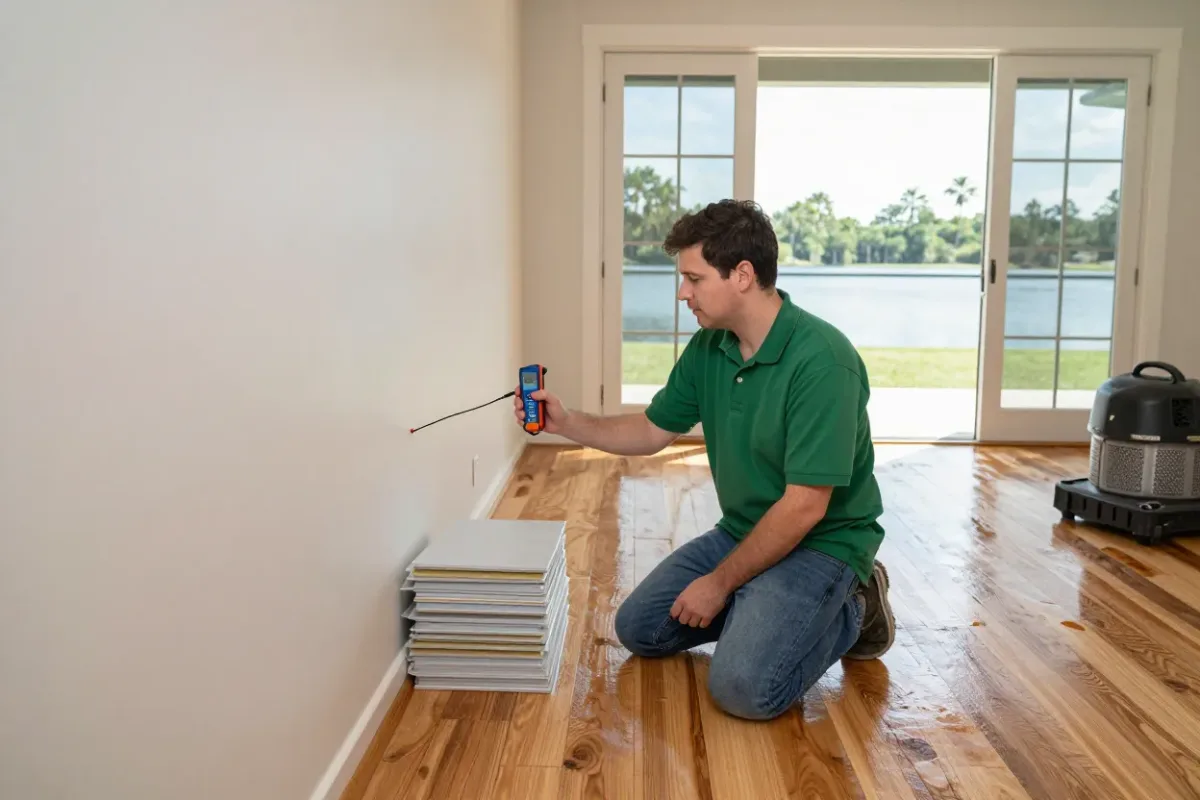
Restoration is the whole path from wet to finished, and moisture mapping sits in the middle of it. After extraction we meter every wall, floor and cabinet run the water could have reached, use thermal imaging to find water that has traveled out of sight, and decide what dries in place and what comes out. In the subdivisions built from the 1990s onward that is usually paper-faced drywall, engineered wood or laminate over slab, and base cabinets with soaked toe-kicks. In the older homes near Plant Street it can be wood floors, plaster and trim worth an effort to save.
Drying is engineered rather than left to chance: the home stays closed with the air conditioning running, dehumidifiers are matched to the space, and air movers are aimed into wall cavities, opened ceilings and under flooring edges. Every material is metered daily until it reaches its dry standard. After that come cleaning, antimicrobial treatment where the water category requires it, and the rebuild.
Flood and Storm Cleanup Where the Water Collects
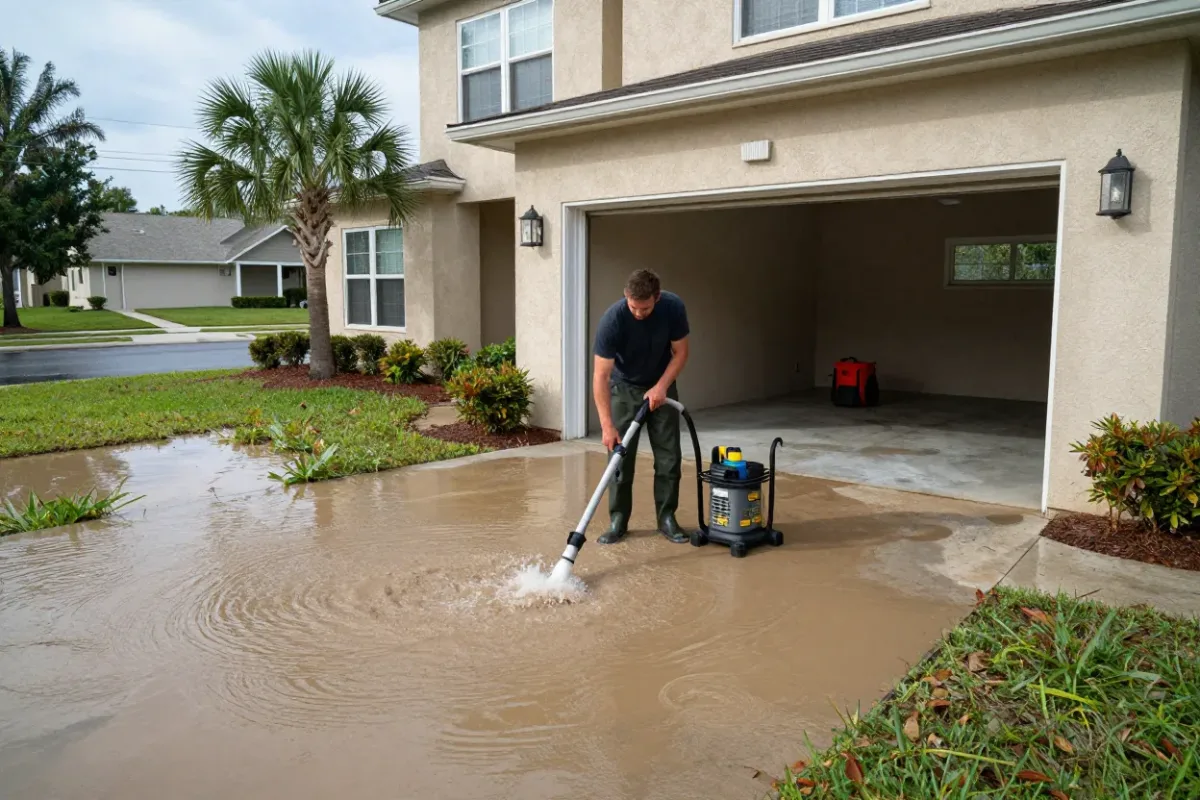
Because elevation falls from the southwest hills toward Lake Apopka, flooding in Winter Garden concentrates on the lower ground near the big lake and around the smaller lakes. The rainy season runs from late spring through October and overlaps the Atlantic hurricane season, so the wettest ground of the year coincides with the strongest storms. Orange County broadly experienced record rain and lake overflow during Hurricane Ian in 2022. More locally, heavy rain in October 2025 broke the stormwater pipes beneath East Crown Point Road between Winter Garden and Ocoee and washed the road out, a repeat of the damage after Hurricane Milton in 2024, and the road stayed closed for months. When drainage fails like that, water that should have been carried away ends up against the nearest homes.
Lake and runoff water is contaminated, so flood cleanup is a removal job first: saturated drywall, insulation, carpet and pad come out, hard surfaces are cleaned and disinfected, and HEPA filtration runs while the structure dries. Lakefront homes, the lowest lots in a subdivision and garages at the bottom of a sloping street get the closest look. If floodwater is inside your home now, stay out of it and call; we will tell you what is safe to do until the crew arrives.
Putting Winter Garden Homes Back Together
Repair starts once the moisture logs confirm the structure is dry. Typical work includes replacing cut drywall and baseboard, rebuilding ceilings below an upstairs loss, reinstalling or replacing flooring, rehanging cabinets and repainting. In newer subdivisions the aim is a repair that matches the builder's finishes so the room does not look patched; in the older homes near downtown it is matching trim profiles and floor species where we can.
Manufactured homes in the city's mobile-home and RV parks are repaired differently, with belly board, underfloor insulation and lightweight subfloors that respond to water in their own way. Whatever the structure, the repair scope stays tied to the mitigation photographs and moisture maps so your adjuster sees exactly which materials the water reached and what was done.
Mold Removal in Winter Garden
In Central Florida's humidity, moisture left inside a wall, ceiling or floor can support visible growth in a matter of days. In the two-story homes around Johns Lake it is usually the ceiling cavity below a bathroom; in slab-on-grade homes it is the drywall behind tub surrounds, the back of base cabinets after a slow dishwasher or icemaker leak, and the closet beside an air handler with a clogged condensate line. After lake or runoff flooding it is the lowest foot of every wall the water reached.
We fix the moisture source first, contain the area with sheeting and negative air, remove and bag affected porous materials, HEPA-vacuum and clean what remains, and confirm the space is dry before it is rebuilt. Painting over growth is not a solution. Our mold remediation page explains the method, and this guide to hidden mold after water damage shows the places it tends to form.
Common Causes of Water Damage in Winter Garden
A fast-growing suburb on sloping, lake-dotted ground with mostly newer subdivisions, an older downtown and a few mobile-home parks produces a particular set of losses. The most frequent sources we see are:
- Runoff collecting against the lowest homes and garages as water drains from the hills toward Lake Apopka and the smaller lakes
- Stormwater pipe failures during extreme rain, like the washouts under East Crown Point Road after Hurricane Milton and again in October 2025
- Water heater, washing machine and refrigerator line failures in slab-on-grade subdivision homes south of State Road 50
- Upstairs bathroom and laundry leaks in two-story homes, with the damage showing in the ceiling below
- Roof and flashing failures on older homes near downtown during summer thunderstorms and tropical systems
- Air handler condensate pans overflowing in attics and interior closets in the cooling season
- Roof and window leaks reaching the floor systems of manufactured homes and RVs in the city's parks
- Wind-driven rain through windows, sliding doors and pool enclosures during hurricanes
Our Eight-Step Restoration Method
Every job in Winter Garden follows the same eight stages in order. The checks along the way are what keep a rebuilt room from getting wet again.
- Inspection and moisture mappingWe find the source, classify the water, and meter every wall, floor, ceiling and cabinet it could have reached, including the downhill side of the home where runoff collects.
- ExtractionSubmersible pumps and extractors clear garages, floors, carpet and pad.
- Removal of ruined materialsSoaked drywall, ceiling board, insulation, swollen baseboard and engineered flooring that has delaminated are cut out and bagged.
- Drying and dehumidificationThe home stays closed while air movers and dehumidifiers run, and each material is metered daily until it hits its dry standard.
- Cleaning and sanitizingHard surfaces that runoff or gray water touched are cleaned and disinfected, with HEPA filtration running the whole time.
- DocumentationWe compile photographs, daily moisture logs and a written scope for you and your insurance carrier.
- RepairDrywall, ceilings, trim, flooring, cabinets and paint are restored so the space matches the rest of the home.
- Final verificationA last set of moisture readings and a walkthrough confirm the home is dry and ready.
Winter Garden Areas We Serve
We respond throughout Winter Garden, from the historic downtown on Plant Street to the subdivisions around Johns Lake and Black Lake and the newest streets toward Horizon West. Our crews carry equipment suited to a two-story home on a hillside lot, a slab-on-grade ranch, or a manufactured home.
Winter Garden Neighborhoods
- Downtown Winter Garden (Plant Street)
- Stoneybrook West
- Johns Lake Pointe
- Wintermere Pointe
- Westfield
- Black Lake Park
- Waterside on Johns Lake
- Oakland Park
- Hickory Hammock
- Horizon Oaks
- Carriage Pointe
- Twinwaters
- Tucker Oaks
- Emerald Ridge
Nearby Communities
Our Winter Garden crews also cover the rest of west Orange County and the Lake County line. Several of them have their own local pages:
First Steps Before Help Arrives
These actions limit the damage in the first hour and protect your claim. None of them should put you in contact with water near electrical equipment.
- Shut off a plumbing sourceClose the fixture valve or the main shutoff, usually near the front hose bib or at the meter by the street.
- Keep out of water near electricityDo not enter a flooded garage or room where outlets, cords, the water heater or the panel may be wet. Only cut power from a panel that is dry and reachable without stepping in water.
- Treat runoff and lake water as contaminatedKeep kids and pets out of it and let a crew with protective gear handle that cleanup.
- Lift and move belongingsCarry electronics, documents and rugs to a dry room; set furniture legs on blocks or foil.
- Photograph the sceneRecord the source, the waterline and every affected room and item before anything is moved or removed.
- Keep the AC runningCool, dry air slows growth while you wait; keep windows shut against the humid outdoors.
- Call Water Damage FloridaDial (888) 435-4769 and tell us the source, how long it has been wet and which rooms are affected.
After a hurricane, our first 24 hours after a flood checklist and the hurricane water damage recovery guide cover what comes next.
Winter Garden Water Damage FAQs
My home is at the bottom of a sloping street and the garage floods every heavy rain. What can be done?
Each time it happens the garage and any adjoining rooms need proper extraction and drying, and we can document the pattern so your adjuster sees it. We can also discuss finishes for the affected rooms that tolerate repeat wetting, though the drainage problem itself is a matter for the city or a site contractor.
Do you work on manufactured homes and RVs in Winter Garden's parks?
Yes. Their floor systems, skirting and underfloor insulation need a different drying approach from a slab home, and our crews are set up for it.
Can engineered wood floors be saved after a leak?
Sometimes, if the water was clean and drying starts quickly. We meter the floor and the slab beneath it and dry from both directions where possible. Floors that have cupped or delaminated, or that took contaminated water, are replaced.
How is a repair in an older Plant Street home different from a newer subdivision home?
Older homes may have wood floors, plaster and trim profiles that are worth saving and hard to match, so we spend more effort drying in place. Newer homes use builder-grade materials that are quicker to replace than to rescue once saturated.
Will the drying equipment be loud and how long does it stay?
Air movers and dehumidifiers make a steady noise, and they stay until daily moisture readings show each material has reached its dry standard. We do not run them for a fixed number of days.
Do you cover the areas around Winter Garden?
Yes. Our crews serve Ocoee, Oakland, Windermere, Horizon West, Clermont, Minneola and Montverde, along with the rest of Florida through our statewide service areas.