Apopka sits on relatively high ground in northwest Orange County, near Lake Apopka and the Wekiwa Springs and Wekiva River corridor, and for a long time it was known more for its greenhouse nurseries than for anything to do with water damage. That has changed as the city has grown into a large suburb of lakeside subdivisions and townhome communities. The city's own flood-preparedness materials point out that some areas are low-lying and sit next to lakes such as Lake McCoy, Lake Doe, Lake Errol, Lake Pleasant, Lake Page and Dream Lake, and along the Beersman Branch floodplain, and that hurricanes, tropical storms and rainy-season thunderstorms are the main flood triggers.
Water Damage Florida provides 24/7 water damage restoration in Apopka for everything from a slow leak behind a shower wall in Errol Estate to a townhome that took lake water in Wekiva Village. Our crews handle the extraction, the drying, the cleaning and the rebuild, and they document every step for your insurance file. Call (888) 435-4769 whenever you need us, day or night.
Emergency Response for Sudden and Creeping Water
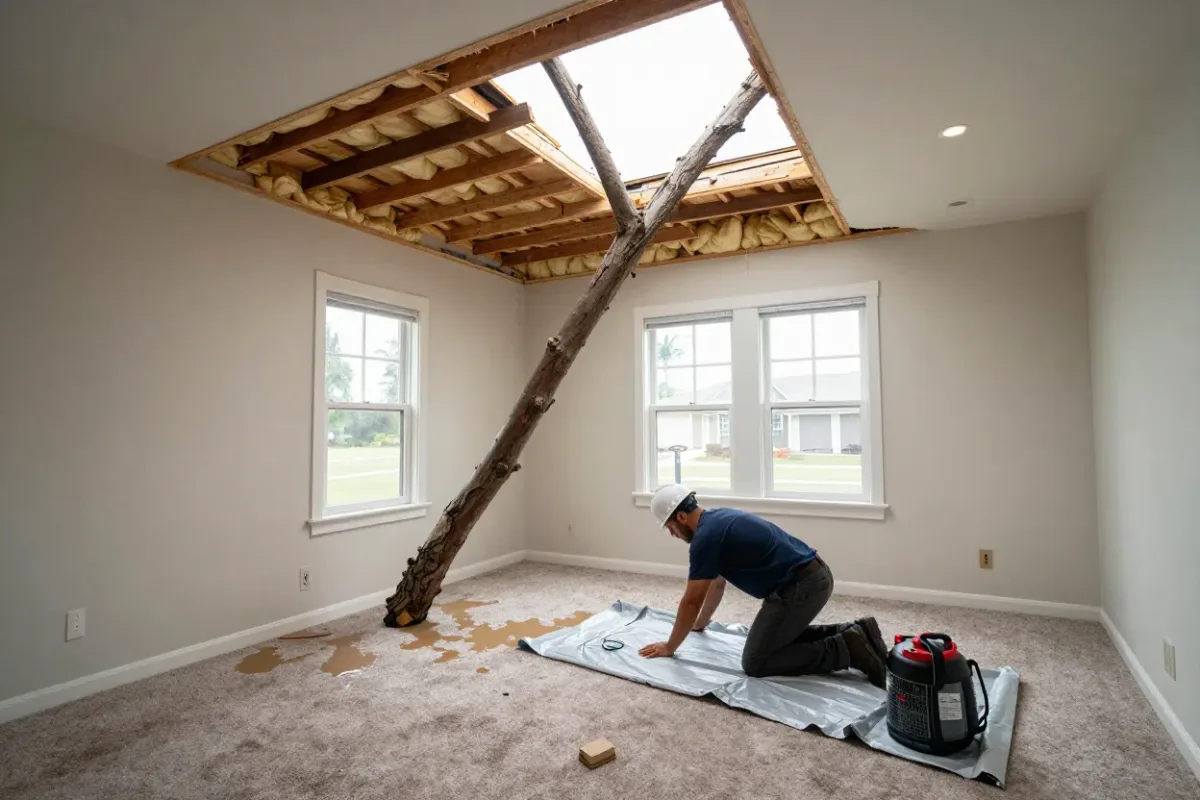
Apopka's emergencies come in two flavors: the sudden kind and the creeping kind. The sudden kind is a burst supply line, a failed water heater, a dishwasher hose, or a tree limb through the roof during a storm; Hurricane Ian in 2022 sent downed trees onto Apopka homes, and a hole in the roof during a rain band turns a bedroom into a pond in minutes. The creeping kind is a lake that has been rising quietly through a week of rain until it reaches the slab of a home in one of the lower subdivisions. Both need the same immediate response: stop what can be stopped, tarp what can be tarped, extract standing water, and get drying equipment running.
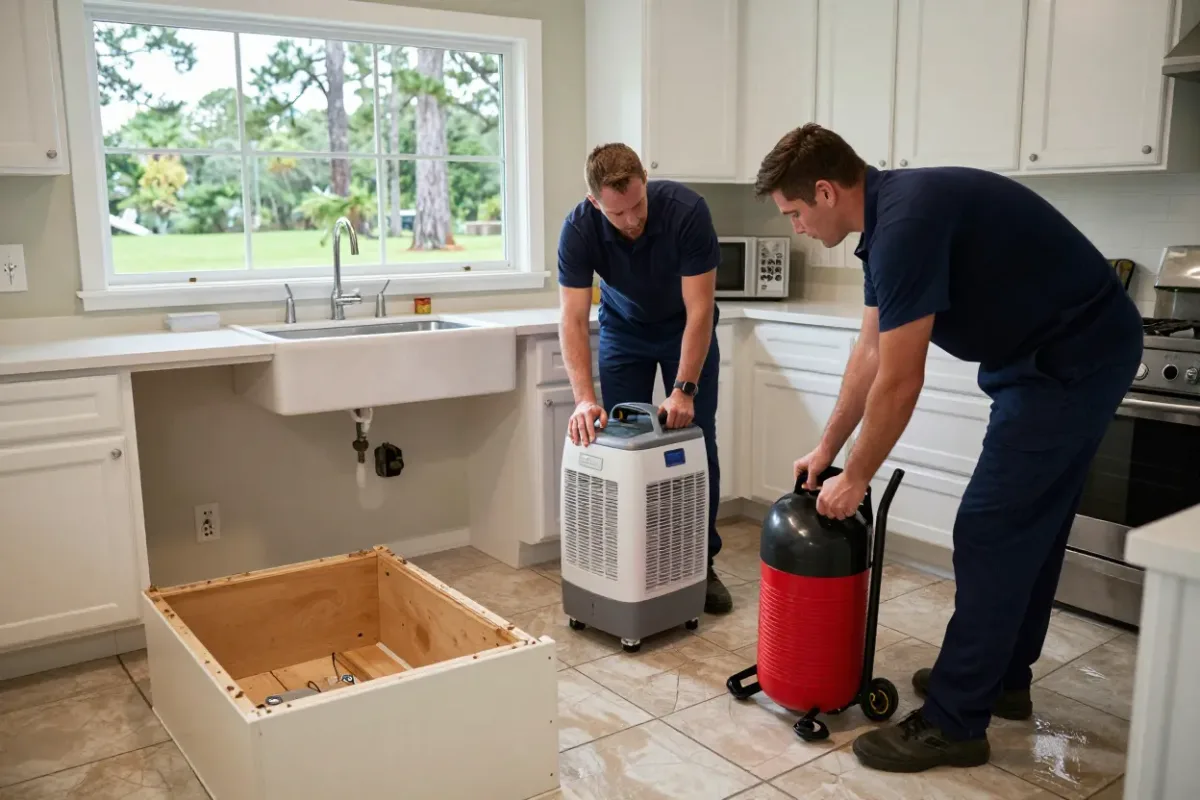
Our crews arrive with extractors, pumps, air movers and dehumidifiers, and with roof tarps and plastic sheeting for storm calls. Moisture readings and photographs begin on arrival so the record is complete from the first hour. For townhome communities where one loss affects shared walls, we trace the water through adjoining units rather than stopping at the first door.
Restoration Work in Lakeside Subdivisions
Restoration takes a home from wet to finished, and the middle of that path is moisture mapping. We meter every wall, floor and cabinet run the water could have reached and use thermal imaging to find water that has migrated out of view, then decide what dries in place and what comes out. Most of Apopka's housing is single-family subdivisions built around lakes and the Wekiva corridor, with slab floors, paper-faced drywall, laminate and tile, and base cabinets that wick water into their toe-kicks; those are the materials that usually decide the scope.
The drying itself is done with the house closed and the air conditioning running, using dehumidifiers matched to the volume of the space and air movers aimed into wall cavities and under flooring edges. Readings are logged daily and the equipment leaves only when every material has reached its dry standard. Cleaning and any antimicrobial treatment follow, and then the rebuild. Read more about the full sequence on our water damage restoration service page.
Flood Cleanup Near Border Lake, Lake Piedmont and the Low Ground
Apopka's recent flooding has been lake driven. Neighborhoods near Border Lake and Lake Piedmont, and the Wekiva Village townhomes off Piedmont Wekiwa Road, flooded during Hurricane Ian in 2022 and again after Hurricane Milton in 2024. In response the city approved a multi-lake pumping plan to move water toward Lake Page, and it updated its flood maps in 2021 and takes part in FEMA's Community Rating System. Those are useful facts to know, but they do not dry a living room, and lake water that has entered a home twice in two years tends to reach the same walls the second time.
Lake water is treated as contaminated. That means saturated drywall, insulation, carpet and pad come out rather than getting dried in place, hard surfaces are cleaned and disinfected, and air filtration runs through the whole job. Because townhomes share walls and often share slab drainage, we check both sides of a party wall before closing anything up. If floodwater is in your home now, keep out of it and call; our flood restoration crews will tell you what is safe to do before they arrive.
Repairs After the Drying Is Done
Repair starts when the moisture logs say the structure is dry. In Apopka that typically means replacing the lower drywall and baseboard, reinstalling or replacing flooring, rehanging kitchen and bath cabinets, repainting, and, after a storm, patching ceilings and insulation below a roof opening once the roofer has closed it. In older homes near the historic center we take care with original trim and floors; in subdivisions built in the last few years the priority is matching the builder's finishes so the repaired room does not stand out.
For homes that have flooded before, we talk with owners about repair choices that hold up better if the lake comes back: tile over carpet on the ground floor, moisture-resistant board in the lowest course, and cabinet installations that can be dried out. Scope stays tied to the moisture maps and photographs from mitigation so your adjuster can see exactly what the water reached.
Mold Removal in Apopka
In Apopka's climate, with a wet season that runs June through November, any moisture left in a wall cavity or under flooring can support visible growth in days. The usual trouble spots are the bottom foot of drywall in a home that took lake water, the back of base cabinets after a slow dishwasher or icemaker leak, the wall behind a shower where the tile grout failed, and the ceiling below an attic air handler with a clogged condensate line.
Our mold cleanup starts by fixing the moisture source, then contains the area with sheeting and negative air, removes and bags affected porous materials, HEPA-vacuums and cleans the surfaces that remain, and verifies the space is dry before it is rebuilt. Spraying over growth is not a fix and we do not offer it as one. Our mold remediation page explains the method, and this guide to hidden mold lists the places it tends to form after a loss.
What Causes Water Damage in Apopka
The losses we handle in Apopka follow from a fast-growing suburb with many homes built near lakes, a heavy summer rainy season, and a mature tree canopy in the older neighborhoods and along the Wekiva corridor. The most frequent causes are:
- Lake flooding in low-lying subdivisions near Border Lake, Lake Piedmont, Lake McCoy and other lakes during hurricanes and extended rain
- Trees and limbs falling on roofs during storms, as happened across Apopka during Hurricane Ian, and rain entering through the opening
- Water heater, washing machine and supply-line failures in single-family and townhome construction
- Roof and flashing leaks during summer thunderstorms, the heaviest rain of the year
- Clogged air conditioning condensate lines overflowing drain pans in attics and closets
- Shared-wall and slab-edge water migration between townhome units after one unit floods
- Standing water against foundations and lanais when yard drainage is overwhelmed during the rainy season
- Slow plumbing leaks inside walls and under slabs in older homes near the historic center
Eight Steps From Wet to Dry
Every Apopka job follows the same eight steps in order. The verification steps are what keep a rebuilt wall from becoming a second claim.
- Assess and mapWe find the source, classify the water as clean, gray or contaminated, and meter every material it could have reached, including the neighbor's side of a townhome party wall.
- ExtractStanding water is removed with pumps and extractors from floors, garages, lanais and carpet and pad.
- Remove what will not drySaturated drywall, wet insulation, swollen baseboard and delaminated flooring are cut out and bagged, and storm debris is cleared from the affected rooms.
- Dry and dehumidifyAir movers and dehumidifiers run in the closed home, with moisture readings logged daily until each material hits its dry standard.
- Clean and sanitizeSurfaces touched by lake or gray water are cleaned and disinfected, and HEPA filtration runs during the work.
- DocumentPhotographs, moisture logs and a written scope are compiled for you and your insurance carrier, with any prior flood line noted.
- RebuildDrywall, trim, flooring, cabinets, ceilings and paint are restored so the space matches the rest of the home.
- Final checkA closing moisture check and walkthrough confirm the home is dry and ready to use.
Apopka Areas We Serve
We respond throughout Apopka, from the older homes near the historic center to the newest subdivisions on the city's agricultural fringe and the lakeside and Wekiva-corridor communities in between. Our crews bring equipment suited to a slab-on-grade ranch, a two-story townhome, or a lakefront home that has taken water before.
Apopka Neighborhoods
- Errol Estate
- Rock Springs Ridge
- Wekiva Village
- Sweetwater Country Club
- Wekiva Springs Estates
- Wekiva Park
- Lake McCoy Oaks
- Bent Oak
- Oakwater Estates
- Wekiva Preserve
- Bronson Peak
- Lake Pleasant Cove
Nearby Communities
Our Apopka crews also cover the communities around the Wekiva corridor and northwest Orange County. Several have their own local pages:
What to Do in the First Hour
These steps protect your home and your claim before our crew arrives. Nothing on this list should put you in contact with water near electrical equipment.
- Cut off a plumbing sourceClose the valve at the fixture or the main shutoff near the front of the house. If the water is from a lake or the storm, skip to the next step.
- Do not enter water that may be energizedStay out of flooded rooms where outlets, cords or the panel could be wet. Switch off power to the area only from a dry panel you can reach without stepping in water.
- Keep away from a roof openingIf a tree has come through the roof, keep everyone out of that room; ceilings and insulation can keep falling after the storm passes.
- Move and lift belongingsCarry electronics, documents and rugs to a dry room and set furniture legs on blocks or foil.
- Photograph before you cleanTake pictures and video of the source, the waterline and every affected room and item before anything is moved.
- Keep the AC on and windows closedCool, dry air slows growth while you wait; opening the house to humid air undoes that.
- Call for helpReach Water Damage Florida at (888) 435-4769 and tell us the source, how long it has been wet and whether the water is still rising.
After a hurricane, our hurricane water damage recovery guide and first 24 hours after a flood checklist cover what comes next.
Apopka Water Damage FAQs
My home near Border Lake flooded in both Ian and Milton. Can restoration be done differently the second time?
Yes. Beyond the standard cleanup, we can talk through repair choices that are more forgiving of another event: hard flooring on the ground floor, moisture-resistant materials in the lowest course of wall, and cabinet details that can be dried rather than replaced. We will also document the prior loss line so your adjuster has a clear picture.
A tree came through the roof and rain got in. Who do I call first?
Call us and a roofer. We can tarp the opening and begin extraction and drying inside while the roofer schedules the permanent repair; waiting for the roof to be finished before drying starts is how ceilings and floors are lost.
Do you work on townhomes where the water came from a neighbor's unit?
We do. Shared walls carry water both ways, so we inspect and meter both sides, coordinate with the association or management where needed, and document each unit separately for the respective claims.
Is lake water in my home handled the same as a pipe leak?
No. Lake water is contaminated, so porous materials it touched are removed rather than dried, and hard surfaces are disinfected. A clean supply-line leak caught quickly allows far more of the home to be saved.
How do I know when the house is really dry?
We take moisture readings in every affected material daily and stop only when they reach the dry standard for that material. You get the logs, so the answer is in the numbers rather than in a guess.
Do you serve the areas around Apopka?
Yes. Our crews cover Ocoee, Winter Garden, Altamonte Springs, Mount Dora, Zellwood, Wekiwa Springs and the rest of northwest Orange County, along with the rest of Florida through our statewide service areas.