Mount Dora is built on a plateau that rises well above Lake Dora, Lake Gertrude and Lake Beauclair, which gives the city its unusual hills and a water problem most of Florida does not share: gravity. When heavy rain falls on those slopes, it gathers speed on its way down, and the house at the bottom of a hillside street or at the low corner of a lot receives everything the hill sends. Wind-driven roof damage and lakefront exposure add to the mix. Water Damage Florida provides water damage restoration in Mount Dora 24 hours a day, whether the water came downhill, through the roof, or from a pipe.
We work throughout the city, from the early-twentieth-century homes of the historic district and downtown to the newer subdivisions growing toward the Wekiva Parkway and the Wolf Branch Innovation District. Call (888) 435-4769 the moment you find water and we will start you on the right steps while a crew heads your way.
Emergency Response for Hillside Homes and Downtown Shops
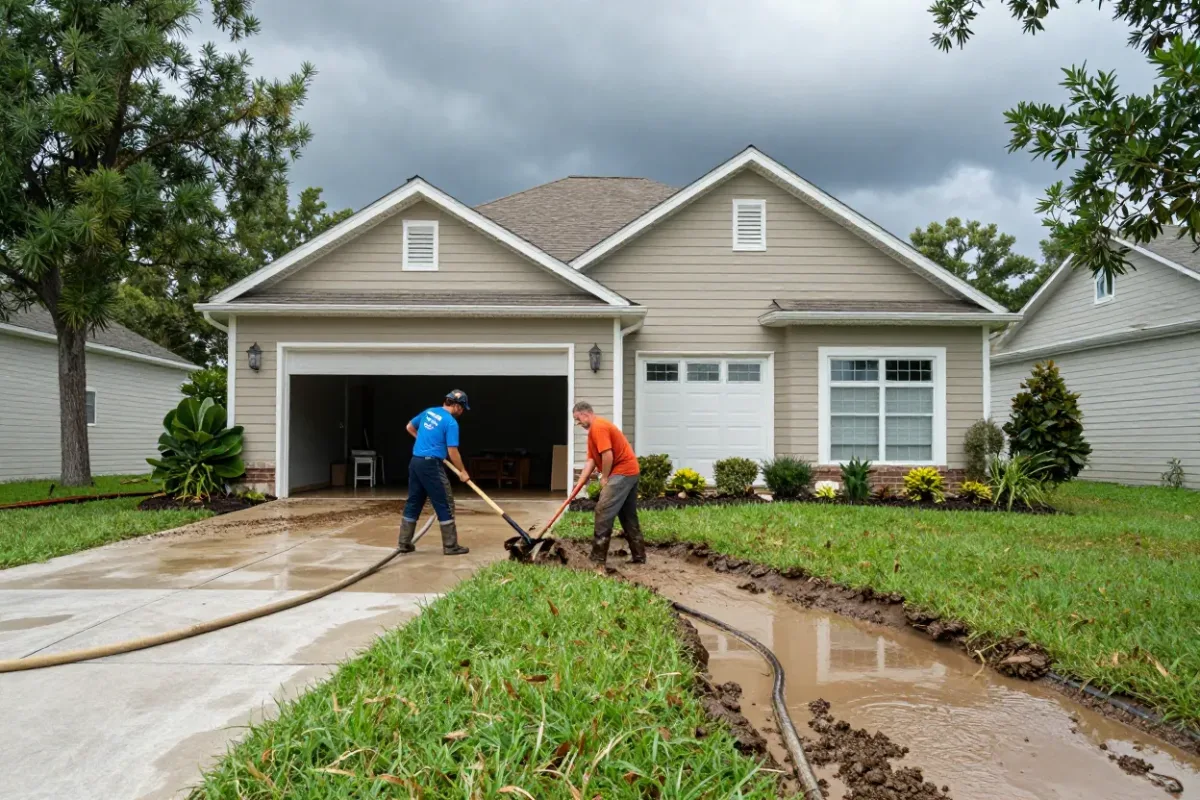
Emergency calls from Mount Dora come in two flavors. During the storm season the phone rings about runoff: a garage filling from a driveway that slopes toward the house, a crawlspace under a historic home taking water from uphill, a downtown shop with rain sheeting under the front door from the street. The rest of the year it is the usual failures of pipes and appliances, with the added complication that older homes here have original plumbing, plaster walls and wood floors that respond badly to being wet for long.
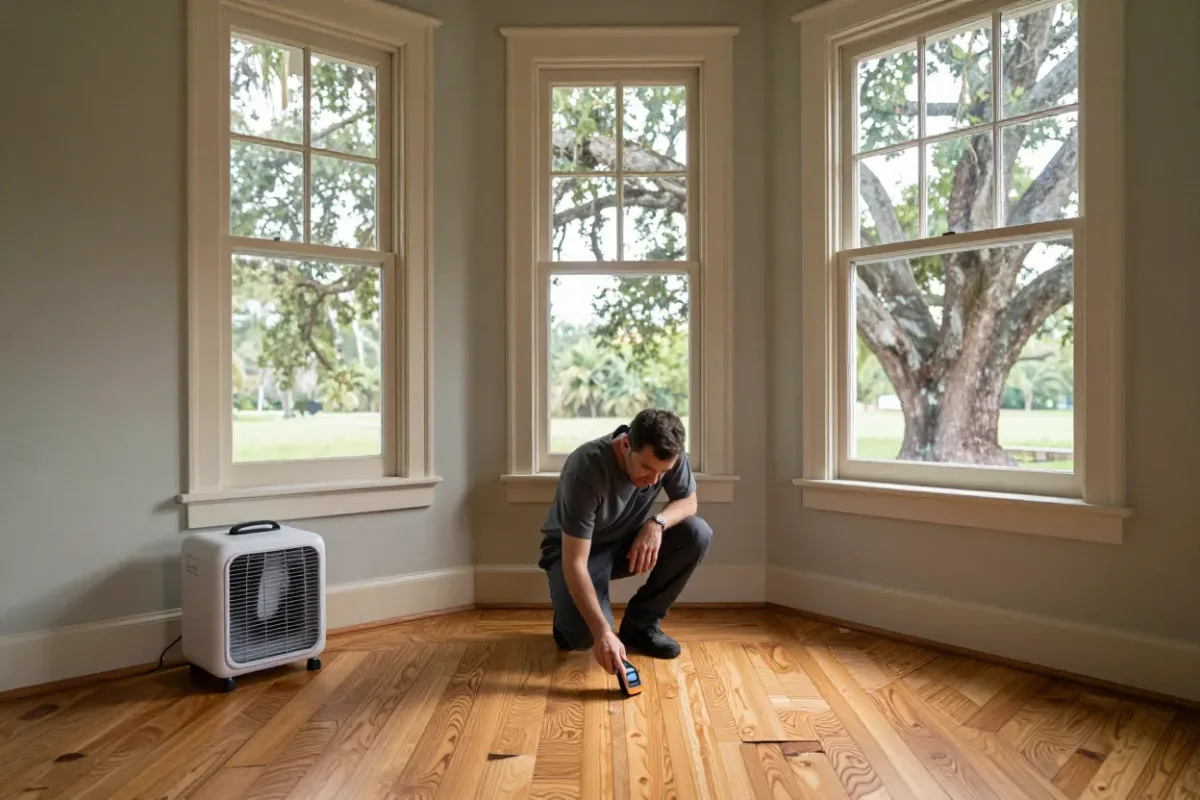
We respond with extractors, pumps for garages and crawlspaces, and drying equipment ready to run on the first visit. In older homes we take care with plaster and heart-pine floors, metering rather than tearing out, and in downtown commercial buildings we plan the work around opening hours where possible. Photographs and moisture readings are taken before any equipment goes in so your insurance record starts with the actual conditions. Our emergency water damage page has more on the first visit.
Restoring Historic Homes and Newer Subdivisions
The historic district holds early-twentieth-century houses and commercial buildings, many with wood framing, pier foundations, plaster and lath, and original wood flooring. These can often be dried in place when we start early, and doing so is worth the effort: original floors and plaster are hard to replace. We use moisture readings to decide what stays, dry crawlspaces from below when needed, and remove only material that has failed. The newer subdivisions on the city's edges are block-and-stucco on slab with drywall and tile or plank floors, which dry well once the lower wall and flooring are opened.
In both cases drying is done with dehumidifiers and air movers in the closed building, monitored daily until each material reaches its dry standard. Cleaning and antimicrobial treatment follow when the water was runoff or otherwise contaminated, and repair waits until the readings say the structure is dry. Our water damage restoration service page describes the standards we work to.
Storm Runoff Cleanup in Mount Dora
Mount Dora's floods run downhill. Hurricane Milton in 2024 dropped heavy rain on Lake County, and runoff washed out sections of Britt Road and Wolf Branch Road near the city while the St. Johns River in the county reached major flood stage. A 2025 downpour described locally as a thousand-year storm sent runoff that undermined a Mount Dora home, a reminder of how steep terrain concentrates stormwater into a few unlucky places. Lakefront properties on Lake Dora and Lake Beauclair face rising water from the other direction when the Harris Chain of Lakes is high.
Runoff carries soil, mulch, fertilizer and road grime, so we treat it as contaminated. Flood cleanup means removing the water and the silt with it, taking out the carpet, pad, lower drywall, insulation and cabinet bases the water soaked, cleaning and disinfecting the slab or subfloor, and running air filtration while the structure dries. Where runoff has scoured soil away from a foundation, we point that out so you can bring in the right specialist. See our flood restoration page for the complete sequence.
Repair After Water Damage in Mount Dora
Repair in the historic district is about matching what was there: refinishing or replacing individual wood floorboards, patching plaster rather than replacing whole walls, matching trim profiles and window casings, and repainting to blend. In newer homes the work is more familiar: drywall, baseboard, plank or tile, cabinet bases and paint. Garages and crawlspaces that took runoff often need drywall, insulation and vapor barrier replaced.
Whatever the building, the repair scope is built from the moisture map and photographs taken during mitigation, so what we rebuild lines up with what was actually wet. That record goes to you and your adjuster. If the loss came from a named storm, our hurricane water damage recovery guide explains how to organize the claim and the rebuild.
Mold Removal in Older and Newer Homes
Older Mount Dora homes give mold more places to hide than a slab house does. Crawlspaces that took runoff, the back of lath and plaster after a roof leak, the underside of wood floors, and closets on the uphill side of a house where moisture wicks through the foundation are the usual spots. In newer homes it is the familiar list: drywall behind a water heater closet, cabinet backs after an appliance leak, and the lower wall behind a lanai slider.
Our mold cleanup corrects the moisture source first, contains the area with sheeting and negative air, removes and bags growing porous materials, HEPA-vacuums and cleans what remains, and dries the cavity before closing it. In a historic home we work to save original material where the readings allow. Our mold remediation page explains the method, and our note on hidden mold after water damage is worth reading if a roof leak was patched but the ceiling was never dried.
Why Water Damage Happens on Hilly Ground
The calls we take here reflect a hilly lakeside city with a large stock of older buildings, growing subdivisions on its edges, and exposure to wind and heavy rain. The common sources:
- Stormwater runoff from sloping streets and lots entering garages, crawlspaces and low rooms
- Wind-driven roof and flashing damage during tropical systems and severe thunderstorms
- Original galvanized and cast-iron plumbing failing in historic district homes
- Lake Dora and Lake Beauclair rising into lakefront lots when the chain of lakes is high
- Roof leaks over plaster ceilings that go unnoticed until the ceiling sags
- Water heaters and supply lines failing in newer subdivision homes
- Air conditioning condensate overflow in months of continuous cooling
- Rain sheeting under the doors of downtown storefronts from the street
From First Reading to Final Walkthrough
A bungalow downtown and a new house near the Wekiva Parkway need different handling, but the order of work is the same on every Mount Dora job.
- Inspect and classifyWe confirm the source is stopped, decide whether the water is clean or contaminated, and meter floors, walls, ceilings and crawlspaces to find everything that is wet.
- Extract the water and siltPumps and extraction equipment remove standing water from garages, crawlspaces and floors, along with the soil that runoff leaves behind.
- Remove what cannot be driedSoaked pad, drywall, insulation, vapor barrier and failed plaster are cut out and bagged; original wood and plaster that can be saved are left in place.
- Dry and dehumidifyAir movers and dehumidifiers run in the closed building, including under raised floors where needed, with readings logged daily until each material reaches its dry standard.
- Clean and treatSurfaces that contacted runoff or lake water are cleaned and treated with an antimicrobial, and air scrubbers run throughout.
- Document the lossPhotos, moisture logs and a written scope are compiled for your records and your insurance carrier.
- Repair and match finishesFloorboards, plaster, drywall, trim, cabinetry and paint are restored to match the original or the builder finish.
- Verify drynessA closing set of moisture readings and a walkthrough with you confirm the work is complete.
Where We Work, From the Lakefront to the Ridge
Our crews serve the whole city, from the lakefront near Gilbert Park and Grantham Point Park up through the historic district and downtown and out to the newer neighborhoods on the city's edges.
Areas of Mount Dora
- Mount Dora Historic District
- Downtown Mount Dora
- Wolf Branch Innovation District
Nearby Communities
The neighboring towns along the Harris Chain of Lakes and toward Orange County share Mount Dora's weather, and our crews serve them as well. Several have their own local pages:
Immediate Steps for Homeowners on the Hill
A few careful actions before the crew arrives protect both the house and your claim.
- Cut off the source if it is insideClose the fixture valve or the main shutoff. In older homes the main may be at the meter near the street; find it before a leak forces you to look.
- Stay out of water that may be energizedIf outlets, cords or the panel are in or near the water, do not enter. Turn off breakers only from a dry panel you can reach on dry footing.
- Do not wade into runoffWater that came downhill or in from the lake carries contaminants and can hide washed-out ground. Keep family and pets away and leave the cleanup to the crew.
- Get belongings upMove rugs, boxes and electronics to a dry room and set foil or plastic under furniture legs that stay.
- Photograph before cleaningCapture the source, the water line and every affected room, including the yard if runoff was the cause.
- Keep the house cooled and closedLeave the air conditioning on and the windows shut so humid outdoor air does not slow the drying.
- Call us with the detailsReach Water Damage Florida at (888) 435-4769 and tell us whether the water came from inside, from the roof or from the hill.
If the storm is still underway, our first 24 hours after a flood guide covers what to do while water is still coming in.
Mount Dora Water Damage FAQs
Runoff from the street above us floods our garage every big storm. Can you help beyond cleanup?
We handle the cleanup and drying and will document the path the water takes each time, which helps when you talk with the city or a drainage contractor about the cause. Grading, swales and drains are outside our scope, but our record of where the water enters is useful to whoever does that work.
Our 1920s house has original heart-pine floors. Will they survive a leak?
Often, yes, if drying starts early. We meter the boards and the subfloor, dry from above and from the crawlspace if needed, and let the wood come back slowly. Boards that have buckled or split are replaced individually rather than refinishing the whole floor.
A roof leak stained the plaster ceiling. Does the whole ceiling come down?
Not necessarily. Plaster that is still sound can usually be dried in place once the roof is repaired. We remove only the sections that have separated from the lath or crumbled, then match the patch to the surrounding surface.
Do you work on downtown shops and restaurants?
Yes. We handle commercial buildings in the downtown and historic districts, coordinate with the owner or property manager on access, and try to schedule the noisier work around business hours when the drying plan allows.
Is a lakefront home on Lake Dora treated differently from one up the hill?
The main difference is contamination and re-entry. Lake water is treated as contaminated, so porous materials it soaked are removed rather than dried, and we watch for water coming back through the slab or crawlspace while the lake stays high.
How long does drying take in an older house?
Longer than in a new slab home, because plaster and thick wood hold moisture. A small clean-water leak may take several days; a crawlspace and floor system that took runoff can take considerably longer. We monitor daily and stop when the readings show the materials are dry.