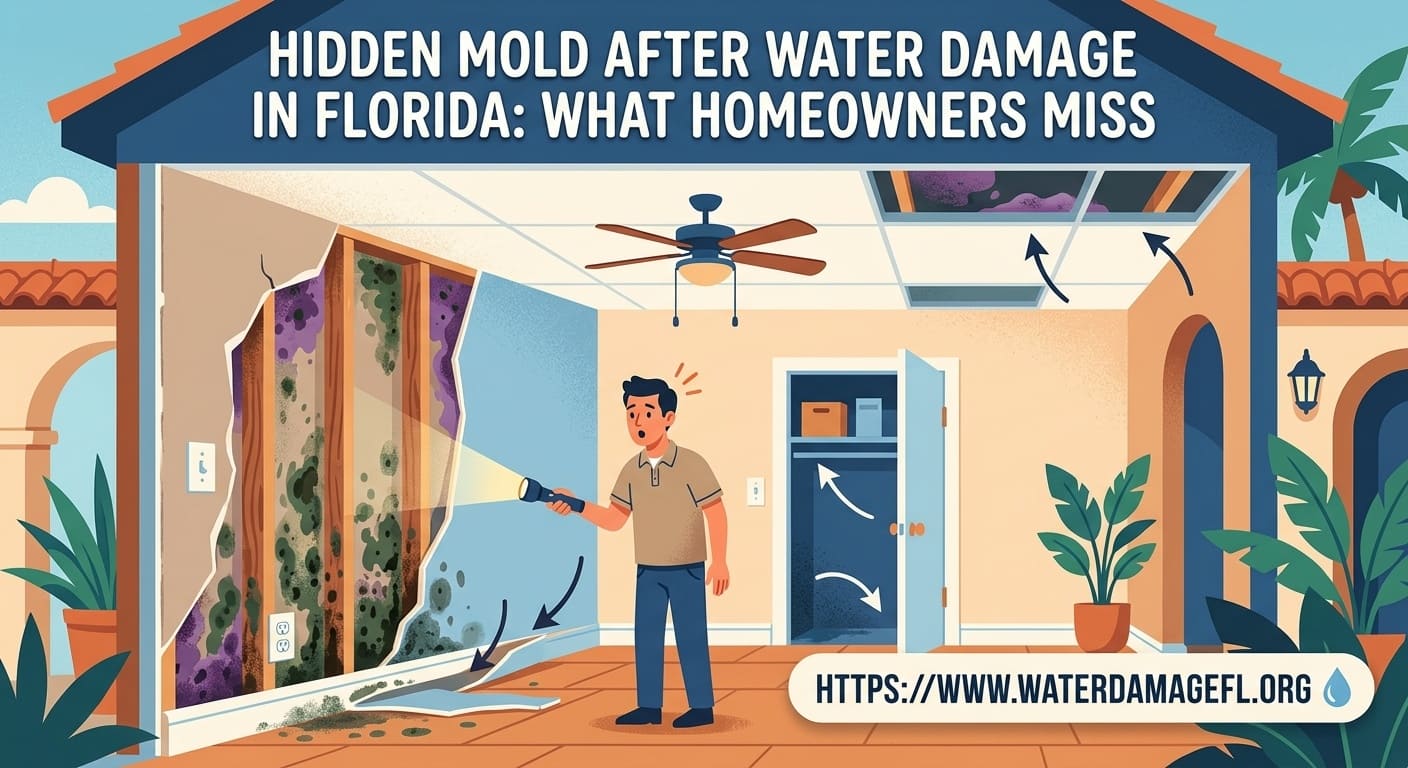
Hidden Mold After Water Damage in Florida: What Homeowners Miss
Florida homeowners often think the emergency is over once carpets feel dry. In our climate, that is when hidden mold problems frequently begin. Warm temperatures, high indoor humidity, and leftover moisture in wall cavities create ideal conditions for growth within a day or two of a leak, flood, or AC condensate event. By the time a stain shows on paint, colonies may already be established behind the surface.
This August 2026 guide explains what Florida homeowners miss after water damage, how to spot early warning signs, what not to do, and when to bring in professional mold remediation Florida help. If water is still active in the home, start with emergency water damage Florida response first. Drying and mold control work together; treating only the visible growth without fixing moisture is how the same problem returns.
Why Mold Hides So Easily in Florida Homes
Surface drying is not the same as structural drying. Vinyl plank and tile can look fine while plywood or concrete underneath stays wet. Drywall paper faces can grow mold behind paint. Insulation traps moisture against exterior walls. Supply closets and guest bathrooms with weak airflow become quiet incubators during humid FL summers. Even homes with strong air conditioning can develop localized humidity pockets in closed rooms.
Hurricane season adds another layer. Storm leaks may wet attic insulation and ceiling cavities that are out of sight until stains appear weeks later. Slow roof leaks after wind events are especially sneaky because the drip rate seems minor while insulation keeps absorbing water. Pair this article with our hurricane water damage recovery guide for Florida homes if your loss started with a named storm.
Florida also has many slab homes where water travels under cabinets and along baseboards far from the original source. A dishwasher leak under a sink can wet an entire run of lower cabinets before anyone notices warping. By then, the cabinet backs and toe kicks may already support mold growth that only appears when doors are opened.
How Quickly Mold Can Start After Water Damage in FL
In cooler, drier climates, homeowners sometimes have several days before microbial growth becomes a serious concern. In Florida, the window is shorter. With indoor temperatures in the 70s or higher and relative humidity that fights every drying effort, many materials can support growth within 24 to 48 hours. That timeline is why emergency extraction and monitored drying matter so much after any water loss in FL.
Not every damp surface becomes a large remediation project, but the risk climbs when drying is incomplete. Carpet pad, wet drywall paper, soaked insulation, and organic dust on framing are common food sources. Once growth starts in a cavity, spores and odor can migrate into living space through outlets, baseboard gaps, and HVAC returns.
Common Places Homeowners Miss
Behind baseboards and under cabinets
Water wicked into toe kicks and baseboard cavities often stays long after floors feel dry. Soft or swollen baseboards, dark lines at the floor edge, or a musty smell when you open lower cabinets are classic FL warning signs after a supply line or dishwasher leak. Kick plates can hide wet particle board that crumbles months later if ignored.
Inside wall cavities and electrical outlets
Moisture meters and infrared cameras help technicians find wet studs without tearing every wall open. Homeowners sometimes notice warm or cool wall spots, peeling paint, or dusty looking growth near outlets. Do not sand suspected mold dry; that spreads spores through the house. If paint bubbles in a vertical pattern above a wet baseboard, moisture may still be traveling up the wall cavity.
HVAC systems and drip pans
Florida air conditioning runs hard for months. Clogged condensate lines and dirty drip pans introduce moisture into mechanical closets and air handlers. After a flood, ducts that sat in humid air can distribute musty odors room to room. Restoration should include checking the mechanical system, not only the wet floor. A clean looking living room can still smell moldy if the air handler closet was never addressed.
Attics, soffits, and roof sheathing
Wind driven rain can wet attic insulation without obvious ceiling stains at first. Later you may see buckling drywall or smell mold when the attic heats up in the afternoon. Early inspection after storms prevents larger remediation bills. Soffit and fascia leaks can also wet exterior wall tops where homeowners rarely look.
Behind shower walls and under tubs
Not every mold problem starts with a dramatic flood. Slow plumbing leaks behind tile, failed shower pans, and dripping supply valves create chronic moisture that Florida humidity never fully resets. If caulk keeps failing or a bathroom smells musty even after cleaning, ask for moisture readings behind the finish surfaces rather than another round of bleach on the tile face.
If you can still smell mildew after fans ran for a few days, moisture is probably still trapped. In Florida, odor is often the first reliable clue that drying was incomplete.
Early Warning Signs of Hidden Mold After Water Damage
- Persistent musty smell in one room, closet, or cabinet run
- Allergy like symptoms that improve when you leave the house
- Warped trim, soft drywall, or bubbling paint days after a leak
- Condensation on windows that does not improve with normal AC use
- Dark spotting on grout, caulk, or the back of furniture against wet walls
- Flooring that feels firm but sounds hollow or soft in spots
- Recurring stains that return after painting
None of these alone prove mold, but together after a water event they justify a professional inspection. Waiting through another humid week usually makes removal more invasive and more expensive.
What Not to Do
Do not paint over stains hoping they disappear. Do not run ozone machines as a substitute for removing wet materials. Do not bag moldy drywall without containment if the area is large. Bleach on porous surfaces rarely solves FL mold problems because roots sit inside the material. Proper remediation removes the food source and corrects the moisture.
Avoid sealing wet cavities with new baseboards or new flooring to make the room look finished. Cosmetic repairs over damp materials trap moisture and often create a larger remediation later. Also avoid moving heavily contaminated materials through clean rooms without containment. Spores travel easily on clothing, tools, and air currents.
DIY Checks Versus Professional Inspection
Homeowners can do useful early checks: smell each room with doors closed, look behind furniture against exterior walls, open lower cabinets, and note any soft trim. A simple moisture meter from a hardware store can hint at wet drywall, but it will not replace thermal imaging or cavity inspection on a complex loss.
Call professionals when the wet area was large, the water was contaminated, odors persist after drying attempts, someone in the home is medically sensitive, or you see growth spreading. Water Damage Florida combines moisture mapping with practical remediation planning so you are not guessing which walls need opening.
How Professional Mold Remediation Works in Florida
Assess and contain
Water Damage Florida starts with moisture mapping and visual assessment. Work zones are contained so dust and spores do not travel. Negative air machines with HEPA filtration protect the rest of the home during removal. Containment is especially important in open concept Florida homes where air moves freely between rooms.
Remove and treat
Contaminated drywall, insulation, and other porous materials are removed as needed. Remaining framing is cleaned and treated. Structural drying continues until readings support rebuild. This pairs with full water damage restoration service Florida when the original leak still needs drying support. Skipping drying and jumping straight to wipe downs is a common reason mold returns.
Verify and rebuild
Once moisture is controlled and surfaces are cleaned, we discuss rebuild options. Keeping humidity in check with working AC, dehumidification in flood prone rooms, and prompt leak repairs helps prevent a repeat visit. New materials should only go in after the structure is confirmed dry.
Connecting Flood Cleanup to Mold Prevention
Floodwater from storms and overflows often carries organic material that feeds mold. Thorough flood restoration service Florida includes cleaning and drying, not only pumping water out. Mud lines, wet insulation, and saturated baseboards need attention even when the floor looks better after extraction.
For a timed plan right after flooding, see First 24 Hours After a Flood in Florida. The decisions made on day one often determine whether mold remediation is a small contained job or a multi room project two weeks later.
Prevention Tips for Florida Homes After Any Water Loss
- Extract standing water as soon as it is safe to do so.
- Keep drying equipment running until meter readings clear, not until the room feels dry.
- Open cabinets and closets so air reaches hidden surfaces.
- Replace soaked pad and insulation rather than hoping they dry in place after dirty water.
- Maintain condensate lines and drip pans during peak AC season.
- Fix roof and plumbing leaks quickly after storms instead of waiting for visible stains.
- Use bathroom exhaust fans and avoid storing wet items against exterior walls.
When to Call Water Damage Florida
Call (888) 435-4769 if you have visible mold larger than a small isolated patch, recurring growth after DIY cleaning, health concerns tied to indoor air, or any water loss that was not professionally dried. We serve Florida homeowners 24/7 and can combine emergency extraction with mold remediation when both are needed.
Questions about your specific FL property? Reach us through Contact Us or email info@waterdamagefl.org. Related reading: Hurricane Water Damage Recovery Guide for Florida Homes and First 24 Hours After a Flood in Florida.