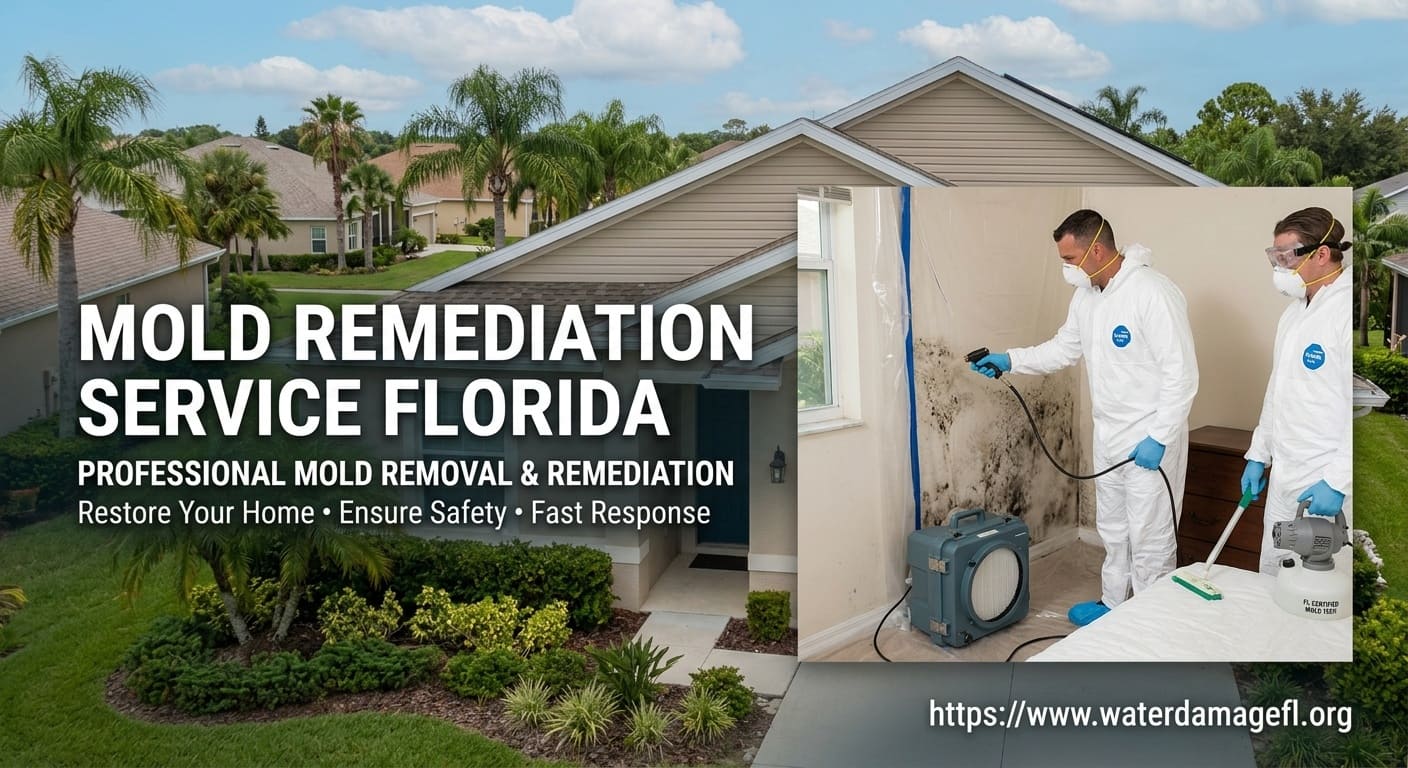
Mold thrives where moisture and organic materials meet, and Florida gives those conditions almost year round. After a leak, flood, or slow seepage behind a wall, growth can start long before you see fuzzy patches. Water Damage Florida provides mold remediation across Florida that focuses on finding the moisture source, containing the work area, removing contaminated materials safely, and drying the structure so growth does not bounce back.
Homeowners often discover mold weeks after what seemed like a minor water event. A stain fades, the floor feels dry on top, and life moves on until a musty closet smell appears or someone in the home notices irritation. In FL properties, incomplete drying is the usual culprit. Our remediation process treats mold as a moisture problem with a cleanup component, not as a scent that can be masked.
Why Mold Spreads So Quickly in Florida Homes
Outdoor humidity, warm interiors, and frequent rain create a short window between wetting and microbial growth. Air conditioning helps when systems run correctly, but clogged condensate lines, dirty coils, and short cycling can introduce moisture into closets and mechanical rooms. Hurricane season multiplies the risk with roof leaks, blown rain, and delayed power for drying equipment.
Building materials common in Florida add complexity. Drywall paper, wood framing, and some insulation hold moisture. Tile floors can hide wet thinset and underlayment. Vinyl plank may look fine while the subfloor beneath remains damp. Block construction can channel water into unexpected cavities. Effective mold remediation in FL starts with moisture mapping, not with a bleach bottle and hope.
Our guide on hidden mold after water damage in Florida covers the spots homeowners miss most often: behind baseboards, under sinks, inside HVAC closets, and above stained ceilings. If you are still in the first day after flooding, also read first 24 hours after a flood to reduce the chance mold gets a foothold.
Our Mold Remediation Process for FL Properties
Inspection and moisture source identification
We inspect visible growth, musty zones, and related water pathways. Moisture meters help locate damp materials that look dry on the surface. Finding and stopping the water source is non negotiable. Remediating a wall while a pipe still weeps, or while humid outdoor air floods a crawl space, invites a repeat visit.
Containment and protection of unaffected areas
Depending on the project size, we set containment so dust and spores are less likely to travel into clean rooms. HVAC registers may be protected. Workers use appropriate protective equipment. Containment is especially important in Florida condos and townhomes where shared air pathways and neighbors raise the stakes.
Removal of contaminated materials
Porous materials with established growth are often removed rather than cleaned in place. That can include sections of drywall, insulation, and carpet pad. We remove only what the conditions require and open cavities for cleaning and drying. Aggressive tear out without a plan wastes money; timid tear out leaves reservoirs of growth behind.
Cleaning, treatment, and structural drying
Salvageable framing and hard surfaces are cleaned thoroughly. Antimicrobial treatments may be used as part of a complete protocol. Then drying equipment brings materials to safe moisture targets. In humid FL weather, this step is where many DIY efforts fail. Air movement without dehumidification can feel productive while materials stay wet.
Clearance for rebuild and prevention advice
When the area is clean and dry, rebuild can proceed. We coordinate with our water damage restoration service so new finishes do not trap leftover moisture. Prevention advice may include humidity control, gutter and grading fixes, AC maintenance, and faster response next time water appears. After storms, our hurricane recovery guide helps homeowners plan ahead.
Why Florida Families Trust Water Damage Florida for Mold Work
Mold remediation should be methodical, transparent, and tied to real moisture science. We do not upsell fear. We show you what we found, what must come out, what can stay, and how drying will be verified. That clarity matters when you are balancing health concerns, insurance questions, and the desire to get life back to normal.
Moisture First Approach
We fix the water story behind the mold so cleanup results last in Florida humidity.
Linked to 24/7 Response
Active leaks get emergency help first via our Florida water damage teams.
Honest Scope Writing
Clear explanations of removal, cleaning, and drying without mystery fees.
Common Florida Mold Scenarios We Handle
Bathroom and laundry overflows that were mopped but never dried inside walls. Roof leaks after tropical rain that soaked attic insulation and ceiling drywall. Supply line failures under sinks that wicked into toe kicks and adjacent rooms. Flooded ground floors where pad and baseboards were left in place. AC closet condensation that stained walls for months before anyone connected the dots.
If water is still actively entering the property, call our emergency water damage line first. If the loss was a flood event, our flood restoration service addresses extraction and sanitation before or alongside mold work. Remediation succeeds when the sequence matches the loss.
Commercial spaces, rentals, and vacation homes across FL face the same physics with different occupancy patterns. Vacant properties can hide mold longer because no one is there to smell it. Property managers should schedule inspections after storms and after any tenant reported leak, not only after complaints escalate.
What Mold Remediation Is Not
Painting over stains is not remediation. Fogging alone without removal of heavy growth is not remediation. Running a household dehumidifier for a weekend after a major flood is rarely enough. Florida homes need containment when growth is established, physical removal of failed materials, and verified drying. Shortcuts often cost more when walls are opened a second time.
We also caution against panic based full gut jobs when moisture is localized. Targeted removal with proper drying can protect budgets while still solving the problem. Our job is to match the remedy to the conditions we measure on site.
Helpful Florida Water Damage Guides
Homeowners across FL often face the same questions after a leak or storm. These guides go deeper on timing, mold risk, and storm recovery:
Mold Remediation FAQs
How soon can mold grow after water damage in Florida?
In Florida heat and humidity, mold can begin growing within 24 to 48 hours on wet organic materials. That is why drying and remediation should not wait for a convenient weekday appointment.
Do you remove mold or just spray it?
Proper mold remediation removes contaminated materials when required, contains the work area, cleans salvageable surfaces, and addresses moisture sources. Surface spraying alone without moisture control usually fails in FL homes.
Can I stay in my home during mold remediation?
It depends on the size and location of the project. Small contained jobs may allow occupancy with precautions. Larger projects may require temporary relocation of people and pets from affected zones. We explain options before work starts.
Is black mold the only mold that matters?
No. Many mold types can affect indoor air quality and materials. Color alone does not diagnose risk. Any persistent musty odor or visible growth after water damage deserves professional evaluation in Florida.
Will mold come back after remediation?
Mold returns when moisture returns. Successful FL remediation pairs removal with drying, humidity control, and fixing leaks, AC condensate issues, or flood pathways that caused the growth.
Schedule Mold Remediation Across Florida
See staining, smell mustiness, or know a past leak was never fully dried? Call Water Damage Florida at (888) 435-4769 or email info@waterdamagefl.org. We provide mold remediation throughout FL with the same 24/7 urgency when active water is still involved.
Call 888 435-4769 Contact Us