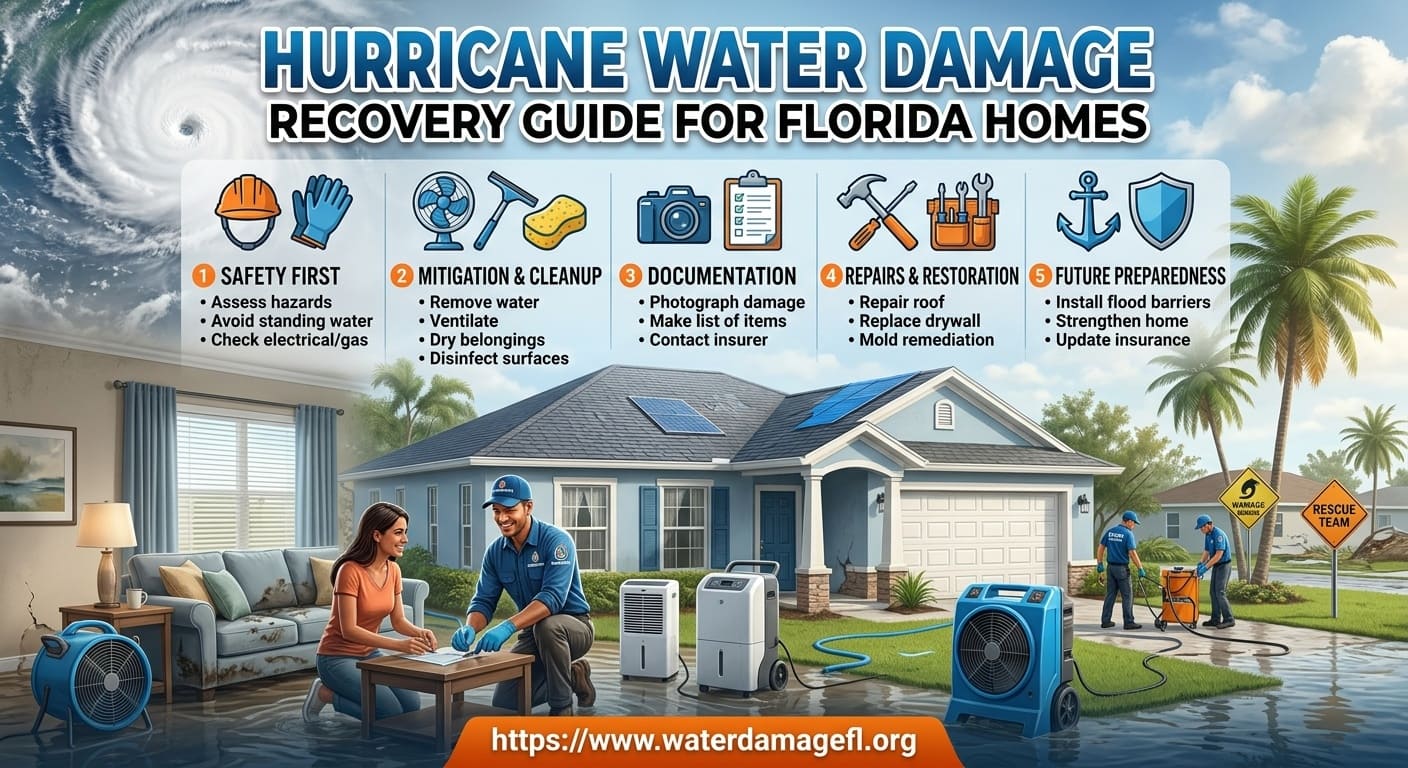
Hurricane Water Damage Recovery Guide for Florida Homes
August 2026 puts Florida deep into hurricane season, when wind driven rain, roof breaches, and storm surge can soak a home in minutes. If your property took on water from a tropical storm or hurricane, this guide walks you through recovery the way Florida crews actually work jobs: safety first, then extraction, drying, mold prevention, and rebuild. The steps below are written for real FL houses, not generic national advice that ignores humidity and local construction.
Water Damage Florida responds 24/7 across FL for storm losses. Call (888) 435-4769 if standing water, wet ceilings, or sewage backup is already in the house. For immediate on site help, see our emergency water damage Florida service page. If you are still in the first day after flooding, pair this article with our first 24 hours after a flood in Florida action plan.
Why Hurricane Water Damage Is Different in Florida
Florida homes face a mix of high winds, saturated soils, aging roofing, and coastal exposure. Water often enters through roof penetrations, sliding doors, soffits, window seals, and garage door thresholds. After the storm passes, outdoor humidity stays high for days. Materials that look only damp on the surface can still support mold within 24 to 48 hours because warm air keeps feeding moisture into wall cavities and flooring systems.
Construction type changes everything. Concrete block walls, elevated coastal homes, slab on grade ranch houses, and older wood frame interiors each hold moisture differently. Tile over slab can hide wet underlayment. Vinyl plank may look perfect while the plywood beneath stays wet. Attic insulation can absorb wind driven rain with no ceiling stain until days later. That is why a cookie cutter cleanup plan fails in FL. Professional water damage restoration service Florida teams map moisture behind walls and under floors before they pack up equipment.
Storm water also tends to be dirtier than a clean supply line break. Roof runoff carries insulation fibers, leaf debris, and outdoor bacteria. Storm surge and street flooding can introduce silt, chemicals, and sewage related contaminants. Treating those losses like a simple mop job leaves health risks and odor problems that show up after you think the emergency is over.
In Florida heat, waiting a week after a hurricane leak is often waiting for mold. Extraction and drying in the first days save flooring, cabinets, and drywall that would otherwise need full replacement.
How Water Typically Enters Florida Homes During a Hurricane
Roof and attic pathways
Missing shingles, lifted flashing around chimneys, damaged ridge vents, and punctured underlayment are among the most common entry points. Once rain reaches attic insulation, it spreads sideways before dripping into living spaces. Many homeowners first notice a wet closet or hallway ceiling long after the storm has passed. Checking the attic early, if it is safe to do so, can reveal soaked insulation that would otherwise stay hidden.
Windows, doors, and stucco transitions
Horizontal rain finds weak seals around sliding glass doors, older windows, and poorly flashed openings. Water can travel behind stucco or into wall cavities and appear as baseboard swelling far from the original leak. If only one corner of a room is wet, do not assume the rest of the wall is dry. Moisture often travels farther than the stain suggests.
Storm surge, drainage backups, and rising groundwater
Coastal and low lying Florida neighborhoods can take on surge or prolonged standing water from overwhelmed drains. Even inland homes see flooding when canals, retention ponds, and street systems fail after days of rain. Water entering from outside is usually classified as contaminated and needs a more careful cleaning plan than a broken supply pipe.
Step 1: Safety Before You Start Cleanup
Watch for electrical and structural hazards
Do not enter rooms with standing water if outlets or appliances may still be live. Shut off power at the breaker only if you can reach it safely and your feet are dry. Avoid rooms with sagging ceilings, shifted walls, or strong sewage odors. If floodwater may include storm drain or sewage contamination, treat it as Category 3 and call professionals rather than mopping with household cleaners.
Protect your family and pets
Keep children and pets out of wet zones. Floodwater can hide sharp debris, nails, and contaminated silt. Wear sturdy shoes, gloves, and an N95 style mask if you must move through dusty or moldy areas after materials start drying. If anyone in the home has asthma or immune concerns, prioritize professional cleanup sooner rather than later.
Document the loss for insurance
Take wide and close photos of every wet room before you move furniture. Capture water lines on walls, damaged contents, roof openings from outside if safe, and any appliances that were submerged. Note the date, storm name if known, and when water first entered. Keep damaged materials until your adjuster says otherwise when practical. Clear documentation speeds claims for Florida homeowners after named storms and helps your restoration company write an accurate scope.
Step 2: Stop Ongoing Water Intrusion
Temporary protection matters because Florida storms often return with more rain bands. Tarp roof openings only if it is safe, or hire a roofing pro for temporary protection. Clear clogged gutters and downspouts that keep dumping water against the foundation. Move outdoor debris away from doors so rain does not keep washing inside. Check weatherstripping at garage doors and sliding doors where wind pressure forced water under thresholds.
If a plumbing fixture broke during the storm, shut off the local valve or main water supply. If the AC condensate line overflowed into a ceiling after power cycling, address that source before drying the room. Once exterior and interior leaks are controlled, extraction can actually hold. Otherwise you are removing water that keeps coming back.
Step 3: Remove Standing Water Fast
Shop vacuums help with small clean water leaks. Hurricane floods and storm surge usually need truck mounted or portable extractors with far higher capacity. Wet carpet pad often cannot be saved after dirty floodwater. Hardwood may cup or buckle if left wet under Florida humidity. Laminate and some engineered floors swell quickly and may need removal so the subfloor can dry.
Our flood restoration service Florida crews prioritize extraction of the highest water volumes first, then move to wall cavities, under cabinets, and crawl spaces when present. Removing water early reduces the amount of demolition needed later. Every gallon left sitting overnight in August heat is an invitation for microbial growth and secondary damage to adjacent rooms.
Step 4: Structural Drying for Florida Humidity
Air movers and dehumidifiers must run as a system. Fans alone can push moist air into other rooms without lowering grain depression. Technicians set equipment based on moisture meter readings and psychrometric charts, then recheck daily until wood and drywall hit target moisture content for your region of FL. In coastal and South Florida humidity, equipment often needs to run longer than homeowners expect.
Closets, baseboards, insulation, and exterior wall cavities are common miss points after hurricanes. Guest bathrooms with weak airflow, laundry rooms, and mechanical closets also hold moisture. If you smell mustiness while the house still feels sticky, residual moisture is likely present. Read our related guide on hidden mold after water damage in Florida so you know what to inspect next.
What daily monitoring should include
A solid drying plan includes baseline readings, daily comparisons, equipment adjustments, and notes you can share with insurance. Ask your crew which materials are still above target and which rooms are cleared. Transparent monitoring prevents the common Florida problem of packing equipment too early because the floor felt dry to the touch.
Step 5: Clean, Sanitize, and Prevent Mold
Contents and porous materials
Hard surfaces can often be cleaned and disinfected. Porous items soaked in floodwater may need disposal. Soft goods that stayed above flood lines can sometimes be cleaned and dried off site. Never paint over wet drywall. Sealing moisture in is one of the fastest ways to create mold pockets in Florida walls. The same applies to installing new flooring over a still wet subfloor.
When mold remediation is required
Visible growth, strong musty odors, or known Category 3 water call for containment and proper removal. Our mold remediation Florida process isolates work areas, removes contaminated materials, and treats remaining surfaces so spores do not recirculate through your HVAC. Small isolated spots on non porous surfaces may be handled carefully, but widespread growth after a hurricane leak usually needs a professional scope.
HVAC considerations after a storm
If return air pathways or ducts sat in humid, contaminated conditions, running the system can spread odor and particulates. Have technicians evaluate whether filters, drip pans, and nearby insulation need attention before normal cooling resumes. Florida homes rely on air conditioning for comfort and for helping control indoor humidity during drying.
Step 6: Rebuild With Florida Storms in Mind
After drying clears, repairs may include drywall, trim, flooring, cabinets, and insulation. Ask about moisture resistant materials in flood prone rooms, better roof flashing where water entered, and improved weather seals at doors and windows. A restored home should not only look finished; it should shed the next rain event more effectively.
Coordinate roofing, electrical, and restoration trades so rebuilds do not start on wet materials. Many Florida claims stall when one trade finishes early and another discovers hidden moisture. Keeping one project manager focused on dryness targets helps the whole rebuild stay on sequence.
Insurance Tips After a Florida Hurricane Water Loss
Homeowners insurance and flood insurance are not the same. Wind driven rain through a damaged roof may be handled differently from rising floodwater. Review your policy language and ask your carrier which coverage applies. Keep copies of invoices, moisture logs, and photos. If an adjuster visit is delayed, continuing emergency mitigation is still wise because secondary damage grows quickly in FL heat.
Ask your restoration company to explain what is emergency mitigation versus permanent repairs. That clarity helps conversations with adjusters and reduces surprises when scopes are reviewed. Water Damage Florida documents readings and conditions so you have a clear record of why materials were removed or saved.
Hurricane Recovery Checklist for Florida Homeowners
Use this list after the storm:
- Confirm the structure is safe to enter and utilities are secured.
- Photograph damage thoroughly and contact your insurer.
- Call (888) 435-4769 for 24/7 extraction if water remains.
- Stop ongoing leaks with tarping or plumbing shutoffs when safe.
- Remove wet contents from floors so drying can reach all surfaces.
- Run professional drying until moisture readings normalize.
- Inspect attics, closets, and baseboards for missed wet spots.
- Watch for hidden mold in the weeks after humidity spikes.
- Complete rebuilds only after the structure is dry.
- Improve flashing, seals, and drainage before the next storm system.
Common Mistakes Florida Homeowners Make After a Hurricane
Turning off drying equipment overnight to reduce noise or power use is a frequent setback. So is painting stains too soon, saving soaked carpet pad after dirty water, and ignoring attic insulation because living areas look dry. Another mistake is waiting for an adjuster appointment before calling for extraction. Emergency mitigation protects the home and usually supports the claim better than letting damage expand.
Finally, do not assume one dry day means the job is finished. Florida humidity can reverse progress if equipment is removed early. Trust meter readings over how a surface feels under your hand.
How Water Damage Florida Helps After a Florida Hurricane
We mobilize emergency crews statewide, coordinate with roofers when temporary tarping is needed, document moisture for claims, and stay through drying and mold prevention. Whether you are inland after prolonged rain or on the coast after surge, our FL team treats the full cycle of loss from first call through rebuild readiness.
For the critical first day timeline after flooding, read First 24 Hours After a Flood in Florida. For mold warning signs after incomplete drying, read Hidden Mold After Water Damage in Florida. Ready for help now? Visit Contact Us or call (888) 435-4769 any hour.