Tampa wraps around the north end of Tampa Bay, with Old Tampa Bay to the west, Hillsborough Bay to the east and the Hillsborough River winding through the middle of the city. Much of the bayfront, including Davis Islands, Harbour Island, the Interbay peninsula and the Bayshore corridor, sits only a few feet above sea level, and the shallow shape of the bay pushes storm surge higher than the open coast would. Hurricane Helene proved it in September 2024, sending the worst surge in a century into bayfront neighborhoods, and Hurricane Milton followed two weeks later with nearly a foot of rain. Water Damage Florida provides 24/7 water damage restoration across Tampa, from surge cleanup on the islands to burst-pipe drying in New Tampa.
We serve every part of the city, including Hyde Park, Seminole Heights, Tampa Heights, Ybor City, Palma Ceia, Westshore, Ballast Point, West Tampa, East Tampa, Sulphur Springs, Forest Hills, Tampa Palms and New Tampa. Call (888) 435-4769 at any hour to reach a crew.
Emergency Water Damage Response in Tampa
Tampa emergencies split between what the bay does and what the plumbing does. On the water side we respond to surge and tidal flooding in ground-floor spaces on Davis Islands, along Bayshore Boulevard and across the Interbay peninsula, and to heavy-rain flooding where the city's older drainage cannot keep up. Inside homes, the calls are the familiar Florida list: supply lines, water heaters, washing machine hoses, air conditioning condensate overflows and roof leaks during summer storms.
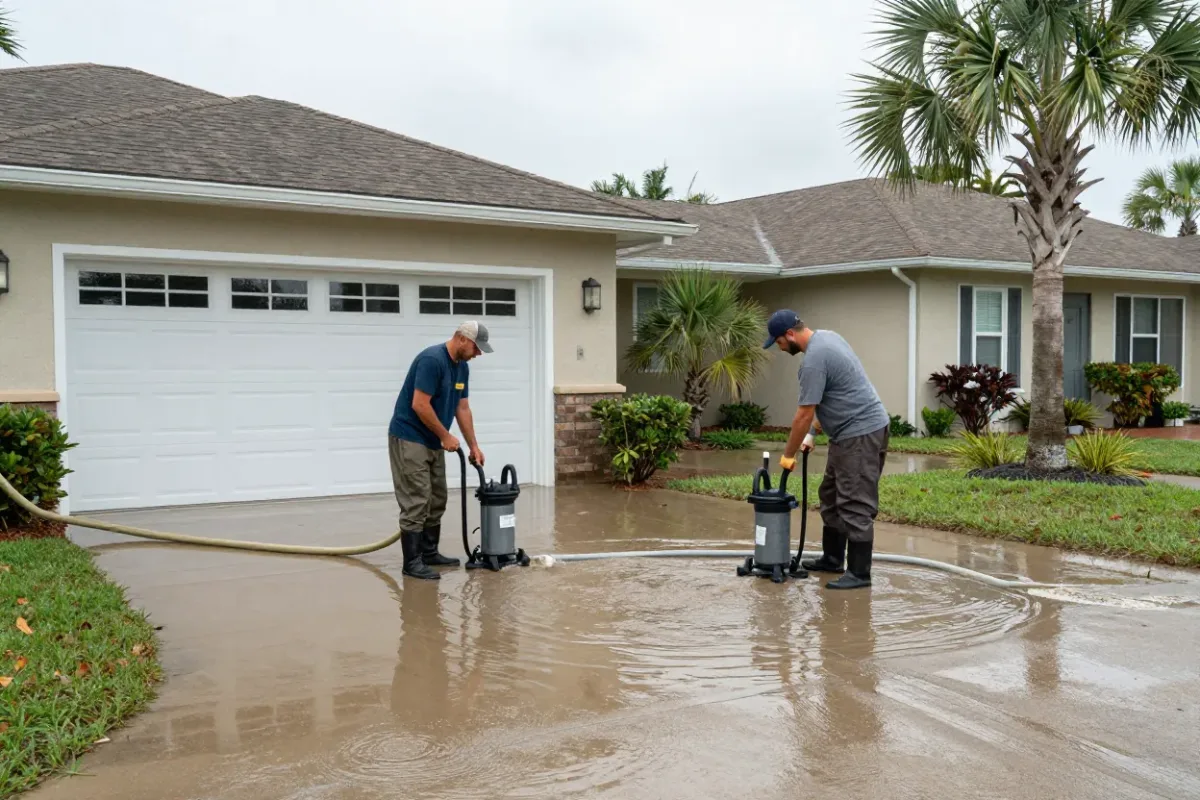
Our crews arrive with pumps and extractors sized for flooded garages and first floors, plus air movers, dehumidifiers and moisture meters to begin drying on the first visit. After a surge event, we also help you identify which materials touched salt water and need removal rather than drying. Photographs and moisture readings are logged from the start so your insurance documentation is complete.
Restoration for Bungalows, Bayfront Homes and High-Rise Condos
Tampa's housing stock is unusually varied, and the restoration plan has to match it. Hyde Park, Seminole Heights and Tampa Heights are full of 1920s wood-frame bungalows with original pine floors and plaster; Davis Islands and Palma Ceia have Mediterranean-style homes and mid-century block ranches; downtown and the Channel District are high-rise condo towers; and New Tampa and Tampa Palms are large master-planned subdivisions of newer wood-frame construction. Each of these holds and releases moisture differently, and each has its own set of materials worth saving.
We map the loss with moisture meters and thermal imaging, remove only what cannot be dried, and then dry the structure with commercial dehumidifiers and air movers inside the closed building until readings return to normal. Cleaning, treatment where the water category requires it, and the rebuild follow. Our statewide water damage restoration service page walks through each phase.
Storm Surge and Flood Cleanup in Tampa
Tampa Bay is often described as one of the most surge-exposed places in the country, and 2024 showed why. Helene's surge of more than seven feet flooded homes and garages across the bayfront even though the storm itself passed well offshore; Milton then dumped nearly a foot of rain and briefly pulled water out of the bay in a reverse surge before it returned. Earlier storms including Irma in 2017 and Ian in 2022 brought damaging wind and rain to the city as well.
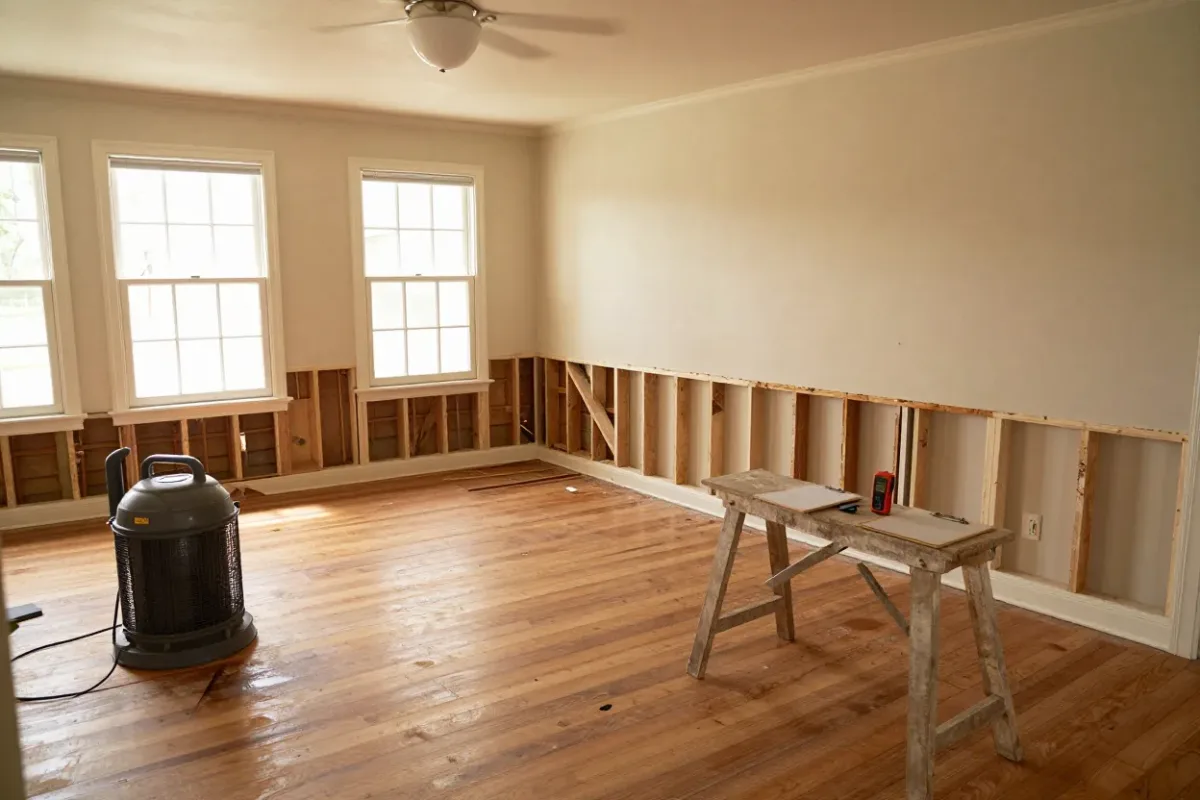
Surge water is salt water mixed with sewage and debris, and rain-driven street flooding is little cleaner. Flood cleanup therefore starts with removing saturated drywall, insulation, cabinetry bases and flooring that were submerged, followed by cleaning and disinfecting the slab and framing and running air filtration while the shell dries. Ground-floor garages, storage rooms and elevated homes' lower enclosures on the islands are where we spend the most time. If you have surge or flood water in the house now, stay out of it, do not touch the electrical panel if it is wet, and call us. Our flood restoration service page explains large-loss cleanup in more detail.
Water Damage Repair After Surge and Plumbing Losses
Repair begins once the drying log confirms the structure is dry. For surge-affected homes on Davis Islands and along Bayshore that usually means new drywall from the flood line down, new baseboards, cabinet base replacement and flooring; for a plumbing loss in New Tampa it may be a ceiling patch, trim and paint. In the historic bungalow neighborhoods we take care with original heart-pine floors and plaster walls, which can often be saved when drying begins early.
The repair scope is built from the mitigation record so it lines up with what your adjuster has already seen, and we separate storm-related damage from anything pre-existing. Flood-zone homes may also face elevation and permitting questions when damage is extensive; we will flag that early so you can plan.
Mold Removal and Cleanup in Tampa
Tampa's humidity and heat mean any wall cavity or subfloor left damp after a leak or a flood is a candidate for mold within days. After the 2024 storms we saw growth in homes that had been mucked out quickly but never dried behind the walls, as well as the usual suspects: air handler closets, the drywall behind shower tile, the back of kitchen base cabinets and crawl spaces under raised bungalows in the older neighborhoods.
Our mold cleanup process fixes the moisture source, contains the area, removes and bags affected porous materials, HEPA-vacuums and cleans the remaining surfaces, and verifies the space is dry before closing it. We do not paint over growth or fog a room and call it done. For more, see our mold remediation page and our guide to hidden mold after water damage.
Common Causes of Water Damage in Tampa
Tampa's mix of bayfront exposure, older housing and year-round humidity produces a broad range of losses. The causes we encounter most often include:
- Storm surge and tidal flooding in Davis Islands, Harbour Island, the Bayshore corridor and the Interbay peninsula
- Heavy-rain street and yard flooding where older drainage in South Tampa and the Heights cannot keep up
- Roof, soffit and flashing leaks during summer thunderstorms and named storms
- Supply line, water heater and washing machine failures, especially in two-story New Tampa homes
- Air conditioning condensate line clogs and drain pan overflows in attic and closet air handlers
- Cast iron drain line failures and sewer backups in mid-century homes
- Plumbing leaks under raised wood-frame bungalows that go unnoticed in the crawl space
- Sliding glass door and window intrusion from wind-driven rain in waterfront condos
Our Restoration Process, Step by Step
Every Tampa loss, from a small leak to a surge-flooded ground floor, moves through the same documented steps.
- Inspection and moisture mappingWe confirm the source, classify the water, and map every wet material with meters and thermal imaging, including crawl spaces and the ceilings below an upstairs loss.
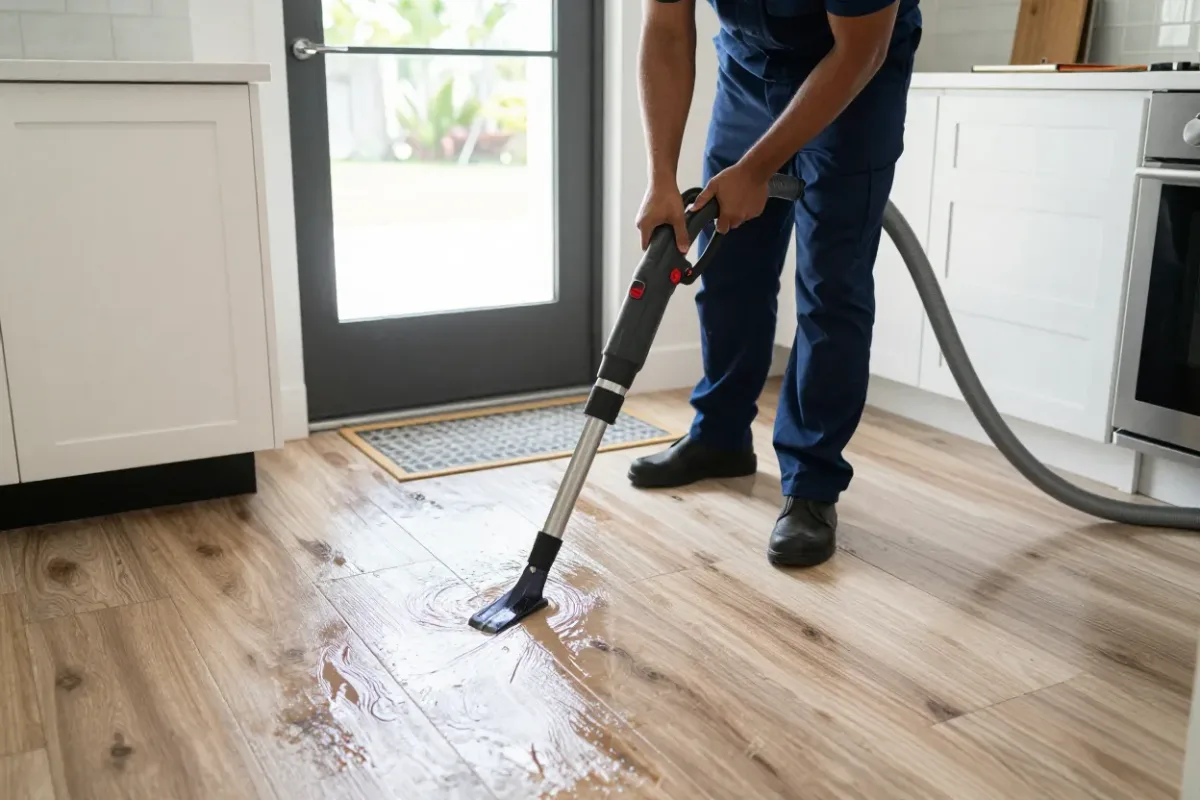
- Pumping and extractionSubmersible pumps and extractors remove standing water from garages, ground floors and flooring before drying begins.
- Removal of contaminated or unsalvageable materialsSubmerged drywall, insulation, cabinet bases and flooring that cannot be dried are removed and bagged.
- Structural drying and dehumidificationAir movers and commercial dehumidifiers run inside the closed building, with readings logged daily until materials are dry.
- Cleaning and sanitizingSurfaces touched by surge, sewage or flood water are cleaned and treated; HEPA air scrubbers run during the work.
- Assessment and documentationPhotos, moisture logs and a written scope are compiled for your records and your insurance carrier.
- Repair and restorationDrywall, trim, cabinets, flooring and paint are restored to match the rest of the home.
- Final inspectionA closing moisture check and walkthrough confirm the work is complete.
Tampa Areas We Serve
We respond throughout the City of Tampa and the surrounding Hillsborough County communities. Our crews know the difference between a surge-exposed home on the islands, a bungalow in the Heights and a newer two-story in Tampa Palms, and they bring the right equipment for each.
Tampa Neighborhoods
- Downtown Tampa
- Channel District
- Davis Islands
- Harbour Island
- Hyde Park
- Palma Ceia
- Ballast Point
- Beach Park
- Culbreath Isles
- Westshore
- Rocky Point
- West Tampa
- Tampa Heights
- Seminole Heights
- Ybor City
- East Tampa
- Sulphur Springs
- Forest Hills
- Tampa Palms
- New Tampa
Nearby Communities
Our Tampa crews also cover the neighboring cities and communities around the bay. Many have their own local pages:
What to Do Right Now if You Have Water Damage
These first steps are safe for most homeowners and will limit the damage while our crew is on the way.
- Stop the source if you canClose the fixture shutoff or the main valve. For a water heater, shut its supply and its power or gas.
- Stay clear of electricity and wet panelsIf the breaker panel is dry and reachable, turn off power to flooded areas. Never wade through water to reach a panel or outlet.
- Keep out of surge and flood waterBay and street water carries sewage, fuel and sharp debris. Keep children and pets away and avoid skin contact.
- Do not run the AC if the air handler was submergedIn a surge-flooded home, have the system checked before turning it on. If it stayed dry, keep it running to control humidity.
- Lift and protect belongingsMove furniture, rugs and electronics off wet floors and put foil or plastic under anything that must stay.
- Document before you cleanPhotograph the source, the high-water line and every affected room. Note the time and date.
- Call for helpReach Water Damage Florida at (888) 435-4769 and tell us the source, how long it has been wet, and whether the water came from the bay, the street or inside the house.
For storm losses, our hurricane water damage recovery guide and first 24 hours after a flood plan go deeper.
Tampa Water Damage FAQs
My home on Davis Islands took surge water during a storm. What has to be removed?
Anything porous that was under salt water: drywall and insulation from the flood line down, cabinet bases, carpet and pad, and most laminate or engineered flooring. Concrete, tile and framing can usually be cleaned and dried. We map the water line and tell you exactly what stays and what goes before any demolition.
Helene flooded us but we cleaned it up ourselves. Should we still have it checked?
Yes. Many Tampa homes that were mucked out quickly still had wet framing, insulation and the back of drywall weeks later, and growth followed. A moisture inspection is inexpensive compared with reopening finished walls later.
Can the original wood floors in a Seminole Heights or Hyde Park bungalow be saved?
Often, if drying starts within the first day or two and the water was clean. Heart pine and oak floors can be dried with specialty mat systems and dehumidification. Floors soaked by surge or left wet for a week are harder to save, but we will assess them before recommending replacement.
How long does drying take after a Tampa flood?
Small clean-water losses typically dry in a few days. Surge-flooded ground floors take longer because more material is removed and framing and slabs must dry fully. We remove equipment when daily readings show the structure is dry, not on a fixed schedule.
Do you handle water damage in downtown Tampa and Channel District condos?
Yes. We coordinate with building management, trace water through the affected units and floors, protect common areas and document each unit separately for individual and association claims.
Is a New Tampa home really at risk if it is nowhere near the bay?
Surge is not the concern there, but heavy rain, roof leaks, two-story plumbing failures and air conditioning overflows are. New Tampa and Tampa Palms losses are among the most common inland calls we take in Hillsborough County.