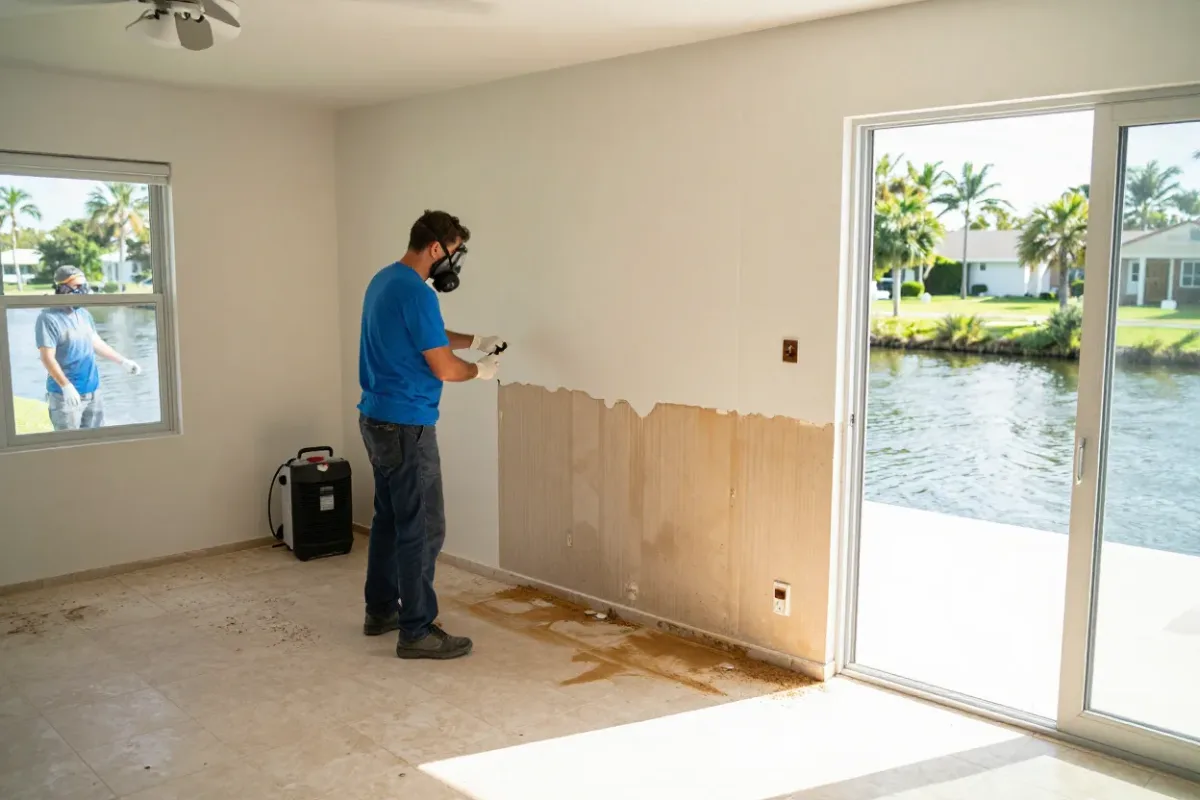
St. Petersburg fills the southern tip of the Pinellas peninsula, with Tampa Bay wrapping its east and south sides and Boca Ciega Bay and the Gulf barrier islands to the west. More than half of the city's total area is water, and a great deal of its housing sits on filled land and finger canals only a few feet above the bay. Shore Acres, Snell Isle, Venetian Isles and Coquina Key flood over and over; Shore Acres, shaped like a shallow bowl, took water four times in four years through 2024. Then Hurricane Helene pushed more than six feet of surge into the city, flooding roughly a hundred miles of streets and forcing boat rescues in the canal neighborhoods, and Hurricane Milton followed two weeks later with nearly nineteen inches of rain.
Water Damage Florida provides 24/7 water damage restoration throughout St. Petersburg, from surge cleanup on the canals to pipe leaks in Historic Kenwood bungalows and stack losses in downtown condo towers. Every job is documented with photographs and moisture readings for your insurance claim from the first visit. Call (888) 435-4769 whenever the water shows up.
Emergency Water Damage Response in St. Petersburg
The emergency calls we take in St. Petersburg fall into two groups. The first is bay water: surge and tidal flooding in the canal neighborhoods along Tampa Bay, and heavy-rain flooding on streets where the drainage simply cannot move water fast enough, as it could not during Milton's five-inch-in-one-hour downpour. The second is the everyday plumbing and roof failures that happen in any Florida city, with the added twist of high-rise condos downtown where a single supply line failure can wet a column of units.
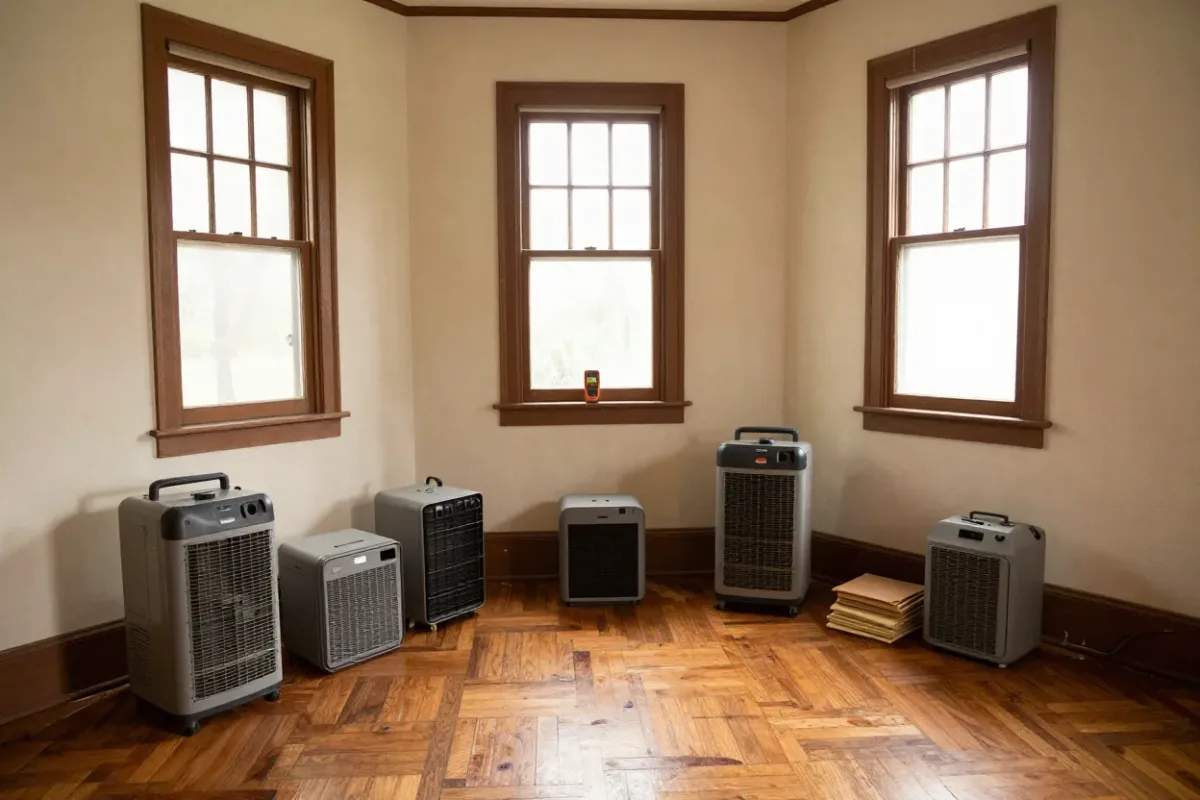
Our crews arrive with pumps for flooded ground floors and garages, extractors for carpet, tile and wood floors, and enough air movers and dehumidifiers to begin drying on the first visit. For surge losses we mark the water line, identify which materials were submerged in salt water and set the removal plan the same day. Our emergency water damage page explains what to expect in the first hours.
Restoration Across Bungalows, Canal Homes and Condo Towers
Few Florida cities have a housing mix this wide, and the restoration approach shifts with it. The 1920s bungalows and Mediterranean Revival homes of Historic Kenwood, the Old Northeast and Roser Park have plaster walls, wood floors and raised framing that dry differently from the mid-century block homes found across most of the city. Canal-front houses in Shore Acres and Snell Isle sit on fill with slab floors that surge water crosses freely. Downtown high-rise condos add shared risers and common areas, and the mobile home parks along the bay are their own category, with several destroyed outright by Helene's surge.
In every case we start with a moisture map built from meters and thermal imaging, remove only what cannot be dried, and dry the rest inside the closed building with commercial dehumidifiers and air movers until logged readings confirm each material has reached its dry standard. Cleaning, treatment where the water category calls for it, and rebuild follow. For a fuller description of each phase, see our water damage restoration service page.
Storm Surge and Flood Cleanup on the Pinellas Peninsula
The city's flood history is long. The 1921 Tampa Bay hurricane set the historical benchmark, Hurricane Idalia in 2023 brought Gulf water into low streets, and 2024 delivered the pair that residents now measure everything against. Helene's surge inundated the finger-canal neighborhoods, shut down the Northeast sewer plant, destroyed bayside mobile home parks and left families in Shore Acres, Snell Isle and Venetian Isles waiting on boats. Milton tore the roof from Tropicana Field and toppled a construction crane downtown. Pinellas County recorded a dozen deaths in Helene, most by drowning, which is why we say plainly that no one should wade into rising water.
Surge and street flooding leave behind salt, silt, sewage and fuel, so flood cleanup starts with removal rather than drying: drywall and insulation from the water line down, cabinet bases, carpet and pad, and flooring that was submerged. The slab, block and framing are then cleaned and disinfected and dried under air filtration. Our flood restoration service page describes this large-loss process, and our first 24 hours after a flood guide covers what to do before we arrive.
Repairing St. Petersburg Homes After the Water Is Gone
Repair scope here depends heavily on the neighborhood. A surge-flooded canal home in Shore Acres or Coquina Key generally needs new drywall from the flood line down, new baseboards, cabinet bases, doors and flooring, plus an inspection of outlets and appliances that sat in salt water. A bungalow in Kenwood or the Old Northeast with a roof leak calls for plaster patching, careful drying of original pine floors, and trim and paint that match the historic work. A downtown condo may need only a ceiling, some drywall and a cabinet run.
We tie every repair line item back to the mitigation photographs and drying logs so your adjuster sees exactly why it is there, and we separate storm damage from anything that was already worn. For homes that flooded repeatedly, we will also flag where a different material choice, such as tile instead of laminate or a raised cabinet base, would make the next event less costly.
Mold Removal in St. Petersburg
After the 2024 storms, the most common mold problem we found in St. Petersburg was a house that had been mucked out fast and then closed up with wet framing, insulation and cabinet backs behind new-looking surfaces. Beyond storm losses, the usual sources are air handler closets, the wall behind shower tile, the underside of kitchen cabinets after a slow dishwasher leak, and crawl spaces beneath the raised bungalows in the historic districts, where the ground stays damp and the floor above never fully dries.
Our mold removal follows a set order: correct the moisture source, contain the area with sheeting and negative air, remove and bag affected porous materials, HEPA-vacuum and clean the remaining surfaces, and dry the space before it is closed. We do not fog a room or paint over growth and call it done. The mold remediation page explains the method, and our guide to hidden mold after water damage is worth reading before any wall that was ever wet gets repainted.
Why St. Petersburg Homes Take On Water
Low elevation, bay exposure on three sides, a wide range of housing ages and a humid climate produce a long list of ways water gets in. The causes behind most of our St. Petersburg work:
- Storm surge and tidal flooding in finger-canal neighborhoods such as Shore Acres, Snell Isle, Venetian Isles and Coquina Key
- Rain-driven street flooding when intense downpours overwhelm drainage, as during Milton
- Sewer backups during storms, including when treatment capacity is lost
- Riser, supply line and water heater failures in downtown high-rise condos that travel down through the stack
- Roof, window and wind-driven rain intrusion in the 1920s bungalows of Kenwood, the Old Northeast and Roser Park
- Air conditioning condensate overflows in the closet and attic air handlers of mid-century block homes
- Plumbing leaks under raised historic homes that go unnoticed in the crawl space
- Water intrusion into mobile homes through damaged skirting, floors and roofs after storms
The Restoration Process We Follow
A canal home full of surge and a condo with a wet ceiling look nothing alike, but both move through the same eight steps so nothing is rebuilt over moisture.
- Inspection, water classification and moisture mappingWe identify the source, decide whether the water is clean, gray or contaminated, and map wet materials with meters and thermal imaging, including crawl spaces, adjacent condo units and the cavity behind plaster.
- Pumping and water extractionSubmersible pumps clear flooded garages and ground floors; extractors pull water from tile, wood, carpet and laminate.
- Removal of submerged and unsalvageable materialsSurge-soaked drywall, insulation, cabinet bases and flooring are cut out and bagged; salvageable plaster and pine floors are protected for drying.
- Structural dryingDehumidifiers and air movers run inside the closed home with readings logged daily until every material meets its dry standard.
- Cleaning and disinfectionSurfaces touched by bay water or sewage are cleaned and treated, and HEPA air scrubbers run while the work continues.
- Claim documentationPhotos, water-line measurements, moisture logs and a written scope are compiled for you and your carrier, with separate records for each condo unit when a building is involved.
- RebuildDrywall, plaster, trim, cabinets, flooring and paint are restored to match the home.
- Final moisture checkA last set of readings and a walkthrough with you confirm the home is dry and finished.
Neighborhoods We Serve in St. Petersburg
We cover the entire city, from the bayfront downtown and the canal subdivisions of the northeast to the historic districts west of downtown, the Gateway area to the north and Pinellas Point at the southern tip.
St. Petersburg Neighborhoods
- Downtown St. Petersburg
- Historic Old Northeast
- Snell Isle
- Shore Acres
- Venetian Isles
- Coquina Key
- Historic Kenwood
- Historic Roser Park
- Grand Central District
- Crescent Lake
- Bayboro
- Pinellas Point
- Jungle Terrace
- Disston Heights
- Childs Park
- Gateway
- Riviera Bay
- Lakewood Estates
- Broadwater
Nearby Communities
Our St. Petersburg crews also work the rest of southern Pinellas County and across the bay. These neighboring communities have their own pages:
What to Do Before the Crew Arrives
Whether the water came over the seawall or out of a pipe, these steps protect you and limit the damage.
- Do not walk into rising or standing waterMost of the county's Helene deaths were drownings. If surge is coming in, get to higher ground or an upper floor and call for rescue; do not try to save belongings.
- Cut the water supply for an indoor leakClose the fixture valve or the main. In a condo, alert management right away so the riser can be shut down.
- Leave electrical panels and outlets alone if they are wetTurn off breakers only if the panel is dry and reachable without stepping in water. Never touch a panel that may have been submerged.
- Treat bay and street water as contaminatedIt carries sewage, fuel and debris. Keep children and pets away and do not use household fans on it.
- Photograph the water line and every roomMark the high-water level on the wall, photograph the source and all damage, and note the date and time.
- Move what you can to higher groundLift rugs, electronics and furniture, and set foil or blocks under legs that must stay on a wet floor.
- Call Water Damage FloridaReach us at (888) 435-4769 and tell us whether the water came from the bay, the street or inside, how deep it got and whether the air handler was submerged.
Our hurricane water damage recovery guide goes deeper on surge losses and the weeks of recovery that follow.
St. Petersburg Water Damage FAQs
Our Shore Acres home has flooded more than once. Does restoration change when it is a repeat loss?
The mitigation is the same, but the rebuild conversation is different. We document each event separately for your carrier and, during repairs, point out where materials that tolerate water better, such as tile floors and raised cabinet bases, would reduce the cost of the next flood.
Helene put salt water through the ground floor of our house. What is salvageable?
Concrete, block, tile and framing can usually be cleaned and dried. Drywall, insulation, cabinet bases, carpet, laminate and most engineered wood that sat in surge water come out. Appliances and outlets that were submerged should be checked before use. We map the water line and give you a room-by-room list before any demolition.
Can the pine floors in a Kenwood or Old Northeast bungalow be dried instead of replaced?
Often, when the water was clean and drying begins within a day or two. Wood floors respond to mat drying systems and dehumidification. Floors that soaked in contaminated water or stayed wet for a week are harder to save, and we will tell you honestly which situation you have.
Water came through our downtown condo ceiling from the unit above. Who do you work with?
We coordinate with building management and the owners involved, trace the water down the stack, protect hallways and elevators, and document each unit on its own so individual and association claims each have what they need.
Our mobile home took surge water. Is it worth restoring?
That depends on how deep the water got and what the frame, floor system and insulation look like once we inspect. Some units can be dried and repaired; others cannot. We give you a straight assessment either way.
How long will the equipment run after a flood?
Small clean-water losses are usually dry within a few days. Surge-flooded homes take longer because more material comes out and the slab and framing must dry fully. Equipment leaves when the readings say the structure is dry, not on a fixed calendar.
Call for Water Damage Restoration in St. Petersburg, FL
Water Damage Florida restores St. Petersburg homes, condos and businesses after surge, rain flooding, plumbing failures and storm damage, with crews available around the clock. Call (888) 435-4769 or email info@waterdamagefl.org to get started, or explore our service areas across the Tampa Bay region.
Call 888 435-4769 Contact Us