Clearwater is the county seat of Pinellas County and a city of two very different elevations. The mainland core sits on bluffs above Clearwater Harbor, while the barrier islands of Clearwater Beach and Sand Key, the waterfront homes of Island Estates and the bayside lowlands along Old Tampa Bay sit right at the water. The 2024 storm season showed both faces at once: Hurricane Helene pushed Gulf surge across Clearwater Beach, filling homes and businesses with seawater and sand and leaving many island residents with total losses, and two weeks later Hurricane Milton's rain flooded a mainland apartment complex so deeply that rescuers pulled more than five hundred people from neck-deep water.
Water Damage Florida provides 24/7 water damage restoration across Clearwater, from surge and sand removal on the beach to rain flooding, plumbing failures and roof leaks in Harbor Oaks, Morningside, North Greenwood and Countryside. Moisture readings and photographs are logged from the first visit so your insurance claim starts on solid ground. Call (888) 435-4769 any time, day or night.
24/7 Emergency Water Damage Service in Clearwater
An emergency in Clearwater can be seawater rolling through a beachfront condo lobby, rain rising inside a ground-floor apartment on the mainland, a tidal high water event backing up into a low bayside street, or a supply line that let go in a Countryside two-story at three in the morning. The city also deals with sunny-day tidal flooding and king tides through its own flooding program, and FEMA has issued updated flood maps for the Alligator Creek drainage area, so residents there are increasingly aware that heavy rain alone can bring water inside.
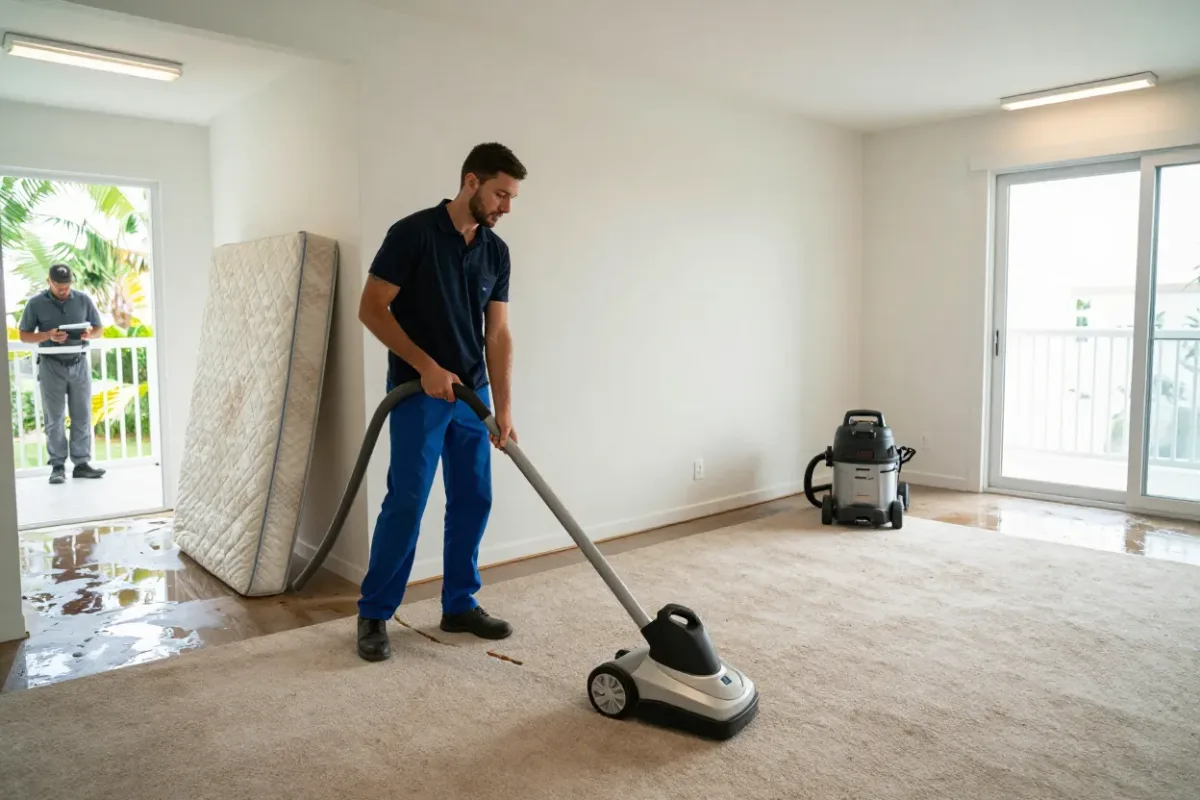
Whatever the source, we arrive with pumps for standing water, extractors for flooring, air movers and dehumidifiers to start drying immediately, and moisture meters to establish where the water actually went. On the islands we add sand removal to the first-day plan, because sand left under flooring and behind walls holds salt water against the structure. Our emergency water damage page explains how the first hours unfold.
Restoration From the Barrier Islands to Countryside
Clearwater's housing runs from early-twentieth-century homes in Harbor Oaks and the older mainland neighborhoods to high-rise beachfront condos and hotels on Clearwater Beach and Sand Key, waterfront homes on Island Estates, and 1970s-and-later suburban subdivisions in Countryside. Restoration looks different in each. An older Harbor Oaks home may have plaster, wood floors and a crawl space; a beach condo has shared risers, elevators, a ground-floor garage and an association to coordinate with; a Countryside home is usually block or frame on a slab with an attic air handler and a two-story plumbing risk.
Our restoration plan is built from a moisture map, using meters and thermal imaging to find water behind tile, under flooring and inside wall cavities. We remove only what cannot be dried, then dry the structure in a closed building with commercial dehumidifiers and air movers until logged readings show every material has returned to its dry standard. Cleaning and treatment follow where the water category requires it, and repairs begin only after the drying is verified. Details of each phase are on our water damage restoration service page.
Surge, Sand and Rain Flood Cleanup
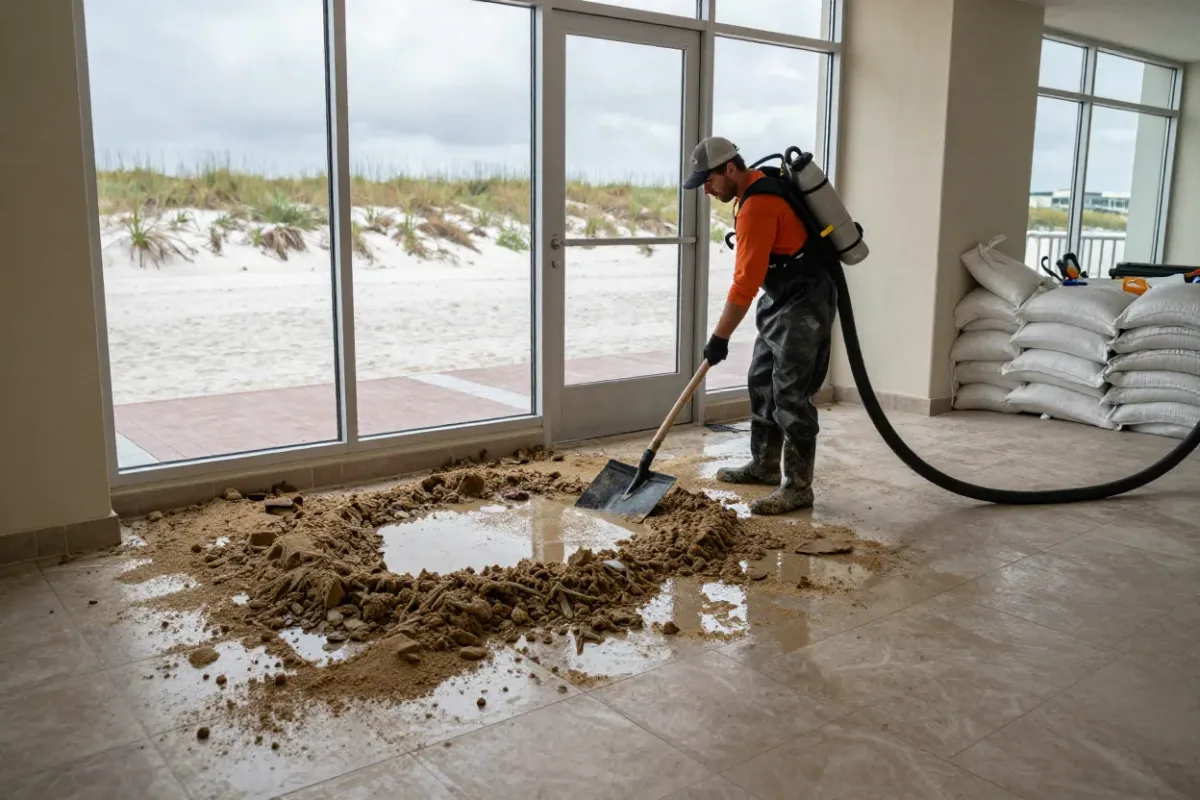
Clearwater's flood exposure has two sources, and 2024 delivered both within two weeks. Helene's surge over Clearwater Beach left homes and businesses full of seawater and sand; the sand is the part island owners rarely expect, because it packs into garages, under cabinets and inside wall cavities, and it has to be dug out before anything can dry. Milton then produced rain-driven flooding on the mainland severe enough that a single apartment complex needed more than five hundred rescues. The 1921 Tampa Bay hurricane remains the historical high-water reference for the whole Pinellas coast.
Surge, tidal and street water is contaminated, so our flood cleanup removes the porous materials it touched, clears sand and silt, cleans and disinfects the slab, block and framing, and dries the shell under air filtration. In multi-unit buildings we work floor by floor and document each unit separately. The flood restoration service page describes the process in depth, and our guide to the first 24 hours after a flood tells you what to do before we arrive.
Water Damage Repair on the Beach and the Mainland
Island repairs after surge typically involve new drywall from the flood line down, cabinet and vanity replacement, doors, baseboards and flooring, plus attention to corroded hardware and any outlets, appliances or air handlers that sat in salt water. Mainland repairs after rain flooding or a plumbing loss are usually lighter: drywall patches, ceilings below an upstairs bathroom, trim and paint, and flooring in the rooms that were wet. In the older homes of Harbor Oaks we work carefully around original plaster and wood that can often be saved when drying starts early.
Every repair item is tied to the photographs and drying logs from mitigation so your adjuster can follow the reasoning, and we separate storm-caused damage from prior wear. For condo and apartment buildings we plan around association rules, elevator use and quiet hours so the project does not stall waiting on approvals.
Mold Cleanup After Water Damage in Clearwater
The most persistent mold problems we see in Clearwater are in buildings that were dried on the surface but not in the cavity. After Helene and Milton that meant beach condos where surge-soaked drywall was left in place behind new paint, and apartments where carpet was replaced over a slab that never dried. Outside of storms, growth turns up behind shower tile, in closet air handler spaces, under kitchen sinks and in the ceilings below upstairs bathrooms in two-story Countryside homes.
We correct the moisture source first, contain the affected area, remove and bag contaminated porous materials, HEPA-vacuum and clean what remains, and verify the space is dry before closing it. Spraying over growth is not a fix. Our mold remediation page explains the method, and the guide to hidden mold after water damage is essential reading for anyone who bought or rents a unit that flooded in 2024.
Common Sources of Water Damage in Clearwater
Between the Gulf beaches, the bay side, Alligator Creek and a large stock of condos and apartments, the ways water enters a Clearwater property are varied. The sources we see most:
- Gulf storm surge and wind-driven seawater on Clearwater Beach, Sand Key and Island Estates
- Rain-driven flooding of ground-floor apartments and low mainland streets during extreme downpours
- Sunny-day tidal flooding and king tides in the lowest bayside and harbor-front areas
- Heavy-rain flooding in the Alligator Creek drainage area
- Riser and supply line failures in beachfront condo and hotel towers
- Roof, window and sliding door leaks from wind-driven rain during summer storms
- Water heater, washing machine and second-floor bathroom failures in Countryside subdivisions
- Air conditioning condensate overflows in attic and closet air handlers
- Slow plumbing leaks in older Harbor Oaks and mainland homes that go unseen until floors cup or paint bubbles
Our Eight-Step Restoration Method
A sand-filled beach condo and a wet ceiling in Countryside are handled in the same disciplined order, so that repair never gets ahead of drying.
- Inspection and moisture mappingWe confirm the source, classify the water and map every wet material with meters and thermal imaging, checking adjacent condo units and the floors below where a building is involved.
- Water extraction and sand removalPumps and extractors remove standing water from garages, lobbies, ground floors and flooring; on the islands, sand and silt are cleared from floors and cavities.
- Removal of unsalvageable materialsSurge-soaked drywall, insulation, cabinet bases, carpet and swollen flooring are cut out and bagged so the structure can dry.
- Dehumidification and structural dryingCommercial dehumidifiers and air movers run inside the closed space, with readings logged daily until materials meet their dry standard.
- Cleaning and treatmentSurfaces touched by seawater, sewage or floodwater are cleaned and treated, and HEPA air scrubbers run during the work.
- DocumentationPhotographs, water-line measurements, moisture logs and a written scope are compiled for you, your carrier and, in a building, the association.
- Repair and rebuildDrywall, trim, cabinets, doors, flooring and paint are restored so the space matches the rest of the home or unit.
- Final verificationA closing set of moisture readings and a walkthrough confirm the structure is dry and the job is finished.
Clearwater Areas We Cover
We respond throughout the City of Clearwater, from the barrier islands and Island Estates across the harbor to the downtown bluffs, the older neighborhoods around them and the Countryside subdivisions to the north.
Clearwater Neighborhoods
- Downtown Clearwater
- Clearwater Beach
- Sand Key
- Island Estates
- Harbor Oaks
- Countryside
- Morningside
- North Greenwood
Nearby Communities
Our Clearwater crews also serve the neighboring cities and towns of central and northern Pinellas County, several of which have their own local pages:
Steps to Take While You Wait for Us
These actions are safe for most residents and will limit the damage before our crew reaches you.
- Get above rising water and stay thereIf surge or rain flooding is coming in, move to an upper floor or higher ground and call for rescue if you need it. Belongings can be replaced.
- Close the water supply for an indoor leakShut the fixture valve or the main. In a condo or apartment, notify management immediately so the building supply can be isolated.
- Keep clear of wet electrical equipmentSwitch off breakers only if the panel is dry and you can reach it without stepping in water. Do not touch a panel, outlet or air handler that may have been submerged.
- Do not use fans on surge or flood waterContaminated water needs extraction and removal, not air movement. Keep children and pets out of it.
- Photograph the sand line and water lineRecord how high the water and sand reached in each room, the source of the water and every damaged item before anything is moved.
- Raise what you canLift electronics, rugs and furniture off wet floors and put foil or blocks under furniture that must stay in place.
- Call Water Damage FloridaDial (888) 435-4769 and tell us whether the water was seawater, rain or a pipe, how deep it got and whether you are in a multi-unit building.
For a storm-season plan, see our hurricane water damage recovery guide.
Clearwater Water Damage FAQs
Helene left sand and seawater through our Clearwater Beach condo. Why does the sand matter so much?
Sand packs under flooring, behind baseboards and inside wall cavities, where it holds salt water against the structure and keeps everything from drying. We dig it out as part of extraction, before drying equipment is set, because drying over a sand layer only produces a dry surface over a wet cavity.
Our ground-floor apartment flooded during Milton. Can it be dried or does everything come out?
Rain flooding that rose from the street or through the slab is treated as contaminated, so carpet and pad, wet drywall from the water line down and soaked cabinet bases generally come out. Tile, block and the slab are cleaned and dried. We work with your landlord or property manager on the scope.
We are on the mainland, well above the water. Are we really at risk?
Surge is not the concern on the bluffs, but heavy rain, the Alligator Creek drainage area, roof leaks and plumbing failures are. Milton flooded mainland Clearwater with rain alone, and the interior losses from water heaters, supply lines and condensate lines happen everywhere.
How do you handle a loss in a beachfront condo tower with many affected units?
We coordinate with the association and management, trace water through the stack and the garage, protect elevators and common areas, and document each unit separately so individual owners and the association each have a clean record for their claims.
Do you check for hidden moisture behind walls that look dry?
Yes. Meters and thermal imaging are used on every inspection, because surge and rain water wick up behind drywall and tile well above the visible line. Reading the cavity, not just the surface, is what tells us where the drying and removal boundary belongs.
Can you restore an older home in Harbor Oaks without losing its original finishes?
Often. Plaster and wood floors can be dried in place when the water was clean and we start quickly. We protect original materials during demolition and drying and replace only what has failed.