Palm Harbor is a large unincorporated community in northern Pinellas County, lying north of Dunedin and Clearwater and south of Tarpon Springs. It has two very different faces. Its western fringe, including the old fishing village of Ozona and the community of Crystal Beach, sits along St. Joseph Sound and Sutherland Bayou at the water's edge, while the interior climbs onto unusually hilly ground for Florida and reaches east toward Lake Tarpon and the East Lake area. It is overwhelmingly residential, with an old downtown near the water and many golf-course and master-planned subdivisions inland, most of them built from the 1970s onward.
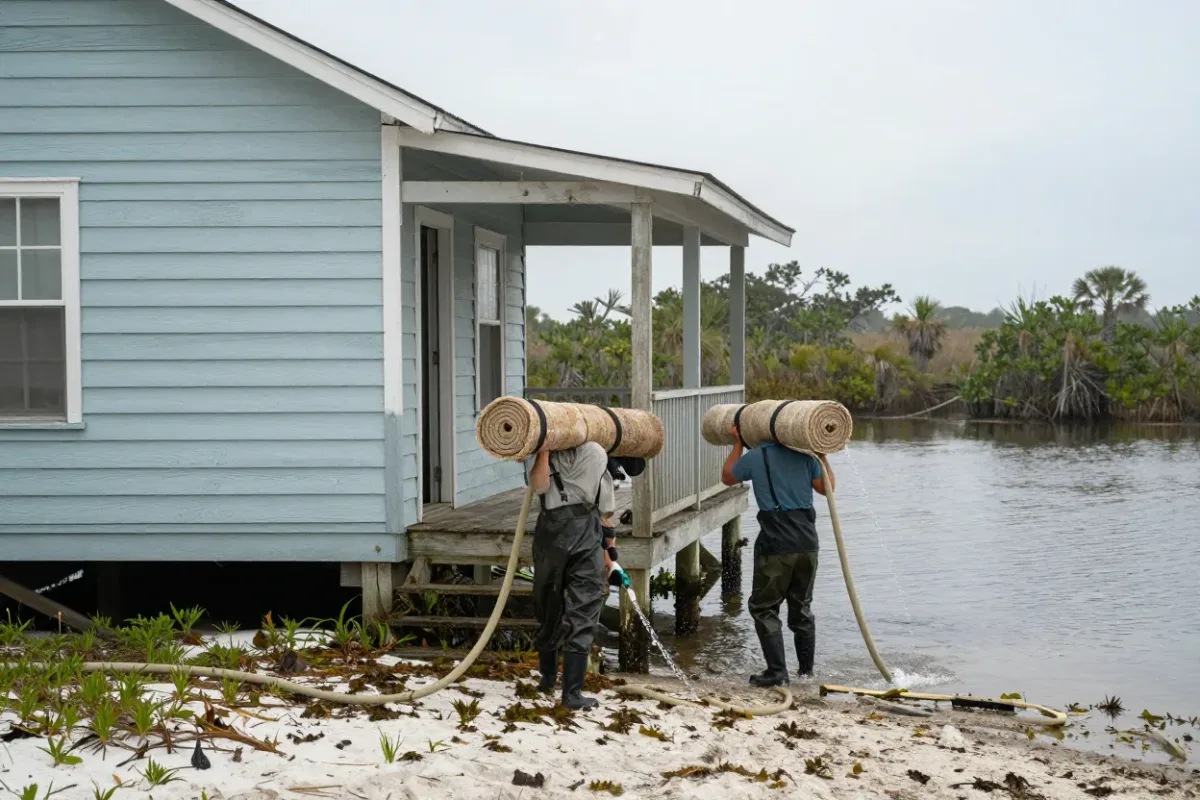
That split means water damage restoration in Palm Harbor has two distinct jobs. On the coast it is surge: Hurricane Helene's 2024 storm tide devastated the Ozona waterfront, where an estimated 40 to 60 boats at Ozona Shores Marina were overturned or stacked on one another and one boat that floated in had been moored a mile south in Dunedin. Inland it is plumbing, roofs and rain, the everyday losses of large subdivisions. Water Damage Florida handles both, 24 hours a day, with photographs and moisture readings logged from the first visit for your insurance claim. Call (888) 435-4769.
Emergency Water Damage Service in Palm Harbor
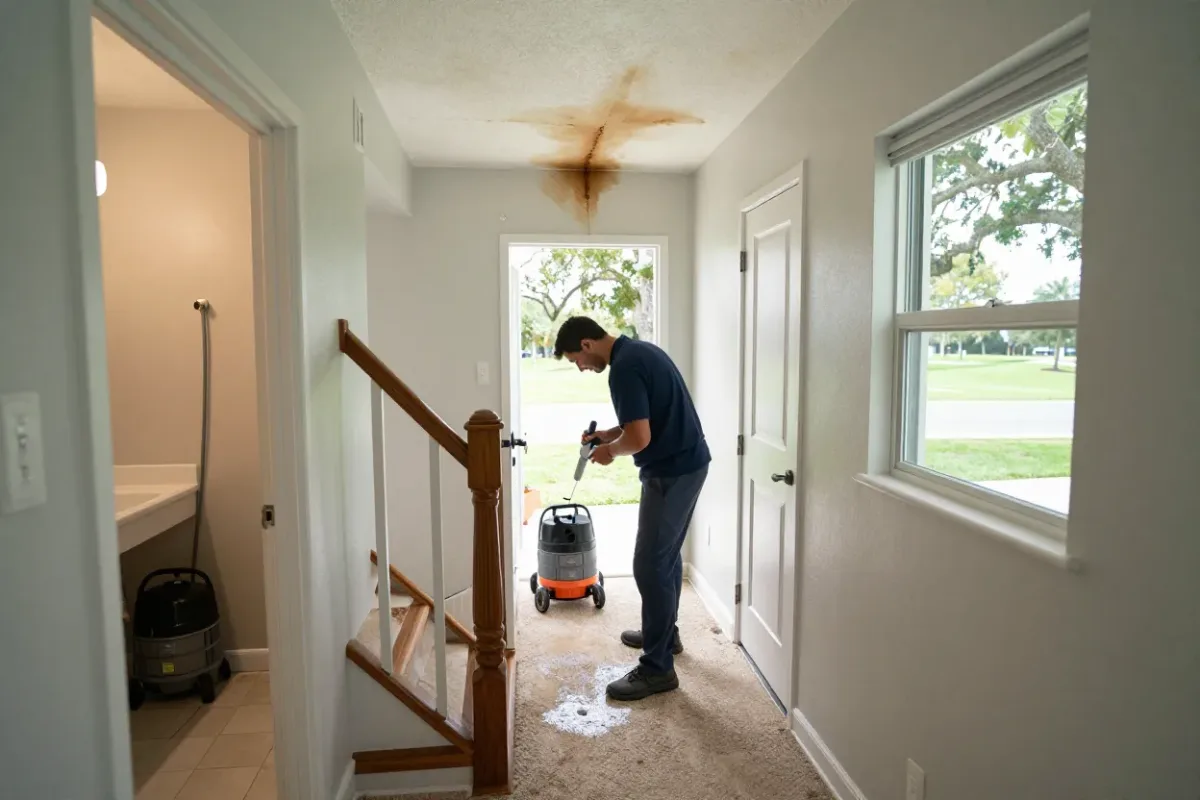
Along the sound, the emergency is the tide. NWS Tampa Bay recorded a record peak water level of more than six feet above normal high tide at nearby Clearwater Beach during Helene, and at that height the low cottages and streets of Ozona and Crystal Beach were inundated. Neighbors in the flooded coastal community organized cleanup and mutual aid afterward, which tells you how many homes were affected at once. Inland, on the hills, surge is not the problem; the calls from Lansbrook, Highland Lakes, Ridgemoor, Boot Ranch and the other subdivisions are about second-floor bathrooms, water heaters, washing machine hoses, condensate lines and roofs opened by wind.
Our crews carry pumps and extractors for standing water, air movers and dehumidifiers to begin drying on arrival, and moisture meters and thermal imaging to find where the water went. For coastal losses we mark the water line and identify what sat in salt water; for inland losses we trace water down through floors and walls from the source. Our emergency water damage page walks through what those first hours look like.
Restoration for Coastal Cottages and Master-Planned Subdivisions
Palm Harbor's housing runs from older coastal cottages in Ozona and Crystal Beach to the golf-course and gated master-planned communities such as Lansbrook and Highland Lakes, along with some active-adult communities. A cottage near the sound may be wood-frame on a raised foundation with a crawl space; a subdivision home is more likely block or frame on a slab, often two stories, with an attic air handler and a lot of plumbing above a finished ceiling. Villas and attached homes in active-adult communities add shared walls and an association to coordinate with.
Whatever the building, our restoration plan begins with a moisture map built from meters and thermal imaging. We remove only what cannot be dried, then dry the structure inside a closed home with commercial dehumidifiers and air movers until logged readings confirm each material has returned to its dry standard. Cleaning and treatment follow when the water was contaminated, and repairs begin only after the drying is verified. Our water damage restoration service page describes each phase in detail.
Surge and Rain Flood Cleanup
Helene's surge on the Ozona and Crystal Beach waterfront was the kind of event that overturns boats and floats them a mile, and the homes along those streets took seawater, marine debris and silt. Less than two weeks later Hurricane Milton brought 10 to 15 inches of rain across Pinellas County, which reached every part of Palm Harbor, hills included, and put rain flooding into low spots, garages and homes that surge had never touched. The two storms together meant that coastal homes were wet twice before they had dried once.
Surge water is contaminated and corrosive, so flood cleanup on the coast means removing drywall and insulation from the water line down, cabinet bases, carpet and flooring that were submerged, cleaning and disinfecting the slab, block or framing, and drying the shell under air filtration. Rain flooding inland is treated the same way once it has crossed a yard or street. Our flood restoration service page goes deeper, and the first 24 hours after a flood guide tells you what to do before we arrive.
Water Damage Repair in Palm Harbor
Coastal repair after surge involves new drywall from the flood line down, baseboards, doors, cabinet and vanity bases, flooring and paint, plus checks on outlets, appliances and air handlers that sat in salt water. Inland repair after a plumbing loss in a two-story home is often about ceilings: the drywall below an upstairs bathroom, the flooring above it, the cabinet the leak started in, and trim and paint to match. When wind has opened the roof, ceiling drywall and attic insulation join the list.
We write the repair scope from the photographs and drying logs collected during mitigation so your adjuster can follow every item back to the loss, and we separate storm damage from prior wear. In gated and active-adult communities we plan around association rules on hours, access and contractor parking so the work does not stall.
Mold Removal After Water Damage
In the coastal fringe, the mold we found after Helene was in cottages that were cleaned quickly but never dried inside the walls or under the floor. Inland, the pattern is the slow leak: an upstairs bathroom or a water heater in a closet that dripped for months, growth spreading across the back of drywall and the underside of a cabinet before anyone saw a stain. Attic air handlers and the wall behind shower tile round out the list.
Our mold work begins by correcting the moisture source, then containing the area, removing and bagging contaminated porous materials, HEPA-vacuuming and cleaning what remains, and verifying the space is dry before it is closed. Painting over growth or fogging a room is not a fix. See our mold remediation page for the method and our guide to hidden mold after water damage for the places most often missed.
Common Causes of Water Damage in Palm Harbor
A community that is half sound-front and half hilly suburb sees water damage from both directions. The sources behind most of our Palm Harbor work:
- Gulf storm surge along St. Joseph Sound and Sutherland Bayou in Ozona and Crystal Beach
- Heavy-rain flooding of low spots, garages and yards across the community, as during Milton
- Second-floor bathroom, water heater and washing machine failures in two-story subdivision homes
- Air conditioning condensate overflows in attic and closet air handlers
- Roof, soffit and window leaks from wind-driven rain in summer storms and hurricanes
- Shared-wall and slab leaks in villas and attached homes in active-adult communities
- Plumbing leaks under raised coastal cottages that go unnoticed in the crawl space
- Irrigation and pool equipment failures flooding garages and lanais on sloped lots
The Eight Steps of Every Job
A surge-flooded cottage in Ozona and a ceiling collapse in Lansbrook follow the same order, because that order is what keeps repairs from sealing in moisture.
- Inspection and moisture mappingWe identify the source, classify the water and map wet materials with meters and thermal imaging, from the crawl space of a cottage to the ceiling cavity below an upstairs bath.
- Water extractionPumps and extractors remove standing water from garages, ground floors, carpet and hard flooring before drying equipment is set.
- Removal of unsalvageable materialsSurge-soaked drywall, insulation, cabinet bases, wet ceiling drywall and swollen flooring are cut out and bagged.
- Structural dryingAir movers and commercial dehumidifiers run inside the closed home with readings logged daily until every material meets its dry standard.
- Cleaning and treatmentSurfaces touched by seawater, sewage or floodwater are cleaned and treated, with HEPA air scrubbers running during the work.
- DocumentationPhotographs, water-line measurements, moisture logs and a written scope are compiled for you, your carrier and, where relevant, your association.
- RepairCeilings, drywall, trim, cabinetry, flooring and paint are rebuilt to match the surrounding rooms.
- Final verificationA closing round of readings and a walkthrough confirm the home is dry and the work is complete.
Palm Harbor Areas We Serve
We respond throughout the Palm Harbor community, from the waterfront streets of Ozona and Crystal Beach and the old downtown to the hilly interior subdivisions and the golf-course communities toward Lake Tarpon and East Lake.
Palm Harbor Neighborhoods
- Ozona
- Crystal Beach
- Downtown Palm Harbor
- East Lake
- Lansbrook
- Highland Lakes
- Ridgemoor
- Tarpon Woods
- Innisbrook
- Cobbs Landing
- Boot Ranch
- Lake St. George
Nearby Communities
Our Palm Harbor crews also serve the surrounding communities of northern Pinellas and southern Pasco counties. Several have pages of their own:
What to Do While Our Crew Is on the Way
These steps are safe for most homeowners and will limit the damage before we arrive.
- Stop the source if it is inside the houseClose the fixture valve or the main. For an upstairs leak, shutting the main quickly limits how much water reaches the ceiling below.
- Stay out of standing water near electricityDo not enter a flooded garage or room where outlets, cords or a panel may be in the water. Cut the breakers only when the panel is dry and you can stand on a dry floor to do it.
- Treat sound and street water as contaminatedKeep children and pets out of it, avoid skin contact and do not use fans on it.
- Poke a hole in a sagging ceiling only if you can do it safelyIf a ceiling is bulging with water and you can reach it from a dry floor, a small hole with a screwdriver lets the water drain into a bucket instead of collapsing the drywall. Skip this if wiring or a light fixture is in the wet area.
- Lift belongings off wet floorsMove rugs, electronics and furniture, and set foil or blocks under anything that must stay in place.
- Photograph everything before cleaningRecord the source, the water line and every affected room, and note the date and time.
- Call Water Damage FloridaReach us at (888) 435-4769 and tell us whether the water was surge, rain or a pipe, how long it has been wet and whether you are in a gated or association community.
Our hurricane water damage recovery guide covers storm losses in more depth.
Palm Harbor Water Damage FAQs
Our Ozona cottage took surge during Helene. Is a raised wood-frame home handled differently from a slab house?
Yes. Water under a raised home wets the floor framing, subfloor and insulation from below, so we inspect and dry the crawl space as well as the interior, and we may remove subfloor insulation that stayed wet. Wood floors and plaster inside are assessed individually rather than removed wholesale.
We are up on the hills in Lansbrook. What water damage should we actually worry about?
Not surge, but nearly everything else. Two-story homes with bathrooms over living space, water heaters in closets, attic air handlers and roofs exposed to wind are the common sources, and Milton's rain flooded low spots and garages well inland.
An upstairs bathroom leaked and the ceiling below is stained. Is it dry now that the stain stopped growing?
Usually not. The ceiling cavity, the subfloor above it and the wall the water ran down hold moisture long after the surface stops changing. We read those areas with meters and thermal imaging and open only what is still wet.
Do you work in active-adult and gated communities with association rules?
Yes. We coordinate access, contractor hours and parking with the association or gate, treat shared walls with the neighboring unit in mind, and document each unit separately when more than one is involved.
How long does drying take?
A clean-water leak caught on the first day usually dries in a few days. A surge-flooded cottage or a home wet by both Helene and Milton takes longer because more material is removed and framing must dry fully. Equipment comes out when the readings say the structure is dry.
A boat ended up in a yard near Ozona after Helene. Is debris like that part of what you handle?
We clear the debris that is inside and against the structure as part of cleanup, including marine debris, silt and sea grass that came in with the surge. Large vessels and dock wreckage in the yard are handled by marine salvage and the owner's insurer, and we work around them.