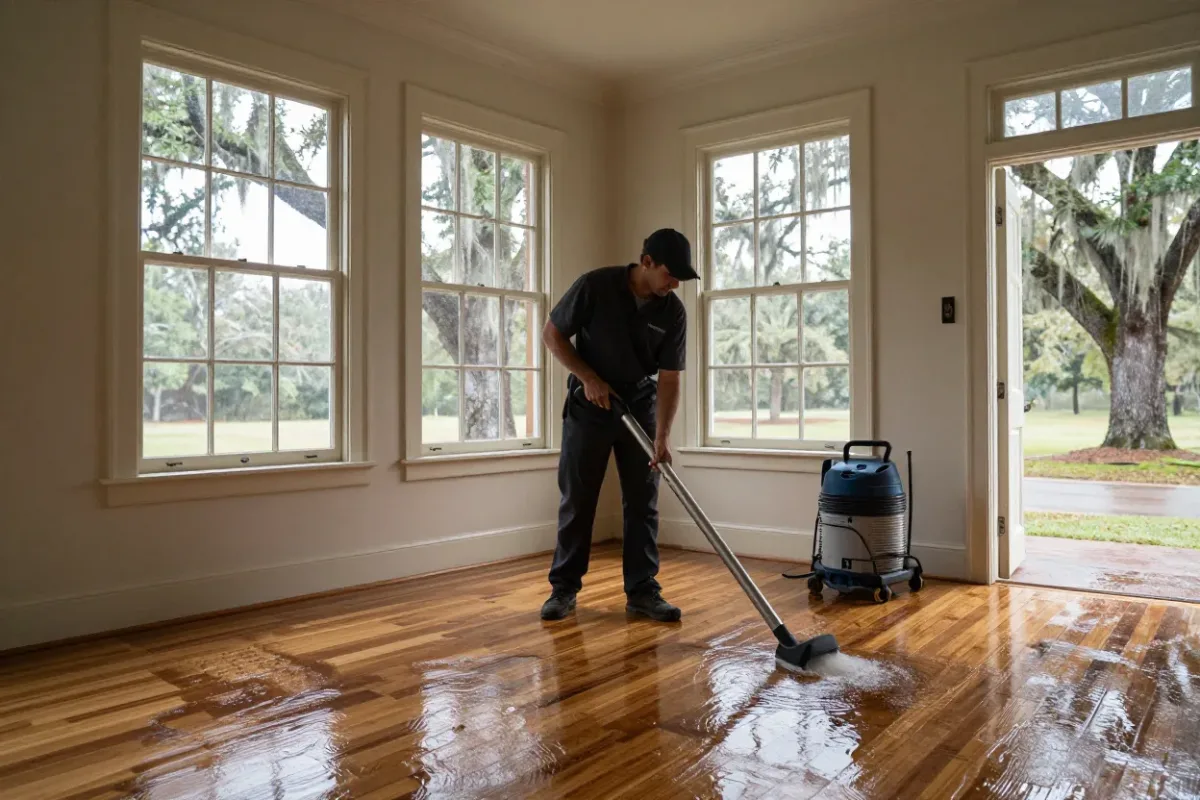
Jacksonville is a river city before it is a coastal one. The St. Johns bends through the heart of a consolidated city-county that is the largest by land area in the contiguous United States, and the neighborhoods that grew up along its banks, from Riverside and Avondale to San Marco and Ortega, sit only a few feet above the water. Add the Trout River on the Northside, Pottsburg Creek on the Southside, and Atlantic beaches on the eastern edge, and you have a city where water damage can arrive from the sky, the river, the tide or the plumbing, sometimes in the same week. Water Damage Florida provides 24/7 water damage restoration throughout Jacksonville and Duval County.
The housing is as varied as the geography: early-20th-century homes in Riverside, Avondale, Ortega and Springfield, including one of the largest collections of Prairie School buildings outside the Midwest and notable mid-century modern work, alongside vast postwar and newer subdivisions across the Southside, Westside and Northside. Our crews are equipped for both the pier-and-beam floor of an early-1900s bungalow and the slab-on-grade layout of a house in Baymeadows or Deerwood. Call (888) 435-4769 whenever you find water and we will dispatch a crew.
Emergency Water Damage Help Across Jacksonville
The emergency calls that reach us from Jacksonville split roughly into two kinds. The first is the ordinary household disaster: a water heater in a Mandarin garage that let go overnight, a washing machine hose in an Arlington ranch, a toilet supply line in a Downtown or Brooklyn apartment sending water into the unit below. The second is weather: a roof opened by a tropical system, a tidal creek backing up into a Southside subdivision, or the St. Johns rising over a Riverside seawall. Both need the same first response, quickly: stop the source, extract the standing water, and get drying equipment running before the moisture climbs the walls.
Our crews arrive with portable and truck-mounted extractors, submersible pumps for crawlspaces and garages, and enough air movers and dehumidifiers to start drying on the first visit. In apartment and condo buildings we trace water through every affected unit rather than only the one that called. Moisture readings and photographs begin on arrival so the record for your claim starts clean. For what to expect in the first hours, see our emergency water damage page.
Restoration for Historic Homes and Suburban Subdivisions
Restoration is the complete path from a wet house to a dry, finished one, and in Jacksonville it has to respect two very different kinds of construction. In the historic neighborhoods, raised wood floors, plaster walls, heart pine and original trim can often be dried and saved if we reach them early, but the crawlspace beneath needs the same attention as the rooms above or the floor will cup months later. In the newer subdivisions the structure is slab and block or wood frame with drywall, and the vulnerable pieces are drywall, baseboards, laminate and engineered floors, carpet pad and cabinet bases.
In either case we map the wet materials with moisture meters and thermal imaging before deciding what stays and what goes, then dry with the building closed and dehumidifiers sized to the space. North Florida's climate is a little less oppressive than South Florida's, but summers are still humid enough that opening windows works against you. Readings are logged daily and drying is declared finished only when materials reach their dry standard, not when they feel dry to the touch.
St. Johns River and Storm Flood Cleanup
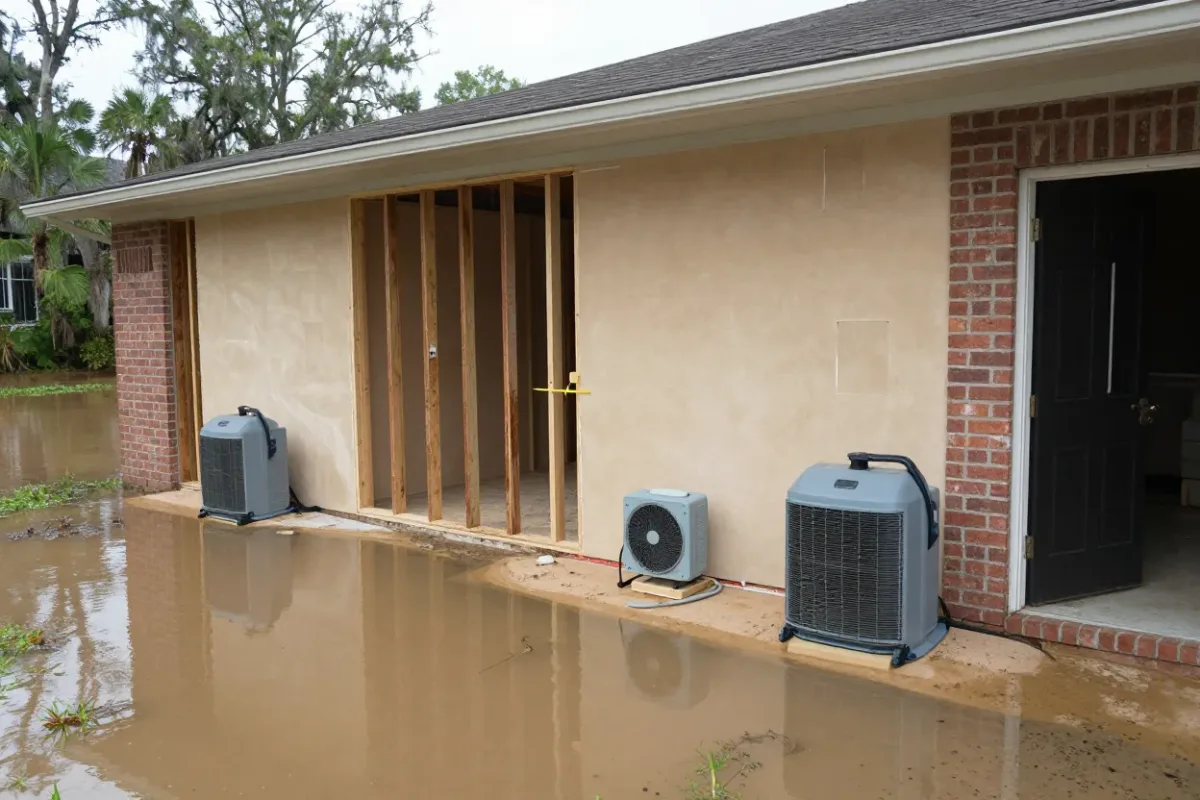
Jacksonville's flood story is written by the river more than by direct hurricane hits. Only Hurricane Dora in 1964 brought sustained hurricane-force winds to the city, but Hurricane Irma in 2017 pushed the St. Johns to record crests above the Dora mark, flooding Downtown and riverfront neighborhoods such as Riverside and San Marco with water several feet deep inside some homes and prompting hundreds of rescues. Hurricane Matthew in 2016 produced significant surge and river flooding, Hurricane Nicole in 2022 set a new coastal water-level record at Jacksonville above the Matthew mark, and heavy rain from Hurricane Debby and Hurricane Milton in 2024 flooded streets in Riverside and along Pottsburg Creek. The city's low elevation along the river leaves many older neighborhoods exposed to both tidal and rain-driven flooding.
River, creek and street water is handled as contaminated. Flood cleanup in Jacksonville means removing saturated porous materials rather than trying to dry them, cleaning and disinfecting hard surfaces, drying crawlspaces that held river water, and running air filtration while the structure dries. In the riverfront neighborhoods we pay particular attention to the space beneath raised floors, where silt and moisture linger long after the rooms above look normal.
Repair Work That Fits the Age of the House
Repair starts when moisture readings say the structure is dry. In Springfield, Riverside and Avondale that can mean patching plaster rather than swapping in drywall, refinishing heart pine that was dried in place, and matching period trim profiles so the repair disappears. In the city's mid-century modern homes it may involve original built-ins and period fixtures. In the Southside, Westside and Northside subdivisions the work is more often replacing cut drywall and baseboards, reinstalling flooring, rehanging cabinets and repainting.
Whatever the house, we build the repair scope from the moisture logs and photographs taken during mitigation, so your adjuster sees a clear line between water damage and pre-existing conditions. In multi-unit buildings Downtown and along the river we work within building rules on hours and common-area protection so the project does not stall waiting on management.
Mold Removal in Jacksonville Homes
Mold in Jacksonville tends to appear in the places water was allowed to sit quietly: the crawlspace under a historic home after the river receded, the back of a bathroom wall in an Arlington ranch with a slow shower leak, an air handler closet in a Baymeadows townhouse, and the lowest course of drywall in any ground-floor room that took creek or tidal water. Growth can begin within days in warm months, which is why we start drying on the first visit.
Our mold remediation follows the same discipline as the water work: correct the moisture source, contain the area with sheeting and negative air, remove and bag contaminated porous materials, HEPA-vacuum and clean what remains, and verify the space is dry before rebuilding. We do not spray over growth and move on. If a room was ever wet and dried on its own, read about where hidden mold forms after water damage before repainting.
What Causes Water Damage Here
Jacksonville's mix of losses reflects a river city with sand and clay soils, an aging historic housing stock, and huge tracts of suburban construction. The sources our crews meet most often include:
- St. Johns River, Trout River and tidal creek flooding during tropical systems and high tides
- Heavy-rain street flooding that backs up into ground floors in areas like Riverside and along Pottsburg Creek
- Water heater, supply line and appliance hose failures in single-family homes and apartments
- Roof, flashing and window leaks from wind-driven rain during named storms
- Crawlspace moisture and plumbing leaks under raised-floor historic homes
- Air conditioning condensate line clogs and drain pan overflows through the long cooling season
- Sewer and storm drain backups when the city system is overwhelmed by rain
- Plumbing failures in multi-story buildings Downtown that send water through units below
Our Step-by-Step Approach in Jacksonville
Every job follows the same sequence, from a one-room leak in Murray Hill to a river flood in San Marco. The verification steps are what keep a rebuilt wall from getting wet again.
- Inspect and map the moistureWe find the source, classify the water, and trace how far it traveled with meters and thermal imaging, including crawlspaces, adjacent rooms and units below.
- Extract the standing waterTruck-mounted or portable extractors remove water from floors and carpet; pumps handle garages, crawlspaces and flooded ground floors.
- Remove what will not drySaturated drywall, wet insulation, ruined carpet pad and swollen flooring are cut out and bagged so the framing and slab behind them can dry.
- Dry and dehumidifyAir movers and dehumidifiers run with the house closed, and moisture readings are logged daily until each material reaches its dry standard.
- Clean and treatSurfaces touched by river, creek or sewage water are cleaned and treated, with air filtration running during the work.
- Document for the claimPhotos, moisture logs and a written scope are assembled for you and your insurance carrier.
- Repair and rebuildPlaster or drywall, trim, flooring, cabinets and paint are restored to match the rest of the home, period details included.
- Verify and walk throughA final round of moisture readings and a walkthrough confirm the house is dry and ready to live in.
Jacksonville Neighborhoods We Cover
We respond across the whole consolidated city, from the river neighborhoods and Downtown to the Northside, Westside, Southside, Arlington and out to Mayport. Crews know the difference between a Prairie-style home on a raised foundation in Riverside and a slab-built house in Deerwood, and they bring gear for each.
Jacksonville Neighborhoods
- Downtown
- Riverside
- Avondale
- Ortega
- Springfield
- San Marco
- Mandarin
- Arlington
- Murray Hill
- Baymeadows
- Deerwood
- San Jose
- Southside
- LaVilla
- Brooklyn
- Mayport
Nearby Communities
Our Jacksonville crews also cover the beach cities, Clay County suburbs and the coast north and south. Several of these communities have their own pages:
First Steps When Water Gets In
What you do in the first hour shapes how much of the house can be saved. These steps are safe for most households and help our crew when it arrives.
- Cut off the sourceClose the fixture shutoff or the main valve. In an apartment, alert management so the riser can be isolated if needed.
- Stay clear of energized waterNever step into a flooded room or crawlspace where outlets, cords or the panel may be in contact with water. Switch off breakers only if the panel is dry and you can reach it without standing in water.
- Assume river and creek water is contaminatedKeep children and pets away, avoid skin contact, and do not use household fans to dry it.
- Get belongings off the floorMove rugs, boxes and electronics, and put foil or blocks under furniture legs that must stay.
- Record the damagePhotograph the source, the water line and every affected room before anything is moved or thrown out.
- Keep the house cooledLeave the air conditioning running and windows closed so humid outside air does not slow drying.
- Call us with the detailsReach (888) 435-4769 and tell us the source, how long it has been wet, and whether a crawlspace, garage or other units are involved.
Our first 24 hours after a flood guide and the hurricane water damage recovery guide go deeper on storm situations.
Jacksonville Water Damage FAQs
The St. Johns came up under my Riverside house. Does the crawlspace really need attention?
Yes. River water leaves silt and moisture beneath a raised floor that keep feeding the boards above, so floors cup and the house smells damp long after the rooms look fine. We clean, dry and monitor the crawlspace as part of the job.
Can original heart pine floors and plaster walls be saved after a leak?
Often, if drying starts early and the water was clean. Wood floors can be dried in place with specialty mats and plaster can usually be dried rather than replaced. Long-wet materials and anything touched by river water are a different story, and we tell you which applies after the moisture mapping.
Do you work in Downtown Jacksonville apartments and condos?
We do. We coordinate with management, trace water through every affected unit, protect common areas, and document each unit separately so owners and the association each have their own record.
My street in the Southside flooded during Debby but the house looked fine. Should I still check?
If water reached the slab or the bottom of an exterior wall, moisture may have wicked into drywall and insulation without an obvious stain. A meter reading along the base of the walls takes minutes and settles the question.
How long does structural drying take in Jacksonville?
A typical clean-water loss dries in a few days; a flooded ground floor or crawlspace takes longer because more material has to come out first. We give a timeline after the inspection and adjust it against daily readings.
Do you cover the whole consolidated city and the beaches?
Yes. Our crews serve every part of Duval County, the beach cities, Orange Park and Fleming Island, Fernandina Beach and St. Augustine, and the rest of Florida through our statewide service areas.