Few Florida cities live as closely with the tide as St. Augustine. The St. Johns County seat sits at sea level on the Matanzas River and Matanzas Bay, with Anastasia Island as its ocean-facing barrier and the San Sebastian River, Salt Run and a lattice of tidal creeks winding through and around the colonial-era street grid. The city itself states that roughly nine in ten residents live in a floodplain, and that its aging infrastructure often cannot handle modern rainfall volumes. When heavy rain meets a high tide here, water shows up in streets, crawlspaces and ground floors well before any hurricane arrives. Water Damage Florida provides 24/7 water damage restoration throughout St. Augustine.
Our crews work in every part of the city, from the downtown Historic District and Lincolnville, where colonial, Victorian and Flagler-era buildings demand careful handling, to the mid-century homes of Davis Shores and the newer construction on Anastasia Island. We bring pumps, extractors and drying equipment on the first visit and begin documenting for your insurance claim as soon as we arrive. Call (888) 435-4769 at any hour.
Emergency Water Damage Response in St. Augustine
In most Florida cities an emergency call means a pipe. In St. Augustine it is just as likely to mean the tide. A king tide backing up through storm drains into a Davis Shores street, Hospital Creek or Oyster Creek rising during a downpour, Maria Sanchez Lake spilling over after hours of rain, or surge pushing across the Matanzas bayfront into the ground floors of historic district businesses: these are the calls that arrive in clusters. The plumbing failures, roof leaks and water heater floods that hit any city come in between.
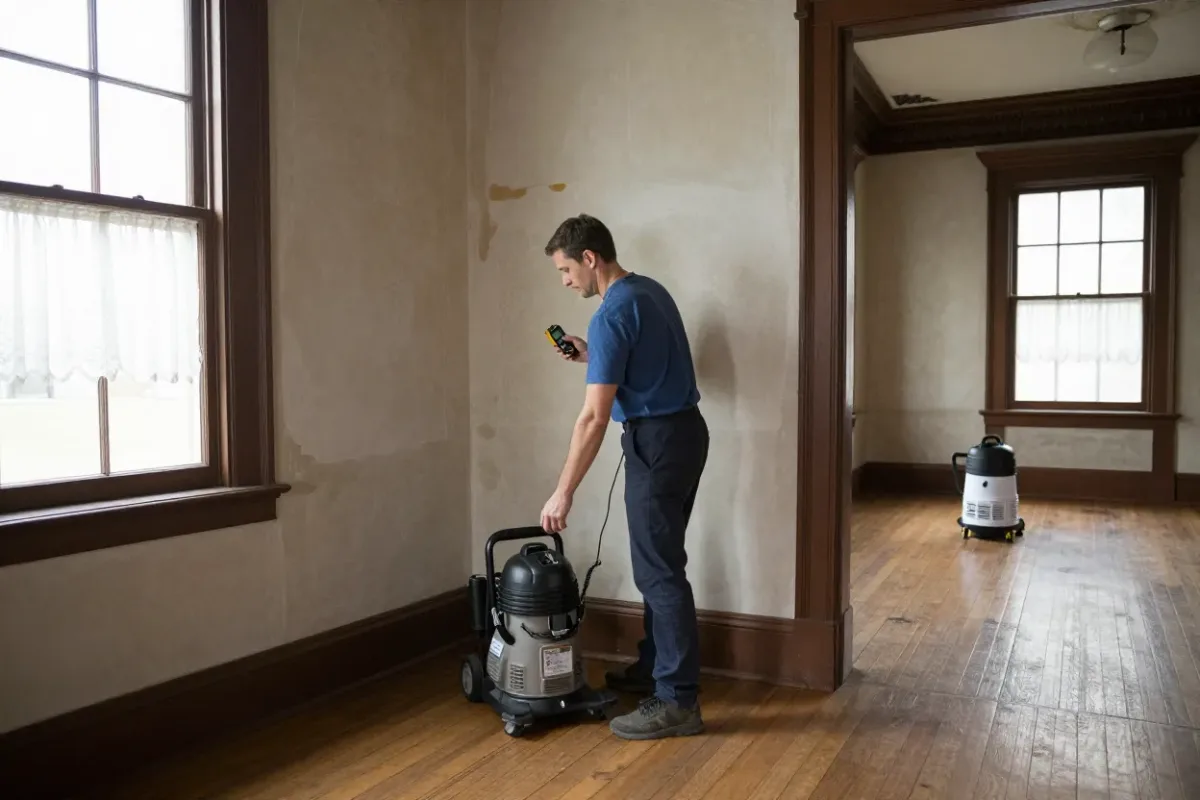
We respond with submersible pumps for crawlspaces, garages and ground floors, extractors for interior rooms, and enough air movers and dehumidifiers to begin drying on the first visit. In older buildings we look immediately at the crawlspace and the base of plaster walls, because those are where tidal water hides. Moisture readings and photographs start on arrival. Our emergency water damage page lists what helps us most on the first call.
Restoration for Historic Buildings and Floodplain Homes
Restoring a water-damaged building in St. Augustine means respecting what it is made of. Colonial-era and Victorian structures in the Historic District and Lincolnville have plaster, old-growth wood and older masonry that behave differently from drywall and require slower, monitored drying rather than aggressive tear-out. Flagler-era buildings add their own masonry and ornamental detail. Davis Shores homes from the mid-century are mostly block and slab, and Anastasia Island's newer construction is frame or block with modern finishes. We map wet materials with meters and thermal imaging before deciding what stays and what goes.
Drying happens with the building closed and dehumidifiers sized to the space, because humid coastal air slows evaporation. Readings are logged daily, and in historic buildings we take extra care to dry masonry and plaster gradually so they do not crack or spall. Drying is finished when the numbers meet the dry standard for each material, not when surfaces feel dry.
Tidal, Surge and Storm Flood Cleanup
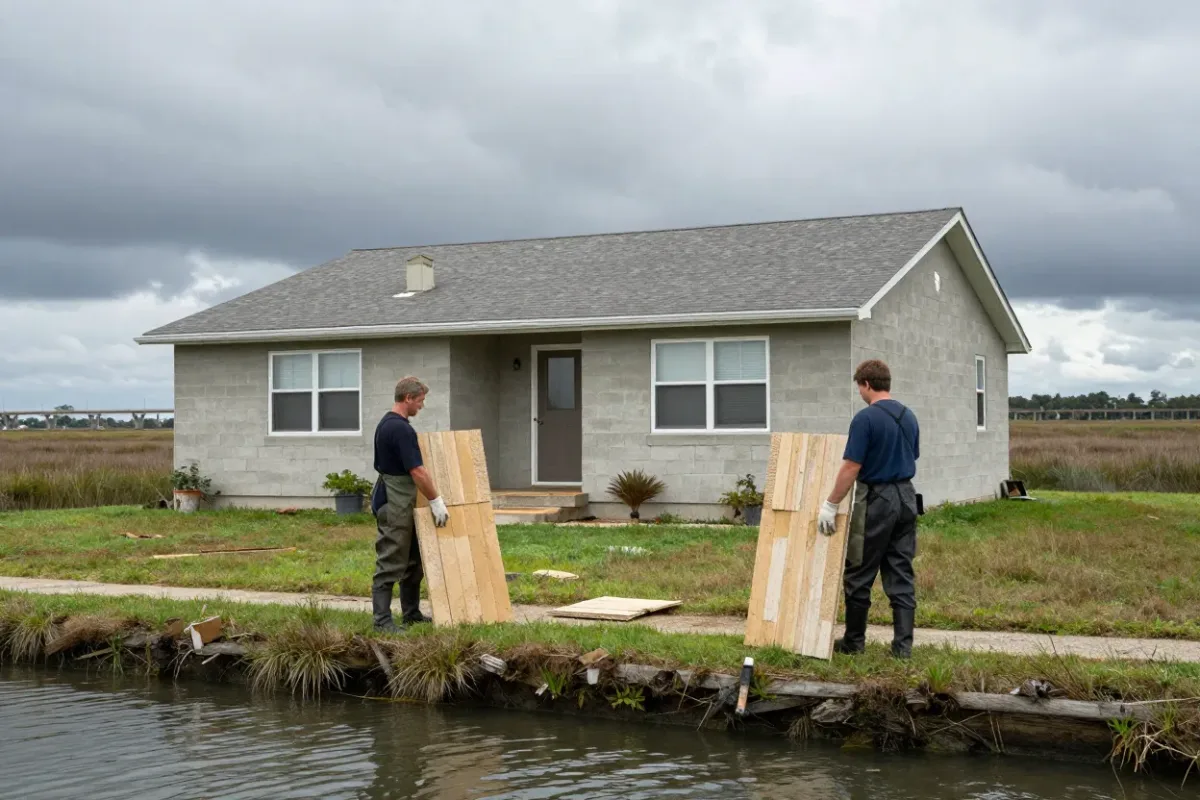
St. Augustine's recent flood history is a run of hard lessons. Hurricane Matthew in 2016 flooded much of downtown and sent surge across Anastasia Island. Hurricane Irma in 2017 flooded riverfront businesses in the historic district again with surge from the Matanzas River. The city names Davis Shores, Lincolnville, the historic districts and the Abbott Tract as neighborhoods hit hard in both storms. Hurricane Nicole in 2022 inundated parts of the city and damaged a long stretch of State Road A1A. Between hurricanes, king tides bring nuisance tidal flooding often enough that the city runs a dedicated mitigation program for South Davis Shores.
Tidal, surge, creek and street water is treated as contaminated. Flood cleanup means pumping out what remains, removing saturated porous materials rather than drying them, cleaning and disinfecting hard surfaces, and running air filtration while the building dries. In historic buildings we work to save original materials wherever the water category and the readings allow, and in Davis Shores and the Abbott Tract we pay close attention to the lowest course of drywall and the cabinets above it, which take brackish water first.
Repair That Matches the Building
Repair in St. Augustine can be as simple as new drywall and baseboards in a Davis Shores ranch or as exacting as matching plaster texture and trim profiles in a Lincolnville Victorian. We begin only after moisture readings verify the structure is dry, then rebuild finishes to match what was there: plaster or drywall, trim, flooring, cabinetry and paint. For historic properties we coordinate with owners on any approvals the building's status requires before finishes are changed.
The repair scope is built from the moisture logs and photographs taken during mitigation, so your adjuster sees a clear record of what the water did and where. For businesses in the historic district we plan the work around operating hours and foot traffic so a flooded ground floor can reopen as quickly as the drying allows.
Mold Removal After Tidal and Storm Water
A city where most residents live in a floodplain is a city where a lot of buildings have been wet at some point, and not all of them were dried properly. Mold in St. Augustine turns up in crawlspaces under historic homes, behind plaster that took surge in 2016 or 2017 and was painted over, in the base of block walls in Davis Shores after a king tide, and in the usual plumbing spots: behind bathroom tile, under kitchen sinks and around air handlers.
Our mold remediation starts with fixing the moisture source, then contains the affected area with sheeting and negative air, removes and bags contaminated porous materials, HEPA-vacuums and cleans what remains, and dries the space fully before rebuilding. In historic buildings we favor cleaning and drying original materials over removal wherever the readings support it. If your building was ever flooded and simply dried out on its own, read about where hidden mold forms after water damage.
Why St. Augustine Buildings Take On Water
The city's own list of flood sources reads like a map of its waterways, and our call log follows it closely. The most common causes of water damage we see here include:
- Heavy rain coinciding with high tide, overwhelming drains and backing water into streets and ground floors
- Storm surge from Matanzas Bay and the Matanzas River during tropical systems
- King-tide flooding in low neighborhoods such as Davis Shores
- Overflowing creeks and waterways including Hospital Creek, Oyster Creek, Salt Run, the San Sebastian River and Maria Sanchez Lake
- Poorly draining soils and aging drainage infrastructure that cannot keep up with modern rainfall
- Roof, flashing and window leaks in older buildings during wind-driven rain
- Plumbing failures, water heaters and supply lines in homes, lodging and downtown businesses
- Crawlspace moisture and slow leaks under raised historic homes
The Sequence We Follow on Every Job
From a leaking water heater on Anastasia Island to a surge-flooded storefront downtown, the order of work is the same. It exists to protect both the building and your claim.
- Inspection and moisture surveyWe find the source, classify the water, and map how far it traveled with meters and thermal imaging, including crawlspaces, plaster walls and rooms that look dry.
- Pumping and extractionPumps clear standing water from crawlspaces, garages and ground floors; extractors pull water from flooring inside.
- Selective removalSaturated drywall, wet insulation, ruined carpet and swollen cabinet bases are removed; in historic buildings original materials are saved wherever the readings allow.
- Drying and dehumidificationAir movers and dehumidifiers run in the closed building, with gradual drying for masonry and plaster, and readings logged daily until each material meets its dry standard.
- Cleaning and disinfectionSurfaces touched by tidal, surge or creek water are cleaned and treated, with air filtration running throughout.
- Documentation for insurancePhotos, the moisture log and a written scope are compiled for you and your carrier.
- Repair and finishingPlaster or drywall, trim, flooring, cabinets and paint are restored to match the building.
- Final readings and walkthroughA final moisture check and walkthrough confirm the space is dry and ready to use.
Where We Work in St. Augustine
We serve the entire city on both sides of the Matanzas River, from the downtown Historic District and Lincolnville on the mainland to Davis Shores and the city's portion of Anastasia Island, along with the Abbott Tract north of downtown.
St. Augustine Neighborhoods
- Historic District (downtown)
- Lincolnville
- Davis Shores
- Abbott Tract
- Anastasia Island (city portion)
Nearby Communities
Our crews also cover the beaches and communities of St. Johns County and the coast north and south. Several nearby cities have their own pages:
What to Do While You Wait for Us
These steps are safe for most homeowners and business owners and will limit the damage in the first hour.
- Close the source if it is plumbingShut the fixture valve or the main. If the water is coming from the street or the tide, there is nothing to shut; skip to the next step.
- Keep away from water near electricityDo not enter a flooded crawlspace, garage or room if outlets, cords, appliances or the panel may be in contact with water. Shut off breakers only when the panel is dry and you can reach it from a dry floor.
- Treat tidal and creek water as contaminatedKeep children and pets out, avoid skin contact, and do not run household fans over it.
- Move belongings upLift rugs, electronics and furniture off wet floors; put foil or blocks under anything that must stay.
- Photograph before cleaningCapture the water line, the source and every affected room before anything is moved or discarded.
- Keep the building closed and cooledRun the air conditioning and keep windows shut so humid air off the bay does not slow drying.
- Call with the detailsReach (888) 435-4769 and tell us the source, how long it has been wet, and whether the building is historic or has a crawlspace.
For storm situations, our first 24 hours after a flood guide and the hurricane water damage recovery guide walk through the rest.
St. Augustine Water Damage FAQs
Can a historic building downtown be dried without destroying original plaster and woodwork?
Usually, if we reach it early and the water was not heavily contaminated. Plaster, heart pine and masonry can be dried gradually in place with controlled equipment and monitoring. Long-wet materials and those soaked by surge are evaluated case by case, and we explain what can be saved after the moisture mapping.
Our Davis Shores street floods on king tides. Should we have the house checked even when water never came inside?
If water has reached the slab edge or the base of the exterior walls, moisture can wick into block and drywall without an obvious sign. A meter reading along the lowest course of the walls takes minutes and settles it.
Do you handle flooded businesses and lodging in the historic district?
Yes. We work around operating hours, protect what is not affected, and move quickly on ground floors so a storefront or guest rooms can reopen as soon as drying is verified.
Is water from the Matanzas or a tidal creek worse than a pipe leak?
It is treated as contaminated, and it is brackish, so porous materials it touched are removed rather than dried, hard surfaces are cleaned and disinfected, and metal and electrical components it reached should be inspected. A clean supply-line leak leaves much more to save.
How long does drying take here?
A clean-water loss in a modern home typically dries in a few days. A flooded crawlspace or a historic building dried gradually takes longer. We set the timeline after the inspection and adjust it against daily readings.
Do you serve St. Augustine Beach and the rest of Anastasia Island?
Yes. Our crews cover St. Augustine Beach, Vilano Beach, Butler Beach, Crescent Beach and the county's inland communities, along with the rest of Florida through our statewide service areas.