Altamonte Springs is a compact, densely built suburb in southern Seminole County, strung along Interstate 4 at the northern edge of the Orlando area. It is built around lakes: Cranes Roost Lake in the Uptown district, Lake Orienta, Lake Lotus, Lake Brantley and Pearl Lake, with the Little Wekiva River running through the city's western side. The city describes itself as a major retail hub with a large share of multifamily housing alongside more than a hundred single-family subdivisions, and that mix shapes the water damage work we do here. A leak in one apartment reaches three others; a river flood reaches an entire street.
Water Damage Florida provides emergency water damage restoration in Altamonte Springs 24 hours a day for apartments, condos, single-family homes and commercial space. Our crews extract, dry to verified moisture readings, clean, and rebuild, and they document every stage for the claim. Call (888) 435-4769 whenever water shows up where it should not be.
Emergency Water Damage in a Multifamily City
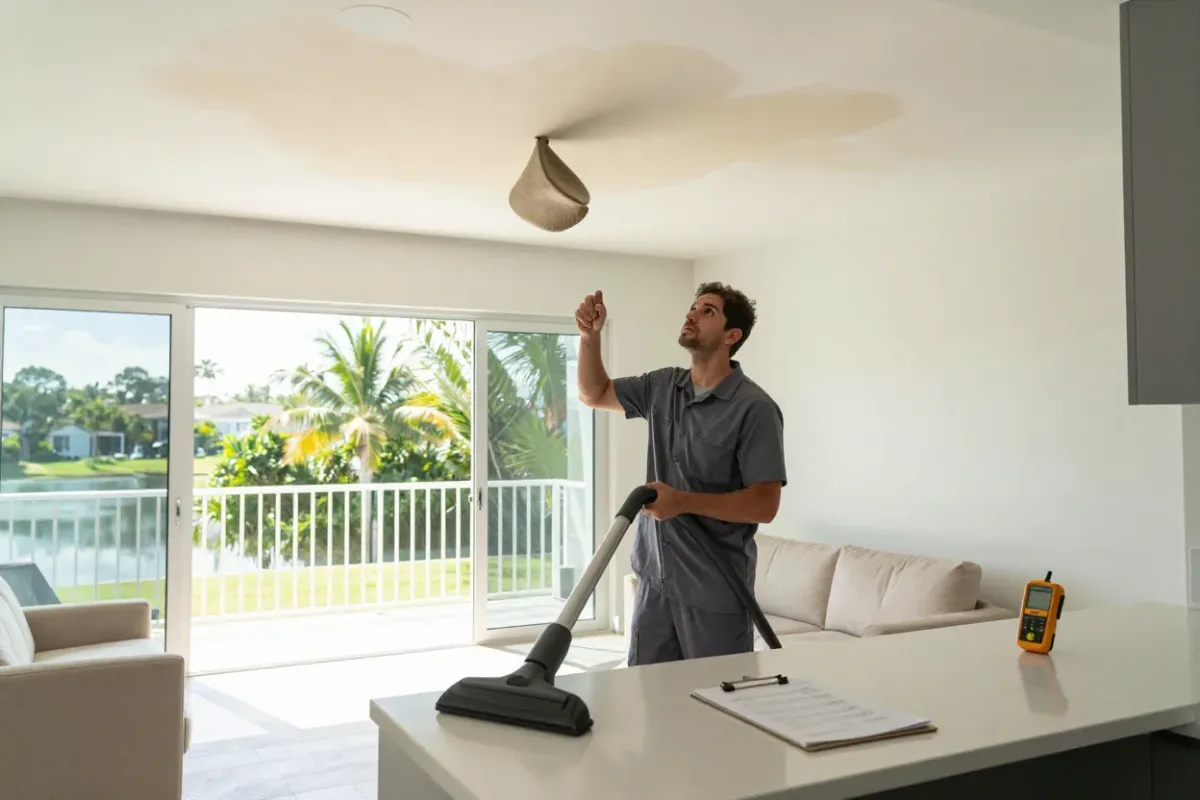
Most of the urgent calls we take in Altamonte Springs involve more than one household. A washing machine hose fails on the third floor of an apartment community and the two units below have water coming through light fixtures. A water heater in a condo closet drains into a shared hallway. A fire sprinkler line or a supply riser lets go in a building that also has retail on the ground floor. Multifamily losses need the water traced through the whole stack, not just the unit that made the call, and they need coordination with management from the first hour.
Our crews arrive with portable extractors, pumps, air movers and dehumidifiers, and they begin photographing and metering each affected unit separately so owners, tenants and the association each end up with their own record. Single-family emergencies get the same treatment on a smaller scale: source stopped, water pulled, drying started the same visit, documentation from the start.
Restoration for Apartments, Condos and Subdivisions
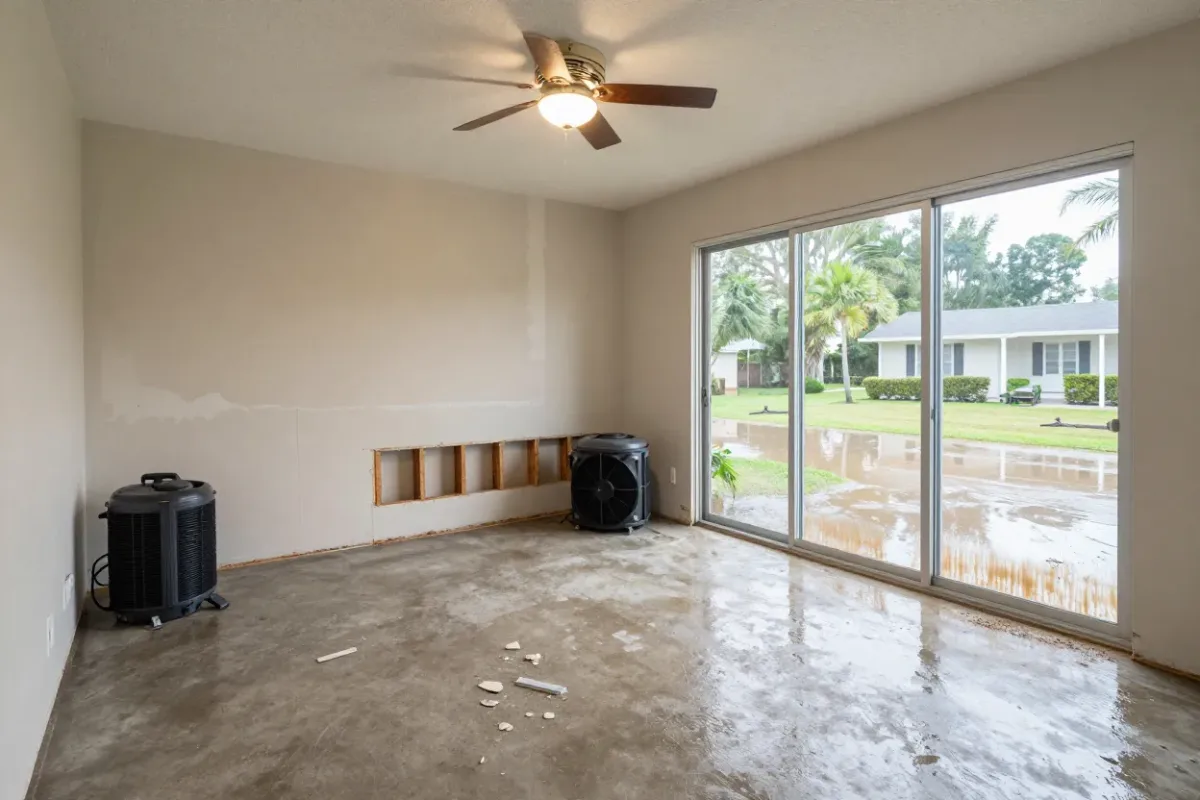
Restoration means taking a wet building all the way back to a finished one. After extraction we meter every wall, floor and ceiling the water could have reached, use thermal imaging to find moisture that has traveled between units or along a slab, and decide material by material what can be dried in place and what must come out. In multifamily buildings the questions include party walls between units, shared ceiling cavities and corridor flooring; in the city's mature single-family subdivisions they are more often slab floors, layers of flooring added over the years, and cabinets that have absorbed water into their toe-kicks.
Drying runs with the space closed, dehumidifiers sized to the volume and air movers aimed into cavities and across subfloors, with readings logged daily until each material reaches its dry standard. Cleaning and any antimicrobial treatment follow, and then repair. Our water damage restoration service page describes the full sequence in more detail.
Flood Cleanup Along the Little Wekiva River
The Little Wekiva is the city's main flood hazard, and the last few years proved it. During Hurricane Ian in 2022 the river hit record levels, with widespread flooding in the Spring Oaks neighborhood, and the same area flooded again after Hurricane Milton in 2024. The city has since pursued a federally funded erosion-control project along the river between State Road 436 and Montgomery Road, and after heavy rain in September 2025 the river briefly topped minor flood stage yet again. For homeowners along its banks the pattern is clear: the river can rise faster than a forecast suggests, and homes that have been wet once are the first to be wet again.
River water is contaminated, so flood cleanup is a removal job before it is a drying job: saturated drywall, insulation, carpet and pad come out, hard surfaces are cleaned and disinfected, and HEPA filtration runs through the work. Homes on the river side of Spring Oaks and on low ground near the city's lakes get the closest inspection, including slab edges and the bottom of exterior walls where water wicks up from outside. If you have river water in your home now, stay out of it and call; our flood restoration crews will guide you until they arrive.
Water Damage Repair in Altamonte Springs
Repair begins after the moisture logs confirm the building is dry. Typical work includes replacing cut drywall and baseboard, repairing ceilings below an upstairs loss, reinstalling or replacing flooring, rehanging cabinets and repainting. In apartment and condo buildings repair also has to respect building rules on hours, elevator use and corridor protection, and it often has to be sequenced across several units so residents can move back in as each one is finished.
For homes in Spring Oaks and elsewhere along the river that have flooded more than once, we talk through repair choices that will survive the next event more gracefully: hard flooring instead of carpet on the ground floor, moisture-resistant board in the lowest course of wall, and cabinet installations that can be dried in place. Scope is tied to the mitigation photographs and moisture maps so your adjuster sees exactly what the water reached and what was done.
Mold Removal After the Water Is Gone
In Altamonte Springs' hot, wet summers, moisture left inside a wall or under flooring can support visible growth within days. In multifamily buildings the usual places are the ceiling cavity below an upstairs leak, the drywall behind a shared plumbing wall, and the corridor side of a party wall that nobody thought to check. In single-family homes it is the bottom foot of exterior walls after river water, the back of kitchen base cabinets, and closets next to air handlers with clogged condensate lines.
We correct the moisture source first, contain the area with sheeting and negative air, remove and bag affected porous materials, HEPA-vacuum and clean what stays, and confirm the space is dry before it is rebuilt. We do not paint over growth and call it done. Our mold remediation page covers the method, and this guide to hidden mold after water damage lists the places it tends to appear.
Common Causes of Water Damage Here
A built-out suburb with a large share of multifamily housing, a river through its western side and lakes throughout produces a particular mix of losses. The most frequent causes we see are:
- Supply line, water heater and appliance failures in apartments and condos, with water traveling through ceilings into the units below
- Little Wekiva River flooding in Spring Oaks and other low-lying streets during and after tropical systems
- Fire sprinkler and riser leaks in mixed-use and multifamily buildings in and around the Uptown district
- Air conditioning condensate overflows in interior closets and attics during the long cooling season
- Roof and flashing leaks on older subdivision homes during summer thunderstorms and hurricane winds, which reached above 100 mph in Altamonte Springs during Hurricane Charley in 2004
- Slab leaks and slow pipe failures inside walls in mature subdivisions
- Wind-driven rain entering through windows, sliding doors and balcony thresholds during storms
- Lake and yard drainage overwhelmed by extended rain, sending water against foundations and into lanais
The Sequence We Follow on Every Job
Whether the job is one bathroom or a whole apartment stack, it moves through the same eight stages in order. The checks along the way are what keep a finished wall from getting wet again.
- Inspect and trace the waterWe identify the source, classify the water, and meter every unit, wall and ceiling the water could have reached, following it down through a building rather than stopping at one door.
- Extract standing waterPumps and extractors clear water from floors, carpet and pad, corridors, ground-floor retail and garages.
- Remove unsalvageable materialsSaturated drywall, ceiling board, wet insulation, swollen trim and flooring that cannot be dried are cut out and bagged.
- Dry and dehumidifyAir movers and dehumidifiers run in the closed space, with readings logged daily in each affected unit until every material reaches its dry standard.
- Clean and sanitizeSurfaces touched by river or gray water are cleaned and disinfected, and HEPA air filtration runs throughout.
- Document for each partyPhotographs, moisture logs and a written scope are compiled per unit so owners, tenants and the association each have what they need.
- Repair and rebuildDrywall, ceilings, trim, flooring, cabinets and paint are restored, sequenced so residents can return unit by unit.
- Final moisture checkA closing round of readings and a walkthrough confirm the space is dry and ready for use.
Altamonte Springs Areas We Serve
We cover the whole city, from the apartment and condo communities around Cranes Roost and the Uptown district to the single-family subdivisions on the east and west sides and the homes along the Little Wekiva. Our crews bring equipment suited to a mid-rise building, a townhome, or a block home on a slab.
Altamonte Springs Neighborhoods
- Uptown Altamonte / Cranes Roost
- Spring Oaks
- Eastmonte
- Westmonte
- Highridge
- Spring Lake Hills
- Sanlando
- Weathersfield
- Spring Valley
- Oak Harbour
- Country Creek
- Lake Orienta area (Orienta Gardens)
Nearby Communities
Our Altamonte Springs crews also serve the surrounding communities along the I-4 corridor and the Wekiva basin. Several have their own local pages:
Steps to Take Before We Arrive
A few safe actions in the first hour make a real difference to how much of the home can be saved and to how cleanly the claim goes.
- Shut off the water and tell the buildingClose the fixture or main valve. In an apartment or condo, call management or the on-site maintenance line at once so the riser can be isolated and the units below can be warned.
- Avoid water near electricityDo not enter a flooded room if outlets, cords or the panel may be wet, and do not touch a light fixture that is dripping. Switch off power only at a panel that is dry and reachable.
- Treat river water as contaminatedKeep people and pets out of it and leave the cleanup to a crew with protective equipment.
- Move belongings up and outLift electronics, documents and rugs to a dry room; set furniture legs on foil or blocks if it must stay.
- Photograph everythingCapture the source, the waterline, the ceiling stains and each affected room before anything is moved or cut.
- Keep the AC runningCool, dry indoor air slows growth while you wait; do not open windows to the humid outdoors.
- Call Water Damage FloridaDial (888) 435-4769 and tell us the source, how long it has been wet, and how many units or rooms are affected.
After a storm, our first 24 hours after a flood guide and the hurricane water damage recovery guide take you through the days that follow.
Altamonte Springs Water Damage FAQs
Water is coming through my ceiling from the apartment above. What should I do?
Move belongings out from under it, stay away from any light fixture that is wet, and call management so the source can be shut off upstairs. Then call us. We will dry your unit, check the units beside and below yours, and document your damage separately from your neighbor's so each claim stands on its own.
My home in Spring Oaks has flooded twice. Is there anything different you can do this time?
Yes. Beyond the standard cleanup, we can help you choose repair materials on the ground floor that tolerate another event, such as hard flooring and moisture-resistant wallboard in the lowest course, and we will document the prior loss line so your adjuster has the full picture.
Who is responsible for the damage in a condo, me or the association?
That depends on the policies and the association documents, not on us. What we provide is a clear, unit-by-unit record of where the water came from, where it traveled and what it damaged, so the adjusters can sort out responsibility from evidence.
Do you work on the retail and office space in the Uptown district?
We do. Commercial water damage in mixed-use buildings is part of our Altamonte Springs work. We contain the affected area, work around your hours where we can, and keep the rest of the building operating.
How do you know the drying is finished?
By daily moisture readings in each affected unit compared against the dry standard for each material; equipment comes out when the numbers say the building is dry, and you receive the logs.
Do you cover the neighboring cities as well?
Yes. Our crews serve Maitland, Longwood, Casselberry, Winter Park, Apopka and the rest of Seminole and Orange counties, and the rest of Florida through our statewide service areas.