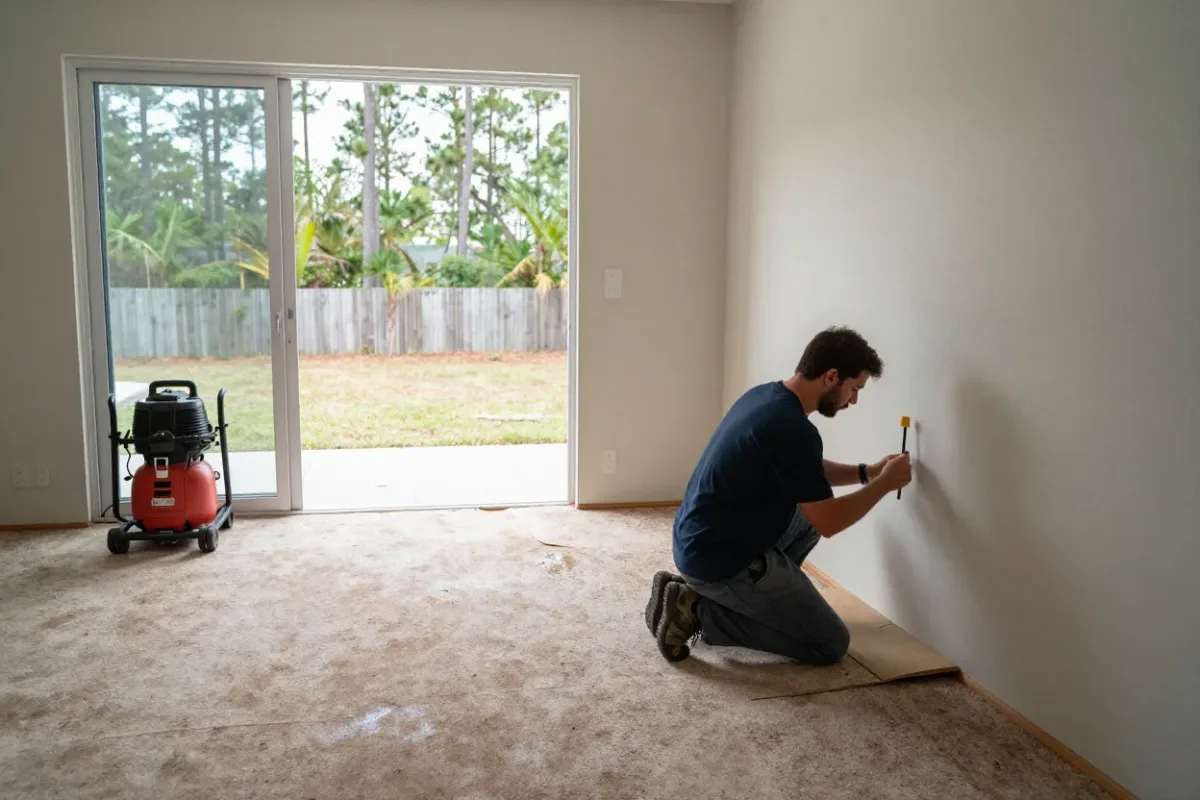
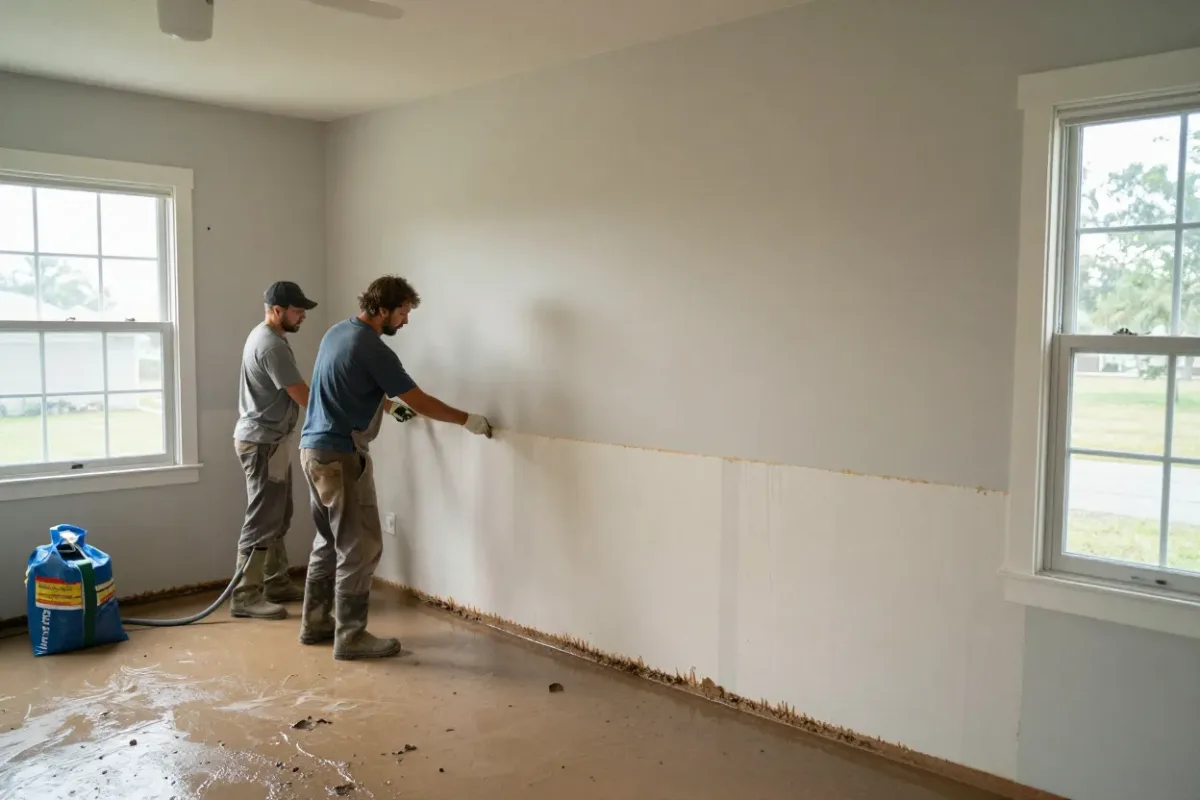
Winter Springs sits on some of the lowest ground in Seminole County, laced by Howell Creek, Gee Creek, Bear Creek and Soldiers Creek on their way to Lake Jesup along the city's northern edge. That creek network is the reason a heavy-rain event here behaves differently than it does a few miles south: when the creeks back up, water enters homes from the yard rather than from the roof, and it can linger for days. Water Damage Florida provides 24/7 water damage restoration in Winter Springs, from a single soaked bedroom after a plumbing failure to whole-house flood cleanup when a creek leaves its banks.
Our crews work throughout the city, including the Tuscawilla planned community and its surrounding subdivisions, the older streets of North Orlando Ranches, and the newer townhomes around the town center. If you are looking at water on the floor right now, call (888) 435-4769. We will walk you through the safe first steps and dispatch a crew with extraction and drying equipment.
Emergency Water Damage Help, Day or Night
The urgent calls we take from Winter Springs fall into two groups. The first is plumbing: a failed water heater in a garage, a washing machine hose, a supply line under a vanity, or a backed-up air conditioner condensate line. The second is weather: wind-driven rain past a roof edge, or creek and lake water rising across a lawn and under a door. Both need fast extraction, but the second also needs the water treated as contaminated and the outside conditions considered before drying can start.
We arrive with portable and truck-mounted extractors, submersible pumps for garages and low rooms, and enough air movers and dehumidifiers to begin drying on the first visit. In a flat, one-story subdivision home, water spreads across the slab under carpet pad and laminate fast, so we map the full wet footprint with moisture meters before we set equipment. Photographs and readings are logged from the start for your insurance carrier. Read more about how we handle emergency water damage statewide.
Restoring Tuscawilla-Era Homes and Town Center Townhomes
Most Winter Springs housing is single-family construction from the 1970s onward, a large share of it within the Tuscawilla planned area, plus newer attached townhomes near the town center. In the older homes we typically find concrete block exterior walls, wood-framed interior partitions, carpet or laminate over slab, and particleboard cabinet bases that swell quickly. Restoration focuses on getting wet pad, baseboards and the lowest section of drywall out early so the block and framing can dry.
Townhomes add shared walls. When a unit takes water, we check the party wall and the neighboring unit's side, because moisture migrates through the shared cavity and a dry-looking neighbor can be wet at the base plate. Drying is done with the home closed up and the air conditioning running, using dehumidifiers matched to the room volume and monitored daily until every material reads within its dry standard. Our water damage restoration service page explains the equipment in more detail.
Flood Cleanup After Creek and Lake Flooding in Winter Springs
Hurricane Ian in 2022 showed exactly where Winter Springs floods. Roughly eighty residents were rescued from rising water on streets such as Hayes Road, Holiday Lane, Mockingbird Lane and Lido Road, neighborhoods around Gee Creek saw several feet of water intrusion, and Tuscawilla-area roads including Winter Springs Boulevard, Northern Way and Moss Road were closed. Hurricane Nicole compounded the flooding later that same year, and Howell and Bear creeks needed debris cleanup after Hurricane Milton in 2024. The city has since identified a dozen priority flood-risk locations tied to Gee Creek, Howell Creek, Soldiers Creek, Lake Jesup and Little Lake Howell, and is working on Gee Creek bank stabilization and culvert cleanout after sediment slowed the flow.
Creek water carries silt, yard chemicals and whatever the storm drains picked up, so we handle it as contaminated. Flood cleanup means pumping out the standing water, removing saturated carpet, pad, drywall, insulation and cabinet bases rather than trying to dry them, cleaning and disinfecting the slab and hard surfaces, and running air filtration while drying proceeds. Because the ground here stays wet for days after creek flooding, we also watch for water re-entering through slab cracks during the drying period. Our flood restoration page covers the full sequence.
Water Damage Repair Once the Structure Is Dry
After drying is verified by moisture readings, repair puts the home back together. Common repair work in Winter Springs includes replacing the lower two feet of drywall and baseboard, reinstalling or replacing laminate and carpet, rebuilding cabinet toe-kicks and vanity bases, repainting, and replacing interior doors that swelled at the bottom. In homes that flooded from the creeks, we frequently also address garage drywall, water heater platforms and the exterior door thresholds that let water in.
We keep the repair scope tied to the mitigation record so it is clear what the water damaged, and moisture maps, photographs and a written scope go to you and your adjuster together. If the flood happened during a named storm, our hurricane water damage recovery guide explains how to organize the claim and the rebuild.
Mold Removal in Winter Springs Homes
Low ground, shaded lots and creek-fed humidity give mold a comfortable start in Winter Springs once a wall cavity or subfloor stays wet. We see it most often behind baseboards after a slow leak, under laminate that was mopped but never dried underneath, in garage drywall that sat in creek water, and on cabinet backs behind a dishwasher or refrigerator line.
Mold removal starts by fixing the moisture problem, because cleaning without drying only buys time. We contain the affected area with plastic sheeting and negative air pressure, remove and bag porous materials that are growing, HEPA-vacuum and clean what remains, and dry the space before rebuilding. Nothing is painted over. For the reasoning behind each step see our mold remediation page, and if a wall was wet once and has since been closed up, read about hidden mold after water damage before you assume it is fine.
Why Winter Springs Homes Get Water Damage
The pattern of calls from Winter Springs reflects a suburb built on creek-drained lowland, with housing that dates back to the 1970s in places and a wet season that runs through the peak of hurricane season. The most common sources we see are:
- Gee Creek, Howell Creek, Bear Creek and Soldiers Creek overtopping their banks during tropical rain events
- Lake Jesup and Little Lake Howell rising into low-lying yards and streets
- Aging water heaters in garages and utility closets failing without warning
- Washing machine hoses, refrigerator ice-maker lines and toilet supply lines splitting
- Air conditioning condensate drains clogging during months of continuous cooling
- Roof and soffit leaks in wind-driven rain, especially on older shingle roofs
- Slab and under-slab pipe leaks in homes built in the 1970s and 1980s
How We Restore a Water-Damaged Home
Every Winter Springs project follows the same eight steps in the same order. The sequence exists so that nothing gets rebuilt over wet material.
- Assess the source and the spreadWe confirm the water source is stopped, classify the water as clean or contaminated, and trace how far it traveled under flooring and into walls using moisture meters and thermal imaging.
- Extract standing waterPumps and extraction wands remove bulk water from floors, carpet and garages; on creek-flooded homes this includes pulling water out of the carpet pad before it is lifted.
- Remove what cannot be savedWet pad, contaminated drywall, swollen baseboards, cabinet bases and saturated insulation are cut out and bagged, opening the wall cavities so they can dry.
- Dry and dehumidifyAir movers and dehumidifiers run around the clock in the closed house; we take readings daily and adjust equipment until the framing, block and slab reach their dry targets.
- Clean and treat surfacesSlab, block and remaining framing that touched contaminated water are cleaned and treated with an antimicrobial, and air scrubbers run throughout.
- Document for your claimMoisture logs, photographs of every stage and a written scope of work are assembled for your records and your insurance adjuster.
- Rebuild the finishesDrywall, trim, flooring, cabinet bases and paint are replaced so the repaired areas match the rest of the home.
- Verify and walk throughA final round of moisture readings confirms the home is dry, and we walk the space with you before closing the job.
Winter Springs Neighborhoods We Serve
We cover the whole city, from the subdivisions along the creek corridors to the streets near Central Winds Park and the Cross Seminole Trail. A lot backing onto Howell Creek and a townhome by the town center face different water risks, and our crews plan each job accordingly.
Areas of Winter Springs
- Tuscawilla
- Oak Forest at Tuscawilla
- Tuscawilla Crossings
- The Highlands
- Parkstone
- Seville Chase
- Winter Springs Village
- North Orlando Ranches
- Howell Creek Reserve
- Bear Creek Estates
- Country Club Village
- Jesups Landing
- Tuskawilla Point
Nearby Communities
The same creeks and the same storms affect the neighboring Seminole County communities, and our Winter Springs crews cover them too. Several have their own local pages:
First Steps While You Wait for the Crew
What you do in the first hour shapes how much of the home can be saved. These steps are safe for most households and take only a few minutes.
- Shut the water off at the sourceClose the valve under the fixture or the main shutoff, usually near the front hose bib or the water meter at the street. If a water heater is leaking, turn its cold-water inlet valve off.
- Keep clear of water that may be energizedIf water has reached outlets, power strips or the garage panel area, stay out of that space. Only switch off breakers if the panel itself is dry and you can reach it without stepping in water.
- Assume creek or pond water is contaminatedWater that came in from the yard, a creek or a retention pond should not be waded through or cleaned by hand. Keep children and pets away from it.
- Get belongings up off the floorMove rugs, boxes, electronics and lightweight furniture to a dry room. Place foil or plastic under the legs of heavy pieces that must stay.
- Take photos before you move anything elsePhotograph the source, the water line on walls and the affected rooms from several angles. Video of the flow is useful if the source is still active.
- Leave the air conditioning onCool, dry indoor air slows microbial growth. Do not open windows or doors to let in humid outside air, even if the house smells damp.
- Call us with the detailsReach Water Damage Florida at (888) 435-4769 and tell us where the water came from, how long it has been there, and whether it is still coming in.
If the water came from a storm, our guide to the first 24 hours after a flood covers the additional steps that matter when the whole street is affected.
Winter Springs Water Damage Questions
My street near Gee Creek flooded during Ian. Is the house at risk again?
The city has identified priority flood-risk locations tied to Gee Creek, Howell Creek, Soldiers Creek, Lake Jesup and Little Lake Howell and is pursuing creek stabilization and culvert cleanout, but those are works in progress. If your home took water once, keep records of that loss, know where your shutoffs and breakers are, and call early when water starts rising rather than waiting to see how high it gets.
Water came in under the garage door and reached the laundry room. Does the drywall have to come out?
Usually yes for the lower section. Creek and street water is contaminated, so drywall and insulation it soaked are removed rather than dried in place. Garage drywall that only got splashed and dried quickly is sometimes salvageable; we decide with moisture readings, not by appearance.
Can laminate flooring over the slab be dried without replacing it?
Rarely. Laminate traps water underneath, and the fiberboard core swells once wet. When a clean leak is caught within hours we can sometimes save it, but after creek flooding or a leak that ran overnight the floor generally has to be lifted so the slab can dry.
Do you work in townhomes near the Winter Springs town center?
Yes. We check the shared wall and the neighboring unit's side whenever an attached home takes water, document each unit separately, and coordinate with the association or property manager when access to a neighbor's unit is needed.
How long will the drying equipment run in my house?
It depends on the materials and how long they were wet. A caught-early supply line leak in one room often dries in a few days; a home that sat in creek water takes longer because the slab and block hold moisture. We remove equipment when the readings, not the calendar, say the house is dry.