Sanford is the seat of Seminole County and sits on the southern shore of Lake Monroe, at the head of navigation on the St. Johns River. It began as a steamboat and celery-farming town, and its historic downtown and lakefront residential districts still hold a large stock of older commercial and residential buildings, ringed by newer subdivisions toward Lake Mary and the Wekiva basin. Low elevation and a big river at the doorstep mean that when the St. Johns rises, Sanford feels it first. Water Damage Florida provides water damage restoration across Sanford 24 hours a day, whether the water came over the seawall or out of a bathroom wall.
Older homes and newer ones fail differently. A Georgetown or Goldsboro house with plaster walls and original wood floors needs careful, early drying to save what makes it worth owning; a two-story stucco home in Kensington Reserve or Wyndham Preserve needs the ceiling below a leak opened and dried before it sags. We bring the equipment and the judgment for both. Call (888) 435-4769 and describe what you are looking at.
Emergency Water Damage Help, Any Hour
The emergency calls we take in Sanford tend to split by season. During the summer wet months it is roof leaks and wind-driven rain during thunderstorms, and the year-round plumbing failures: water heaters, washing machine hoses, toilet supply lines, and slab leaks in older homes. In the weeks around a tropical system it becomes river and lake water, which rises slowly, spreads wide, and stays. Whatever the cause, the response is the same: stop the source if there is one, pull the standing water, and start air moving before the drywall, plaster and cabinets absorb it.
Our crews carry extractors, submersible pumps and enough drying equipment to begin the same visit. On arrival we photograph the scene and take baseline moisture readings so your insurance record starts with hard numbers rather than a description. For commercial properties downtown and along Seminole Boulevard, we work around business hours where we can and keep the affected footprint contained so the rest of the building stays open.
Restoring Historic and Suburban Sanford Homes
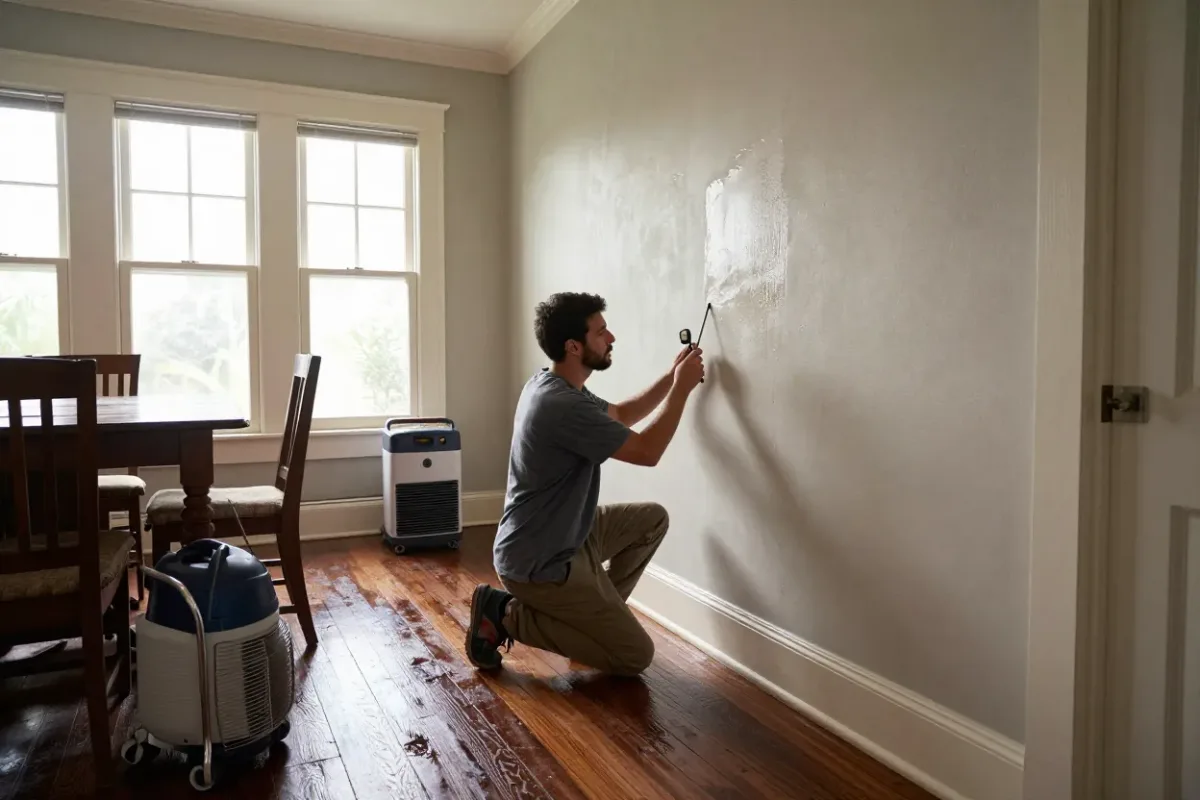
After extraction, restoration is a question of what to save and how. We meter every wall, floor and ceiling the water could have reached, use thermal imaging to find moisture that has traveled out of sight, and then decide material by material. In Sanford's historic districts that decision carries extra weight: plaster and lath, heart-pine flooring and original trim can often be dried in place if we get to them early, and replacing them is expensive and rarely matches. In the newer subdivisions, builder-grade drywall and laminate are cheaper to remove than to rescue once they are saturated.
Drying is done with the house closed up, dehumidifiers sized to the room volume, and air movers aimed to push moisture out of wall cavities and off subfloors. Readings are taken every day and logged, and the equipment comes out only when each material is back to its dry standard. Cleaning, antimicrobial treatment where the water category requires it, and the rebuild follow in that order.
Flood Cleanup When Lake Monroe and the St. Johns Overflow
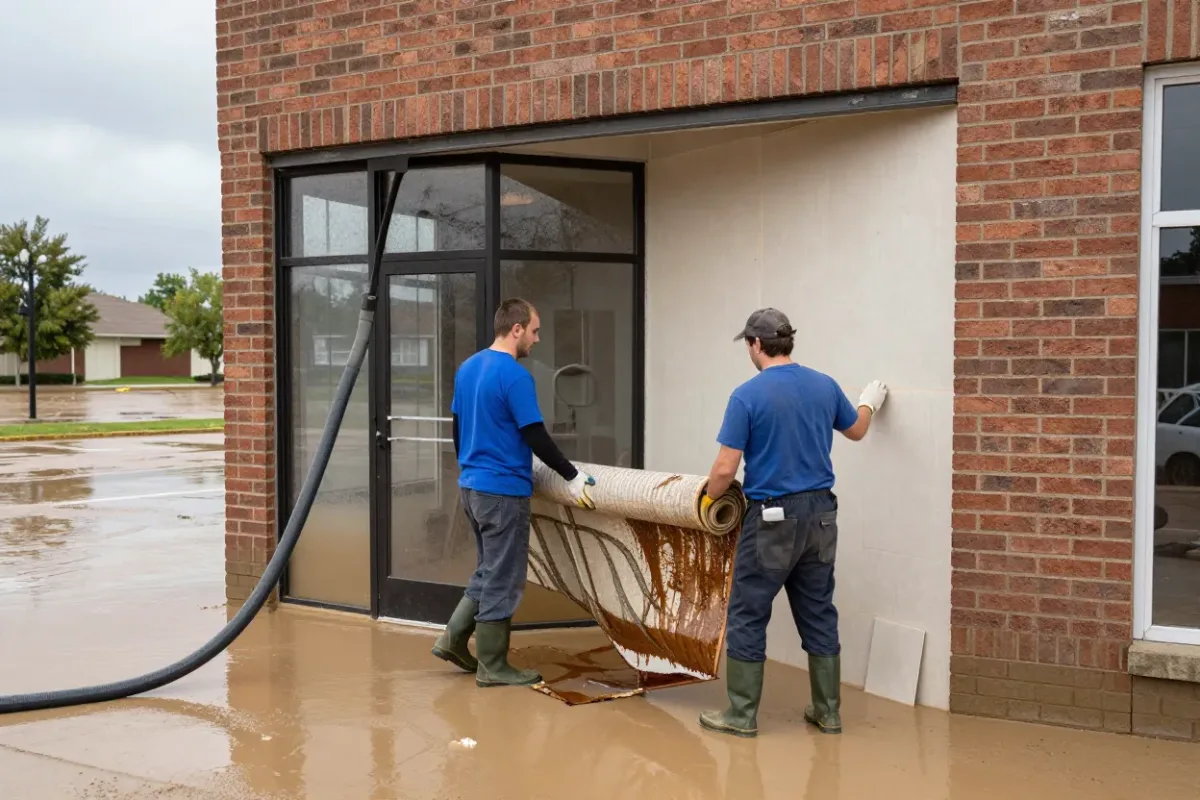
Sanford's flood story is written by the river. After Hurricane Ian in 2022 the St. Johns at Lake Monroe reached a record crest well above flood stage. Water topped the downtown seawall and the Riverwalk, spread across Seminole Boulevard into parking lots, parks and businesses, and a waterfront assisted-living facility had to be evacuated. Days after the storm, neighborhoods were still under water, because a river flood does not drain when the rain stops; it drains when the whole basin upstream has emptied. The November 2023 storm system that set a November daily rainfall record in Sanford and caused minor flooding near Lake Jesup showed that it does not take a hurricane to bring water up.
River and lake water is contaminated, so flood cleanup means removing the porous materials it touched, cleaning and disinfecting the hard surfaces that remain, and filtering the air while the building dries. Ground-floor commercial spaces downtown, lakefront homes and any structure on low ground near Lake Monroe get the closest look. If you have floodwater inside now, stay out of it and call; our flood restoration crews will tell you what is safe to do before they arrive.
Water Damage Repair in Sanford
When the moisture logs confirm the structure is dry, repair puts the rooms back. Typical Sanford work includes replacing cut drywall and baseboard, refinishing or replacing flooring, rehanging cabinets, repainting, and rebuilding ceilings below an upstairs or roof leak. In the Sanford Residential Historic District and the older blocks of Goldsboro, Georgetown and Sanford Heights, we match trim profiles and floor species where we can, because a modern replacement in an old room is visible from the doorway.
For businesses on the lakefront and downtown, repair often means storefront finishes, commercial flooring and the lower walls of retail and restaurant spaces that took river water. We keep the repair scope tied to the mitigation photographs and moisture maps, so your adjuster sees a clear line between what the water damaged and what was already there.
Mold Removal After Water Damage
Moisture left in a wall or under a floor in Sanford's humid climate can support visible growth within days. In older homes the usual hiding places are behind plaster where a roof leak has run for a season, under wood floors over a damp crawl space, and inside kitchen and bathroom walls around slow pipe leaks. In newer construction it is the paper face of drywall behind vanities and the back of base cabinets. After a river flood it is the lowest foot of every wall the water reached.
Our approach is to fix the moisture problem first, contain the area with sheeting and negative air, remove and bag affected porous materials, HEPA-vacuum and clean what stays, and verify the space is dry before anything is closed back up. We do not paint over growth. Our mold remediation page explains the method, and this guide to hidden mold shows where it usually forms after a loss.
Common Sources of Water Damage in Sanford
The losses we see in Sanford reflect a low-lying river city with a large stock of older buildings and a growing ring of newer suburbs. The most frequent causes include:
- St. Johns River and Lake Monroe flooding that tops the seawall and spreads across the downtown lakefront during and after tropical systems
- Aging plumbing in historic-district homes, including slab leaks and slow wall leaks that go unnoticed for months
- Roof and flashing failures on older buildings during summer thunderstorms and hurricane winds
- Water heater, washing machine and supply-line failures in two-story subdivision homes, with damage in the ceiling below
- Extreme single-day rainfall, like the November 2023 event, overwhelming street drainage and low lots near Lake Jesup
- Air conditioning condensate overflows in attics and interior closets during the cooling season
- Wind-driven rain through old windows, doors and porch enclosures during storms such as Hurricane Charley in 2004 and Hurricane Irma in 2017
Our Step-by-Step Process for Sanford Losses
Every job moves through eight stages in a fixed order. Skipping the verification steps is how a repaired wall ends up wet again a month later.
- Inspection and moisture surveyWe locate the source, classify the water, and meter walls, floors and ceilings with meters and thermal imaging, including plaster and wood floors in older homes that hide moisture well.
- ExtractionPumps and extractors remove standing water from floors, crawl spaces, ground-floor commercial spaces and garages.
- Removal of unsalvageable materialsSaturated drywall, wet insulation, swollen trim and flooring that cannot be dried are cut out and bagged, with extra care taken to preserve original materials where possible.
- Drying and dehumidificationWith the building closed, air movers and dehumidifiers run continuously and plaster, wood and drywall are metered daily until each reaches its dry standard.
- Cleaning and sanitizingSurfaces touched by river or gray water are cleaned and disinfected, and HEPA air filtration runs during the work.
- DocumentationPhotographs, moisture logs and a written scope are put together for you and your insurance carrier.
- RepairDrywall, plaster, trim, flooring, cabinets and paint are restored to match the rest of the home or business.
- Final verificationA closing moisture check and walkthrough confirm the structure is dry and the space is ready to use.
Sanford Areas We Serve
We cover all of Sanford, from the lakefront and Historic Downtown to the gated subdivisions toward the Wekiva basin and Lake Mary. Our crews are as comfortable in a wood-frame house from the celery-farming era as in a new home in a master-planned community, and they bring equipment suited to each.
Sanford Neighborhoods
- Sanford Residential Historic District (Historic Downtown)
- Goldsboro
- Georgetown
- Sanford Heights
- Lake Forest
- Preserve at Lake Monroe
- Estates at Wekiva Park
- Buckingham Estates
- Kensington Reserve
- Sylvan Lake Reserve
- Markham Estates
- Wyndham Preserve
Nearby Communities
The St. Johns and its lakes touch communities well beyond the city limits, and our Sanford crews serve them too. Several have their own local pages:
Safe First Steps While You Wait
These actions limit damage in the first hour without putting anyone at risk. If any step would put you near water and electricity, skip it.
- Stop a plumbing sourceShut the fixture valve or the main. Older Sanford homes may have the main at the meter or on an exterior wall; find it now if you have not before.
- Keep out of water near outlets or the panelDo not go into a flooded room where cords, outlets or the electrical panel could be wet. Turn off power to the area only if the panel is dry and reachable from a dry spot.
- Treat river and lake water as contaminatedKeep family and pets out of it and do not try to clean it up yourself.
- Protect belongingsMove furniture, rugs and electronics to dry rooms or raise them on blocks or foil.
- Record the damagePhotograph and video the source, the waterline and every affected room before anything is moved or removed.
- Keep the home cool and closedLeave the air conditioning running and windows shut; humid outdoor air slows drying and speeds growth.
- Call Water Damage FloridaDial (888) 435-4769 and tell us the source, how long it has been wet, and whether the water is still rising.
For storm losses, our first 24 hours after a flood guide and the hurricane recovery guide cover the days that follow.
Sanford Water Damage FAQs
Can plaster walls and original wood floors in a historic Sanford home be saved after water damage?
Often, yes, if drying starts early and the water was clean. Plaster dries more slowly than drywall but holds up better when dried correctly, and heart-pine floors can frequently be dried flat with the right equipment. Long-wet or contaminated materials are another matter, and we tell you honestly which situation you have after the moisture survey.
The river is still high days after the storm. Is it too late to prevent damage?
No. A river flood recedes slowly, and every day water sits in a structure it does more harm. We can begin protecting what is above the waterline, set up drying in the dry portions of the building, and extract as soon as the level drops. Call as early as you can.
Do you handle flooded businesses downtown and on the lakefront?
Yes. Commercial flood cleanup along Seminole Boulevard and Historic Downtown is part of our Sanford work. We contain the affected area, work around your hours where possible, and document the loss separately from any residential units above.
How do you decide when a Sanford home is dry?
By the numbers. We take moisture readings in every affected material daily and compare them to the dry standard for that material. Equipment comes out when the readings say so, not after a set number of days.
What happens with insurance?
You keep control of your claim. We supply the photographs, moisture logs and written scope that show where the water came from, what it reached and what was done about it, so your adjuster has a clear record to work from.
Do you cover the rest of Seminole County?
We do. Our crews serve Lake Mary, Longwood, Winter Springs, Oviedo and the communities across the river in Volusia County, and the rest of Florida through our statewide service areas.