Winter Park is an established, affluent city immediately northeast of downtown Orlando, laid out around the Winter Park Chain of Lakes: Lake Virginia, Lake Osceola, Lake Maitland, Lake Mizell and others, joined by navigable canals that were dug originally for flood control and to float logs to a sawmill. Brick streets, a canopy of old live oaks and camphor trees, the Park Avenue shopping district and Rollins College give the city its character, and lakefront lots line much of it. Housing is predominantly owner-occupied, with many older homes in the historic districts alongside lakefront estates and newer infill.
That combination, old houses, big trees and water on every side, means water damage in Winter Park is often a question of saving something irreplaceable. Water Damage Florida provides 24/7 water damage restoration across the city with the care that plaster, heart pine and original millwork deserve. Call (888) 435-4769 and tell us about the house and the water.
Emergency Water Damage Help in Winter Park
The city's tree canopy is beautiful and a documented hazard. During Hurricane Charley in 2004 Winter Park sustained considerable damage as large old oaks that had never faced such winds came down onto power lines and cars, and when they come down onto roofs the rain follows them in. Storm emergencies here are as much about the hole in the roof as the water on the floor. The rest of the year the calls are the usual ones for older housing: a supply line or water heater failure, a roof or flashing leak found by a summer thunderstorm, a slow pipe leak inside a plaster wall that finally shows itself as a stain or a soft floor.
Our crews arrive with extractors, pumps, air movers, dehumidifiers and tarps, and they begin drying on the first visit. In older homes we start metering plaster, wood floors and built-ins immediately, because those are the materials that can be saved if we act early and lost if we do not. Photographs and moisture readings on arrival start your insurance record with the actual condition of the house.
Restoring Historic Homes and Lakefront Estates
Restoration is the full path from wet to finished, and in Winter Park the decisions along it carry more weight than usual. After extraction we meter every wall, floor, ceiling and built-in the water could have reached and use thermal imaging to find moisture that has traveled behind plaster or under wood floors. Then we decide, material by material, what dries in place and what comes out. In the College Quarter, Virginia Heights and Interlachen Avenue historic districts that means plaster and lath, heart-pine and oak floors, original windows and trim that are worth a real effort. In lakefront estates it may be stone, custom millwork and finishes that cannot be reordered from a catalog.
Drying is engineered, not left to the weather: the house stays closed with the air conditioning running, dehumidifiers are matched to the space, and air movers and floor-drying systems are set to pull moisture out of plaster and wood at a rate that does not crack or cup them. Readings are logged daily until every material reaches its dry standard. Cleaning, any antimicrobial treatment and the rebuild follow in that order.
Storm and Flood Cleanup Around the Chain of Lakes
With lakefront lots lining much of the city, Winter Park's flood exposure is the lakes themselves. Orange County as a whole recorded extremely heavy rain and widespread lake overflow during Hurricane Ian in 2022, and lost power to most households during Irma in 2017, which meant air conditioners and sump pumps stopped just when they were needed. The canals connecting the chain were built for flood control, but a chain of lakes rising together has only so many places to go, and the lowest lakefront lots, boathouses and ground-floor rooms are where it ends up.
Lake water is contaminated, so flood cleanup begins with removal: saturated drywall, insulation, carpet and pad come out, hard surfaces are cleaned and disinfected, and HEPA filtration runs while the structure dries. Where the water reached plaster and wood in an older home, we make a careful judgment about what can be dried and what cannot. If lake water is in your home now, stay out of it and call; we will tell you what is safe to do until the crew arrives.
Water Damage Repair That Respects the House
Nothing is rebuilt until the moisture logs show the house is dry. In Winter Park that often means patching and skimming plaster rather than replacing it with drywall, refinishing wood floors that were dried flat, matching trim profiles and window casings, and rebuilding ceilings below a roof opening once the roofer has closed it. In newer infill homes the work is more conventional: drywall, baseboard, flooring, cabinets and paint matched to the builder's finishes.
Homes in the city's historic districts may be subject to preservation rules on exterior changes, and we plan repairs with that in mind. After a tree strike, we coordinate the interior schedule with the roofer and the tree crew so drying is not undone by the next storm. Throughout, the repair scope stays tied to the mitigation photographs and moisture maps so your adjuster sees exactly what the water reached and what was done.
Mold Removal Behind Plaster and Under Old Floors
In Winter Park's humid climate, moisture left behind plaster, under a wood floor or inside a ceiling can support visible growth within days, and older construction hides it well. The usual places are the back of plaster where a roof or window leak has run for a season, the underside of wood floors over a damp crawl space, the wall behind an old tub or shower, and the closet beside an air handler. In newer homes it is the paper face of drywall behind vanities and the back of base cabinets.
We correct the moisture source first, contain the area with sheeting and negative air, remove and bag affected porous materials, HEPA-vacuum and clean what stays, and confirm the space is dry before it is closed up again. We do not paint over growth. The method is described on our mold remediation page, and this guide to hidden mold after water damage is worth reading before any wall that was once wet is repainted.
Common Causes of Water Damage in Winter Park
An older, largely built-out lakefront city under a mature tree canopy sees a particular set of losses. The sources we encounter most often are:
- Large old oaks and camphor trees falling on roofs during hurricanes, as happened across the city in Charley, with rain following through the opening
- Aging plumbing inside plaster walls and under wood floors in historic-district homes, leaking slowly for months before it shows
- Roof, flashing and original-window leaks during summer thunderstorms
- Lake overflow reaching the lowest lakefront lots and ground-floor rooms during extreme rain, as Orange County saw broadly in Hurricane Ian
- Water heater, supply line and appliance failures in homes of every age
- Air conditioning condensate overflows and the humidity damage that follows when power is lost, as most households experienced in Irma
- Ground movement affecting plumbing and drainage in a city with documented sinkhole history, including the large 1981 sinkhole that opened during record-low aquifer levels
- Wind-driven rain through older windows, doors and porch enclosures during tropical systems
How We Work, Step by Step
Every Winter Park job moves through the same eight stages in order. In an older home the pace of the drying stage is adjusted so materials are saved rather than stressed.
- Inspection and moisture surveyWe find the source, classify the water, and meter every wall, floor, ceiling and built-in it could have reached, with particular attention to plaster and wood that hide moisture.
- ExtractionPumps and extractors remove standing water from floors, crawl spaces, ground-floor rooms and garages.
- Removal of what cannot be savedSaturated drywall, wet insulation, ruined carpet and pad, and storm debris are removed and bagged, with original materials preserved wherever drying is possible.
- Controlled dryingAir movers, floor-drying systems and dehumidifiers run in the closed home, with readings logged daily until each material reaches its dry standard.
- Cleaning and sanitizingSurfaces touched by lake or gray water are cleaned and disinfected, with HEPA filtration running throughout.
- DocumentationWe assemble photographs, daily moisture logs and a written scope for you and your insurance carrier, with original materials noted separately.
- RepairPlaster, floors, trim, ceilings, cabinets and paint are restored to match the character of the house.
- Final verificationA closing round of moisture readings and a walkthrough confirm the home is dry and ready to live in.
Winter Park Areas We Serve
We respond throughout Winter Park, from the historic districts and the streets around Park Avenue and Rollins College to the lakefront estates on the chain of lakes and the newer infill on the city's edges. Our crews bring equipment suited to plaster and heart pine as readily as to drywall and laminate.
Winter Park Neighborhoods
- Olde Winter Park
- Downtown Winter Park Historic District / Park Avenue
- Hannibal Square
- College Quarter
- Virginia Heights
- Interlachen Avenue Historic District
- Windsong
Nearby Communities
Our Winter Park crews also serve the surrounding communities of northern Orange and southern Seminole counties. Several have their own local pages:
First Steps in an Older Home
These actions limit the damage in the first hour and are safe for most homeowners. If a step would bring you near water and electricity at the same time, leave it to us.
- Shut off the waterTurn off the fixture valve or the main supply. In an older Winter Park home the main may be at the meter, in a crawl space hatch or on an exterior wall; find it before you need it.
- Stay out from under a damaged ceilingWet plaster is heavy and can fall without warning, especially after a tree strike. Keep everyone out of that room.
- Avoid water near outlets or the panelDo not step into a wet room where cords, outlets or the panel might be in contact with water; switch off power only if the panel is dry and you can reach it from a dry floor.
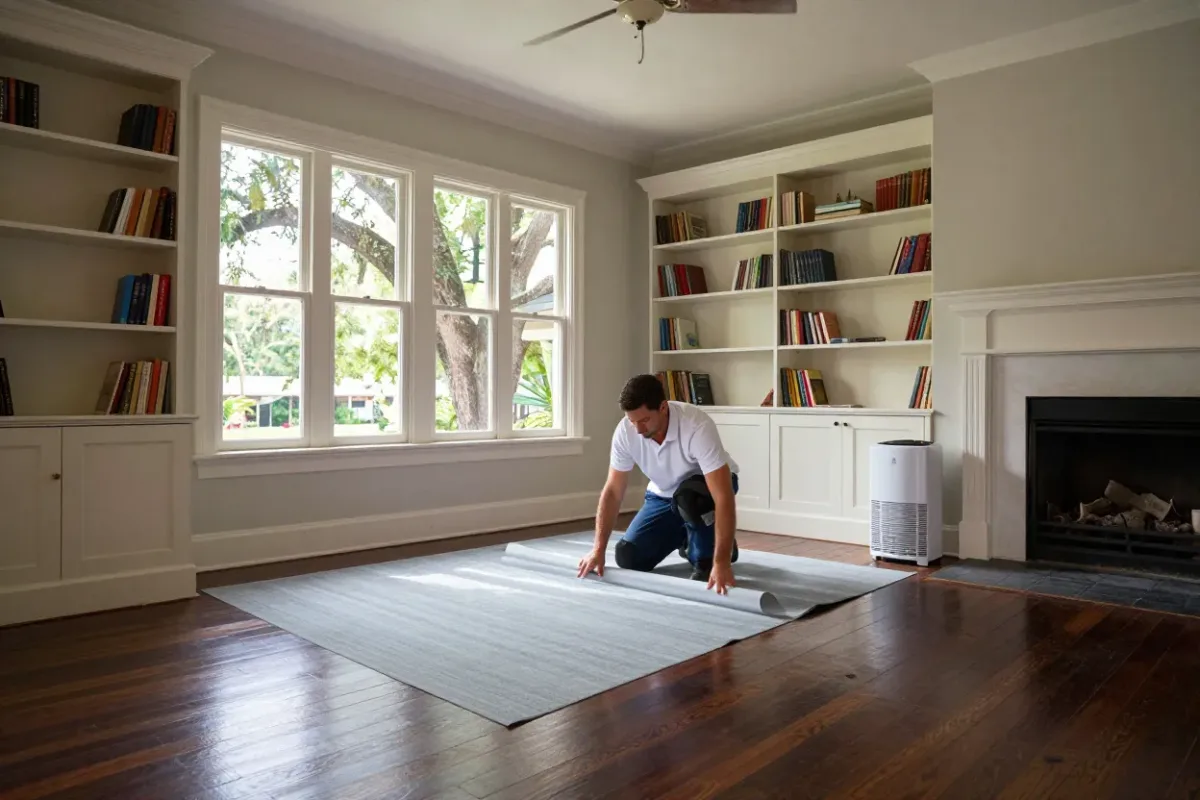
- Move rugs, art and furnitureLift area rugs off wood floors at once, move artwork and antiques to a dry room, and set furniture legs on foil or blocks.
- Photograph before anything is touchedRecord the source, the waterline, the damaged ceiling or roof and every affected room and item.
- Keep the house cool and closedLeave the air conditioning running if you have power; humid outdoor air slows drying and swells wood.
- Call Water Damage FloridaReach us at (888) 435-4769 and tell us the source, the age of the house and whether the roof is open.
After a hurricane, our hurricane water damage recovery guide and the first 24 hours after a flood checklist cover the days that follow.
Winter Park Water Damage FAQs
Can the original wood floors and plaster in my historic Winter Park home be saved?
Often, if the water was clean and drying starts early. Wood floors can frequently be dried flat with floor-drying systems, and plaster holds up well when dried at a controlled pace. Long-wet or contaminated materials are another matter, and we tell you which situation you have after the moisture survey.
An oak came down on the roof and rain is coming in. What do I do first?
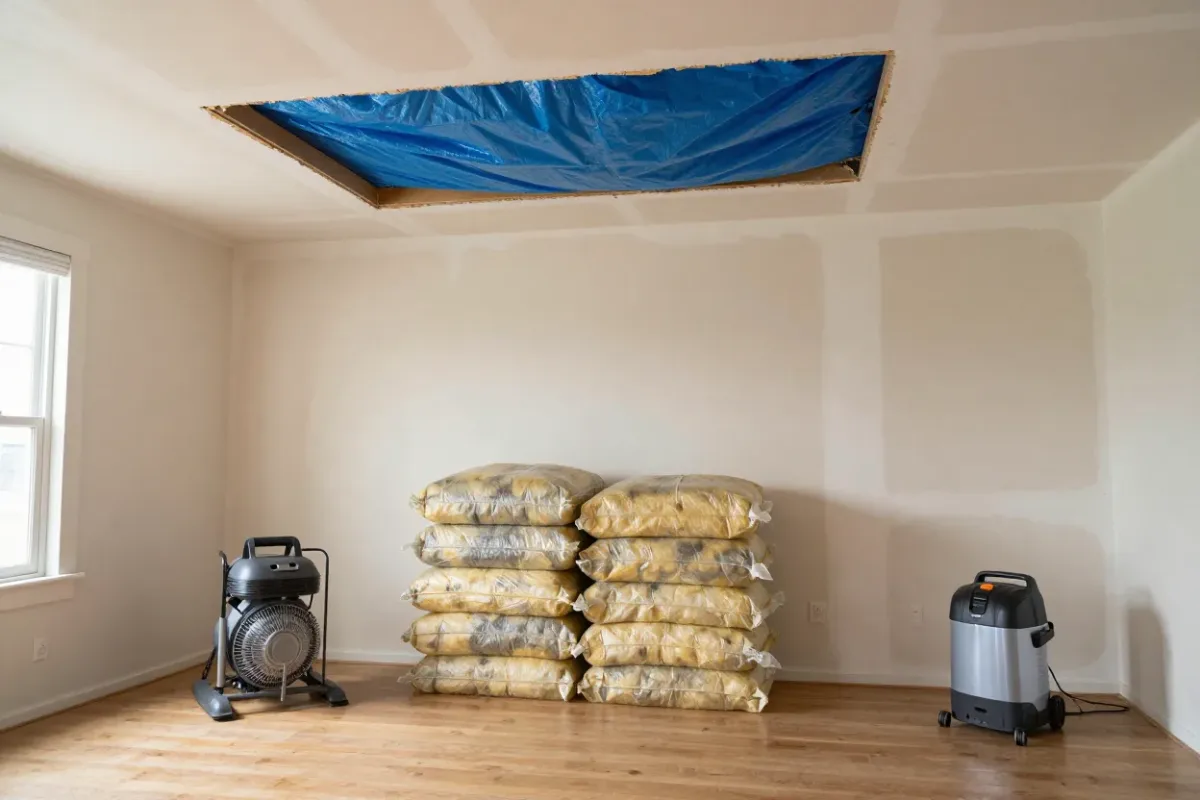
Keep everyone out of the rooms under the damage, then call us and a roofer. We can tarp the opening and begin extraction and drying inside while the roofer and tree crew do their work, so the interior is not lost waiting for the roof.
Does my home being in a historic district change the repair?
It can affect exterior work, and we plan for that. Inside, our aim is to repair with materials and methods that match the house, such as patching plaster rather than swapping it for drywall, wherever the drying allows.
Is lake water in a lakefront home treated differently from a pipe leak?
Yes. Lake water is contaminated, so porous materials it touched are removed rather than dried and hard surfaces are disinfected. A clean leak caught early lets us save far more of an older house.
How do you know the drying is finished without damaging the wood?
By daily moisture readings compared against the dry standard for each material, with the drying rate set so wood and plaster are not stressed. Equipment leaves when the readings reach that standard, and the logs go to you.
Do you serve Maitland, Orlando and the surrounding area?
Yes. Our crews cover Maitland, Eatonville, Casselberry, Goldenrod, Baldwin Park and the rest of Orange and Seminole counties, along with the rest of Florida through our statewide service areas.