Coconut Creek was developed as a planned community that put trees, landscaped roads, parks and an extensive network of lakes and canals at the center of its design, and it calls itself the Butterfly Capital of the World. It is a mid-sized inland suburb roughly midway between Fort Lauderdale and Boca Raton, on low, flat terrain only about ten feet above sea level. The housing is a mix: single-family homes, townhouses, newer developments, and the large gated 55-plus condominium community of Wynmoor. Being several miles from the Atlantic spares the city from surge, but not from the region's summer downpours, its year-round humidity, or its hurricanes.
Hurricane Wilma in 2005 proved that point. The storm damaged an estimated majority of homes and businesses in Coconut Creek and led officials to condemn hundreds of residences. Water Damage Florida provides water damage restoration in Coconut Creek 24 hours a day, whether the loss is a storm-damaged roof, a failed water heater or a leak in a condominium stack. Call (888) 435-4769 and we will start the response.
Emergency Response for Leaks and Storm Damage
The emergencies we see in Coconut Creek follow the calendar. In the dry months they are plumbing: supply lines, water heaters and washing machine hoses in townhouses and condominiums, where a failure in one unit is a ceiling problem in another. In the wet season and hurricane months, they are roofs and windows, with rain coming through damaged shingles, soffits and seals and soaking ceilings, insulation and the rooms below. After a major storm the calls come all at once, from every neighborhood.
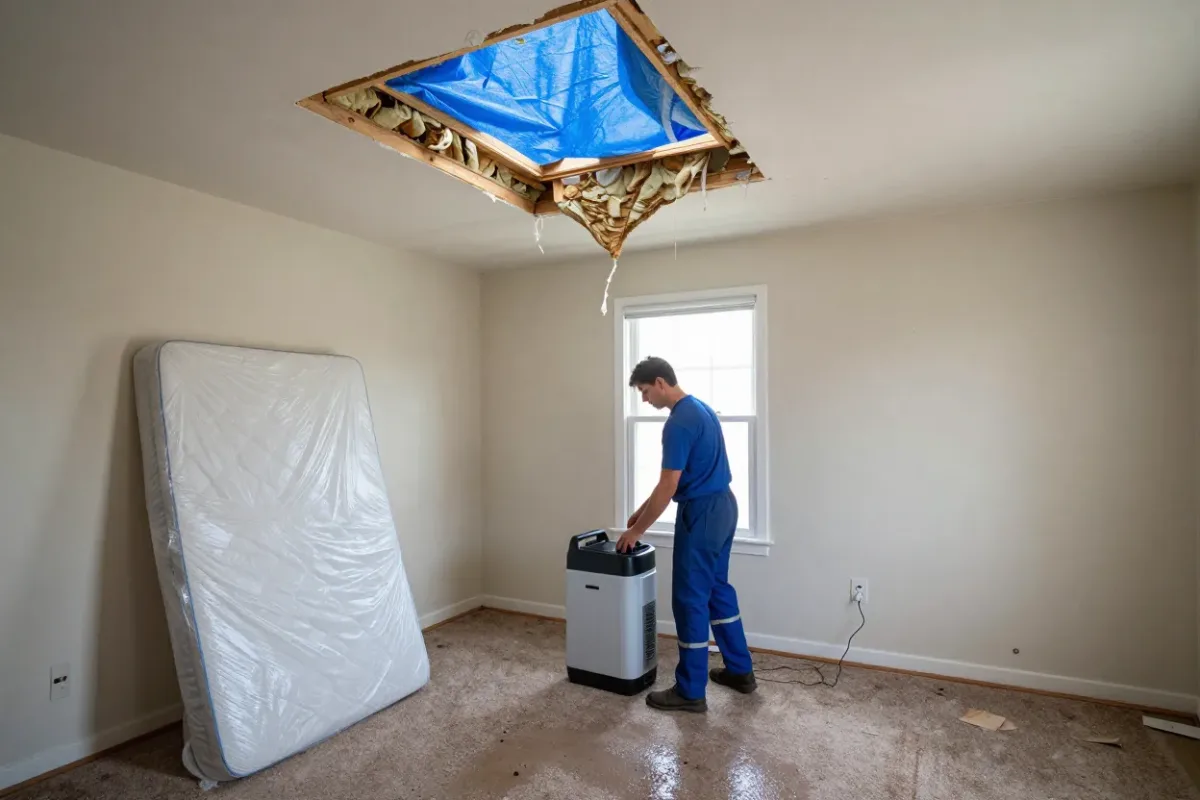
We respond with extraction equipment for interiors and pumps for garages and patios, and we set air movers and dehumidifiers on the first visit. For storm damage we prioritize stopping the intrusion, removing collapsed or saturated ceiling material safely, and getting the structure drying before the humidity sets in. Photos and baseline moisture readings are recorded before removal begins. Our emergency water damage page describes what the first hours look like.
Restoration Across Homes, Townhouses and Wynmoor
Coconut Creek's building types each fail in their own way. A single-family home takes water at the slab and in the ceiling under a roof leak. A townhouse shares walls with its neighbors, so water in one unit's wall cavity is water in the next. A garden-style condominium in a community like Wynmoor stacks units vertically, and a leak upstairs shows up as a stained ceiling and wet closet downstairs, often in a unit whose seasonal owner is away. Our first task on every job is to find the full extent of the water, which is usually larger than the visible damage.
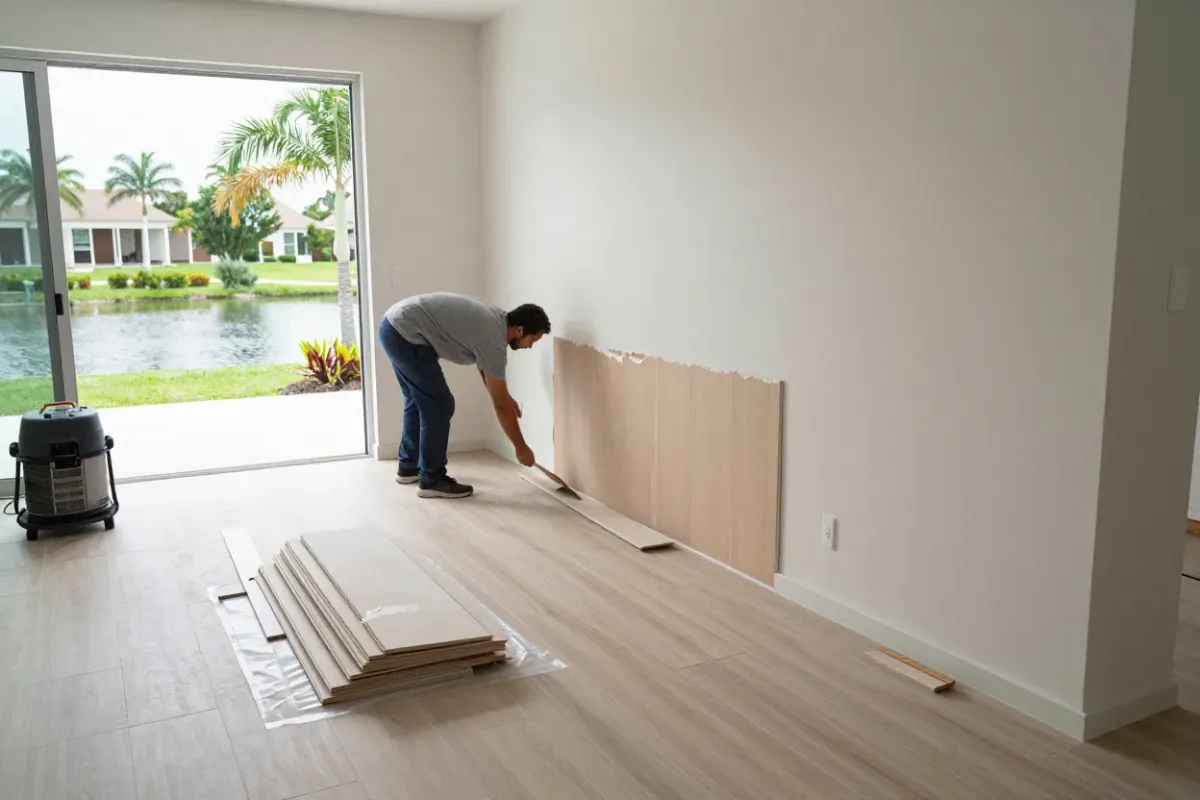
We map that extent with moisture meters and thermal imaging, remove what cannot be dried, and dry the rest with the building closed up and dehumidifiers sized to the space. Readings are taken daily until every material meets its dry standard, then cleaning, treatment and repair follow. The full approach is described on our water damage restoration service page.
Storm Damage and Flood Cleanup in Coconut Creek
Coconut Creek is not on the ocean, but it is low-lying and threaded with canals and lakes, and the city runs floodplain, stormwater and canal-bank-stabilization programs for good reason. Heavy summer rainfall and tropical systems fill the lakes and canals that wind through the neighborhoods, and homes on the lowest lots or backing onto water are the first to see it reach the patio and the rear wall. The larger storm risk here, as Hurricane Wilma showed, is wind: damaged roofs let rain into the house for days afterward, and that is often the bigger water loss.
Rain that has crossed a yard or a street, or backed up from a canal, is contaminated and handled by removing saturated porous materials rather than drying them. Roof intrusion is usually cleaner, but soaked insulation and collapsed ceiling drywall still have to come out. We clean and disinfect hard surfaces, filter the air, and dry the structure with readings to prove it. For storm planning, read our hurricane water damage recovery guide and our flood restoration page.
Repairing What the Water Damaged
Repairs in Coconut Creek range from a single strip of drywall and baseboard in a townhouse to a full ceiling rebuild in a home whose roof failed in a storm. Common work includes replacing ceiling drywall and insulation, restoring cut walls and trim, reinstalling or replacing flooring, rehanging cabinets pulled for drying, and repainting. After a hurricane we coordinate the interior rebuild with your roofer's schedule so the ceiling is not closed before the roof is sound.
Every repair scope is built from the photos and moisture logs collected during mitigation, so your adjuster can see which materials were affected and why. In Wynmoor and other association communities we follow the rules on hours, access and shared elements and keep each unit's documentation separate.
Mold Removal After a Leak or Storm
Coconut Creek's tropical climate keeps humidity high year-round, and any water left in a ceiling, wall or floor assembly can support growth within days. The spots we check first are the insulation and drywall beneath a roof leak, the drywall behind bathroom tile, the cavity under kitchen base cabinets, the shared wall of a townhouse that took water from the neighbor's side, and closets in seasonally vacant condominium units where the air conditioning was turned up while a leak ran unnoticed.
Our mold removal starts by correcting the moisture source, then containing the area with plastic sheeting and negative air, removing and bagging affected porous materials, HEPA-vacuuming and cleaning remaining surfaces, and drying fully before the rebuild. We never paint over growth. Our mold remediation page explains the process, and our guide to hidden mold after water damage is worth reading before any stained ceiling is simply repainted.
Frequent Causes of Water Damage in Coconut Creek
A low, humid, lake-laced suburb with a large stock of townhouses and condominiums and a documented history of hurricane damage produces a recognizable list of water losses. In Coconut Creek the most common are:
- Roof, shingle and soffit damage during hurricanes and tropical storms letting rain into ceilings and attics
- Window and sliding door seal failures in wind-driven rain
- Upper-unit plumbing leaks in Wynmoor and other condominium communities reaching the units below
- Shared-wall water migration between attached townhouses
- Leaks running unnoticed in seasonally vacant units
- Air conditioning condensate overflows in interior closets during the long cooling season
- Water heater and supply-line failures
- Lake and canal water rising into patios and rear rooms on low lots during prolonged rain
Our Restoration Process
Each Coconut Creek project runs through eight stages in order, with each one verified before the next begins. That order is what keeps a rebuilt ceiling from hiding wet insulation.
- Inspection and mappingWe confirm the source, classify the water, and trace it with meters and thermal imaging through ceilings, shared walls and adjacent units.
- ExtractionStanding water is removed from floors with portable or truck-mounted extractors; pumps clear garages and patios after a storm.
- Removal of damaged materialsCollapsed or saturated ceiling drywall, wet insulation, swollen baseboard, carpet pad and flooring that cannot be dried are cut out and bagged.
- Structural dryingAir movers and dehumidifiers run continuously in the closed building, and moisture readings are logged daily until each material reaches its dry standard.
- Cleaning and treatmentSurfaces touched by contaminated water are cleaned and disinfected, with HEPA air filtration during the work.
- DocumentationPhotos, readings, an equipment log and a written scope are prepared for you and your insurance carrier, separated by unit in multi-family buildings.
- RepairCeilings, drywall, trim, flooring, cabinets and paint are restored, coordinated with roof repairs after a storm.
- Final checkA closing set of readings and a walkthrough confirm the property is dry and finished.
Coconut Creek Areas We Serve
We cover the entire city, from the condominium buildings of Wynmoor to the townhouses and single-family streets of The Township, Winston Park and the newer developments near MainStreet. Our crews arrive with equipment matched to the building type on the call.
Coconut Creek Neighborhoods
- Wynmoor
- The Township
- Centura Parc
- Winston Park
- South Creek
- MainStreet
Nearby Communities
Coconut Creek borders several northern Broward cities, and our crews serve all of them. These neighbors have their own service pages:
Immediate Steps for Homeowners
Whether the water came from a pipe or through the roof, a few safe actions in the first hour make a real difference. Do not take any step that puts you near energized water or under an unstable ceiling.
- Stop the water where you canClose the fixture valve or main shutoff for a plumbing leak. For a roof leak, place a bucket under the drip and move belongings, but do not go onto the roof during or after a storm.
- Keep out of water near electrical sourcesDo not enter a room where water may have reached outlets, appliances or ceiling fixtures, and do not touch a wet panel. Cut a breaker only if the panel is dry and reachable.
- Stay clear of a sagging ceilingA bulge in ceiling drywall is holding water and can give way. Keep people and pets out from under it until our crew relieves it.
- Notify neighbors and managementIn a townhouse or condominium, tell the adjoining or downstairs residents and the association so shared plumbing can be isolated and their units checked.
- Photograph everythingRecord the source, the ceiling or waterline and each affected room before anything is moved or discarded.
- Keep the air conditioning onIf power is on, cool dry indoor air slows microbial growth. Keep the house closed to the humid outdoor air.
- Call Water Damage FloridaDial (888) 435-4769 and describe the source, how long it has been wet and whether other units are involved.
After a named storm, our first 24 hours after a flood guide covers the extra precautions for contaminated water.
Coconut Creek Water Damage FAQs
Our roof was damaged in a storm and rain came into the bedrooms. Do we call you or a roofer first?
Both, and quickly. The roofer stops the intrusion; we remove the saturated ceiling material and insulation, dry the structure and document the interior damage. We coordinate the interior rebuild with the roof repair so the ceiling is not closed over a roof that still leaks.
Is a Wynmoor unit handled differently from a single-family house?
The drying science is the same, but the logistics differ. We coordinate with the association and management, check the units above and below, protect hallways and shared areas, and keep separate documentation for each unit so owners and the association each have their own record.
We are away for the summer. Who can let you in if a leak is found?
Many seasonal owners leave a key with management, a neighbor or a caretaker; we can coordinate with whoever you designate. Call us as soon as you learn of the problem so we can contain and assess before the water spreads further.
Does the lake behind my house put me at risk of flooding?
Homes that back onto Coconut Creek's lakes and canals are the first to see water reach the patio and rear wall during prolonged tropical rain. Most storms pass without incident, but if water approaches the house, photograph it and call early; a rear wall checked and dried promptly is far less work than one found wet later.
What was the impact of Hurricane Wilma here?
Wilma in 2005 damaged an estimated majority of homes and businesses in Coconut Creek and led officials to condemn hundreds of residences. Roof damage and the rain that followed it were a large part of the water losses, which is why we treat roof intrusion as an urgent drying job, not a cosmetic one.
Can a wet ceiling be dried without removing it?
Sometimes, if the water was clean, the insulation above is dry or removable from the attic, and the drywall has not sagged. More often the insulation is saturated and the ceiling has to be opened. Moisture readings and thermal imaging make that decision, not appearance.