Parkland occupies the far northwest corner of Broward County, with the Palm Beach County line to its north and the Everglades at its western edge. It sits about thirteen feet above sea level on flat former wetland, and a notable share of its land area is water: the lakes and drainage canals that thread through its neighborhoods. The city grew from a rural equestrian settlement with no stores or traffic lights until the 1990s into a community of large-lot homes and gated, master-planned golf and lake neighborhoods, and its zoning still preserves the park-like character that gave it its name.
Those homes are large, mostly built from the 1990s onward, and finished to a standard that makes a water loss expensive fast: wood and stone floors, custom cabinetry, two-story ceilings and upstairs plumbing that drains through the rooms below. Water Damage Florida provides water damage restoration in Parkland 24 hours a day, with the equipment and care to save finishes rather than replace them wherever the readings allow. Call (888) 435-4769 as soon as you see water.
Emergency Water Damage Service in Parkland
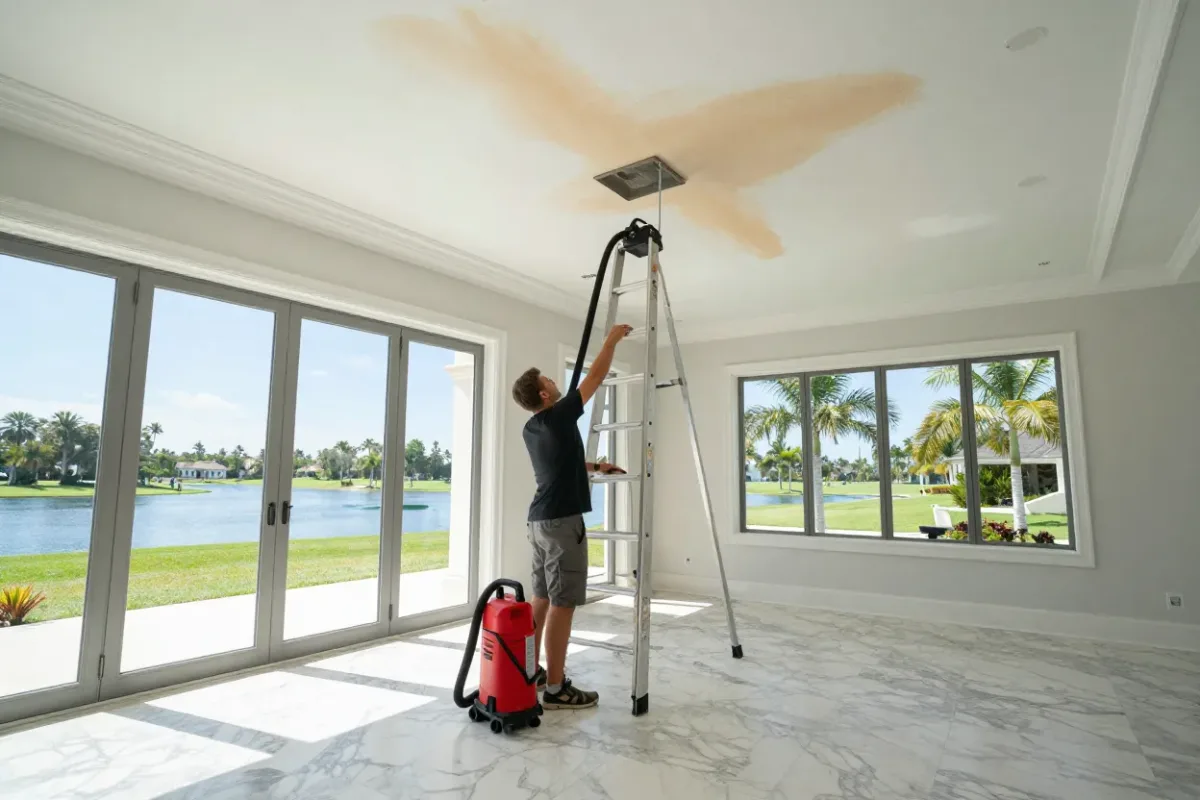
The most common Parkland emergency starts on the second floor. A supply line under a vanity, a toilet fill valve, a water heater in an upstairs closet or a washing machine hose lets go, and by the time the stain appears on the great-room ceiling the insulation above it is saturated and the water has followed the framing into the kitchen cabinets and the wall cavities below. The other frequent call is the ground floor after a storm: water through a lanai door, a garage on a low corner of the lot, or a pool deck draining toward the house.
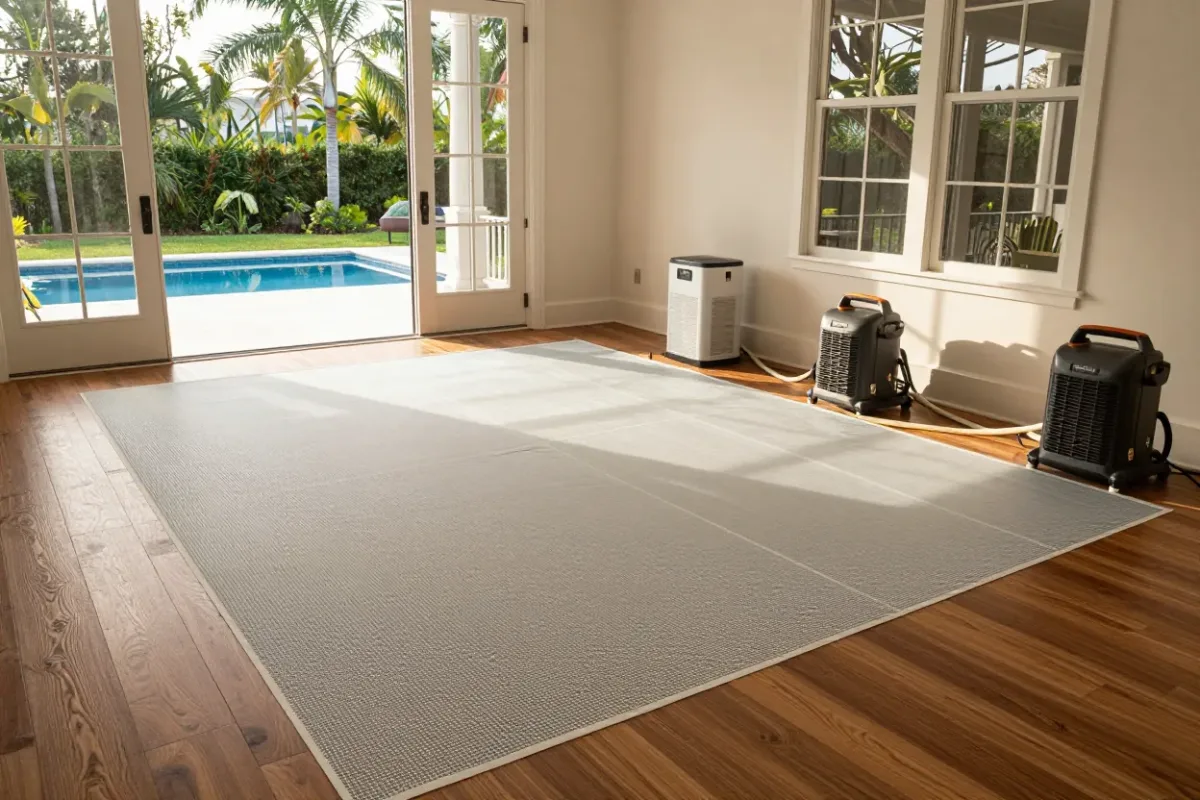
Our crews arrive with extraction equipment for wood, stone and carpet, floor-drying mat systems that pull moisture up through hardwood, and enough air movers and dehumidifiers for high-ceiling spaces. Thermal imaging on the first walk-through shows where the water went between floors, and we photograph and log moisture readings before anything is removed. The emergency water damage page describes what to expect in those first hours.
Restoration Built Around Saving High-End Finishes
In Parkland, restoration is largely about deciding what does not have to be removed. Large single-family homes in gated golf and lake communities are finished with materials that are costly to match: solid and engineered wood floors, natural stone, crown molding, coffered ceilings, built-in cabinetry. A wood floor that looks fine can be wet beneath the finish; a cabinet that looks dry can be soaked at the base. Appearance is not the test. Moisture readings are.
We map the loss with meters and thermal imaging, remove only what the readings say cannot be saved, and dry the rest in place with the home closed and dehumidifiers sized to the volume of the rooms. Daily readings continue until every material reaches its dry standard, and cleaning and repair follow only then. Our water damage restoration service page explains the full method.
Storm Water and Flood Cleanup at the Everglades Edge
Parkland is well inland and sits higher than most of Broward, but it is exposed to the same hurricane winds and heavy tropical rain as the rest of the county's interior, and it borders the Everglades. Hurricane Wilma in 2005 damaged city facilities and left dozens of homes and businesses unsafe to occupy, a reminder that wind damage to a roof turns into a water loss inside the house for days afterward. Prolonged rain fills the lakes and canals that make up so much of the city's area, and homes on the lowest corners of large lots, or whose pool decks and lanais slope toward the house, can take water at the ground floor.
Water that has crossed a lawn, a driveway or a lake bank is contaminated and is handled by removing saturated porous materials rather than drying them, then cleaning and disinfecting hard surfaces while the air is filtered. Roof intrusion is usually cleaner but still means removing soaked insulation and ceiling drywall. For storm losses in more depth, see our flood restoration page and the hurricane water damage recovery guide.
Repairs Matched to the Home
Repair in Parkland means the damage should be invisible when we leave. That requires matching wood species, stain and finish across a floor, replicating crown and baseboard profiles rather than approximating them, rebuilding cabinet bases so doors and drawers still align, and repainting full walls and ceilings rather than patching. Ceilings under upstairs bathrooms are the most frequent rebuild, and we replace the insulation above them with new material rather than reusing anything that was wet.
The scope of repair comes straight from the photographs and daily moisture logs collected during mitigation, so your adjuster can see which materials were affected and why each was removed or dried. In gated communities we arrange access, follow HOA rules on contractor hours and vehicles, and leave the site clean between visits.
Mold Removal Behind Finished Walls
Newer, tightly built homes with constant air conditioning tend to hide mold rather than prevent it. Visible surfaces stay dry while a wall cavity behind a shower, the space beneath a wood floor or the insulation above a kitchen ceiling stays wet for weeks. In Parkland the places we find growth most often are the drywall behind upstairs bathroom tile, the closet housing an air handler, the toe-kick space under kitchen cabinets after a dishwasher or refrigerator line leak, and the ceiling cavity beneath a second-floor laundry room.
Mold removal begins by correcting the moisture source, then containing the area with plastic sheeting and negative air, removing and bagging affected porous materials, HEPA-vacuuming and cleaning remaining surfaces, and drying completely before the rebuild. We do not seal growth behind fresh paint. Our mold remediation page explains the process, and our guide to hidden mold after water damage is worth reading before a ceiling stain is simply painted over.
Where Water Damage in Parkland Comes From
Large two-story homes on generous lots, many with pools, lakefront edges and long plumbing runs, produce a particular set of water losses. In Parkland the most common are:
- Upstairs supply lines, toilet fill valves and water heaters leaking through the ceilings below
- Burst washing machine hoses in second-floor laundry rooms
- Dishwasher, refrigerator and ice-maker line leaks spreading beneath wood and stone floors
- Overflowing condensate pans on air handlers in closets and attics
- Wind-driven rain through windows, doors and roof vents during hurricanes and tropical storms
- Roof damage in a major storm letting rain into attics and ceilings for days
- Pool, spa and irrigation equipment failures near the house
- Ground-floor intrusion on the lowest corners of large lots after prolonged rain
- Well pump and pressure tank failures on the city's rural equestrian properties
The Sequence We Follow
Every Parkland job passes through eight stages in a fixed order. Each is confirmed with readings before the next begins, so no finish is reinstalled over a wet cavity.
- Inspection and tracingWe identify the source, classify the water, and use thermal imaging and moisture meters to follow it between floors, into cabinetry and beneath wood and stone flooring.
- Water extractionWater is drawn from carpet, stone and wood with weighted extractors and floor-drying mats; pumps clear garages and lanais after a storm.
- Selective removalWet insulation, saturated ceiling drywall, swollen cabinet bases and flooring that cannot be dried are removed and bagged with as little disturbance to surrounding finishes as possible.
- Drying and dehumidificationAir movers and dehumidifiers sized for large, high-ceiling rooms run continuously, and readings are logged daily until each material reaches its dry standard.
- CleaningEvery affected surface is cleaned, treated where the water category calls for it, and kept under HEPA air filtration while the work proceeds.
- DocumentationPhotos, daily readings, an equipment log and a written scope are prepared for you and your insurance carrier.
- Repair and finish matchingCeilings, drywall, trim, cabinetry, wood and stone flooring and paint are restored to match the surrounding work.
- Final verificationWe finish with a last set of readings and a walkthrough with you to confirm the home is dry and complete.
Parkland Communities We Serve
We serve all of Parkland, from the older large-lot and equestrian areas to the gated golf and lake communities built out from the 1990s onward. Our crews are used to gate procedures and HOA requirements and arrange them before arrival.
Parkland Neighborhoods
- Heron Bay
- Parkland Isles
- Parkland Golf & Country Club
- Cypress Head
- Pine Tree Estates
- The Ranches
- MiraLago
- Watercrest
- Fox Ridge
- Tall Pines
- Parkland Reserve
- Cypress Cay
Nearby Communities
Our Parkland crews also respond throughout northern Broward and across the line into southern Palm Beach County. Each has its own service page:
First Hour Checklist
A wet floor or a stained ceiling has usually been developing for hours. These steps are safe to take right away and limit what will need to be replaced.
- Turn off the waterClose the valve under the fixture or shut off the main supply at the house. On a property with a well, switch off the pump breaker only if the panel is dry and reachable.
- Stay away from water near electrical sourcesDo not enter a room where water may have reached outlets, appliances or light fixtures, and never touch a wet panel.
- Do not touch a sagging ceilingA bulge is holding water and can give way. Move belongings out from under it and let our crew relieve it safely.
- Protect the floorsLift rugs off wood and stone immediately and put foil or plastic under furniture legs so finishes are not stained.
- Photograph before anything movesRecord the source, the ceiling or floor, and every affected room for your claim.
- Keep the air conditioning onCool, dry indoor air slows wood swelling and microbial growth; keep the house closed to outdoor humidity.
- Call Water Damage FloridaDial (888) 435-4769 and tell us the source, how long it has been running and which rooms and floors are affected.
If the water came in during a storm, our first 24 hours after a flood guide adds the precautions for contaminated water.
Parkland Water Damage FAQs
Can you save a hardwood floor after a leak?
Frequently, if we get to it early. Floor-drying mats draw moisture up through the boards, and daily readings show whether the floor is responding. Boards that have cupped severely, delaminated or taken contaminated water are replaced and matched to the rest of the floor.
Water came through the great-room ceiling from an upstairs bathroom. Will the whole ceiling come down?
Rarely. Thermal imaging and moisture readings show the true extent, which is usually larger than the stain but far smaller than the ceiling. We remove the wet section and all the insulation above it and dry the framing before rebuilding.
Parkland sits higher than most of Broward. Is flooding really a concern?
Rising water into homes is less common here than in the lower cities, but heavy rain still fills the lakes and canals that cover much of the city, and low corners of large lots can take water. The bigger storm risk is wind damage to a roof, as Hurricane Wilma showed in 2005, which lets rain into the house for days.
We are on a well in The Ranches. Does that change anything?
Only the shutoff. A well pump keeps supplying water until it is switched off at the breaker, so cutting power to the pump is the first step for a plumbing leak on a well property, provided the panel is dry and safe to reach. The drying and repair are the same.
Do you work inside gated communities?
Yes. We arrange gate access before arrival, follow HOA rules on hours, vehicles and contractor conduct, and supply any documentation the association asks for when shared elements are involved.
How do you decide the home is dry?
With meters, not a calendar: each day's readings are compared against the dry standard for that material. Wood, stone and cabinetry take longer than drywall, so equipment may leave some rooms before others, and you receive the log.