Coral Springs was laid out from farmland in the early 1960s as a master-planned community in the northwest corner of Broward County, with the Everglades to its west and, despite the name, no natural springs at all. The land was drained by canals and levees before the first homes went up, and it stays dry today only because the Coral Springs Improvement District pumps its canals down with large pump stations during heavy rain. Water Damage Florida provides water damage restoration in Coral Springs around the clock, from a single wet closet to a home opened up by a storm.
The storm that residents still measure others against is Hurricane Wilma, whose eye passed directly over the city in 2005; it is documented as the most powerful hurricane to hit Coral Springs since incorporation, and the 2004 and 2005 seasons together stripped about a third of the city's tree canopy. Hurricane Irma brought tropical-storm to near-hurricane winds to the western suburbs in 2017. Wind that opens a roof lets rain into a home just as surely as a burst pipe. If that has happened to you, call (888) 435-4769 and we will get moving.
Emergency Response for Coral Springs Homes
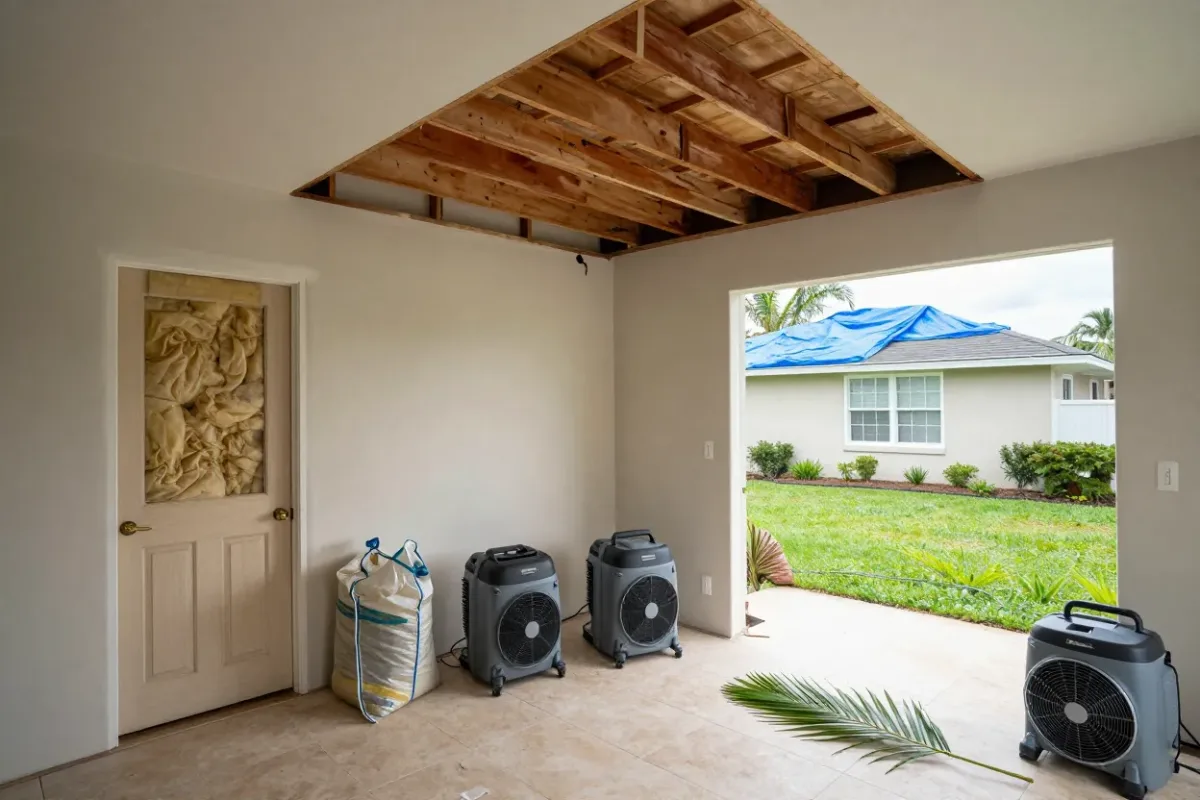
A Coral Springs emergency usually starts one of two ways. Inside the house, a water heater, washing machine hose, refrigerator line or second-floor bathroom lets go and water heads for the ceiling and floor below. Outside, a summer storm or a tropical system lifts roof tiles or shingles, and rain runs into the attic, soaks the insulation and comes through the ceiling in a bedroom or living room. After Wilma, the second kind was the story across the city, and every hurricane season brings a smaller version of it.
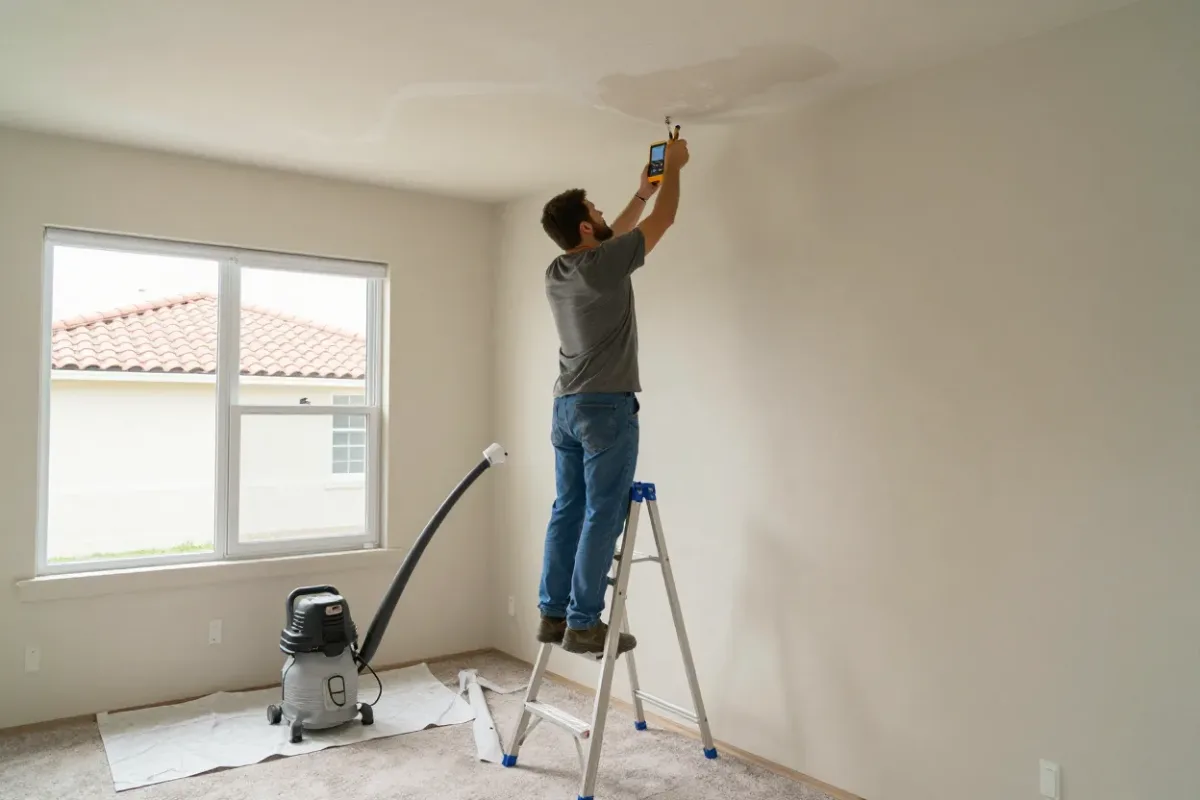
Our first visit stops the spread. We extract standing water, pull wet carpet and pad, remove baseboards so wall cavities can breathe, open ceilings that are holding water, and set air movers and dehumidifiers before we leave. Photographs and moisture readings begin on arrival so your claim starts with a documented record. If a roof is open, we can place temporary protection on the interior side while you arrange the roof repair. Our emergency water damage page describes that first response in more detail.
Restoration in a Planned Community
Coral Springs is predominantly single-family subdivisions with townhome and condo enclaves, built under strict codes on exterior paint, roofing materials and landscaping. That matters for restoration in two ways. First, the housing is fairly consistent: block construction, tile or carpet over slab on the first floor, wood-framed second floors with carpet or engineered flooring, and finished ceilings below upstairs bathrooms. Second, exterior repairs have to meet the city's appearance standards, so we coordinate interior work with the roofer or painter handling the outside.
Inside, the method does not vary. After extraction we map moisture with meters and thermal imaging, remove what cannot dry, close the space and run dehumidifiers and air movers with readings logged daily until every material reaches its dry standard. Cleaning and treatment follow where the water category requires it, and rebuild comes last. A two-story home adds the floor-ceiling cavity between levels, which is where water from an upstairs leak sits unseen; we open and dry it rather than assuming. Our water damage restoration service page covers the full scope.
Flooding on Pumped Canals and Flat Ground
Coral Springs floods differently from coastal Broward. There is no surge and no tide; there is rain landing on flat, low ground that was wetland before the late 1940s floods prompted the drainage that made the city possible. The Improvement District's canals do not flow freely; they are pumped down by pump stations during heavy rain, and when a storm outpaces the pumps, water rises in swales, streets and canal-side yards before finding its way into garages and low doorways. Coral Springs has been ranked among the U.S. cities with the most residents in FEMA's coastal floodplain, which reflects that flat terrain.
Once street or canal water enters a home it is treated as contaminated. Flood cleanup means removing carpet, pad, the lowest drywall and any cabinets that stood in it, cleaning and treating the slab and block, and running air filtration while the structure dries. Do not step into standing water in a garage or room with outlets or appliances, and do not aim fans at it. Our flood restoration page and the first 24 hours after a flood guide explain what comes next.
Repair After Wind, Rain and Leaks
Repair begins when the moisture logs confirm the structure is dry. After a roof-driven loss, that typically means replacing ceiling drywall and insulation, patching or replacing the upper wall below the ceiling, repainting, and dealing with flooring that took the drip. After an upstairs plumbing loss, it is the ceiling and wall below plus whatever the water reached on the second floor. After a flooded garage or entry, it is the lowest drywall, baseboard, cabinets and flooring in the affected rooms.
We build the repair scope from the mitigation record so your adjuster can see exactly what the water damaged. Where wind damage is involved, we keep the interior documentation clear enough that the roof claim and the water claim can each stand on its own, and we time the interior rebuild so it does not go in before the roof is sound.
Mold Removal After Coral Springs Water Damage
Mold in Coral Springs homes usually traces back to one of three things: a roof leak that stained a ceiling for a season before anyone opened it, an upstairs bathroom leak that was dried from the top while the floor cavity stayed wet, or a garage or entry that took on street water and was fanned dry without removing the wet drywall. Air handler closets and the backs of kitchen base cabinets appear on the list too, as they do everywhere in South Florida.
Our mold removal runs in order: correct the moisture source, contain the area with plastic and negative air, remove affected drywall, insulation and cabinetry, HEPA-vacuum and clean the remaining surfaces, and dry the space completely before rebuild. We do not treat paint or spray as a substitute for removal. The mold remediation page explains the statewide process, and our guide to hidden mold after water damage covers the attics, ceiling cavities and floor systems where it hides in two-story homes.
Where Coral Springs Water Damage Starts
A master-planned city of single-family and townhome subdivisions on drained, pumped land near the Everglades sees a consistent set of water losses:
- Wind damage to tile and shingle roofs during hurricanes, letting rain into attics and ceilings
- Second-floor bathroom, laundry and water heater leaks soaking the ceiling and floor cavity below
- Street, swale and canal-side yard flooding when heavy rain outpaces the district's pump stations
- Water heater tank failures in garages and utility rooms
- Washing machine, dishwasher and refrigerator supply line breaks
- Air conditioning condensate line clogs and overflowing drain pans
- Window and sliding door leaks in wind-driven rain
- Shared-wall and ceiling leaks between townhome and condo units
How We Handle Every Job
Whether the water came through the roof or out of a pipe, each Coral Springs project runs through the same eight stages in order.
- Inspection and moisture mappingWe locate the source, determine whether the water is clean or contaminated, and trace its path through attics, ceilings, walls and floors with meters and thermal imaging.
- ExtractionWe pump out standing water in garages and low rooms first, then extract from carpet, pad and hard floors.
- Removal of unsalvageable materialsSaturated ceiling drywall, attic and wall insulation, carpet, pad and swollen cabinetry are removed and bagged so the framing behind can dry.
- Structural dryingDehumidifiers and air movers run in a closed home, with floor-ceiling cavities opened where needed and readings logged daily until each material reaches its dry standard.
- Cleaning and treatmentSlabs, block and hard surfaces that contacted street water or sewage are cleaned and treated while HEPA filtration runs.
- DocumentationPhotos, moisture logs, equipment records and a written scope are compiled for you and your insurance carrier, with roof-related and plumbing-related damage kept distinct.
- RebuildCeilings, drywall, insulation, baseboards, cabinets, flooring and paint are restored to match the rest of the home.
- Final verificationClosing moisture readings and a walkthrough confirm the home is dry and the work is complete.
Coral Springs Neighborhoods We Serve
We serve the entire City of Coral Springs, from the subdivisions nearest the Everglades on the west to the neighborhoods along the eastern boundary, including its townhome and condominium communities.
Coral Springs Neighborhoods
- Eagle Trace
- Ramblewood
- Cypress Run
- Turtle Run
- Wyndham Lakes
- Kensington
- Coral Springs Country Club
- Forest Hills
- Maplewood
- Pine Ridge
- Westchester
- Shadow Wood
- The Isles
Nearby Communities
Our northwest Broward crews also cover the cities around Coral Springs, several of which have their own pages:
While You Wait for the Crew
These steps are safe and worthwhile in the first hour. Stop at anything that would put you near flood water or electricity.
- Close the supply if the source is plumbingShut the valve at the fixture or appliance, or the main. For an upstairs leak, this is the single most useful thing you can do for the ceiling below.
- Do not touch wet electrical equipmentStay out of water that may be in contact with outlets, cords, the water heater or the air handler. Only switch breakers from a dry panel you can reach on dry floor.
- Relieve a bulging ceiling from a distanceMove furniture and belongings out from under a sagging ceiling and place a bucket beneath any drip. Do not climb up and open it yourself.
- Keep fans off contaminated waterWater from the street, a canal or a drain backup should not be fan-dried. Leave it for us.
- Move belongings to dry groundLift rugs, electronics and the contents of low closets and cabinets out of wet rooms.
- Photograph everything firstRecord the source, the ceiling or water line, and every affected room before cleanup starts.
- Call Water Damage FloridaReach us at (888) 435-4769 with the source, the rooms and floors involved, and whether the roof is open.
After a hurricane, our hurricane water damage recovery guide explains how to sequence roof protection, drying and rebuild.
Coral Springs Water Damage FAQs
Rain came through my roof during a storm and stained the ceiling. Do I need more than a patch?
Almost always. The stain is the visible edge of a wet area that includes attic insulation, the top of the wall and often the ceiling drywall itself. We map the moisture, remove what is saturated, dry the framing and cavity, and repair the interior once the roof is sound.
Will interior repairs have to meet the city's appearance codes?
The city's codes address exterior paint, roofing materials and landscaping, so they mainly affect the roof or exterior repair rather than our interior work. We coordinate timing with whoever is handling the outside so the interior rebuild does not go in before the roof is finished.
Our canal-side yard floods during heavy rain. Is the house at risk?
When rain outpaces the district's pump stations, water in yards and swales can reach garages and low doorways. If it gets inside, or stands against the exterior walls for long, a moisture survey will tell you whether anything needs drying or removal.
An upstairs bathroom leaked and the downstairs ceiling is wet. Can you dry it without removing the ceiling?
Sometimes, if the water was clean and the ceiling is not saturated; we can open small access points and dry the cavity with directed airflow. If the drywall is sagging or the insulation is soaked, removing it is faster and safer than trying to dry through it.
How long after Hurricane Wilma-type damage does a home stay at risk?
The risk is not the storm date but how long materials stayed wet. Insulation and ceiling drywall that were never properly dried can support mold long after the roof was fixed, which is why we verify with readings rather than by look or touch.
Do you also serve Parkland, Tamarac and Margate?
Yes. The same crews cover Parkland, Coconut Creek, Margate, North Lauderdale, Tamarac and Sunrise, and we serve the whole state through our service areas.