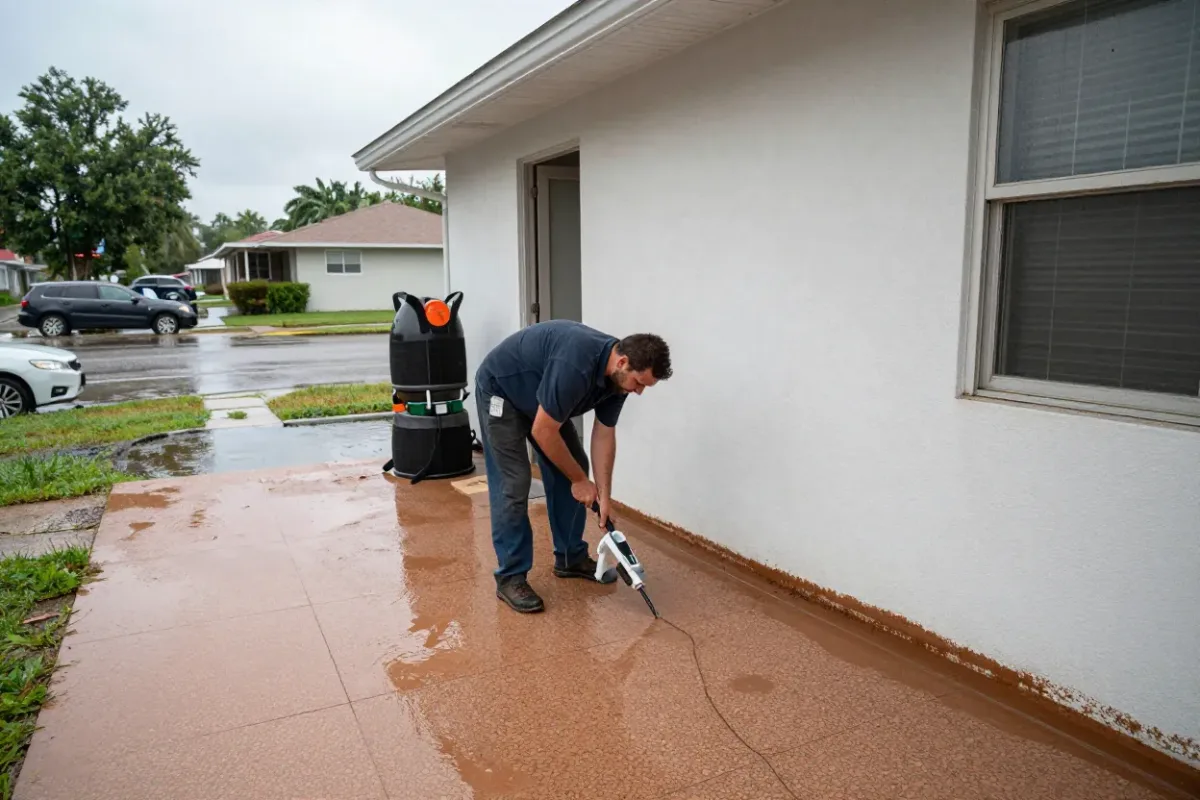
Oakland Park is a small, established city just north of Fort Lauderdale, split down the middle by the Florida East Coast Railway and edged by the north fork of the Middle River and Cypress Creek. It sits only about seven feet above sea level, and those waterways are tidal, so the city drains slowly and floods easily. The city's own flood-warning page notes that residents near tidal waterways, in low-lying areas and in mobile homes face the highest risk, even though no part of the city lies in a mandated evacuation zone. Street and yard flooding from intense rain is a recurring problem, and the city is funding multiple drainage-improvement projects to reduce it.
The clearest example came in April 2023, when the record South Florida rain event flooded streets around Oakland Park Boulevard, NW 39th Street and Royal Palm Park, sent water into yards and homes in the lower areas, and damaged a school in the city. Water Damage Florida provides water damage restoration in Oakland Park 24 hours a day, from older single-family neighborhoods and condominiums to the new mixed-use buildings downtown. Call (888) 435-4769 whenever water reaches your home.
Emergency Water Damage Response in Oakland Park
When a storm stalls over Oakland Park, the emergency calls come from the streets that flood first: the low blocks near the Middle River and Cypress Creek, the older subdivisions with shallow swales, and the mobile-home residents the city's flood page singles out. Water crosses the yard, comes under the door, and spreads across terrazzo and tile into every room on the slab. In dry weather the calls are more familiar: a water heater, a supply line, an air handler overflow, or a leak in a new downtown building traveling through the units below.
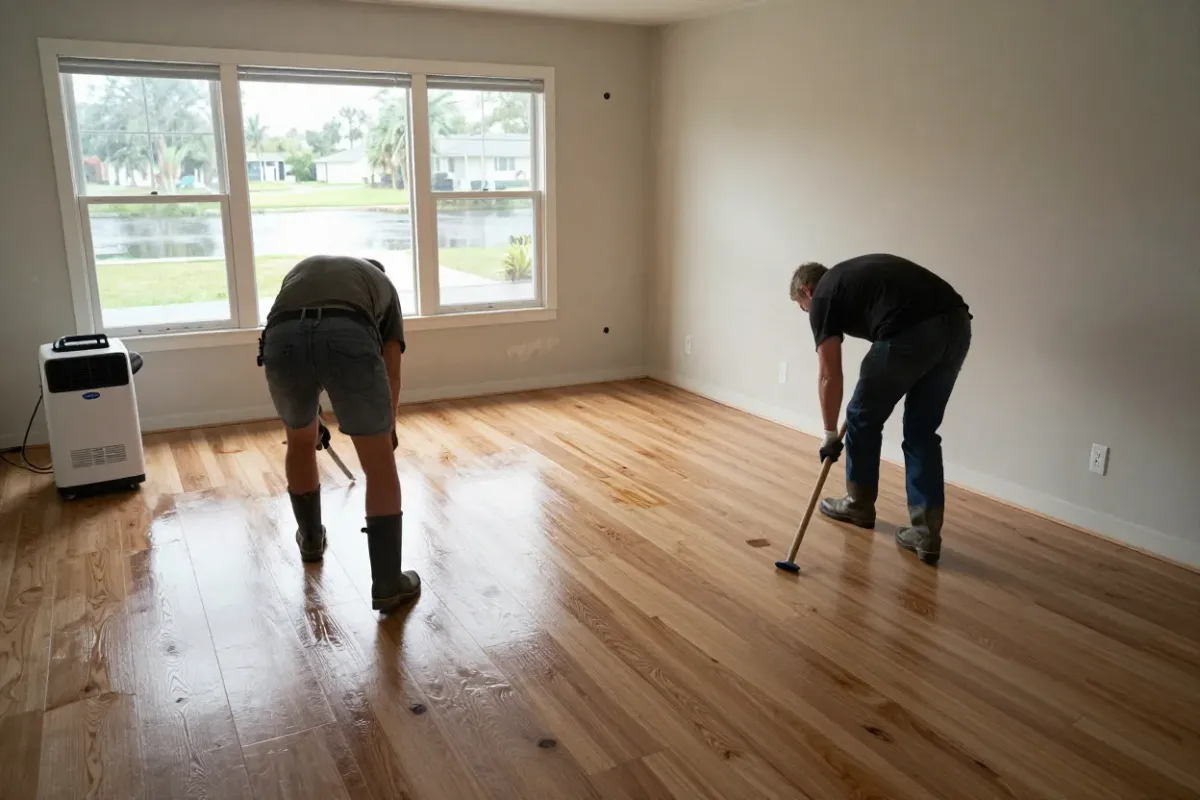
We respond with submersible pumps for garages and low rooms, portable and truck-mounted extractors for interiors, and enough air movers and dehumidifiers to start drying on the first visit. We photograph the waterline and the source, record baseline moisture readings and, in multi-unit buildings, check adjoining units before removal begins. Our emergency water damage page covers what those first hours involve.
Restoration for Older Homes, Condos and New Downtown Buildings
Oakland Park's housing spans a wide range: older single-family neighborhoods of block homes on slabs, condominium buildings, mobile-home residents, and the new mixed-use construction going up in the redeveloping downtown. Each responds to water differently. Older block homes hold water in the bottom foot of drywall and under whatever flooring covers the original terrazzo. Mobile homes have raised floors and belly insulation that trap water beneath the living space. New downtown buildings stack units vertically, so a leak on one floor is a ceiling problem on the floors below.
Our restoration method adapts to each. We map every wet material with moisture meters and thermal imaging, remove what cannot be dried, and dry the rest with the building closed and dehumidifiers sized to the space. Daily readings continue until each material meets its dry standard, and only then do cleaning, treatment and repair follow. See our water damage restoration service page for the full approach.
Flood Cleanup After Oakland Park's Heavy Rains
Oakland Park floods from rain, not surge. Its low elevation and tidal drainage mean that when intense rain arrives, the Middle River and Cypress Creek cannot take the runoff fast enough, and water backs up into streets and yards. The April 2023 event was the record: streets around Oakland Park Boulevard, NW 39th Street and Royal Palm Park went under, and water reached yards and homes in the lowest areas. The city's drainage-improvement projects are aimed at exactly this nuisance flooding, but they cannot change the elevation. The 1926 Miami hurricane, which devastated the original town and forced it into bankruptcy, remains the city's oldest reminder of how much water can arrive at once.
Floodwater that has crossed streets and yards is contaminated. Flood cleanup means removing saturated carpet, pad, the lower portion of drywall and wet insulation rather than drying them, cleaning and disinfecting hard surfaces, and running air filtration while the structure dries. In mobile homes we also address the belly insulation and vapor barrier beneath the floor. Our flood restoration page and the first 24 hours after a flood guide explain the work and what you can do while waiting.
Repairs After Drying Is Confirmed
Repair in Oakland Park runs from a strip of drywall and baseboard in a condominium to a full floor-level rebuild in a home that took street water. Typical work includes replacing cut drywall and trim, reinstalling or replacing flooring, rehanging cabinets pulled for drying, repainting, and rebuilding ceilings beneath an upper-floor leak. In older homes we frequently expose original terrazzo under later carpet or laminate, and many owners keep it. In mobile homes, subfloor and belly-board repairs are part of the scope.
Because the same crew handled mitigation, the repair scope is built on the photos and daily moisture logs already in your file, so your adjuster can see which materials were affected by this loss and which were pre-existing. In condominium and mixed-use buildings we follow management rules on hours and shared spaces and keep each unit's documentation separate.
Mold Removal in Oakland Park
After a street flood, mold in Oakland Park homes shows up where water was wiped from the surface but never extracted from the material beneath: the pad under carpet, the back of the lowest course of drywall, the base of kitchen cabinets, and the insulation under a mobile-home floor. In homes with plumbing leaks, the usual spots apply: drywall behind bathroom tile, the cabinet under a dripping sink, and the closet housing the air handler. Tidal humidity along the Middle River and Cypress Creek keeps exterior walls damp longer than elsewhere.
The removal work starts with fixing the moisture source, then sealing the area with plastic sheeting under negative air, bagging out the affected porous materials, HEPA-vacuuming and cleaning what remains, and drying the space completely before any rebuilding. Growth is removed, not painted over. Our mold remediation page explains the process, and our guide to hidden mold after water damage describes where it forms.
What Causes Water Damage in Oakland Park
A low-lying city drained by tidal rivers, with older slab homes, mobile homes and new multi-story buildings, sees a distinctive mix of water losses. The most common in Oakland Park are:
- Street and yard flooding during intense rain events, entering homes on the lowest blocks
- The Middle River and Cypress Creek backing up into adjacent yards and low rooms during heavy rain
- Water rising beneath mobile homes and soaking floor insulation
- Original supply lines, drains and water heaters failing in older block homes
- Upper-unit leaks in condominiums and new downtown buildings reaching the units below
- Wind-driven rain entering through roofs, soffits and window frames
- Air conditioning condensate overflows during the cooling season
- Storm drain and sewer backups when the drainage system is full
Our Eight-Step Restoration Method
Every Oakland Park job follows the same eight stages, each confirmed before the next begins. The order is what keeps a rebuilt floor from hiding a wet slab.
- Inspection and moisture mappingWe identify the source, classify the water (street and river water always count as contaminated) and trace it with meters and thermal imaging through floors, walls and adjoining units.
- Water extractionSubmersible pumps clear standing water from low rooms and garages; portable and truck-mounted extractors pull water from carpet, tile and terrazzo.
- Removal of damaged materialsFlood-soaked carpet and pad, the lower section of wet drywall, swollen laminate, wet insulation and, in mobile homes, saturated belly insulation are removed and bagged.
- Drying and dehumidificationAir movers and dehumidifiers run continuously with the home closed to the humid river air, and readings are logged daily until each material reaches its dry standard.
- Cleaning and disinfectionSurfaces that contacted floodwater are cleaned and treated, with HEPA air filtration running during the work.
- DocumentationPhotos, daily readings, an equipment log and a written scope are compiled for you and your insurance carrier.
- RepairDrywall, trim, flooring, cabinets, paint and, where needed, subfloor are restored to match the rest of the home.
- Final checkA closing round of moisture readings and a walkthrough confirm the home is dry and complete.
Oakland Park Areas We Serve
We serve every part of the city on both sides of the railway, from the neighborhoods along the Middle River and Cypress Creek to the redeveloping downtown core. Our crews bring equipment suited to a block home, a mobile home or a new multi-story building.
Oakland Park Neighborhoods
- North Andrews Gardens
- Harlem McBride
- Lloyd Estates
- Royal Palm Acres
- Twin Lakes
- Prospect Gardens
- Eastside Village
- Oak Tree
- Isles of Oakland Park
- Downtown Oakland Park
Nearby Communities
Oakland Park's neighbors in central and eastern Broward share the same rain and the same low ground, and our crews serve them all. Each of these has a service page of its own:
What to Do When Water Reaches Your Home
Whether it came from the street or a pipe, a few safe actions in the first hour protect you and reduce the damage. Skip anything that puts you in water near electricity.
- Stop the source if it is insideClose the fixture valve or the main shutoff for a plumbing leak. In a condominium or apartment, notify management so a shared line can be isolated.
- Do not enter water that may be energizedStay out of flooded rooms where outlets, cords, appliances or the panel could be in the water. Only flip a breaker if the panel is dry and you can get to it without wading.
- Treat street and river water as contaminatedKeep children and pets away from it, avoid skin contact and leave the cleanup to us.
- Raise what you canGet rugs, furniture and boxes up off the wet floor, and block heavy pieces with foil or plastic under the legs.
- Document before cleanupPhotograph and video the waterline, the source and every affected room before anything is discarded.
- Keep the air conditioning on if power is safeCool, dry indoor air slows microbial growth; keep the home closed to humid outdoor air.
- Call Water Damage FloridaDial (888) 435-4769 and tell us the source, how deep the water got, how long it has been there and whether neighbors are affected.
Oakland Park Water Damage FAQs
Our street flooded in April 2023 and water came into the house. Is that likely to happen again?
The city's flood page is honest that low-lying areas and homes near the tidal waterways face higher risk, and street flooding from intense rain is recurring. The city's drainage projects aim to reduce it. If your home took water once, keep the documentation from that loss; it helps separate old damage from new if it happens again.
Can you handle water damage in a mobile home?
Yes. Mobile homes need attention beneath the floor, where water soaks the belly insulation and vapor barrier, as well as inside. We remove saturated material under the floor, dry the subfloor and cavity, and confirm with readings before repairs.
Is the Middle River a flood risk for homes that are not right on the bank?
It can be. The river and Cypress Creek are tidal, so when heavy rain coincides with high water they drain slowly, and runoff backs up into nearby streets and yards well beyond the bank. Homes on the lowest blocks near either waterway see water first.
Do you work in the new downtown Oakland Park buildings?
We do. In multi-story mixed-use buildings we coordinate with management, trace water through the units below the source, protect common areas and keep separate documentation for each unit.
The floodwater is gone and the floor looks dry. Do I still need help?
Usually, yes. Floodwater leaves contamination and moisture in the pad, the base of the walls and under flooring long after the surface dries. Readings tell us whether the materials beneath are still wet, and what the water touched still has to be cleaned or removed.
What records do you provide for my insurance claim?
Photographs from the first visit onward, the daily moisture readings, the equipment record and a written scope. You decide what to share with your carrier; the claim remains yours.