Key West is a small coral island at the far end of the Florida Keys, where the Gulf of Mexico meets the Atlantic, a few miles long and about a mile wide, averaging only about eight feet above sea level. Its highest ground is Solares Hill in Old Town, and most of the rest of the island is exposed to storm surge and tidal flooding. Seasonal king tides put water in low intersections even on sunny days, and the city's recorded hurricane history stretches back into the nineteenth century. Water Damage Florida provides 24/7 water damage restoration in Key West, from emergency water extraction and structural drying to flood cleanup, mold removal and repair.
Two very different kinds of housing share this island. Old Town is filled with historic wood-frame conch houses set on foundation piers, with metal roofs and wood siding, while New Town to the east is mid-century concrete-block homes and apartments built on filled salt ponds. The city also includes the northern half of Stock Island and several small keys. Each of these dries differently, and our crews plan around the building in front of them. Call (888) 435-4769 when you find water.
Emergency Water Damage Response in Key West
Emergencies on the island tend to arrive with the weather or the plumbing. Summer storms drive rain under metal roofing and through old window sashes in Old Town; a supply line or water heater fails in a New Town apartment and runs into the units beside it; a guesthouse or rental discovers a leak between guests; and during king tides and storms, salt water rises through low streets into ground-level rooms, garages and the crawl spaces beneath pier-set houses.
Because Key West sits at the far end of the island chain, our crews plan each trip so the extraction gear, air movers and dehumidifiers needed for the job arrive together and drying starts on the first visit. We document the source, the water path and moisture readings from arrival to give your insurance claim a clean starting point. Our emergency water damage page explains that first response in more detail.
Restoration for Conch Houses and Block Homes
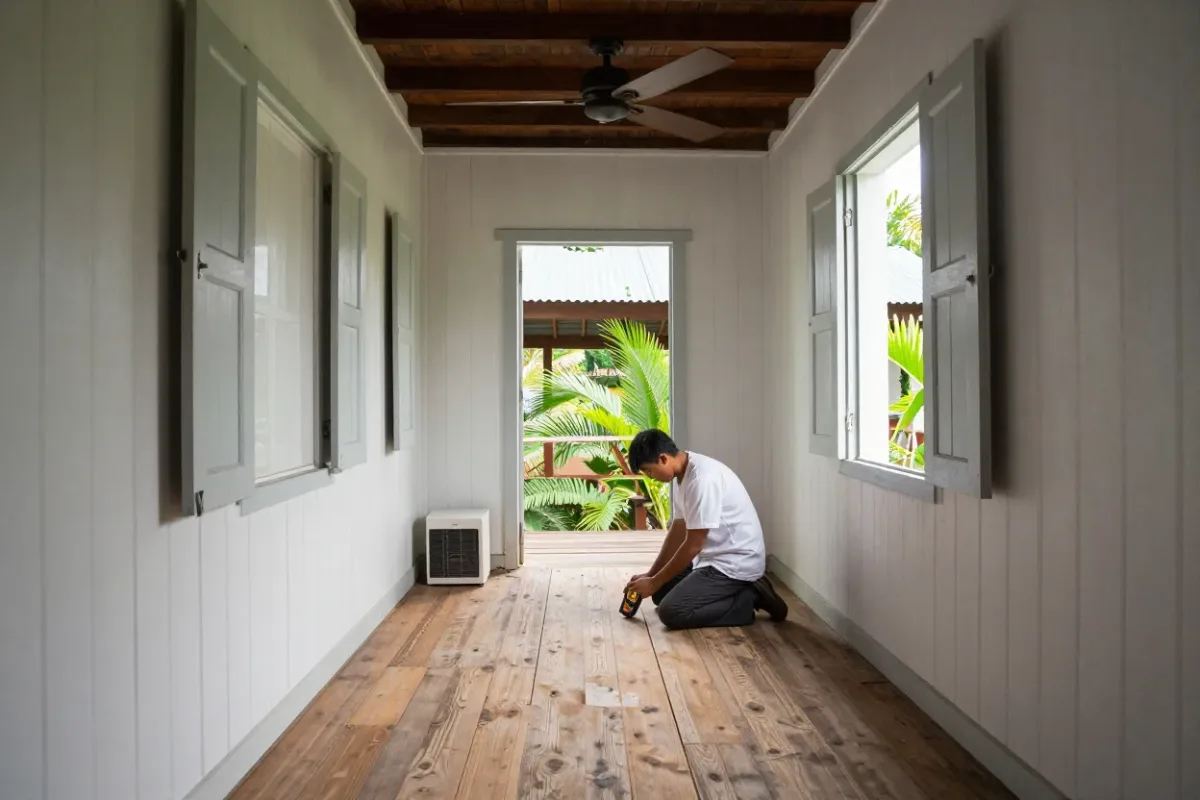
A wood-frame conch house on piers absorbs water into its floorboards, joists, siding and beadboard, but it also has something New Town homes lack: air beneath the floor. Drying it means getting air moving under the house as well as inside, protecting original wood and plaster, and watching the framing with moisture meters until it returns to normal. A concrete-block house on the former salt ponds keeps water out of the structure but traps it behind drywall and under tile, where it lingers.
In both cases we extract, map moisture with meters and thermal imaging, remove what cannot be dried, and run closed-space drying with dehumidifiers, because island air is too humid to dry anything by opening windows. We log readings every day and hold off on repair until each material is back at its dry standard. Our water damage restoration service page covers the full scope.
Flood Cleanup After Surge and King Tides
Key West's flood record is long. The 1935 Labor Day Hurricane and Hurricane Georges in 1998 are part of the island's history. Hurricane Wilma in 2005 pushed surge across the island and flooded a majority of homes, some with several feet of water, while the higher Old Town blocks around Solares Hill stayed dry. Hurricane Irma came ashore in the lower Keys in 2017 as a Category 4 storm with significant wind damage and flooding in the city, and Hurricane Ian in 2022 produced two to four feet of inundation here. Between storms, seasonal king tides flood low intersections on clear days.
Whether from a hurricane or a high tide, salt water in a home is contaminated and corrosive. Flood cleanup means pumping and extracting, removing porous materials the water reached rather than drying them, cleaning and disinfecting hard surfaces, inspecting metal and electrical components the salt touched, and drying the structure under air filtration. Ground-level rooms in New Town and the crawl spaces and lower framing of pier-set Old Town houses need particular attention. Stay out of standing water until power is confirmed off, and see our flood restoration page for what follows.
Water Damage Repair Suited to the Building
Repair in Old Town has to respect the house. After drying is verified, that can mean replacing or refinishing sections of wood flooring, patching beadboard and plaster, repairing siding and trim, and matching period details. In New Town it is more often new lower drywall and baseboards, replacement cabinet bases, tile or plank flooring, ceiling repairs under a roof leak, and paint. Salt-damaged hardware and fixtures are frequently replaced at the same time.
We build the repair scope from the photos and readings collected during mitigation, so your adjuster sees exactly what the water affected. For owners of rentals and guesthouses, we work around bookings where we can and keep the property secured and climate-controlled between visits.
Mold Removal in Key West
Humid island air and salt water make mold a near-certainty when moisture lingers. In Key West we find it under the floorboards and along the lower framing of conch houses that took tide or surge water, behind the drywall of block homes in rooms that flooded, inside walls around leaking showers, in the back of kitchen cabinets, around air handlers, and throughout closed seasonal homes and rentals where a leak ran with the thermostat set high.
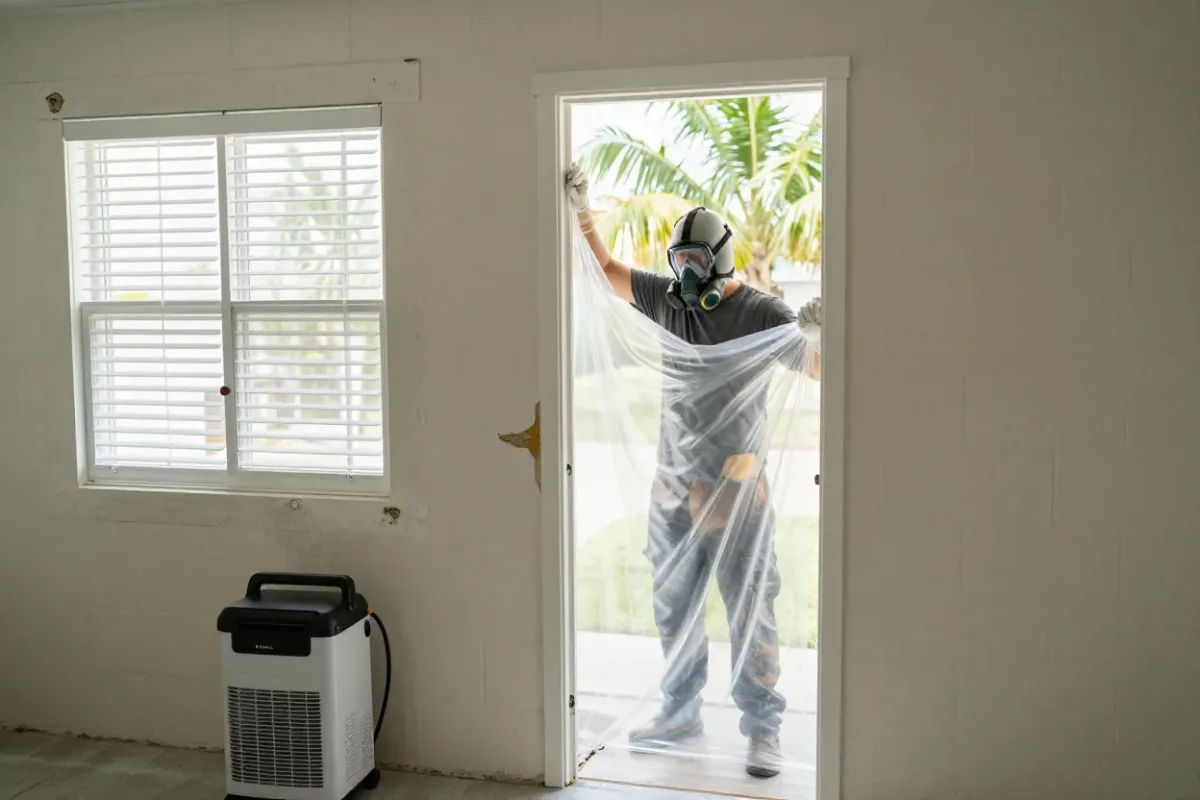
Our mold removal follows a controlled sequence: correct the moisture source, contain the area with sheeting and negative air, remove and bag affected porous materials, HEPA-vacuum and clean remaining surfaces, and dry the space fully before rebuilding. Our mold remediation page explains the method, and our guide to hidden mold after water damage shows where growth hides in older houses.
Common Causes of Water Damage in Key West
A low coral island with historic wood houses, mid-century block homes on fill, constant salt air and a long storm history sees water damage from these sources most often:
- Storm surge crossing the island during hurricanes and entering ground-level rooms and crawl spaces
- King tide flooding of low streets and yards that reaches garages and slab homes in New Town
- Wind-driven rain under metal roofing and through old windows of Old Town conch houses
- Salt-air corrosion of supply fittings, valves and water heater connections
- Plumbing failures in apartments and multi-unit buildings that spread to neighboring units
- Leaks in vacation rentals and seasonal homes that go unnoticed between occupants
- Air conditioning condensate overflows during the long cooling season
- Roof leaks that appear during ordinary rain after earlier storm damage
The Eight Steps We Follow
From Old Town to Stock Island, each job follows the same sequence, with every stage verified before the next begins.
- Inspection and moisture surveyWe identify the source, classify the water, and map moisture through wood framing, subfloors, block walls and drywall using meters and thermal imaging.
- ExtractionExtractors and pumps remove standing water from floors, ground-level rooms and crawl spaces, including salt water after a tide or surge.
- Removal of unsalvageable materialsSaturated drywall, insulation, pad, cabinetry and unsound wood are removed and bagged; sound historic wood is protected for drying.
- Structural dryingAir movers and dehumidifiers run in the closed house, including beneath pier-set floors, with readings logged daily until each material reaches its dry standard.
- Cleaning and disinfectionSurfaces exposed to salt water or long-standing moisture are cleaned and treated while HEPA filtration runs.
- DocumentationWe assemble the photos, daily moisture logs and a written scope into a record for you and your insurance carrier.
- Repair and finishingFlooring, siding, beadboard, drywall, trim, cabinets and paint are restored to match the building.
- Final verificationA closing moisture check and walkthrough confirm the home is dry and complete.
Key West Areas We Serve
We cover the whole City of Key West, from the historic blocks of Old Town and Bahama Village to the block homes of New Town, the Casa Marina area, Truman Annex, Sigsbee Park and the northern portion of Stock Island.
Key West Neighborhoods
- Old Town
- Bahama Village
- The Meadows
- Casa Marina area
- Truman Annex
- New Town
- Sigsbee Park (Dredgers Key)
- Stock Island (northern portion)
Nearby Communities
The same crews continue up the island chain through the Lower Keys. Marathon has its own service page:
- Marathon
- Stock Island
- Key Haven
- Boca Chica Key
- Big Coppitt Key
- Sugarloaf Key
- Cudjoe Key
What to Do Before We Reach the Island
Because the drive down the Keys takes time, the steps you take first matter more here than almost anywhere else. Do only what is safe.
- Stop the waterClose the fixture or appliance valve or the main supply. In an apartment or guesthouse, notify the owner or manager so the building supply can be isolated.
- Avoid water near electricityDo not walk into a flooded room or under a pier-set house where outlets, cords or the panel may be wet. Cut breakers only if the panel is dry and reachable.
- Treat tide and surge water as contaminatedKeep people and pets out of it and do not attempt cleanup yourself.
- Raise what you canMove rugs, electronics, boxes and light furniture off wet floors; slide foil or blocks under heavy pieces.
- Photograph everythingRecord the source, the water line and every affected room, including under the house if you can do so safely from outside.
- Keep the air conditioning runningCool, dry air slows mold; keep windows and shutters closed against humid air if power is safely available.
- Call Water Damage FloridaReach us at (888) 435-4769 with the source, how long it has been wet, and the type of building.
Ahead of hurricane season, our hurricane water damage recovery guide and first 24 hours after a flood guide are worth reading.
Key West Water Damage FAQs
Can a historic conch house be dried without losing its original wood?
Often, yes. Wood-frame houses on piers can be dried from below as well as inside, and sound floorboards, beadboard and framing usually recover when drying starts quickly. Long-standing salt water or rot is a different matter. We map moisture first and tell you what can be kept.
King tide water came into my New Town garage and laundry room. Is that a real problem?
Yes. Even a few inches of salt water soaks drywall and cabinets and corrodes fittings. Porous materials it touched are removed, hard surfaces are cleaned and disinfected, and the space is dried and verified. Small tidal events are worth handling promptly so they do not become mold problems.
Do you service vacation rentals and guesthouses?
Yes. We work with owners and managers to schedule around bookings where possible, document the loss for the owner's policy, and get the property dry and ready for guests.
How do you reach Key West quickly given the distance?
We serve the Keys with crews that travel prepared, bringing the extraction, drying and containment equipment the job needs on the first trip so that work begins on arrival rather than after a second run for gear.
Is surge from a hurricane handled differently from a pipe leak?
It is. Salt water is contaminated and corrosive, so materials it reached are removed rather than dried, surfaces are disinfected, and metal and electrical components are inspected. A fresh-water leak from a supply line, caught early, leaves far more of the house intact.
Do you cover Stock Island and the Lower Keys?
Yes. We serve Stock Island, Key Haven, Boca Chica, Big Coppitt, Sugarloaf and Cudjoe Key, Marathon, and the rest of Florida through our service areas.