Palm Beach Gardens was planned in the late 1950s by John D. MacArthur as a garden city on former cattle ranch, pine forest and swampland, and it grew into a large, mostly inland city of golf-course and gated master-planned communities that calls itself the Golf Capital of the World. Its eastern edge touches the Intracoastal Waterway, which PGA Boulevard crosses by drawbridge, while the rest stretches west toward the Loxahatchee Slough. With an average elevation of about sixteen feet, most homes here are more likely to see water from a pipe, a roof or an overfull community lake than from a tide. New FEMA flood maps for the city took effect in December 2024, and many owners are still learning what zone their home now sits in.
Water Damage Florida provides water damage restoration in Palm Beach Gardens 24 hours a day, from the older country-club neighborhoods built from the 1960s onward to the new homes rising in Alton and Avenir. Call (888) 435-4769 and we will get a crew on the way.
Emergency Water Damage Response in Palm Beach Gardens
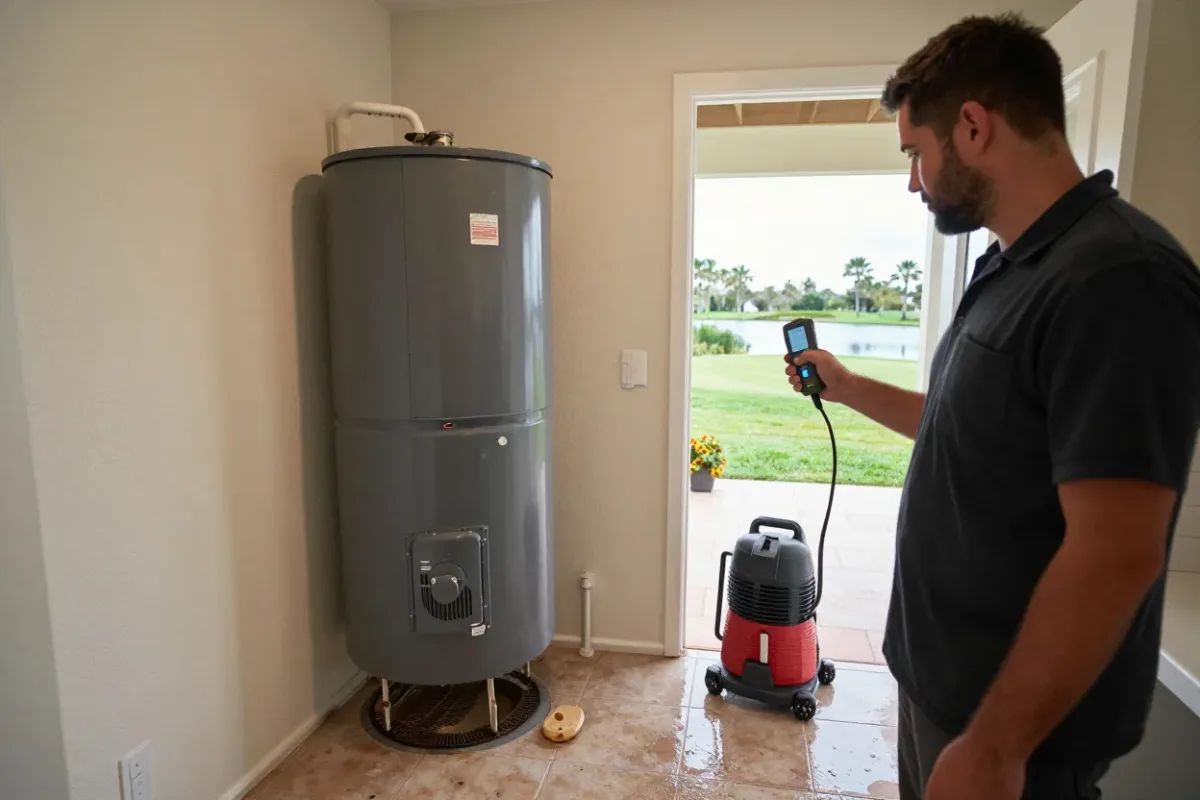
The typical Palm Beach Gardens emergency starts inside the house. Water heaters and supply lines in homes built in the 1960s through the 1990s fail with age; upstairs bathrooms and laundries in townhomes and two-story houses send water into the ceilings below; and air handlers in closets and attics overflow when a condensate line clogs in the wettest months. Weather adds its own share: wind-driven rain through roof edges and sliding doors during a tropical system, and heavy rain that raises a community lake until it laps at the lanai and comes under the door.
Our crews arrive with extractors, pumps, air movers, dehumidifiers and moisture meters so drying begins during the first visit. We know how to work inside gated communities, from guardhouse access to HOA rules on work hours and equipment placement, and we document the source, the water's reach and the initial readings before anything is disturbed. Our emergency water damage page explains the first hours in detail.
Restoration in Country-Club Homes, Townhomes and New Construction
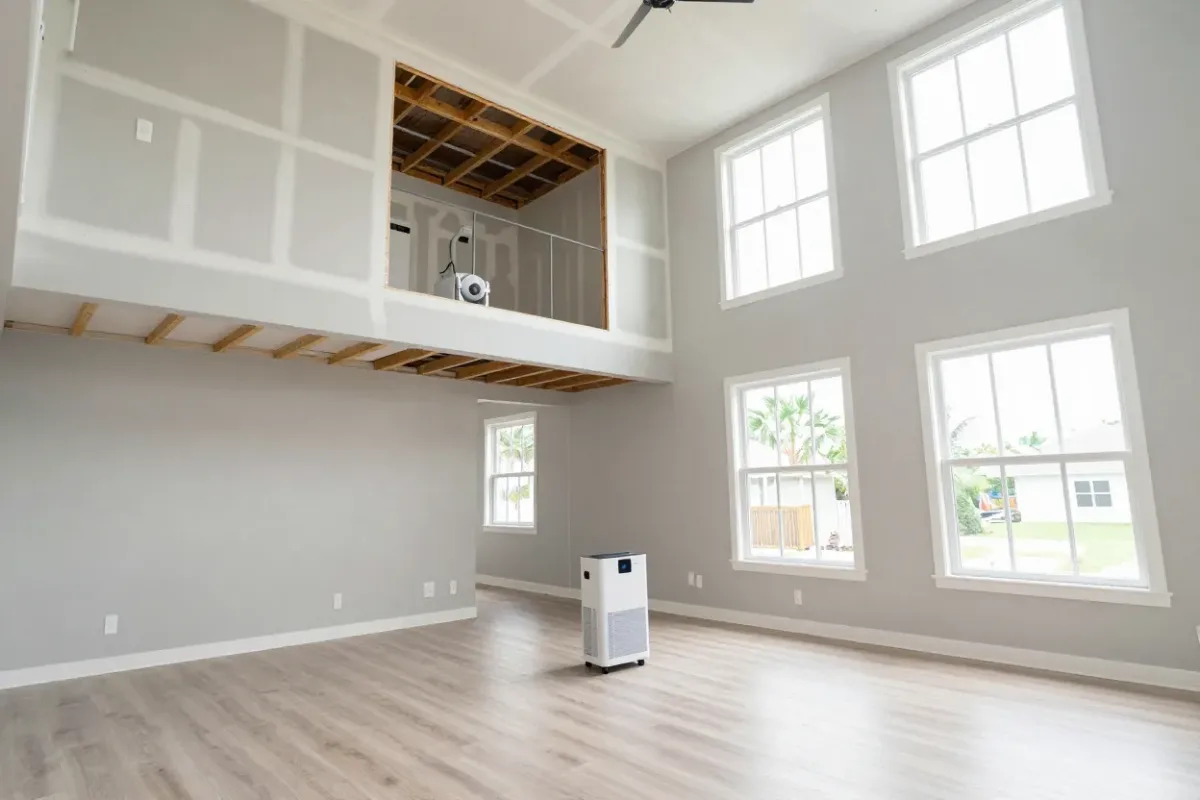
Housing in Palm Beach Gardens is dominated by single-family homes and townhomes in gated golf and country-club communities such as PGA National, BallenIsles, Mirasol, Frenchman's Creek and Old Palm, with newer large developments like Alton and Avenir on the western side. The older homes tend to be block on slab with tile floors, plaster or drywall and original plumbing; the townhomes stack bedrooms and baths over living space; the new construction uses modern framing, engineered flooring and open plans where water travels farther before it is noticed.
We map the wet area with meters and thermal imaging and decide, material by material, what can be dried in place and what must come out. Dehumidifiers and air movers run inside the closed home, with readings logged daily until each material returns to its dry standard, and only then do cleaning and repair begin. Our water damage restoration service page describes each phase of that sequence.
Flood Cleanup After Heavy Rain and Tropical Systems
Palm Beach Gardens' most damaging storms were Hurricanes Frances and Jeanne in 2004 and Wilma in 2005, which caused widespread power outages and property damage, with Wilma alone damaging several thousand dwellings in the city. Because the city was built on former swampland and pine flatwoods, its neighborhoods depend on community lakes, swales and drainage to carry rain away, and a long, heavy rain can raise those lakes and flood low lanais, garages and ground-floor rooms. Along the eastern edge near the Intracoastal, a storm tide adds a coastal element that the rest of the city does not share.
Flood water from a lake, a street or the Intracoastal is treated as contaminated. Cleanup means removing the drywall, insulation, carpet and cabinet bases that were submerged, cleaning and disinfecting the slab and framing, and running air filtration while the structure dries. Wind-driven rain through a roof is handled by tarping, extracting and drying the affected rooms and ceiling cavities. Keep out of standing water and away from wet electrical equipment, and call us; our flood restoration service page describes how a larger loss is managed.
Water Damage Repair That Fits Your Community
Repair begins when the drying log confirms the structure is dry. In a single-story country-club home it usually means new lower drywall, baseboards, cabinet bases and flooring in the affected rooms, plus paint that blends with the rest of the house. In a townhome it often means a ceiling repair below an upstairs bathroom, wall patching and trim. In newer homes in Alton or Avenir we match current finishes and work within the builder's warranty considerations where they apply.
The scope of repair is built from the photos and moisture logs gathered during mitigation, so your adjuster sees a single consistent record, and we separate water damage from anything that was already worn. Where an HOA requires approval for exterior or visible work, we prepare what the board needs to see.
Mold Removal in Palm Beach Gardens
Mold in Palm Beach Gardens follows the leaks. We find it most often in the ceiling cavity below a townhome bathroom, behind the vanity and tub tile in older homes, in air handler closets and the ductwork around them, at the base of garage walls after lake or rain flooding, and behind kitchen cabinets after a slow dishwasher or ice-maker line leak. Homes closed for the summer are a special case: a small leak in May can be a large problem by October.
Our mold removal fixes the moisture source first, then contains the area with sheeting and negative air, removes and bags affected porous materials, HEPA-vacuums and cleans the remaining surfaces, and verifies the space is dry before it is closed and rebuilt. Spraying a wall and repainting it is not remediation, and we do not offer it as such. See our mold remediation page and our guide to hidden mold after water damage.
Where Water Damage Comes From in Palm Beach Gardens
A mostly inland city of golf communities, aging country-club homes, stacked townhomes and brand-new construction sees a particular mix of losses. The causes we respond to most often are:
- Water heater, supply line and washing machine hose failures in homes built from the 1960s through the 1990s
- Upstairs bathroom and laundry leaks in townhomes and two-story homes, with damage to the ceilings below
- Air conditioner condensate line clogs and drain pan overflows in closet and attic air handlers
- Community lake and swale flooding onto lanais, garages and ground floors after prolonged heavy rain
- Roof, soffit and sliding door leaks in wind-driven rain during tropical systems
- Leaks that run for weeks in seasonal homes closed for the summer
- Slab and drain line leaks in older neighborhoods such as Eastpointe and Horseshoe Acres
- Storm tide reaching ground-level spaces along the Intracoastal on the city's eastern edge
- Ice-maker and dishwasher line failures in newly built homes with open floor plans
The Eight Steps We Follow
A water heater leak in Steeplechase and a rain-flooded garage in Mirasol are handled the same way, with every step verified before the next.
- Inspection and mappingWe locate the source, classify the water, and trace it with meters and thermal imaging through floors, walls, ceilings and closets.
- ExtractionExtractors and pumps remove standing water from floors, garages and lanai thresholds so drying can start on the structure.
- Removal of unsalvageable materialsCeiling drywall, wet insulation, swollen flooring and cabinet bases that cannot be dried are cut out and bagged.
- Structural dryingDehumidifiers and air movers run inside the closed home, with readings logged daily until every material meets its dry standard.
- Cleaning and treatmentSurfaces touched by lake, street or contaminated water are cleaned and treated, with HEPA filtration running throughout.
- DocumentationPhotos, moisture logs and a written scope are compiled for you, your insurer and your HOA where required.
- RepairDrywall, ceilings, trim, cabinetry, flooring and paint are restored to match the rest of the home.
- Final inspectionA closing set of readings and a walkthrough confirm the home is dry and the work is complete.
Palm Beach Gardens Communities We Serve
We serve the whole City of Palm Beach Gardens, from the Intracoastal side and the downtown area to the golf and country-club communities and the new neighborhoods toward the Loxahatchee Slough.
Palm Beach Gardens Neighborhoods
- PGA National
- BallenIsles
- Mirasol
- Frenchman's Creek
- Frenchman's Reserve
- Evergrene
- Old Palm
- Eastpointe
- Steeplechase
- Avenir
- Horseshoe Acres
- Downtown Palm Beach Gardens
Nearby Communities
Our Palm Beach Gardens crews also cover the neighboring communities of northern Palm Beach County. Several have their own local pages:
What to Do While the Crew Is on the Way
These steps are safe for most Palm Beach Gardens homeowners and will keep the damage from spreading.
- Close the valveShut off the fixture supply or the main valve. A leaking water heater should have its supply valve closed and its power or gas switched off.
- Do not enter water near electricityStay out of rooms where water may reach outlets or cords. Switch off breakers only if the panel is dry and you can reach it from dry ground.
- Treat lake and street water as contaminatedKeep children and pets away from it and leave the cleanup to us.
- Move belongings out of the wet areaLift rugs, furniture and electronics to dry rooms and put foil or plastic under anything that must stay.
- Photograph everything firstCapture the source, the water's reach and each affected room, including a sagging ceiling below an upstairs leak, before cleaning.
- Keep the air conditioning on if the air handler is dryCool, dry air slows growth; if the air handler was in the water, leave it off until it is checked.
- Call (888) 435-4769Tell us the source, how long the water has been there, and the gate or guardhouse instructions for your community.
For storm losses, our hurricane water damage recovery guide and first 24 hours after a flood checklist cover the following days.
Palm Beach Gardens Water Damage FAQs
The ceiling below our upstairs bathroom is sagging. Should we poke a hole in it?
Do not stand under it, and call us. A sagging ceiling can hold a surprising amount of water. Our crew relieves it in a controlled way, extracts, opens the cavity and dries the joists before any repair.
Does the new FEMA flood map change how you handle my home?
It does not change the work; we extract, dry, document and repair the same way in any zone. The map may affect how your insurance responds, and we provide the photos and moisture logs needed to support whatever claim you file.
Our community lake rose and water came across the lanai into the family room. Is that a flood?
For cleanup purposes, yes. Lake and street water is treated as contaminated, so the materials it soaked are removed rather than dried, and the slab is cleaned before drying. How your policy classifies it is a question for your adjuster.
Can you work inside our gated community?
Yes. We coordinate guardhouse access, follow HOA rules on hours and equipment, and prepare any documentation the board requires for visible repairs.
We are away for the summer and a neighbor reported water. What can you do?
With access arranged through your property manager, a neighbor or a key holder, we can inspect, extract, dry and send you photos, readings and a written scope so you can approve the work from a distance.
How long does drying take in a Palm Beach Gardens home?
Most clean-water leaks that are caught early are dry within a few days. A ceiling cavity or a flooded ground floor takes longer. We remove equipment when daily readings show the materials are dry, not on a set schedule.
Call Water Damage Florida in Palm Beach Gardens
From a leaking water heater in an older country-club home to a rain-flooded garage in a new neighborhood, Water Damage Florida is available 24 hours a day for water extraction, structural drying, repair and mold removal in Palm Beach Gardens. Call (888) 435-4769 or email info@waterdamagefl.org, and see our service areas for neighboring communities.
Call 888 435-4769 Contact Us