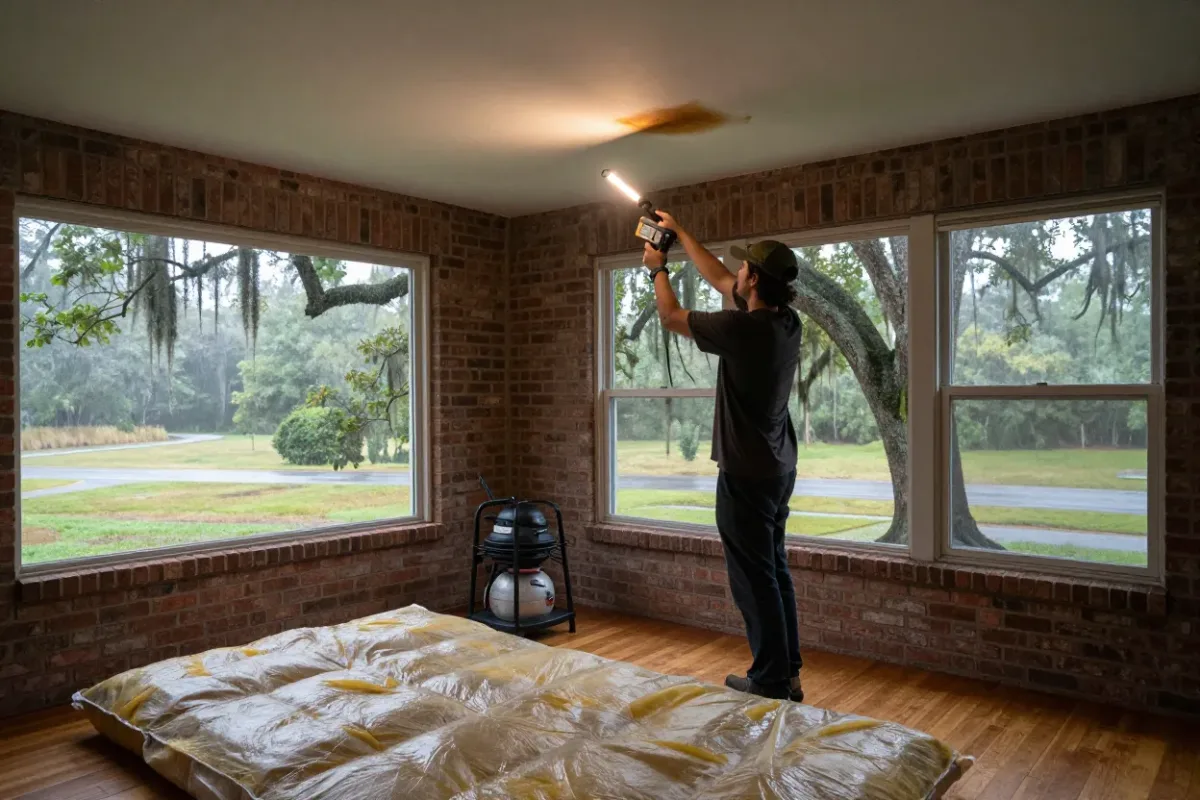
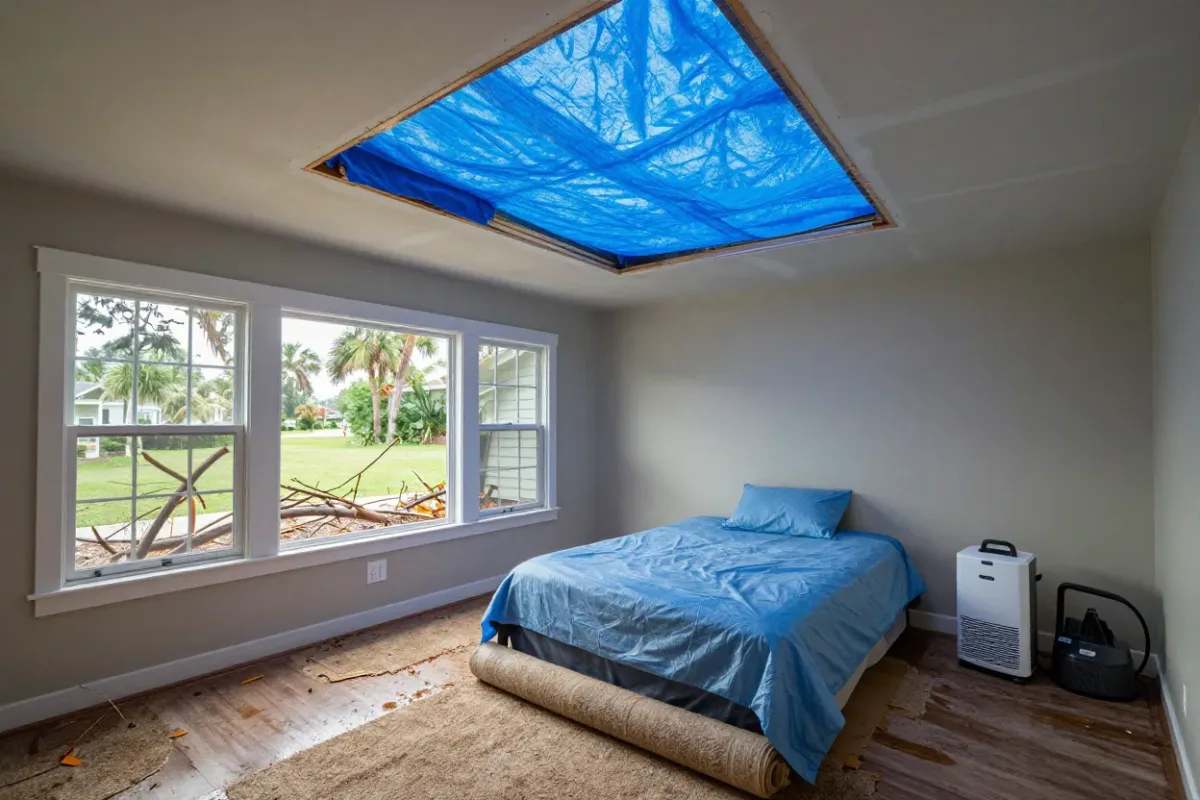
Tallahassee breaks the Florida pattern. The state capital sits well inland in the Big Bend at the southern edge of the Red Hills, and it is genuinely hilly, with elevations rising from near sea level to a bit over two hundred feet. There is no storm surge here. What Tallahassee has instead is one of the densest live-oak canopies of any city in the state, and that canopy is the main reason water gets into homes: when a hurricane or tornado moves through, trees and limbs puncture roofs and rain follows them in. Heavy rain also floods a few known low areas, notably around Franklin Boulevard next to downtown and in the Killearn Lakes subdivision.
Water Damage Florida provides 24/7 water damage restoration in Tallahassee, from historic in-town neighborhoods such as Frenchtown, Myers Park and Betton Hills to the large master-planned suburbs of Killearn Estates, Killearn Lakes Plantation and SouthWood, and the student rental market around Florida State, Florida A&M and Tallahassee State College. Call (888) 435-4769 and we will get a crew moving through the canopy roads to you.
Emergency Response After Wind, Trees and Rain
The city's recent history explains our most common emergency. On May 10, 2024, two simultaneous EF2 tornadoes cut through downtown, the university campuses and several subdivisions, damaging trees and roofs across a wide area and cutting power to about half the city; they also damaged the Emily Loop mobile home park. Hurricane Helene later that year brought tropical-storm-force gusts of about 67 mph at the airport and roughly four to eight inches of rain. Hurricane Michael in 2018 passed to the west but still left most of Leon County without power and dropped trees that closed more than a hundred roads. In each case the immediate emergency inside homes was the same: rain pouring through a punctured roof into attics, ceilings and walls while the air conditioning was off.
Our crews respond by protecting the roof opening from further rain, removing saturated insulation and sagging ceiling drywall, extracting water from floors, and setting air movers and dehumidifiers on the first visit. We start moisture readings and photographs immediately so your insurance file begins with a record of what was wet and where. Our emergency water damage page describes the first response in detail.
Restoration for In-Town, Suburban and Student Housing
Tallahassee's housing is varied enough that we plan each job around the building. Historic homes in Frenchtown, Myers Park and Betton Hills have wood framing, plaster and original floors that we dry carefully rather than demolish. The master-planned suburbs of Killearn Estates, Killearn Lakes Plantation and SouthWood are largely modern construction, slab or crawlspace, where fast extraction and controlled drying save most materials. Student rentals near the universities are often multi-unit and see leaks reported late, so we trace water into neighboring units and shared walls.
Whatever the building, we map wet materials with meters and thermal imaging, remove what cannot be dried, and run dehumidifiers and air movers in a closed structure until every monitored material returns to its dry standard. Cleaning, treatment where the water category calls for it, and the rebuild follow. See our water damage restoration page for the complete service.
Flood Cleanup in Tallahassee's Low-Lying Areas
Flooding in Tallahassee is local rather than citywide. The hills drain quickly, but water collects in the bottoms: the Franklin Boulevard area next to downtown and the Killearn Lakes subdivision are both documented to flood during extremely heavy rain, and the Lake Jackson and Lake Lafayette basins take in runoff from a large part of the city. Helene's rain in 2024, and the tropical rain that came with Hurricane Hermine in 2016 and Hurricane Kate in 1985, are the kinds of events that push water into ground floors, garages and crawlspaces in those areas.
Runoff that has crossed streets and yards is contaminated, so we remove the porous materials it soaked, disinfect hard surfaces and run air filtration while the structure dries, rather than blowing air across dirty water. If your home is in one of the low areas and is wet now, our first 24 hours after a flood guide covers the immediate steps, and the flood restoration page covers the rest.
Repair Work Once the Drying Is Verified
Repair in Tallahassee usually begins overhead, because that is where the water came in. Replacing ceiling drywall and attic insulation under a repaired roof, patching wall sections where water ran down inside framing, and repainting are the most common tasks after a storm. Flood and plumbing losses call for the lower course of drywall and baseboards, cabinet bases, subfloor in crawlspace homes, and flooring. In historic neighborhoods we save and refinish original wood floors and match plaster and trim.
The repair scope comes directly from the moisture logs and photographs gathered during mitigation, so your adjuster has a clear record of what the storm or leak affected. For rental owners we document each unit separately and schedule around tenants and lease dates where possible.
Mold Removal in the Capital's Shaded Homes
Days without power after Hermine, Michael and the 2024 tornadoes are exactly the conditions that start mold in this city. A punctured roof wets insulation and ceiling drywall, the house sits warm and humid, and growth begins before the power is back. Shade from the tree canopy keeps roofs and siding damp, so slow leaks around flashing and chimneys are another frequent source, along with crawlspaces under older raised homes and the walls of ground-floor rooms in the flood-prone low areas.
We begin by correcting the moisture source, then contain the area with plastic sheeting and negative air, run HEPA filtration, remove and bag contaminated porous materials, clean remaining surfaces and dry the space completely before rebuilding. Our mold remediation page explains the approach, and where hidden mold forms after water damage is worth reading if a ceiling in your home was stained after a storm and simply painted.
Leading Causes of Water Damage in Tallahassee
A hilly, heavily wooded inland city with a mix of historic homes, big suburbs and student rentals has a distinctive set of water problems. In Tallahassee the most common sources are:
- Live oaks and pines falling onto roofs during hurricanes and tornadoes
- Roof and flashing leaks under constant shade and leaf litter from the canopy
- Heavy rain flooding low-lying areas such as Franklin Boulevard and Killearn Lakes
- Extended power outages that leave storm-wet homes without air conditioning
- Water heater, supply line and washing machine failures in student rentals reported late
- Aging plumbing in historic in-town houses
- Damp crawlspaces beneath raised homes on sloping lots
- Air conditioning condensate overflows during the long humid season
- Wind-driven rain through windows and siding damaged by debris
Our Eight-Step Approach
Every Tallahassee job follows the same sequence, whether the water came through the roof or up from a crawlspace. Each step is finished before the next begins.
- Inspection and tracingWe find the entry point, judge whether the water is clean or contaminated, and follow it with meters and thermal imaging through attics, ceilings, walls, floors and neighboring units.
- ExtractionStanding water is vacuumed and pumped out of rooms, garages and crawlspaces.
- Removal of damaged materialsSaturated attic insulation, sagging ceiling drywall, wet carpet pad and swollen cabinetry are removed and bagged, with historic wood and plaster kept wherever drying can save them.
- Structural dryingAir movers and dehumidifiers run inside the closed home, with readings logged on every visit until framing, drywall and subfloor are dry.
- Cleaning and treatmentSurfaces reached by runoff or contaminated water are cleaned and treated, with air filtration running throughout.
- DocumentationPhotos, moisture logs and a written scope are compiled for you and your insurer.
- RebuildCeilings, insulation, drywall, trim, flooring and paint are replaced so the repaired rooms match the untouched ones.
- Final verificationA final set of moisture readings and a walkthrough confirm the house is dry and the work is complete.
Tallahassee Neighborhoods We Serve
We respond across the whole city and Leon County, from the historic core and Midtown to the northeast suburbs and the neighborhoods south and east of the capital. Crews arrive prepared for the specific house in front of them, whether that is a raised wood-frame home in Frenchtown, a mid-century house in Indian Head Acres or a newer home in SouthWood.
Tallahassee Neighborhoods
- Frenchtown
- Midtown
- Betton Hills
- Myers Park
- Levy Park
- Indian Head Acres
- Lafayette Park
- Los Robles
- Killearn Estates
- Killearn Lakes Plantation
- SouthWood
- Buck Lake
- Apalachee Ridge
- Seminole Manor
Nearby Communities
Our Tallahassee crews also cover the small towns and unincorporated communities around Leon County and the neighboring Big Bend counties:
- Woodville
- Bradfordville
- Crawfordville
- Havana
- Quincy
- Monticello
What to Do in the First Hour
These steps are safe for homeowners and tenants and will limit the damage before our crew arrives.
- Cut off the source if it is plumbingClose the fixture valve or the main. Tenants should notify the landlord or management immediately.
- Do not enter water near electricityStay out of any flooded room or crawlspace where outlets, cords, appliances or the panel could be in the water. Turn off the affected breakers only if the panel is dry and reachable without stepping in water.
- Stay out from under a wet ceilingCeiling drywall that is sagging with water can give way. Keep the room clear until we can drain and remove it.
- Catch what you can under a roof breachPlace buckets and move furniture and belongings out of the drip line. Leave the roof itself to professionals.
- Treat runoff as contaminatedWater that came in from the street or yard should not be touched or cleaned up by hand, and fans should not be run on it.
- Photograph before moving anythingDocument where the water came in, how high it reached and every room it touched.
- Call Water Damage FloridaDial (888) 435-4769 and tell us the source, how long it has been wet and whether the home has power.
For a storm plan that extends past the first day, see our hurricane water damage recovery guide.
Tallahassee Water Damage Questions
A tornado or storm damaged my roof and rain got in. Do you handle the roof too?
Our work is the interior: protecting the opening from more rain, removing wet insulation and ceiling material, drying the structure and rebuilding. We coordinate with your roofer so the roof is closed before the interior rebuild begins.
Why does my house in Killearn Lakes keep getting water in the garage?
Killearn Lakes is one of the areas documented to flood during extremely heavy rain. We can dry and restore the garage and adjoining rooms, and we will point out where water is entering so you can address grading or drainage with the right contractor.
Do you work with landlords of student rentals near the universities?
Yes. We coordinate access with management, trace water into adjoining units, document each unit separately and schedule repairs around lease dates where possible.
Can the original floors in my Myers Park or Betton Hills home be saved?
Often, when drying begins soon after the loss. We meter the boards and the framing beneath, dry them gradually so they do not cup, and refinish instead of replacing when the readings permit.
We were without power for days after the storm. Should we worry about mold?
If anything got wet during that time, yes. Warm, humid conditions without air conditioning are how growth starts. We inspect, open what needs opening, remediate any mold and dry the structure properly before repairs.
Do you serve the towns outside Tallahassee?
We cover all of Leon County and the surrounding communities, including Woodville, Bradfordville, Crawfordville, Havana, Quincy and Monticello, and the rest of the state through our service areas.