Gainesville is not a coastal city, and that changes what water damage looks like here. There is no storm surge to plan for; instead the risks come from the ground and the sky. The city sits on rolling, wooded terrain over karst limestone, where sinkholes and fast-shifting groundwater are documented features and where prolonged rain can keep low ground like Paynes Prairie under water for weeks. Add one of the densest tree canopies of any Florida city and a housing stock that runs from late-nineteenth-century houses in the Duckpond to sprawling student apartment complexes on the west side, and you have a place where a leak, a fallen oak or an overwhelmed sewer can each put water where it does not belong.
Water Damage Florida provides 24/7 water damage restoration in Gainesville, covering the University of Florida area, the historic east side and the suburban and student neighborhoods to the west. Whether the water came from a roof puncture, a slab leak, a failed washing machine hose or a sewer backup during a tropical downpour, call (888) 435-4769 and we will start the response.
Emergency Response for Leaks, Backups and Storm Intrusion
The most urgent Gainesville calls come in a few forms. Sewer and stormwater backups are the worst: during Hurricane Irma in 2017 the city's sewer system was overwhelmed by what utility engineers called a 200-year flood, and sewage mixed with rainwater backed up into streets and some homes. Falling trees in saturated soil are the next most common source, especially on the east side, where a limb through the roof lets rain pour into attic insulation and ceilings. The rest are the everyday failures of any city: water heaters, supply lines, refrigerator lines and air conditioning condensate drains, multiplied here by the sheer number of rental units.
Our first visit stops the spread. We extract standing water, remove soaked carpet pad and lower drywall where needed, contain sewage-affected areas, and place drying equipment before leaving. Every job begins with photos and moisture readings so the record for your insurer or landlord starts at the first hour. Our emergency water damage page describes how we handle the first response statewide.
Restoring Historic Houses, Family Homes and Rentals
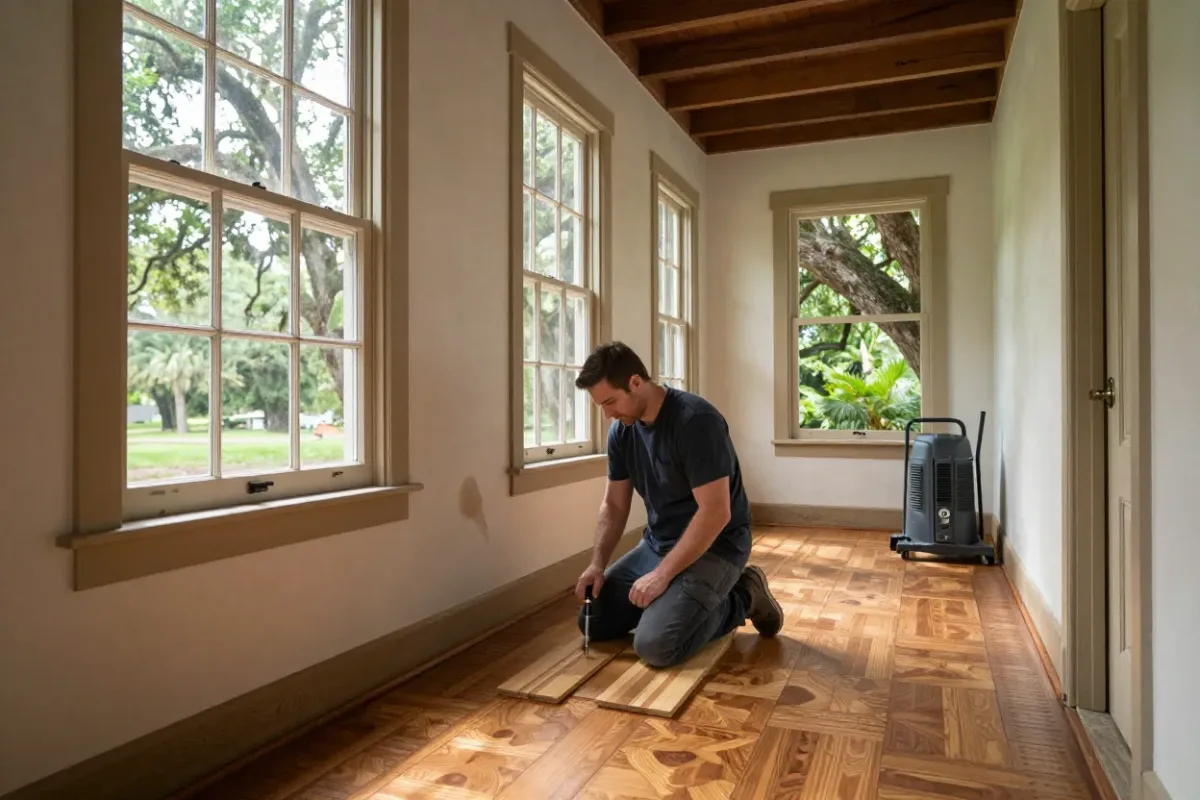
Gainesville's housing calls for different restoration approaches in different neighborhoods. In the Duckpond and Pleasant Street historic areas, homes built in the late 1800s and early 1900s have wood framing, plaster walls and original floors that deserve a careful, drying-first approach rather than a demolition-first one. Older single-family neighborhoods on the east side often have aging water infrastructure, so we look for the underlying cause as well as the visible damage. On the west side, student apartments and newer subdivisions are mostly slab, drywall and carpet, where quick extraction and controlled drying save most of the unit.
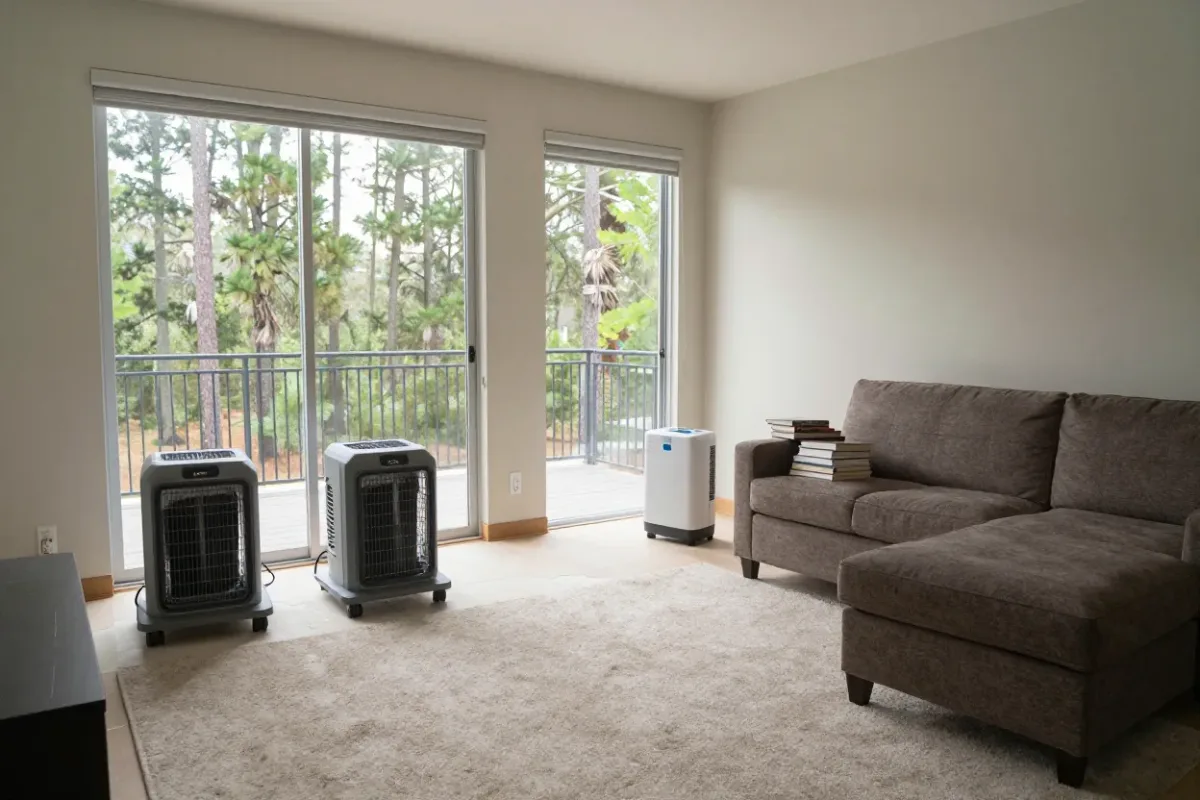
In every case the goal is the same: map the wet materials with meters and thermal imaging, dry in place what can be dried, remove what cannot, and keep dehumidifiers and air movers running until the readings say the structure is dry. Then the rebuild of drywall, trim, flooring and paint begins. Learn more about the complete service on our water damage restoration page.
Flood Cleanup in Gainesville After Heavy Rain
Flooding in Gainesville is a rainfall story rather than a tidal one. Irma's rain in 2017 pushed floodwater across US 441 at Paynes Prairie and kept it there into late October, and the same event drove the sewer backups that reached homes. Hurricane Debby in 2024 dropped close to nine inches of rain, flooding homes in Gainesville and nearby towns and causing water damage in University of Florida buildings. Hurricane Ian in 2022 and Hurricane Milton in 2024 also passed through the region's storm record. When the ground is already saturated, low yards, crawlspaces and ground-floor units fill quickly and drain slowly.
Rain-driven floodwater that has run across streets and yards, and any water involving a sewer backup, is contaminated. We remove the porous materials it touched rather than drying them, clean and disinfect hard surfaces, and run air filtration during the work. Please do not run household fans on sewage-affected water; that spreads contamination. Our flood restoration page explains the difference between clean-water and contaminated-water cleanup in detail.
Repairs Once the Structure Is Dry
Repair begins only after moisture readings confirm the drying is finished. In Gainesville that work commonly includes replacing cut drywall and baseboards, patching or replacing ceilings under tree-damaged roofs, repairing subfloors under long-wet carpet, rebuilding bathroom and kitchen cabinet bases, and repainting. In historic homes we work to save and refinish original wood flooring and match plaster or trim profiles rather than substituting modern materials where they would look wrong.
For landlords and property managers with student units, we schedule around lease turnover and document each unit on its own so you have a clean record per address. The repair scope is built from the moisture logs and photographs from mitigation, giving your adjuster a clear line between what the water damaged and what was already worn.
Mold Removal After Leaks and Backups
Mold in Gainesville tends to show up where water lingered unnoticed: in the crawlspace or under the floor of an older east-side home after a long wet season, behind the drywall of a student unit where a slow leak went unreported for a semester, in attic insulation under a roof that a limb punctured months ago, and along the base of walls after a backup was mopped up but never properly dried. The city's shade and humidity slow natural drying and give growth time to spread.
We treat mold as a moisture problem first. The source is found and corrected, the area is contained with plastic sheeting and negative air, contaminated porous materials are removed and bagged, remaining surfaces are HEPA-vacuumed and cleaned, and the space is dried completely before rebuilding. See the mold remediation page for the full method, and read where hidden mold forms after water damage if a wall in your home was wet once and simply painted over.
Common Sources of Water Damage in Gainesville
An inland university city with old neighborhoods, heavy tree cover and karst ground has its own set of water problems. The sources we see most in Gainesville include:
- Trees and limbs falling onto roofs during storms, especially in saturated soil on the east side
- Sewer and stormwater backups when heavy rain overwhelms the city system
- Aging supply lines, drains and water heaters in older east-side homes
- Unreported leaks in student apartments and rental houses
- Heavy tropical rainfall ponding in low yards, crawlspaces and ground-floor units
- Roof and flashing leaks under the constant load of leaf litter and shade
- Slab and foundation cracks related to shifting groundwater in karst terrain
- Air conditioning condensate drain clogs during the long cooling season
- Washing machine hoses and dishwasher lines failing in multi-unit buildings
The Eight Steps We Follow on Every Job
From a single wet closet to a flooded ground floor, the sequence does not change. Each step has to finish before the next one starts, which is what keeps a rebuilt wall from getting wet again.
- Inspection and moisture mappingWe identify the source, classify the water as clean or contaminated, and trace it with meters and thermal imaging through walls, ceilings, crawlspaces and, in apartments, the neighboring units.
- Water extractionStanding water is removed with portable or truck-mounted extractors; submersible pumps handle flooded crawlspaces and ground floors.
- Removal of unsalvageable materialsSewage-touched drywall, saturated insulation, carpet pad and swollen particleboard are cut out and bagged, while original wood and plaster in historic homes are preserved wherever drying can save them.
- Structural dryingAir movers and dehumidifiers run in a closed home, with readings recorded each visit until framing, subfloor and drywall reach their dry standard.
- Cleaning and disinfectionSurfaces reached by backup or floodwater are cleaned and treated, and HEPA filtration runs while the work continues.
- Documentation for your claimPhotos, moisture logs and a written scope are compiled for you, your landlord or property manager, and your insurance carrier.
- Repair and rebuildDrywall, ceilings, trim, flooring and paint are restored to match the rest of the house or unit.
- Final moisture checkA closing set of readings and a walkthrough confirm the work is complete and the space is ready for use.
Gainesville Neighborhoods and Surrounding Towns
We respond across the entire city, from the historic east side and downtown to the university area and the suburban west side. Crews arrive prepared for the specific house in front of them, whether that is a raised wood-frame home in Pleasant Street, a mid-century ranch in Suburban Heights or a ground-floor unit in a west-side complex.
Gainesville Neighborhoods
- Downtown Gainesville
- Duckpond (Northeast Gainesville Residential District)
- Pleasant Street
- Fifth Avenue
- University Park
- Suburban Heights
- Forest Ridge
- Black Acres
- Sugarfoot
- Broadmoor
- Kirkwood
- Rosemont
- Northwood
- Springtree
- Mill Pond
Nearby Communities
Our Gainesville crews also cover the small towns and rural communities of Alachua County and the neighboring counties. Some of these have their own local pages:
- Ocala
- Lake City
- Alachua
- High Springs
- Newberry
- Archer
- Micanopy
- Hawthorne
- Waldo
- Jonesville
- Haile Plantation
Steps to Take While You Wait for Us
What you do in the first hour shapes how much of the home can be saved. These steps are safe for homeowners, tenants and property managers alike.
- Stop the source if it is plumbingClose the fixture valve or the home's main shutoff. Tenants should call the landlord or management right away so the building supply can be isolated if needed.
- Do not enter water near electricityStay out of any flooded room where outlets, cords, appliances or the panel might be in contact with water. Cut power only if the panel is dry and reachable without stepping in water.
- Treat backup water as contaminatedIf the water came from a drain, toilet or the street, keep people and pets away, do not try to clean it, and do not run fans on it.
- Cover a roof breach from inside if it is safeIf a limb has opened the roof, place buckets and move belongings out from under the drip. Leave the roof itself to professionals.
- Lift belongings off the floorMove rugs, boxes, books and electronics off wet floors and put foil or blocks under furniture that must stay.
- Photograph everything firstRecord the source, the water level and every affected room before anything is moved.
- Call Water Damage FloridaDial (888) 435-4769 and describe the source, how long it has been wet, and whether the home is a rental with other units affected.
If a storm caused the damage, our hurricane water damage recovery guide walks through the days that follow.
Gainesville Water Damage Questions
A sewer backup came into my house during a storm. Is that something you handle?
Yes. Sewage-affected water is treated as contaminated. We contain the area, remove the porous materials it touched, clean and disinfect the hard surfaces, run air filtration, and dry the structure before any repair. This is one of the most common storm-related calls we take in Gainesville.
My home in the Duckpond is over a hundred years old. Will you tear out the original floors?
Not if drying can save them, and often it can when we start early. We meter the floors and framing, dry them in a controlled way, and remove only what is truly unsalvageable. Historic materials are replaced only as a last resort.
Do you work with landlords and student housing managers?
We do. We coordinate access with management, document each unit separately, and schedule repairs around lease turnover where possible.
A tree came through the roof and rain got into the attic. What happens to the insulation?
Wet blown-in or batt insulation usually has to come out because it holds water against the ceiling drywall and framing. We remove it, dry the attic framing and ceilings, and replace it once readings confirm everything is dry.
Is there a sinkhole risk with water damage in Gainesville?
Gainesville sits on karst limestone, and sinkholes are a documented feature of the area. We do not evaluate ground stability, but if we see signs of foundation movement during a water loss we will tell you so you can bring in the right specialist.
Do you cover the towns around Gainesville?
Yes. Our crews serve Alachua, High Springs, Newberry, Archer, Micanopy, Hawthorne and the surrounding communities, as well as Ocala and Lake City, and the rest of the state through our service areas.