Lake City sits at the crossroads of I-75 and I-10, roughly midway between Jacksonville and Tallahassee, at one of the higher elevations in Florida on the edge of the Osceola National Forest. It takes its name from the natural lakes inside its limits, among them Lake DeSoto, Lake Isabella and Lake Montgomery, and it lies in springs-and-karst country that drains toward the Santa Fe and Suwannee rivers. None of that puts it near the coast, yet this part of North Florida has taken repeated direct hits from storms coming off the Gulf, and the flat, poorly draining low spots around the lakes hold water long after the rain stops.
Water Damage Florida provides 24/7 water damage restoration in Lake City, from a single flooded room after a flash flood to a house opened up by a fallen tree. As the regional hub for a largely rural area, the city also draws calls from the surrounding towns, and our crews cover those too. Call (888) 435-4769 and describe what you are dealing with; we will start the response and tell you what to do in the meantime.
Emergency Water Damage Response in Lake City
Two recent storms define the emergencies we see here. Hurricane Idalia in 2023 crossed near Lake City, bringing down trees onto homes and power poles and leaving thousands in Columbia County without power, which meant soaked ceilings and attics that could not be dried by air conditioning for days. Hurricane Debby in 2024 dropped more than a foot of rain on the county, the heaviest in the region, and produced widespread flash flooding, a confirmed tornado near the airpark and I-75, a washed-out state road and destroyed homes near the county line. Between storms, the calls are the familiar ones: water heaters, supply lines, roof leaks and septic or drain backups.
Our crews arrive equipped to pump and extract standing water, remove sodden insulation and drywall, secure a roof opening from further rain, and start drying on the first visit. Moisture readings and photographs begin on arrival so that your claim has a documented starting point. Our emergency water damage page explains how the first response works everywhere we serve.
Complete Restoration for Town and Country Homes
Restoration takes a wet house through drying and back to finished condition. Lake City and the countryside around it hold a wide mix of construction, from in-town homes near the lakes and downtown to raised houses, manufactured homes and newer subdivisions on the outskirts. Each dries differently. A raised wood-frame house may have a wet crawlspace nobody has looked at; a slab home traps moisture under vinyl and laminate; a manufactured home has a belly board and floor system that must be checked before the interior can be called dry.
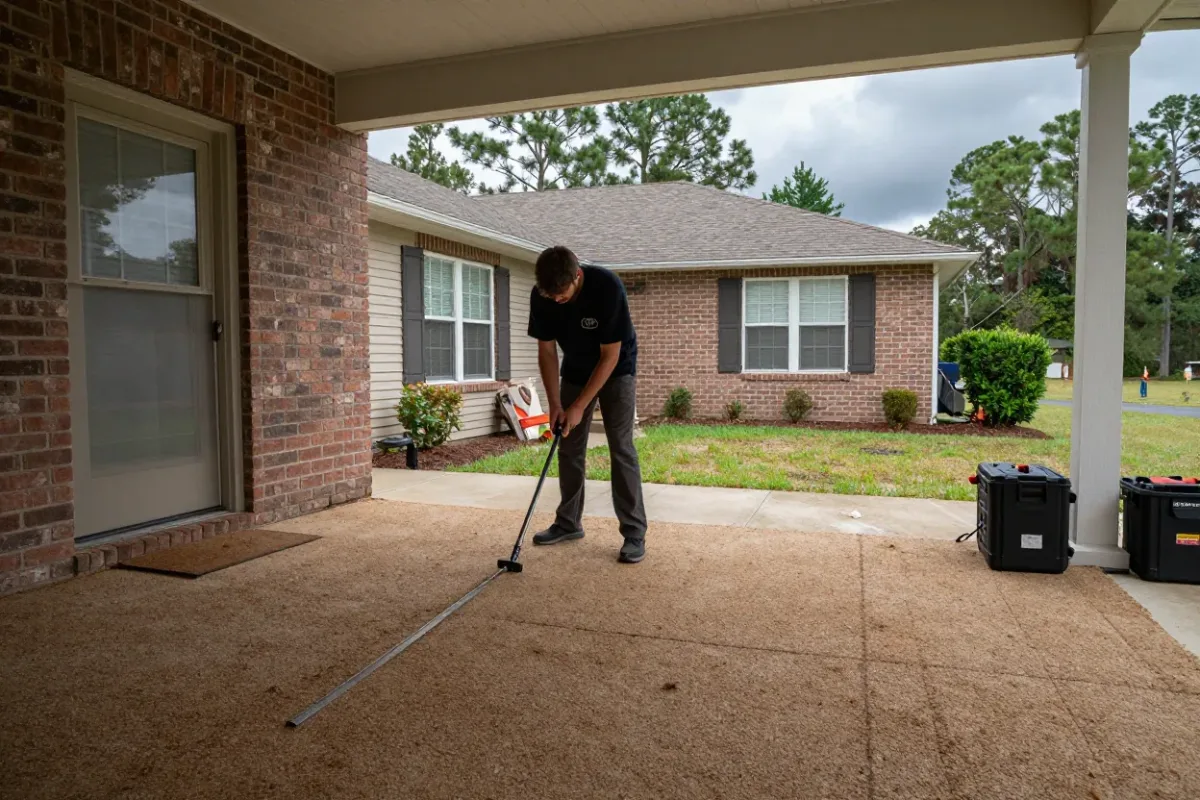
We map wet materials with meters and thermal imaging, remove what cannot be saved, and run air movers and dehumidifiers in a closed house until readings return to the dry standard for each material. After that comes cleaning and treatment where the water was contaminated, then the rebuild. The full sequence is described on our water damage restoration page.
Flash Flood Cleanup After Gulf Storms
Debby's rainfall in 2024 showed how fast water rises in Columbia County when a Gulf storm stalls overhead. More than a foot of rain in a short span overwhelmed ditches and culverts, flooded roads and homes, and washed out a state road. Lake City's in-town lakes and low, flat ground mean the water does not leave quickly; it sits in yards, garages and ground-floor rooms for days, soaking into everything it touches.
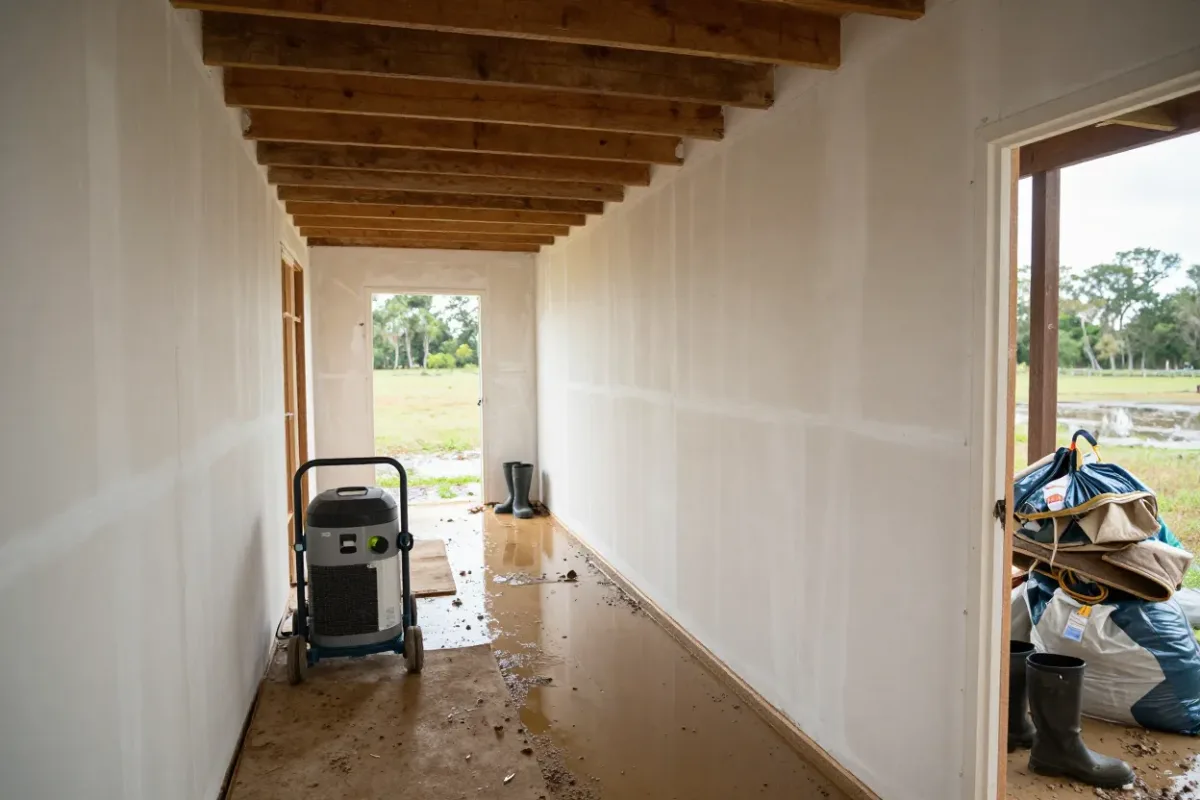
Floodwater that has run across roads, fields and septic drainfields is contaminated, so flood cleanup means removing the drywall, insulation, carpet and pressboard it soaked rather than trying to dry them, disinfecting hard surfaces and running air filtration while the structure dries. Do not use household fans to blow air across this kind of water. If you are in the middle of it now, our first 24 hours after a flood guide covers the immediate steps, and the flood restoration page covers what comes after.
Water Damage Repair After Verified Drying
Repair starts once the moisture logs confirm the structure is dry. Typical Lake City repair work includes replacing ceiling drywall and attic insulation under tree-damaged roofs, replacing the lower course of wall drywall and baseboards after flooding, rebuilding cabinet bases, replacing subflooring in raised homes and manufactured homes, re-laying flooring and repainting. Where a septic backup was involved, the affected bathroom or utility area is rebuilt after full disinfection.
We write the repair scope from the photos and moisture records gathered during mitigation so your adjuster can see exactly what the storm or leak affected. For rural homeowners a long drive from town, we plan visits so equipment is monitored and adjusted without unnecessary trips.
Mold Removal After Storms and Leaks
The days without power after Idalia are a good example of how mold gets started in Lake City: a roof leak wets an attic and ceiling, the air conditioning is off, the house is humid and warm, and by the time power returns growth has begun on the drywall paper and insulation. The same thing happens more slowly under a raised house with a damp crawlspace, behind a wall where a supply line drips, or in a garage that took flash-flood water and was mopped rather than dried.
Mold work begins with correcting the moisture source, then containing the area, running HEPA air filtration, removing and bagging contaminated porous materials, cleaning the remaining surfaces and drying the space fully before rebuilding. Read more on our mold remediation page, and if you have a spot that was wet after a storm and then painted over, see where hidden mold forms after water damage.
Typical Causes of Water Damage in Lake City
An inland town on high ground surrounded by forest, lakes and karst terrain has water problems that differ from the coast. In Lake City the sources we see most often include:
- Flash flooding when a stalled Gulf storm drops heavy rain on flat, slow-draining ground
- Pines and oaks falling onto roofs during hurricanes and tornadoes
- Rain entering through roofs and windows damaged by high winds
- Prolonged power outages that leave wet homes without air conditioning
- Water heater, supply line and washing machine hose failures
- Septic and drain backups after saturating rain
- Damp crawlspaces beneath raised houses and manufactured homes
- Roof leaks under pine-needle buildup and aging shingles
How the Job Proceeds
Every Lake City job follows the same eight steps in the same order, whether it is a single wet bedroom or a house flooded to the windowsills.
- InspectionWe find the source, judge whether the water is clean or contaminated, and trace it through walls, ceilings, floors, crawlspaces and, in manufactured homes, the belly and floor system.
- ExtractionStanding water is pumped and vacuumed out of rooms, garages and under-floor spaces.
- Removal of ruined materialsFlood-soaked drywall, insulation, carpet pad, pressboard cabinetry and damaged subfloor are cut out and bagged.
- DryingAir movers and dehumidifiers run inside the closed house and, where needed, in the crawlspace, with readings logged until each material is dry.
- Cleaning and disinfectionSurfaces reached by flood or septic water are cleaned and treated, with air filtration running during the work.
- Records for your claimPhotos, moisture logs and a written scope are compiled for you and your insurance carrier.
- RebuildDrywall, insulation, subfloor, trim, flooring and paint are restored to match the rest of the home.
- Final walkthroughA last set of moisture readings and an inspection confirm the house is dry and finished.
Where We Work in and Around Lake City
We respond throughout the city, from the downtown and the homes around Lake DeSoto, Lake Isabella and Lake Montgomery to the newer areas along the interstates and the rural roads toward the Osceola National Forest and the Santa Fe River. Because Lake City is the service hub for a large rural area, our crews routinely cover the whole of Columbia County and the neighboring counties.
Nearby Communities
Our Lake City crews also serve the surrounding towns of the Suwannee River region. Gainesville has its own service page:
- Gainesville
- Fort White
- Live Oak
- White Springs
- Wellborn
- High Springs
- Watertown
What You Can Do Right Away
Before the crew arrives, these steps protect you and limit what the water can ruin. All are safe for a homeowner to do.
- Stop the flowFor a plumbing leak, close the fixture valve or the main shutoff. For a roof opening, set buckets and move belongings out from under the drip.
- Keep out of water that may be electrifiedDo not enter a flooded room or crawlspace if outlets, cords, appliances or the panel could be in contact with water. Cut power only if the panel is dry and you can reach it without stepping in water.
- Treat floodwater and backups as contaminatedKeep children and pets out, avoid contact, and leave the cleanup to us.
- Do not run fans on floodwaterBlowing air across contaminated water spreads it through the house. Wait for proper containment and equipment.
- Raise belongingsMove rugs, boxes and electronics off wet floors and put foil or blocks under furniture that must stay.
- Photograph before you move anythingRecord the source, the water level and every affected room.
- Call usReach Water Damage Florida at (888) 435-4769 with the source, how long it has been wet, and whether you have power.
After a hurricane, our hurricane water damage recovery guide covers the following days in more detail.
Lake City Water Damage FAQs
We lost power for days after the storm and now the house smells musty. What should we do?
Call us for an inspection. Wet materials that sat without air conditioning often have growth behind or under them even when the surface looks fine. We meter walls, ceilings and floors, open what needs to be opened, remediate any mold and dry the structure properly.
Do you work on manufactured homes?
Yes. Manufactured homes need attention to the floor system and belly board, which hold water out of sight. We check and dry those areas along with the interior.
My crawlspace is wet after the rain. Is that a problem for the house?
A wet crawlspace keeps moisture against the subfloor and framing and can lead to growth and rot. We dry crawlspaces with dedicated equipment and confirm the subfloor readings before calling the house dry.
Is floodwater from the yard really different from a clean leak?
It is. Water that has run across roads, fields and drainfields is contaminated. Porous materials it soaked are removed and hard surfaces disinfected, whereas a clean supply-line leak caught early can often be dried in place.
How far outside Lake City do you go?
Our crews cover all of Columbia County and the neighboring towns, including Fort White, Live Oak, White Springs, Wellborn, High Springs and Watertown, plus Gainesville to the south and the rest of the state through our service areas.