Panama City Beach runs along roughly nine miles of white-sand Gulf beach on the low strip of land between the Gulf of Mexico and West Bay. It was assembled from small beach communities, Laguna Beach, Long Beach Resort and Edgewater Gulf Beach among them, and then transformed by a 2000s condominium boom that replaced older cottages and motels with high-rise towers directly on the sand. The result is a resort city whose housing is heavy in condo units and vacation rentals, with newer subdivisions inland, all sitting on terrain laced with coastal dune lakes and lagoons.
That combination of tall buildings in salt spray, thousands of units that sit empty between guests, and low ground exposed to surge and ponding rain is what shapes water damage here. Water Damage Florida provides 24/7 water damage restoration in Panama City Beach for condominium associations, rental managers, owners who live elsewhere and year-round residents. Call (888) 435-4769 and we will get a crew headed for the beach.
Emergency Water Damage Help in Panama City Beach
In a beachfront tower, a water emergency is rarely confined to one unit. A failed supply line or water heater on an upper floor sends water down through ceilings, chases and elevator shafts, and the unit that calls is often not the one that is wettest. The other common emergency is wind-driven rain: when Hurricane Michael made landfall to the east in 2018, its strongest winds and the nine-to-fourteen-foot surge fell on the eastern side of Bay County, yet Panama City Beach still suffered severe roof and siding damage, and rain came in wherever the envelope was breached.
Our first visit traces the water through the stack rather than treating only the unit that called, extracts standing water, removes wet carpet pad and lower drywall where needed, sets air movers and dehumidifiers, and begins photographs and moisture readings for each unit and the association. Owners who are out of town get their documentation remotely. There is more on that first visit on our emergency water damage page.
Restoring Gulf-Front Towers, Rentals and Inland Homes
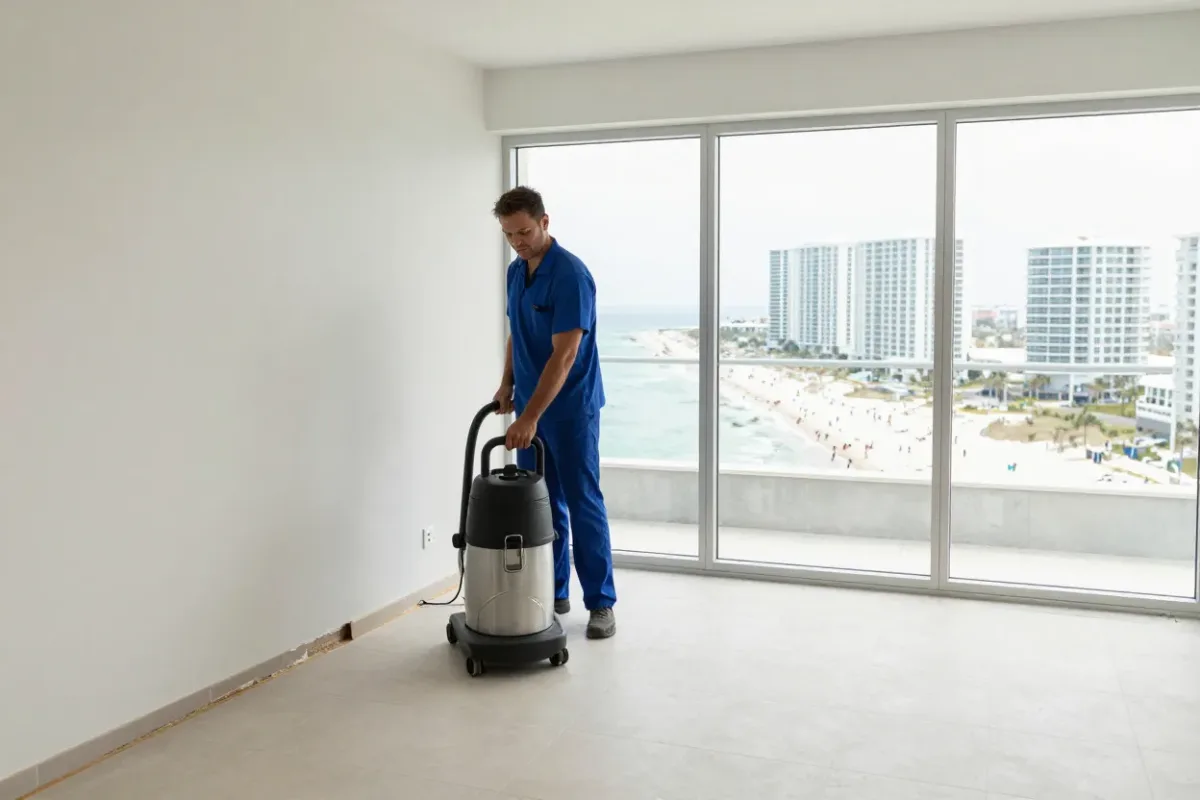
Restoration in Panama City Beach is mostly condominium work, and condominium work has its own logic: concrete structure that survives almost anything, and drywall, cabinetry, flooring and insulation that do not; shared walls and stacked plumbing; association rules on hours, elevators and common areas; and a rental calendar that owners want protected. Constant salt spray and wind-driven rain during tropical systems wear on balcony doors, window seals and exterior finishes, and those are the usual entry points. Inland, the newer subdivisions are conventional slab homes where quick extraction and controlled drying do most of the work.
We map wet materials with meters and thermal imaging, dry in place what the readings allow and remove what they do not, then run dehumidifiers and air movers in a closed unit until every monitored material reaches its dry standard. Cleaning, treatment where the water was contaminated, and the rebuild follow, with each unit documented separately. Our water damage restoration page explains how each stage works.
Flood Cleanup on Low Ground Between the Gulf and West Bay
Panama City Beach's Gulf frontage and low elevation give it surge exposure, and its dune-lake and lagoon-laced terrain gives it heavy-rain ponding: water that falls on this strip of land has few places to go. The surrounding area takes its name from its coastal dune lakes, and the city maintains an active water-quality study on Lullwater Lake, a reminder of how close the water table sits to the surface. Ground-floor units, parking garages, pool decks and the older cottage streets in areas such as Laguna Beach are the first to take water when a tropical system stalls offshore.
Gulf and lagoon water is salty and contaminated, and rain runoff that has crossed Front Beach Road is no cleaner. Flood cleanup in these buildings means stripping out the soaked drywall, insulation, carpet and pressboard, disinfecting the slab and other hard surfaces, having any outlets or wiring the water reached inspected, and filtering the air while the space dries. See the flood restoration page for the full cleanup and the first 24 hours after a flood guide for the immediate steps.
Repair After the Drying Is Verified
Repair in a Panama City Beach condo usually means replacing lower drywall and baseboards, rebuilding vanity and kitchen cabinet bases, replacing flooring, repairing the ceiling of the unit below, resealing or replacing a balcony door threshold and repainting, all to a finish that suits a rental market. In inland subdivision homes the work is more conventional drywall, trim, flooring and paint. Fixtures and wiring that salt water reached are inspected, and anything corroded is replaced before the walls are closed.
Each unit's repair scope is written from its own drying log and photographs, so the adjuster for that owner sees precisely what the water affected there and nowhere else. We work within association rules on hours, elevator use and common-area protection so the project does not stall on building logistics.
Mold Removal in Beachfront Condos and Homes
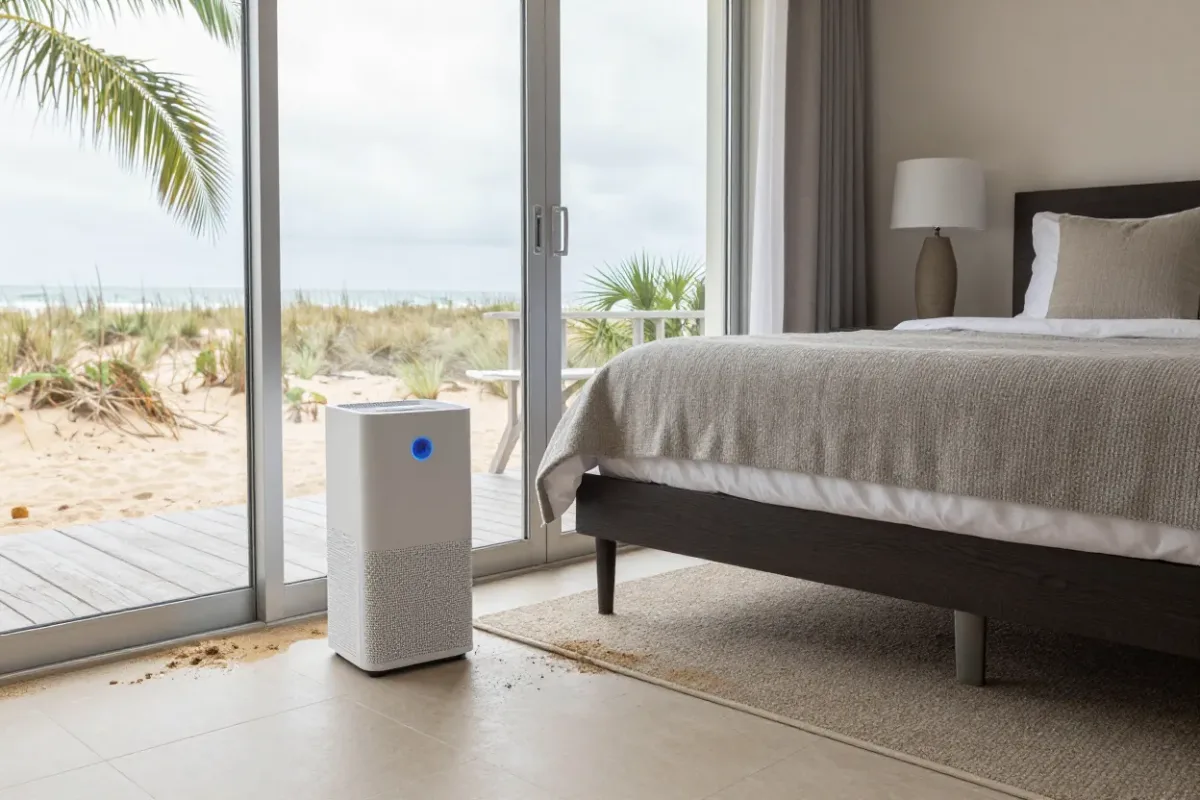
A high-rise unit that sits empty for weeks in humid, salty air is where mold gets its start in Panama City Beach. A balcony door seal that failed in the last storm, a slow drip under a kitchen sink, a bathroom exhaust that never runs between guests, or the wet drywall two floors below a leak that was fixed but never traced can all produce growth behind baseboards and cabinet backs before anyone notices. A power outage after a storm, with the air conditioning off across an entire building, speeds it up.
The first job is stopping the moisture, whether that is a failed seal or a leak several floors up. The unit is then sealed off under negative pressure, HEPA scrubbers run, contaminated drywall and cabinet backs are bagged and carried out under the building's rules, the remaining surfaces are cleaned, and the space is dried to verified readings before finish work. See our mold remediation page for the method, and read where hidden mold forms after water damage before repainting a stained wall in a unit.
Common Causes of Water Damage Here
A low resort strip lined with high-rise condos and vacation rentals, exposed to the Gulf on one side and West Bay on the other, sees a particular pattern of losses. In Panama City Beach the sources we see most are:
- Supply line and water heater failures in upper-floor units sending water down through the building
- Wind-driven rain forced through balcony doors and window seals in tropical systems
- Roof and siding damage from hurricane winds, as during Michael
- Leaks in vacant rental units running unnoticed between bookings
- Storm surge and heavy-rain ponding on low ground between the Gulf and the bay
- Salt spray degrading exterior seals and flashing on beachfront towers
- Air conditioning condensate overflows in units left closed in the off-season
- Pool deck, garage and ground-floor drainage failures during heavy rain
How We Handle a Loss in a Beachfront Building
Every job follows eight steps in a fixed order, whether the loss is one wet bathroom or a leak that has run through ten floors.
- Inspection and stack tracingWe find the source, judge whether the water is clean, salty or contaminated, and trace it with meters and thermal imaging through the unit, the shared walls and every unit below.
- ExtractionStanding water is vacuumed out of living spaces and pumped from garages, ground-floor units and elevator pits when needed.
- Removal of unsalvageable materialsSoaked drywall, insulation, carpet pad and swollen cabinetry are cut out and bagged, with debris moved through the building under the association's rules.
- Drying and dehumidificationAir movers and dehumidifiers run inside closed units, with readings logged each visit until slab, framing and drywall are dry.
- Cleaning and treatmentAny surface that salt water or runoff touched is cleaned and treated, with scrubbers filtering the air the whole time.
- Documentation for each ownerPhotos, moisture logs and a written scope are prepared per unit, for the owners, the association and the insurers involved.
- RebuildDrywall, trim, cabinets, flooring and paint are restored to a rental-ready finish matching the rest of the unit.
- Final verificationClosing moisture readings and a walkthrough confirm each unit is dry and ready for residents or guests.
Panama City Beach Areas We Serve
We respond along the entire beach and inland to the bay, from the towers along Front Beach Road to the older cottage communities and the newer subdivisions behind them.
Panama City Beach Neighborhoods
- Laguna Beach
- Long Beach
- Edgewater Gulf Beach
- Bid-a-wee Beach
- Sunnyside on the Gulf
- Lullwater Beach
- Colony Club
- Bahama Beach
- El Centro Beach
- Gulf Vista
- Palm Cove
- Lyndell Plantation
Nearby Communities
Our crews also cover the rest of Bay County and the beach communities to the west along the coast. Panama City and Destin have their own service pages:
- Panama City
- Destin
- Lynn Haven
- Upper Grand Lagoon
- Lower Grand Lagoon
- Rosemary Beach
- Inlet Beach
- Callaway
- Mexico Beach
What Owners, Managers and Guests Should Do First
Whether you are in the unit or hearing about the problem from a guest or manager, these steps are safe and will limit the damage.
- Shut off the unit's water and alert the buildingClose the fixture valve or the unit shutoff, then notify the association or building engineer so the riser can be isolated and the units below can be warned.
- Keep everyone out of water near electricityNo one should enter a wet room if outlets, appliances or the panel could be in contact with water. The unit's breakers are switched off only if the panel is dry and can be reached without walking through water.
- Treat Gulf, lagoon or street water as contaminatedKeep people and pets away from it, do not clean it by hand and do not run fans across it.
- Move belongings upLift rugs, electronics and luggage off wet floors and slide foil or blocks under furniture that must stay.
- Photograph before anything is movedHave whoever is in the unit photograph the source, the extent of the water and every room it reached.
- Keep the air conditioning runningIn a closed unit, conditioned air slows mold; sliding the balcony door open to the salt breeze speeds it up.
- Call Water Damage FloridaReach us at (888) 435-4769 with the building, the unit, the source, how long it has been wet and who can provide access.
If a hurricane caused the loss, our hurricane water damage recovery guide covers the days that follow.
Panama City Beach Water Damage FAQs
A leak upstairs came through my ceiling. Who do you work for, me or the association?
Whoever engages us, but we document every affected unit and the common areas separately and give the association a clear record of the source and the water's path. Responsibility between policies is decided by the adjusters and the condo documents; our job is to make the record clear.
Can you work around the building's rules on hours and elevators?
Yes. We plan debris removal, equipment moves and work hours around the association's rules and protect hallways and elevators so the project does not stall on building logistics.
I rent my unit out. Can the job be finished before the next guests arrive?
We plan around your booking calendar as far as the drying allows, but walls are not closed and floors are not laid until the readings say the material is dry. Closing up a damp wall to save a weekend usually means opening it again later.
Is salt water from the Gulf handled differently from a plumbing leak?
It is. Salt water is contaminated and corrosive, so porous materials it reached are removed, hard surfaces disinfected and fixtures and wiring inspected. A clean leak from a supply line, caught within a day or two, usually lets us dry the unit without tearing it apart.
I live out of state. How do I stay informed?
We coordinate access with your manager or the association, send photographs and moisture readings as the job progresses and prepare the documentation your insurer needs, so you can make decisions from anywhere.
Do you cover Rosemary Beach, Inlet Beach and the Grand Lagoon area?
Yes. Our crews serve Upper and Lower Grand Lagoon, Rosemary Beach, Inlet Beach, Lynn Haven, Callaway and Mexico Beach, as well as Panama City and Destin, and the rest of Florida through our statewide service areas.