Everything in Panama City is shaped by St. Andrews Bay. The city spreads along the bay's north shore, its arms and bayous reach into the neighborhoods, and most routes in or out cross one of three large bridges, the Hathaway, the Bailey and the DuPont. It grew from separate settlements, among them the old fishing village of St. Andrews and the mill town of Millville, into the largest city between Tallahassee and Pensacola. And on October 10, 2018, Category 5 Hurricane Michael passed almost directly over it with gusts above 160 mph, damaging roughly nine in ten structures and about two-thirds of the homes in the city and displacing tens of thousands of residents.
Years later, that storm still defines water damage here. A large share of the housing stock has been repaired or rebuilt since Michael, so many of the homes we enter are a mix of old bones and new finishes, and the bayfront and bayou-lined neighborhoods remain low and exposed to surge and tidal flooding. Water Damage Florida provides 24/7 water damage restoration in Panama City, for storm intrusion, bay flooding, tornado damage and the everyday leaks that happen in any city. Call (888) 435-4769 to get help moving.
Emergency Water Damage Response in Panama City
Panama City's emergencies come from wind as much as water. Michael tore roofs from most of the city's buildings, and tornadoes have followed: an EF2 in March 2022 and an EF3 in January 2024 are both documented. When a roof opens, rain enters attics, ceilings and walls within minutes, and if the power is out the house sits warm and wet for days afterward. Earlier storms, Hurricane Opal in 1995 and Hurricane Ivan in 2004, caused damage in the city as well.
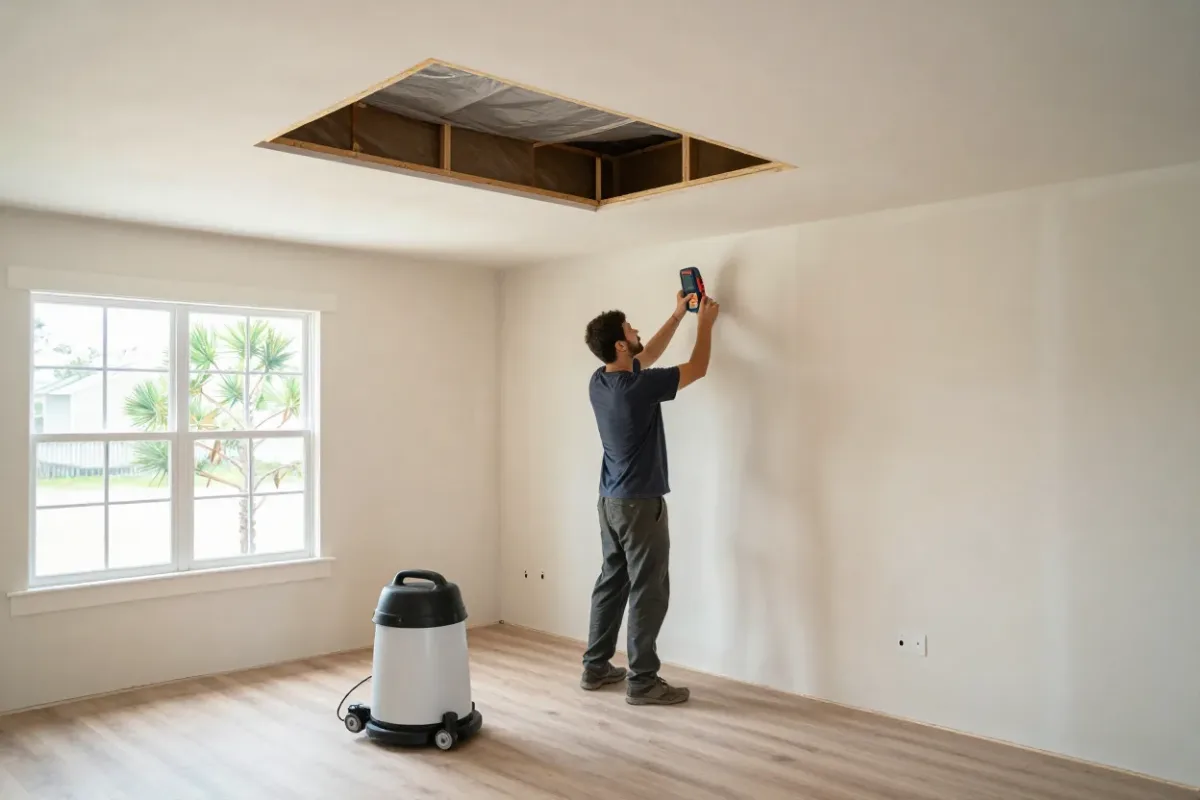
Between storms, the emergencies are ordinary but frequent: water heaters, supply lines and appliance hoses, sometimes in homes whose plumbing was disturbed during post-Michael reconstruction. Our first visit protects a roof breach from further rain, removes wet insulation and sagging ceiling material, extracts water from floors, sets air movers and dehumidifiers and begins photographs and moisture readings for your insurer. Our emergency water damage page walks through what that first visit involves.
Restoration for Old Bungalows and Rebuilt Homes
Panama City's housing is a layered mix: historic bungalows in St. Andrews and Millville, mid-century bayfront neighborhoods, and a large share of homes repaired or rebuilt after Michael. That last group needs particular attention. A home with a new roof and new drywall over original framing can hide moisture in places the reconstruction never opened, and the transition between old and new materials is where water tends to collect. The older bungalows have wood framing, beadboard and original floors that respond well to patient drying and badly to hasty demolition.
We map wet materials with meters and thermal imaging, dry in place what the readings allow and remove what they do not, then run dehumidifiers and air movers in a closed home until every monitored material is back at its dry standard. Cleaning follows, with antimicrobial treatment where bay water was involved, and then the rebuild. More on each stage is on our water damage restoration page.
Flood Cleanup Along the Bay and Bayous
During Michael, Bay County recorded storm surge of nine to fourteen feet along its eastern shoreline, and Panama City's bayfront and bayou-lined neighborhoods sit low enough that surge and tidal flooding reach them in lesser tropical systems too. The humid Gulf climate keeps moisture pressure on roofs and slabs year-round, so a home that took an inch of bay water and was never properly dried tends to show the consequences months later.
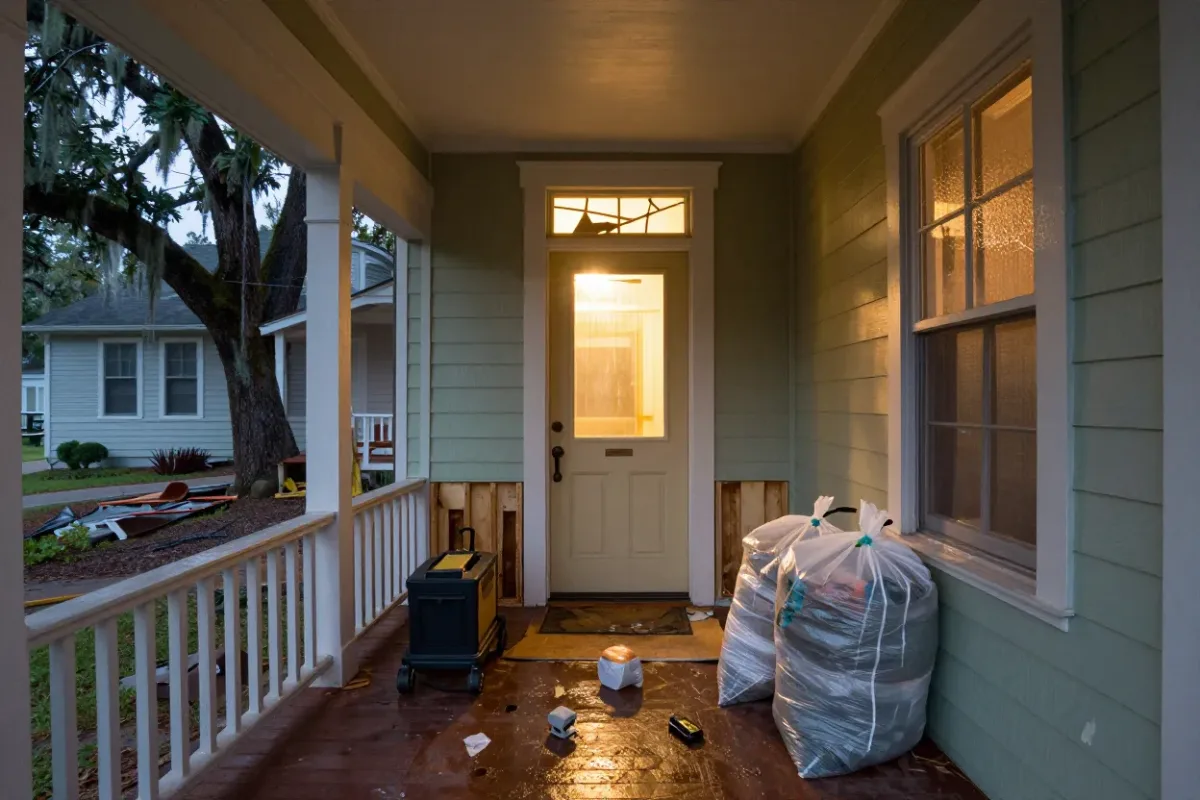
Bay water is salty and contaminated, and rain runoff that has crossed streets is no cleaner. Flood cleanup means removing the drywall, insulation, carpet and pressboard it soaked, disinfecting hard surfaces, inspecting the electrical components it reached and running air filtration while the house dries. If you are dealing with floodwater now, start with our first 24 hours after a flood guide and call; the flood restoration page explains what follows.
Repair Once the Structure Is Dry
Repair in Panama City frequently means redoing work that was done once already after Michael: new ceiling drywall and insulation under a repaired roof, lower wall drywall and baseboards after bay flooding, cabinet bases, flooring and paint. In the bungalows of St. Andrews and Millville we save and refinish original wood floors and match beadboard and trim rather than replacing them with modern stock. Salt water that reached outlets, fixtures or wiring means those components are checked and, where needed, replaced before the walls go back on.
The repair scope is drawn from the moisture logs and photographs gathered during mitigation, so your adjuster can see exactly what this loss affected as distinct from earlier storm repairs. That distinction matters in a city where many homes already have a claims history.
Mold Removal After Michael and Beyond
Mold in Panama City often traces back to Michael or to a repair made in a hurry afterward: framing that was closed up before it was dry, insulation that stayed damp under a new ceiling, a bayfront ground floor that was mopped rather than dried. Newer losses follow the same pattern, helped along by the humid Gulf climate and by power outages that leave a wet house warm for days after a storm or tornado.
The moisture source is corrected before remediation begins. The affected area is then sealed under negative pressure, HEPA scrubbers filter the air, contaminated drywall and insulation are bagged and removed, remaining surfaces are cleaned, and the cavity is dried to verified readings before it is rebuilt a second time. Read our mold remediation page for the method, and see where hidden mold forms after water damage if a wall in your home was wet after a storm and then rebuilt.
Why Panama City Homes Get Water Damage
A bayfront city that took a Category 5 hurricane and has since been largely rebuilt, with tornadoes as a recurring hazard, sees a distinctive set of losses. In Panama City the most common sources are:
- Roofs opened by hurricane winds and tornadoes, letting rain into attics and ceilings
- Storm surge and tidal flooding in low bayfront and bayou-side neighborhoods
- Moisture trapped in framing or insulation during post-Michael reconstruction
- Roof and flashing leaks where new and old materials meet
- Water heater, supply line and appliance hose failures
- Aging plumbing in historic bungalows in St. Andrews and Millville
- Extended power outages that leave storm-wet homes without air conditioning
- Air conditioning condensate overflows in the long humid season
- Wind-driven rain through windows and siding damaged by debris
Our Restoration Process
Every Panama City job follows eight steps in a fixed order. The sequence exists so that no wall or ceiling is closed up over wet material, a lesson this city learned the hard way after Michael.
- Inspection and moisture mappingWe find the entry point, judge whether the water is clean, salty or contaminated, and trace it with meters and thermal imaging through ceilings, walls, floors and the spaces between old framing and new finishes.
- ExtractionStanding water is pumped and vacuumed out of rooms, garages and crawlspaces.
- Removal of damaged materialsWet insulation, sagging ceiling drywall, surge-soaked wall material, carpet pad and swollen cabinetry are cut out and bagged, with original bungalow wood kept wherever drying can save it.
- Drying and dehumidificationAir movers and dehumidifiers run inside the closed house, with readings logged each visit until framing, drywall and floors are dry.
- Cleaning and disinfectionSurfaces reached by bay water or runoff are cleaned and treated, with air filtration running during the work.
- DocumentationPhotos, moisture logs and a written scope are compiled for you and your insurance carrier, kept distinct from any earlier storm claim.
- RebuildCeilings, insulation, drywall, trim, flooring and paint are rebuilt to match the finishes already in the home, whether original or post-Michael.
- Final verificationClosing moisture readings and a walkthrough confirm the home is dry and the work is complete.
Panama City Areas We Serve
We respond throughout the city, from the downtown and the historic bungalow streets of St. Andrews and Millville to the mid-century bayfront neighborhoods and the areas north toward the county line. Crews arrive prepared for the house in front of them, whether it is an original bungalow, a rebuilt ranch or a bayfront home on a bayou.
Panama City Neighborhoods
- Downtown Panama City
- St. Andrews
- Millville
- Glenwood
- Harrison
- Forest Park
- Bunkers Cove
- Venetian Villas
- Northshore
Nearby Communities
Our Panama City crews also cover the rest of Bay County, across each of the bridges and along the coast. Panama City Beach has its own service page:
- Panama City Beach
- Lynn Haven
- Springfield
- Callaway
- Parker
- Cedar Grove
- Mexico Beach
- Tyndall AFB
- Youngstown
What to Do in the First Hour
Every one of these steps is homeowner-safe, and together they limit how far the water travels before we take over.
- Stop the water if it is plumbingClose the valve at the fixture, or the main if you cannot find the source.
- Stay out of water near electricityDo not enter a flooded room, garage or crawlspace if outlets, appliances or the panel could be in contact with water. Kill power to the area only if the panel is dry and reachable without stepping through water.
- Keep clear of a sagging ceilingCeiling drywall holding rainwater can fall. Stay out of the room until it can be drained and removed safely.
- Treat bay water and runoff as contaminatedKeep people and pets away, do not clean it by hand and do not run fans across it.
- Move belongings up and outLift rugs, electronics and paper off wet floors and out from under any roof drip.
- Photograph before moving anythingCapture the breach or leak, the water level and every affected room. If the home has an earlier storm claim, note what is new.
- Call Water Damage FloridaReach us at (888) 435-4769 with the source, how long it has been wet and whether the home has power.
For a hurricane, our hurricane water damage recovery guide walks through the days after landfall.
Panama City Water Damage FAQs
My house was rebuilt after Michael and now there is a musty smell and staining. What is going on?
Homes repaired quickly after the storm sometimes had framing or insulation closed up before it was fully dry. We inspect with meters and thermal imaging, open what needs opening, remediate any mold and dry the structure properly before repairing the finishes again.
How does a new claim get separated from my earlier hurricane claim?
Our photographs, moisture logs and written scope document this loss specifically, so your adjuster can see what the current event affected as distinct from earlier repairs. Clear records are the best protection for a homeowner with a claims history.
Is bay water treated differently from a burst pipe?
Yes. Bay water is salty and contaminated, so porous materials it soaked are removed, hard surfaces disinfected, and fixtures and wiring it reached inspected. A clean plumbing leak caught early can often be dried in place.
A tornado damaged my roof. Do you handle the interior?
We do. We protect the opening from more rain, remove wet insulation and ceiling material, dry the structure and rebuild the interior, coordinating with your roofer so the roof is closed before the finish work begins.
Can the original floors in my St. Andrews bungalow be saved?
Often, if drying begins soon after the loss. We take readings from the boards and the joists beneath them, dry them slowly enough to avoid cupping, and refinish rather than replace when the numbers come back dry.
Do you serve Lynn Haven, Springfield and the rest of Bay County?
Yes. Our crews cover Lynn Haven, Springfield, Callaway, Parker, Cedar Grove, Mexico Beach, Youngstown and the Tyndall area, as well as Panama City Beach, and the rest of Florida through our statewide service areas.