Sebring is the seat of Highlands County, a small south-central Florida city arranged around its circular downtown on the shore of Lake Jackson at the southern end of the Lake Wales Ridge. Water is a large share of the city's footprint: Lake Jackson, Little Lake Jackson and Dinner Lake all lie within the limits, and lakefront living is part of why retirees and winter residents settle here. That profile shapes the water damage we see. Many homes sit empty for part of the year, so a failed valve or a roof leak can run for weeks before anyone notices, and the mid-century subdivisions that make up much of the housing stock carry original plumbing and roofs.
Water Damage Florida provides 24/7 water damage restoration in Sebring, from Circle Drive downtown to Sebring Country Estates, Sebring Hills and the Sun 'n Lake area, and we start documenting for your insurance claim on the first visit. Call (888) 435-4769 at any hour.
Emergency Water Damage Help in Sebring
Sebring is nowhere near the coast, so the emergencies we handle here are the inland kind: a water heater that let go in the garage, a washing machine hose that split while the owners were at the lake, a toilet supply line that ran overnight, or a summer storm that lifted shingles and let rain into the attic. In a city with this many seasonal residences, a surprising number of calls come from a neighbor, a property manager or a returning snowbird who opened the front door to the smell of damp.
When you call, we ask what is leaking, how long it has likely been running and whether the house has been closed up. Then we dispatch a crew with extraction equipment, air movers, dehumidifiers and moisture meters so drying begins on arrival. Photographs and initial readings are taken before anything is moved so that your emergency water damage claim opens with a complete record.
Restoring Mid-Century Homes and Seasonal Residences
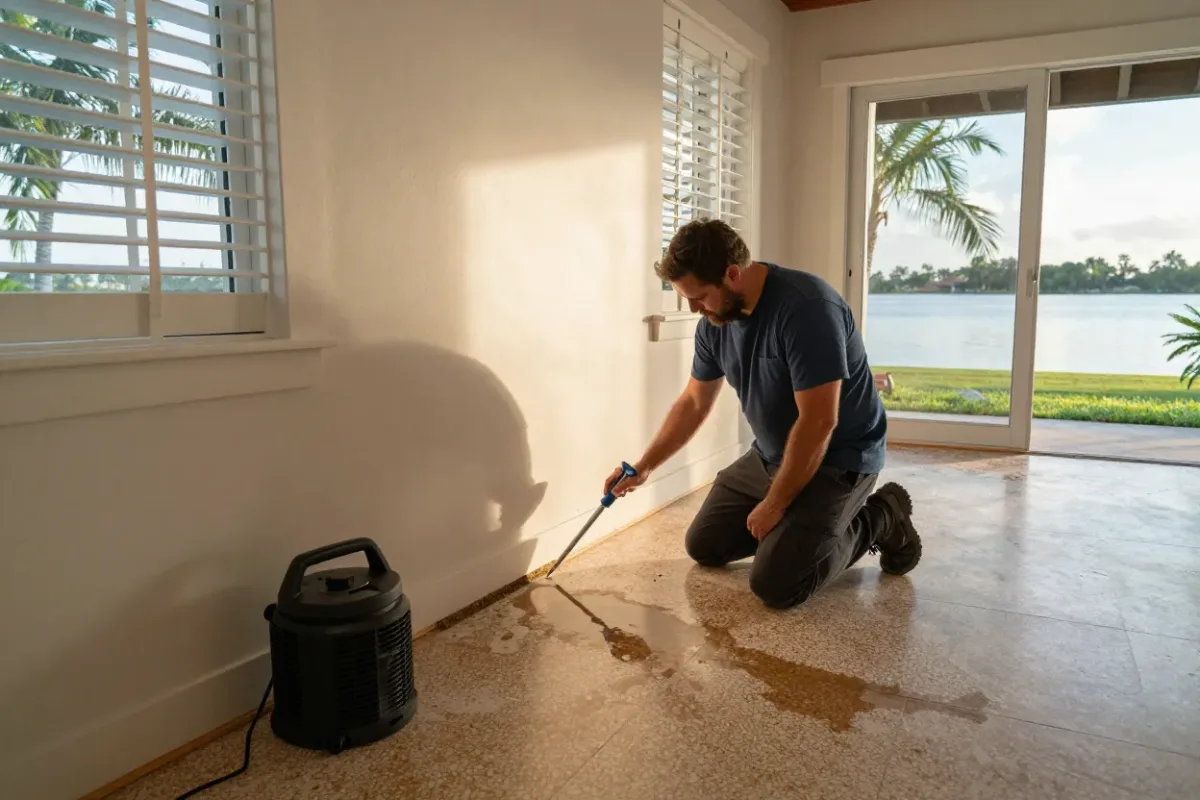
Most of Sebring's housing is single-family and much of it dates from the mid-century subdivision era, which means concrete block walls, slab floors, terrazzo or tile under later carpet and laminate, and drywall or plaster over furring strips. These homes hold up well structurally, but water moves under flooring and into the cavity behind the furring, where it will not dry on its own. Our restoration plan starts by mapping that hidden moisture with meters and thermal imaging so we know exactly which walls, floors and cabinets need attention.
Because so many Sebring homes are occupied only part of the year, we also plan around an absent owner. We can coordinate access with a caretaker or family member, send photo updates as the work progresses, and set the drying equipment so the house is protected even when nobody is checking on it daily. Materials that can be saved are dried in place; those that cannot are removed, and the space is verified dry before repairs begin.
Storm Flooding and Lake-Level Cleanup in Highlands County
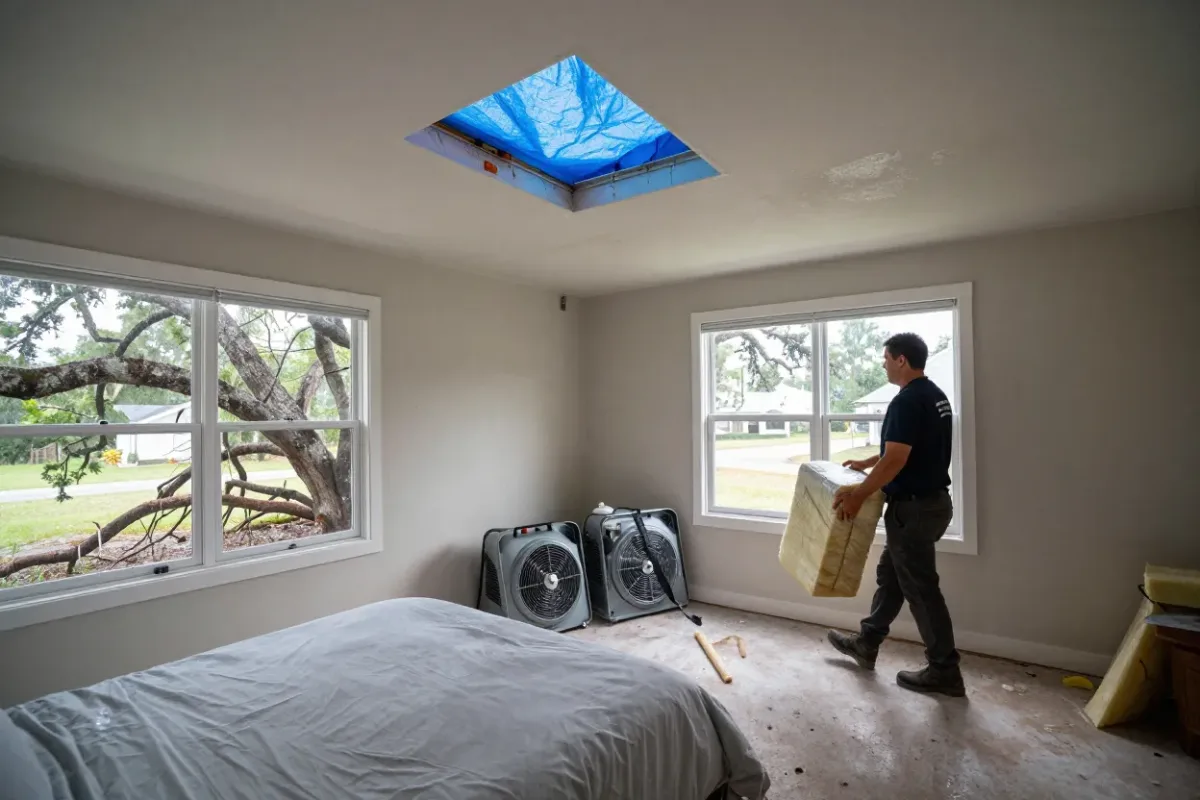
Sebring has no storm surge exposure, but it sits squarely in the path of hurricanes crossing the peninsula. Hurricane Ian in 2022 produced gusts near 80 mph at Sebring Regional Airport, knocked out power to most of Highlands County, spawned brief tornadoes and left streets, intersections and yards in Sebring and the neighboring Sun 'n Lake area under water after several inches of rain. Falling trees broke water lines during that storm, so some homes flooded from the inside even as the yard flooded from the outside. Hurricane Irma in 2017 cut power to most county residents, and a house without air conditioning in September becomes a humid box where damp materials cannot dry.
Lakefront homes on Lake Jackson face a slower kind of flooding: during prolonged wet periods the lake rises and can reach low yards, docks and the lowest floors of homes built close to the shore. Whether the water came from a flooded street or a rising lake, we treat it as contaminated, remove porous materials it soaked, clean the slab and framing, and run air filtration while the structure dries. Our flood restoration page covers the large-loss version of this work.
Water Damage Repair in Sebring
Repair work in Sebring commonly means new drywall and baseboard in a block ranch home, replacing laminate or carpet that was laid over an original terrazzo floor, rebuilding a vanity or kitchen base cabinet, and patching and painting a ceiling below a roof leak. Storm losses add roof decking, insulation and sometimes soffit and fascia. Where a home still has its original terrazzo, we protect it; it usually cleans up well once the flooring above it is removed and the slab dries.
We build the repair scope from the same photographs and moisture logs gathered during mitigation, so your adjuster sees a clear connection between the water event and each item being replaced. For owners who are out of state during the work, we keep the scope and schedule in writing and confirm each stage before moving to the next.
Mold Removal After Leaks and Long-Vacant Wet Conditions
The mold calls we take in Sebring share a pattern: a small, slow leak in a house that was closed up for the season, with no air conditioning running and nobody home to notice. By the time the owners return, growth has spread across the back of drywall, inside a closet or under a vanity. Attic and ceiling growth after a storm roof leak is the other frequent scenario, especially when the power was out for days after Ian or Irma and the house sat warm and humid.
Our cleanup begins by finding and fixing the moisture source, because removing growth without correcting the leak only buys time. We contain the affected area, remove and bag contaminated porous materials, HEPA-vacuum and clean what remains, and dry the space before it is closed back up. Read about our approach on the mold remediation page, and see our guide to hidden mold after water damage if a wall in your home was ever wet and simply repainted.
What Causes Water Damage in Sebring Homes
Inland location, an older single-family housing stock and a large seasonal population combine to produce a specific set of losses. The causes we encounter most often in Sebring include:
- Supply lines, water heaters and appliance hoses that fail while a seasonal home sits unoccupied
- Roof and attic leaks after wind damage from storms crossing the peninsula, as during Hurricane Ian
- Street and yard flooding from heavy rain in low spots of Sebring and the Sun 'n Lake area
- Water lines broken by falling trees during high wind events
- Rising Lake Jackson levels reaching low lakefront lots during extended wet periods
- Air conditioning condensate overflows and drain pan failures in attic and closet air handlers
- Aging cast iron drains and slab plumbing in mid-century subdivision homes
- Humidity damage when power outages shut down air conditioning for days after a storm
How We Restore a Water-Damaged Home
Whether the loss is a burst line in Sebring Hills or a storm-flooded floor near the lake, our crews follow the same eight steps, in order, so that nothing gets rebuilt over moisture.
- Inspection and moisture surveyWe locate the source, judge how long the home has been wet, classify the water and use meters and thermal imaging to find moisture behind furred block walls and under flooring.
- Extraction of standing waterPortable and truck-mounted extractors pull water from carpet, tile and laminate; pumps handle flooded garages and lower floors near the lakes.
- Removal of materials that cannot be savedSaturated drywall, wet insulation, swollen laminate and carpet pad that has been wet too long are cut out and bagged.
- Drying and dehumidificationAir movers and commercial dehumidifiers run in the closed home, with readings logged each day until every material meets its dry standard.
- Cleaning and antimicrobial treatmentSurfaces touched by flood or gray water are cleaned and treated, and air scrubbers run when contamination or growth is present.
- Documentation for your claimPhotographs, drying logs and a written scope are assembled for you and your insurance carrier, with copies sent to owners who are out of town.
- RepairsDrywall, trim, cabinetry, flooring and paint are replaced or refinished to match the rest of the home.
- Final verificationA closing moisture check and walkthrough confirm the home is dry and the work is complete.
Sebring Neighborhoods and Highlands County Coverage
We serve all of Sebring, from the historic circle downtown and the lakefront streets around Lake Jackson to the subdivisions that spread east and south of the city, and we cover the rest of Highlands County as well.
Sebring Neighborhoods
- Downtown Sebring (Circle Drive)
- Sebring Country Estates
- Sebring Hills
- Sun 'n Lake
Nearby Communities
Our crews also respond to the towns along the ridge and around the lakes near Sebring, several of which have pages of their own:
First Steps When You Find Water in Your Sebring Home
These actions are safe for most homeowners and will slow the damage while our crew is on the road to Highlands County.
- Shut off the water at the mainIf the source is a pipe, valve or appliance, close the main shutoff. In a seasonal home, this is also the valve to close before you leave for the summer.
- Keep away from water near outlets or the panelDo not walk through standing water in a room with outlets, cords or appliances. If the breaker panel is dry and you can reach it without stepping in water, switch off the affected circuits; otherwise leave it alone.
- Assume lake and street water is contaminatedKeep children and pets out of it, avoid skin contact and do not try to clean it up with household equipment.
- Run the air conditioning if it worksCool, dry air slows growth on wet materials. If the power is out after a storm, open interior doors and closets so air can at least circulate.
- Raise furniture and belongingsMove rugs, boxes and electronics off the floor and put foil or blocks under furniture legs that must stay in place.
- Photograph before you touch anythingCapture the source, the extent of the water and every affected room, and note the date and time, especially if the leak may have started weeks ago.
- Call Water Damage FloridaDial (888) 435-4769 and tell us the source, how long the house has likely been wet and whether anyone is on site to provide access.
Storm losses have their own sequence; our hurricane water damage recovery guide and first 24 hours after a flood checklist cover it.
Sebring Water Damage Questions
We are out of state for the summer and a neighbor found water in our Sebring house. Can you handle it without us there?
Yes. We regularly work with seasonal owners who are not in Florida. You or a local contact can provide access, we send photographs and readings as we go, and every stage of the scope is confirmed with you in writing before we proceed.
Does a house with no storm surge risk really need flood cleanup?
It can. Hurricane Ian flooded streets, intersections and yards in Sebring and the Sun 'n Lake area with rain alone, and low lots on Lake Jackson can take water when the lake rises after a long wet spell. That water is treated the same way as any contaminated flood water: porous materials it soaked are removed, and the structure is cleaned and dried.
The power was out for days after the storm and the house smells musty. Is that mold?
Possibly. A closed home without air conditioning in late summer stays warm and humid, and anything that got wet during the storm may have supported growth in that time. We inspect, take moisture readings and open only what needs to be opened to find out.
Can the terrazzo floor in my mid-century home survive a leak?
Usually, yes. Terrazzo is poured over the slab and tolerates water far better than the carpet or laminate that is often installed on top of it. Once the flooring above is removed and the slab dries, terrazzo typically cleans up well. We protect it during demolition and drying.
A tree took down a line and water was running under the house. What happens next?
After the line is shut off and repaired, we survey how far the water traveled under flooring and into walls, extract what is standing and set drying equipment. Water that ran for hours often reaches farther than the visible wet spot suggests.
What should we do before closing up the house for the summer?
Shut off the main water valve, turn off the water heater, leave the air conditioning running at a moderate setting so humidity stays under control, and ask a neighbor or caretaker to walk through every couple of weeks. Most of the long-running leaks we find in Sebring would have been caught in days with that routine.