Winter Haven is defined by its Chain of Lakes: dozens of lakes inside the city limits, two interconnected chains joined by canals and a lock, near the headwaters of the Peace River. Most of those lakes are solution lakes, formed where limestone dissolved, and the city's residential streets are interlaced with lakefront and canal-front lots as a result. That geography puts water close to a great many homes. It also means the historic districts around downtown, where early-twentieth-century houses line the lakes, and the large new subdivisions of the past several years both have their own kinds of water damage.
Water Damage Florida provides water damage restoration in Winter Haven 24 hours a day, from canal water in a lanai to a supply line failure in a brand-new subdivision home. Call (888) 435-4769 and we will guide you through the first steps while a crew is dispatched.
Emergency Water Damage Help Across the Chain of Lakes
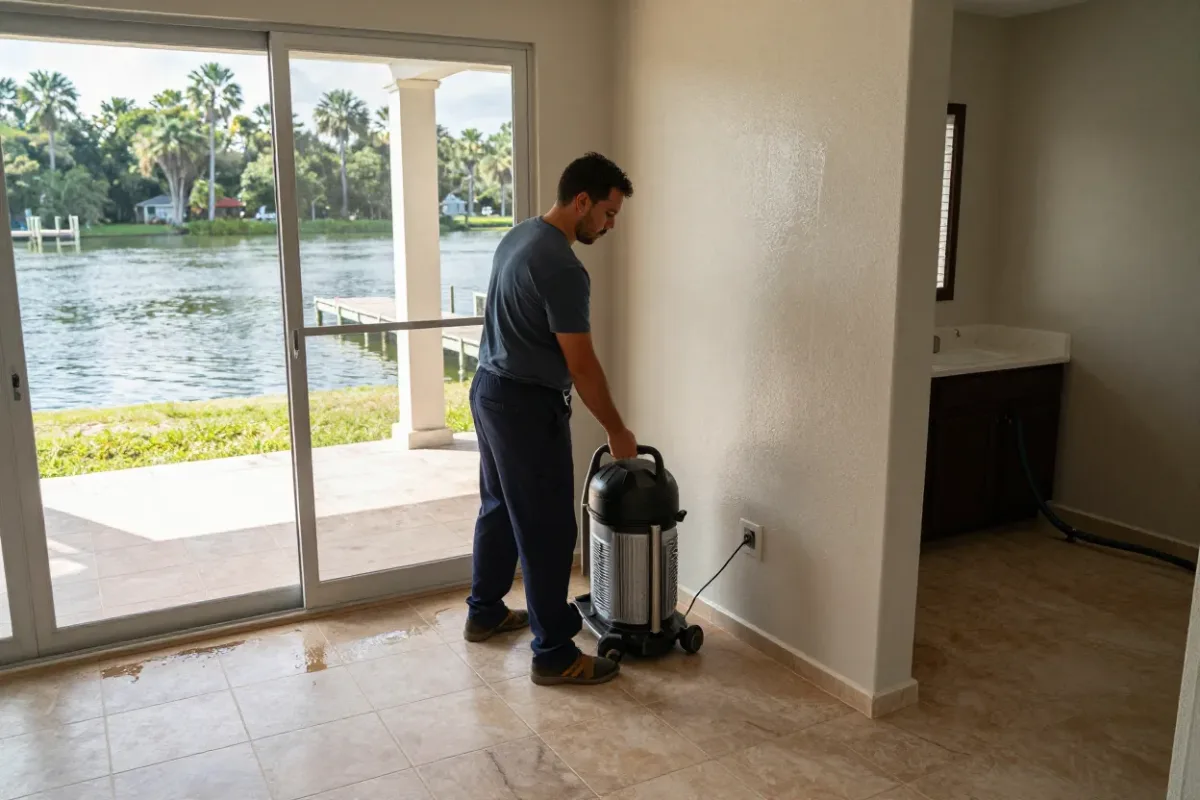
Winter Haven's emergency calls have a lakeside flavor. Water rising in a canal reaches a seawall, then a lanai, then the sliding door track; a boathouse or dock-side room takes water first; a lakefront yard saturates until water seeps in at the slab edge. Away from the water, the calls are familiar: a water heater failing in a garage, a washing machine hose splitting, an air handler drain pan overflowing in a hall closet, or wind-driven rain finding a way through a storm-damaged roof.
Our crews arrive with pumps, extractors, air movers and dehumidifiers and begin on the first visit. For lakefront and canal-front homes we treat the water as contaminated and plan for the lake to stay high, checking daily for moisture returning at the slab. In the historic districts we meter before we cut, because original plaster and wood floors are worth the extra care. Photographs and moisture readings are logged before equipment goes in so your insurance file starts with the actual conditions. Our emergency water damage page has more on what to expect.
Restoring Historic Lakefront Homes and New Subdivisions
The Interlaken and Winter Haven Heights historic districts hold early-twentieth-century homes, many on the National Register, with wood framing, plaster, original flooring and, on the lakes, foundations built close to the water. Those homes can often be dried in place when we start early, with crawlspaces dried from below and only failed material removed. The city's rapid growth in the 2010s added large subdivisions of block-and-stucco homes on slab with drywall and tile or plank floors, which dry well once the lower wall and flooring are opened.
Whatever the home, drying is measured rather than assumed. We run dehumidifiers and air movers in the closed house, meter each material daily, and continue until readings reach the dry standard. Cleaning and antimicrobial treatment come first when the water was lake or canal water, and repair begins only after the structure is verified dry. Our water damage restoration service page explains the standards we follow.
Flood Cleanup for Lakefront and Canal-Front Properties
Winter Haven's lakes and canals mean flood exposure is spread across the city rather than confined to one low district. Heavy rain during Hurricane Milton in 2024 flooded roads across Polk County, and the county's river basins were already high from earlier storms, so the lakes had little room to absorb more. Hurricane Irma in 2017 caused wind damage to apartment buildings in the city, the kind of roof and envelope damage that lets rain into units below. The Peace River watershed drains the area, and when it is full, the lakes stay up.
Lake and canal water is treated as contaminated. Flood cleanup removes the standing water and then the porous materials it soaked: carpet, pad, lower drywall, insulation, cabinet bases and, in older pier homes, sections of subfloor. Hard surfaces are cleaned and disinfected, air scrubbers run during the work, and drying follows once the contaminated material is out. Because the lakes recede slowly, we keep checking slab edges and crawlspaces for returning moisture. Our flood restoration page and the hurricane water damage recovery guide cover the rest.
Water Damage Repair in Winter Haven
In the historic districts, repair means patching plaster rather than replacing walls, replacing individual floorboards, matching trim and casing profiles, and repainting to blend with the original finish. In the newer subdivisions the work is standard: drywall, baseboard, tile or plank, cabinet bases and paint. Lakefront homes often also need lanai finishes, exterior door thresholds and garage drywall replaced, and apartment buildings damaged in a storm need the units below a roof failure dried and rebuilt together.
The repair scope follows the moisture map and photographs from mitigation, so what we rebuild lines up with what was wet. That record goes to you and your adjuster. For multi-unit buildings we document each unit separately so owners and managers each have what they need.
Mold Removal Near the Water
Lakefront humidity and slow-receding water give mold a head start in Winter Haven. We check first the lower walls of any room facing a lake or canal, crawlspaces and the underside of wood floors in the historic districts, the back of plaster after a roof leak, and in newer homes the water heater closet, cabinet backs and the wall behind the lanai slider. In apartment buildings, the units below a storm-damaged roof are where hidden growth shows up months later.
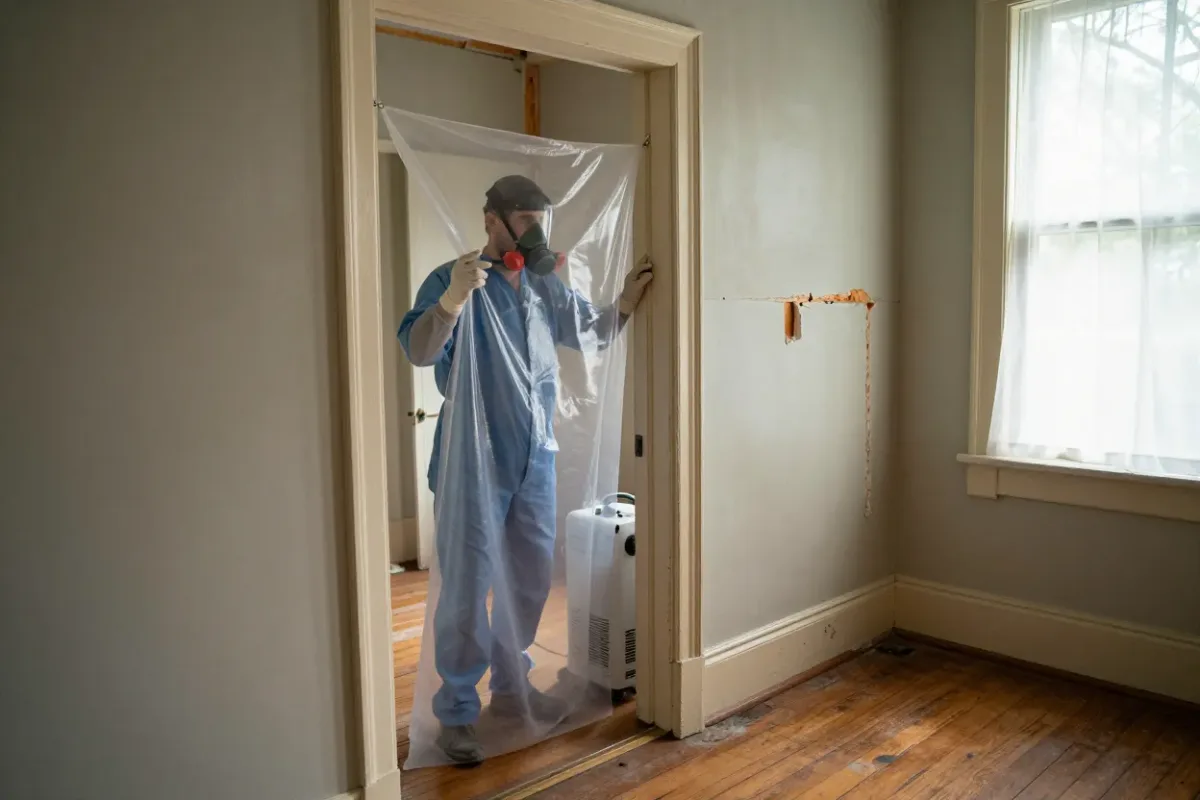
Our mold cleanup corrects the moisture source first, contains the area with sheeting and negative air, removes and bags growing porous materials, HEPA-vacuums and cleans what remains, and dries the cavity before it is closed. We do not spray over growth. Our mold remediation page explains the method, and our note on hidden mold after water damage is worth reading if a lanai wall was wet last season and was simply repainted.
Why Water Damage Happens in Winter Haven
The calls we take here reflect a city threaded with lakes and canals, a stock of historic homes on the water, fast-growing subdivisions and a stormy summer. The frequent sources:
- Lakes and canals on the Chain of Lakes rising over seawalls and into lanais and low rooms
- Saturated lakefront yards seeping water in at the slab edge during long wet spells
- Storm damage to roofs and building envelopes, including apartment buildings, letting rain into units below
- Original plumbing and cast-iron drains failing in Interlaken and Winter Haven Heights homes
- Water heaters, supply lines and dishwasher connections failing in newer subdivision homes
- Air conditioning condensate line clogs and drain pan overflows in summer
- Street drains overwhelmed by heavy rain, backing water into driveways and garages
- Crawlspace moisture in older pier homes built close to the water
How a Restoration Job Runs, Step by Step
A canal-front lanai and a subdivision water heater closet get the same disciplined order of work. Here is how a Winter Haven job proceeds.
- Inspection and moisture surveyWe confirm the source, classify the water, and meter floors, walls, ceilings and crawlspaces, paying special attention to walls that face the lake or canal.
- ExtractionPumps and extraction equipment remove standing water from lanais, floors, garages and crawlspaces.
- Removal of unsalvageable materialsSoaked pad, contaminated drywall, wet insulation, failed plaster and subfloor sections are cut out and bagged, and sound original material is kept.
- Drying and dehumidificationDehumidifiers and air movers run in the closed home, including beneath raised floors, with readings logged daily until each material reaches its dry standard.
- Cleaning and antimicrobial treatmentSurfaces that contacted lake or canal water are cleaned and treated, and air scrubbers run throughout the work.
- DocumentationPhotographs, moisture logs and a written scope are compiled for you and your insurance carrier, unit by unit in multi-family buildings.
- RepairPlaster, drywall, flooring, subfloor, trim, cabinetry and paint are restored to match the home.
- Final verificationA closing set of moisture readings and a walkthrough with you confirm the home is dry and the work complete.
Winter Haven Areas We Serve
Our crews cover the whole city, from the historic districts around downtown and the lakes to the new subdivisions on the edges, and the lakefront and canal-front streets on Lake Eloise, Lake Howard, Lake Lulu, Lake Haines, Lake Elbert and the rest of the chain.
Winter Haven Neighborhoods
- Interlaken Historic District
- Pope Avenue Historic District
- Winter Haven Heights
- Downtown Winter Haven Historic District
- Pughsville
Nearby Communities
The other Polk County lake towns and the communities toward Orlando share Winter Haven's storms, and our crews serve them as well. Several have their own local pages:
First Steps for Lakeside Homeowners
A few safe actions before the crew arrives make a real difference to what can be saved.
- Shut off an inside sourceClose the fixture valve or the main, usually at the front hose bib or the meter box by the street. If the water heater is leaking, close its inlet valve.
- Keep away from water near powerIf outlets, dock power, pool equipment or the panel are in or near the water, do not go in. Turn off breakers only from a dry panel you can reach on dry footing.
- Treat lake and canal water as contaminatedDo not wade through it or clean it by hand. Keep family and pets away until the crew has removed it.
- Move belongings up and away from the lanai sideRugs, electronics and light furniture go to a dry room away from the water; heavy pieces get foil or plastic under the legs.
- Photograph everythingCapture the source, the water line, each affected room and the seawall or yard if the lake was the cause.
- Keep the house cooled and closedLeave the air conditioning running and the sliders shut so humid lakeside air does not slow the drying.
- Call Water Damage FloridaDial (888) 435-4769 and tell us whether the water came from the lake, the roof or inside, and whether it is still rising.
If the lake is still coming up, our first 24 hours after a flood guide covers the added steps.
Winter Haven Water Damage FAQs
Canal water came over the seawall and into our lanai and family room. What comes out?
Canal water is contaminated, so the carpet, pad, lower drywall, insulation and cabinet bases it reached are removed rather than dried. Tile and the slab are cleaned and disinfected and then dried with monitored equipment. Because the canal recedes slowly, we keep checking the slab edge for moisture returning until the water is down.
We manage an apartment building that lost part of its roof in a storm. Can you handle several units at once?
Yes. We dry and document each affected unit separately, trace the water from the roof down through the stack, and coordinate access and scheduling with management so the work moves through the building in order.
Our Interlaken home has original wood floors and plaster. Can they be saved after a leak?
Often, if drying starts early. We meter the boards, subfloor and plaster, dry from above and from the crawlspace if needed, and replace only material that has failed, matching the patch to the original.
Is a home on a solution lake at greater risk than one on a canal?
Both face the same contaminated-water and slow-recession issues. The practical difference is where the water enters: lakefront homes usually take it through a saturated yard and the slab edge, canal-front homes through the seawall and lanai. We meter the whole waterside of the house either way.
A water heater in our new subdivision home flooded the garage and hallway. Is that a big job?
Usually manageable if caught quickly. Clean water from a heater can often be extracted and dried in place when it has not soaked the drywall or run under plank flooring for long. If it has, the lower wall and flooring are opened so the slab can dry, and we decide with moisture readings.
How long does the drying equipment stay?
A small clean-water loss caught early typically dries within a few days. A lake- or canal-flooded home, a crawlspace or a slab that sat wet takes longer. We monitor daily and remove the equipment when the readings show the materials are dry.