Cape Coral was laid out from the late 1950s as a pre-platted waterfront city, with the canals and streets dug before most of the houses went up. The result is a broad peninsula bounded by the Caloosahatchee River and Matlacha Pass, laced with hundreds of miles of navigable canals, more than any other city, and made up almost entirely of single-family homes, a very large share of which sit directly on tidal or freshwater water. It is now the most populous city in Southwest Florida. For water damage, that means two things: a lot of homes only about ten feet above sea level, and a lot of water at the edge of the backyard.
Water Damage Florida provides 24/7 water damage restoration in Cape Coral, handling everything from a burst supply line in a 1970s block ranch off Del Prado to storm-surge cleanup in a newer canal home near Tarpon Point. We extract, dry, clean, document and rebuild. Call (888) 435-4769 the moment you find water and we will tell you what to do while a crew heads your way.
24/7 Emergency Water Damage Response
Cape Coral emergencies come in two flavors. The first is the everyday plumbing or appliance failure: a water heater in the garage, a washer hose in the laundry room, a refrigerator line behind the kitchen wall, or an air handler drain pan that overflowed in a closet. With open floor plans and tile throughout, water from one of these can reach three or four rooms before you find it. The second is weather: wind-driven rain past a lanai door or roof edge, and, in the worst case, surge and canal water rising into garages and the lowest rooms of waterfront homes.
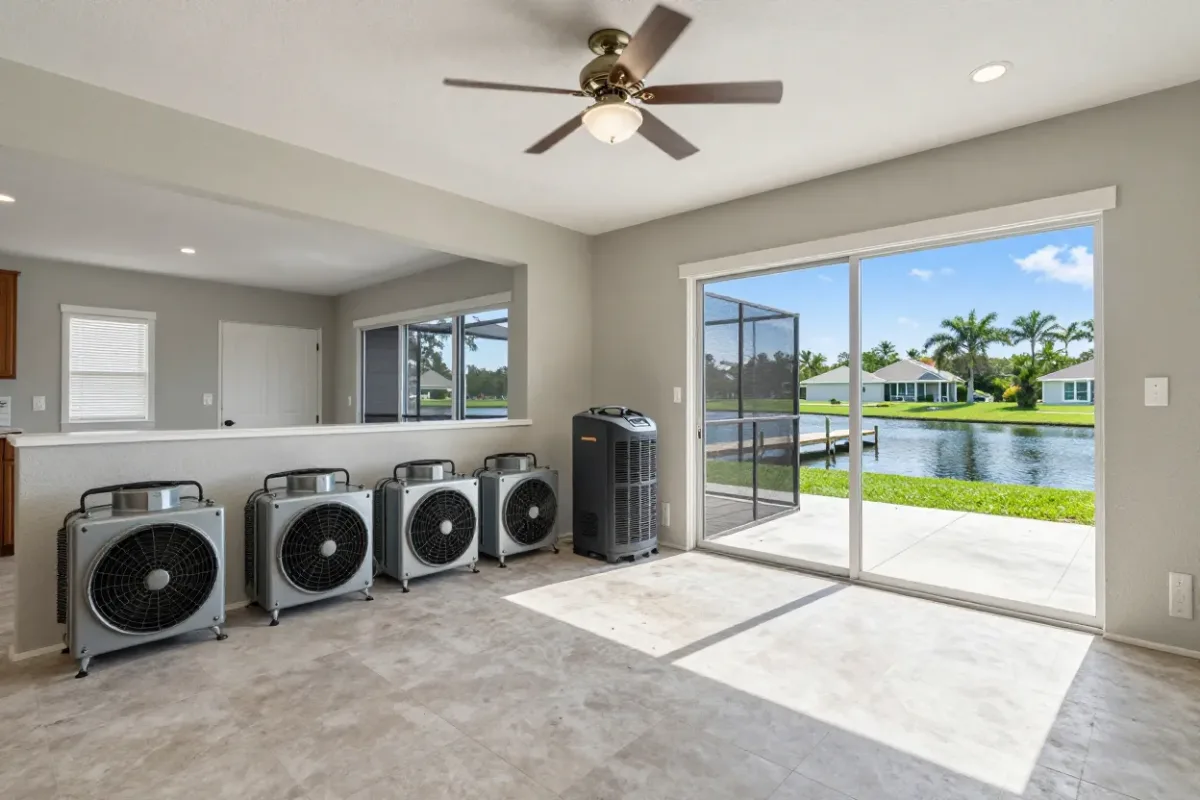
Our crews respond with extraction equipment, pumps, air movers and dehumidifiers loaded, so drying starts on the first visit rather than after a separate assessment. We record the source, the water path and moisture readings from the moment we walk in, which gives your insurance claim a clear starting point. Details on how we handle urgent calls are on our emergency water damage page.
Water Damage Restoration for Every Era of Cape Coral Homes
Because construction in Cape Coral spans the 1960s to the present, no two houses dry alike. Older block homes near the Yacht Club area and Redfish Point may have terrazzo or tile over slab, plaster or thin drywall, and original galvanized plumbing that is reaching the end of its life. Newer homes toward the north and west have engineered wood or plank flooring, thick insulation and larger open volumes that need more air movement to dry. We map moisture with meters and thermal imaging before deciding what to remove and what can be dried in place.
Drying in this climate is done with the house closed and dehumidifiers running, not with open windows, because outdoor humidity would undo the work. We monitor each material daily until it reaches its dry standard, then move to cleaning and repair. Our water damage restoration service page lays out the whole scope.
Flood Cleanup for Canal-Front and Storm-Hit Homes in Cape Coral
Hurricane Ian made landfall nearby in 2022 and caused major damage across the city, with roughly six to nine feet of surge inundation in Cape Coral and Punta Rassa and widespread loss of power. Hurricane Irma in 2017 brought strong winds and heavy rain with prolonged flooding across Lee County. With a June-to-November hurricane season and heavy summer rains, the city is described as vulnerable to tropical storms and flooding, and canal-front neighborhoods along the river are the most exposed.
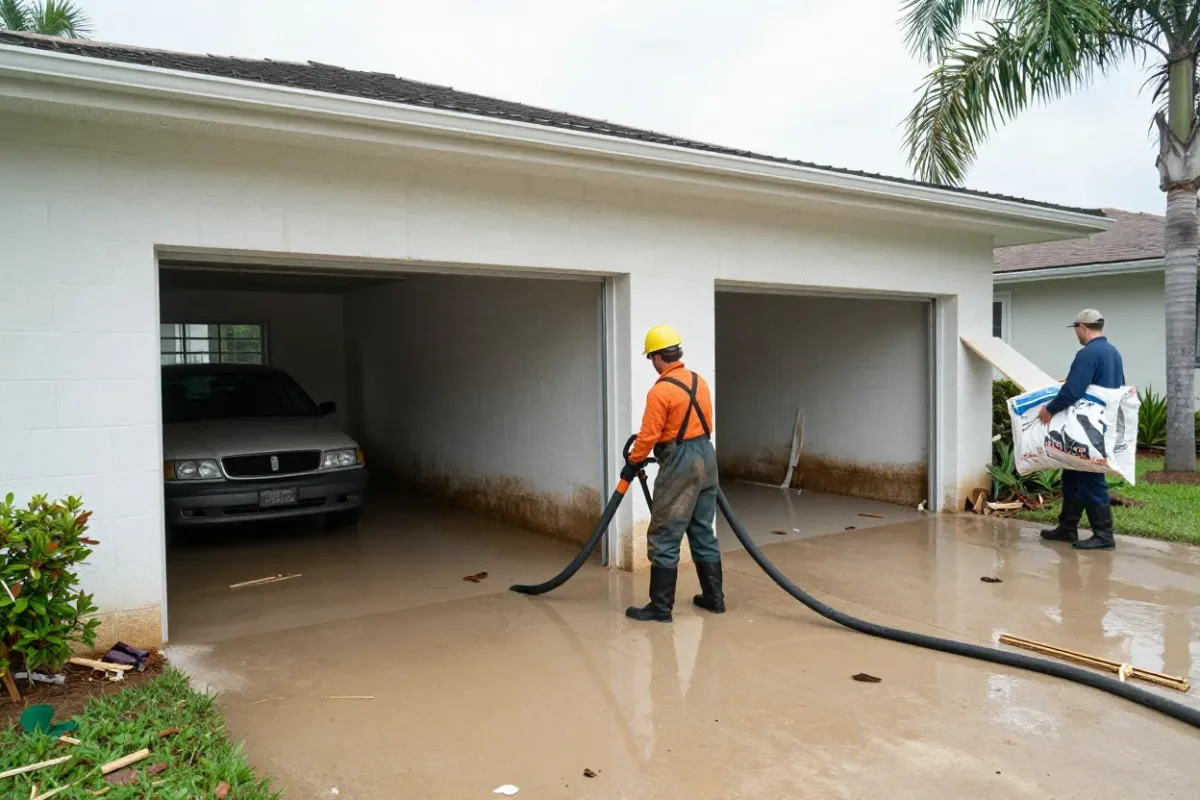
Surge and canal water is treated as contaminated. Cleanup starts with pumping and extraction, then removal of everything porous the water touched: drywall, baseboards, carpet and pad, insulation, particleboard cabinets. Hard surfaces are cleaned and disinfected, and air scrubbers run while the house dries. Garages, lanais, ground-level storage and the lowest interior rooms of waterfront homes get the earliest attention. If floodwater is in your home now, stay out of it until you are sure the power is off and read our flood restoration page for what comes next.
Repairing Water-Damaged Homes
Once drying is verified, repair puts the house back together. In Cape Coral that commonly means new lower drywall and baseboards throughout the affected rooms, replacement of swollen cabinet bases, new flooring where plank or laminate failed, ceiling repair under roof leaks, and paint. In older homes we take care with terrazzo and original tile, which usually survive if the slab is dried properly.
We build the repair scope from the photos and moisture logs collected during mitigation, so your adjuster sees exactly what the water affected. If you are away from the house while the work is done, we keep you updated with progress photos and secure the home between visits.
Mold Removal in Cape Coral
With water on so many property lines and humid air most of the year, mold follows any moisture that lingers. We typically find it behind the flood-cut line in rooms that took canal water, inside the wall behind a leaking shower valve, beneath plank flooring laid over a damp slab, around air handler closets, and in homes left empty where a leak went unnoticed for weeks with the air conditioning set warm.
Our mold removal starts with fixing the moisture source, then contains the area with sheeting and negative air, removes and bags affected porous materials, HEPA-vacuums and cleans the remaining surfaces, and dries everything before repair. We do not encapsulate over growth and call it done. Our mold remediation page has more, and our article on hidden mold after water damage shows where it tends to hide.
What Causes Water Damage in Cape Coral Homes
A city of single-family homes on canals, built across many different eras and exposed to Gulf storms, produces a distinctive set of water damage causes. The ones we see most often:
- Storm surge and canal overflow into garages and low rooms of waterfront homes during hurricanes
- Water heater failures in garages and utility closets
- Wind-driven rain through lanai sliders, windows and roof edges during summer storms
- Aging plumbing in 1960s and 1970s homes developing pinhole and joint leaks
- Air conditioning condensate line clogs and overflowing drain pans
- Washing machine, dishwasher and refrigerator line failures
- Roof leaks from storm-damaged shingles or tile that show up during ordinary rain
- Slab leaks that surface as warm spots or damp flooring
From First Visit to Final Reading
Here is the sequence a Cape Coral job follows. Each step is verified before the next begins, which is what keeps a rebuilt room from holding hidden moisture.
- Inspection and moisture surveyWe identify the source and water category, then trace how far water has spread across tile and slab and up into walls with meters and thermal imaging.
- ExtractionStanding water is removed with extractors and, for flooded garages and lanais, submersible pumps.
- Removal of damaged materialsWet drywall, baseboards, insulation, carpet pad and swollen cabinetry that cannot be dried are cut out and bagged.
- Drying and dehumidificationAir movers and commercial dehumidifiers run in the closed house, with daily readings until every material reaches its dry standard.
- Cleaning and treatmentSurfaces touched by canal, surge or long-standing water are cleaned and treated while HEPA air filtration runs.
- DocumentationPhotos, moisture logs and a written scope are compiled for you and your insurance carrier.
- RepairDrywall, trim, flooring, cabinetry and paint are restored to match the home.
- Final inspectionA last moisture check and walkthrough confirm the job is complete.
Cape Coral Neighborhoods and Nearby Communities
We serve every part of the City of Cape Coral, from the established waterfront neighborhoods near the river in the south to the newer areas spreading north and west toward Matlacha Pass and Burnt Store Road.
Cape Coral Neighborhoods
- Yacht Club area
- Cape Harbour
- Tarpon Point
- Pelican
- Hancock
- Trafalgar
- Del Prado
- Four Mile Cove
- Redfish Point
Nearby Communities
The same Lee County crews cross the bridges to Fort Myers and reach the islands and communities around the Cape. Several have their own pages:
What to Do While You Wait for Us
These steps are safe for most homeowners and will reduce the damage before the crew arrives. Stop if any of them would put you near live electricity or contaminated water.
- Stop the flowClose the valve on the appliance or fixture, or the main shutoff near the meter or the house. For an air handler leak, turn the system off.
- Do not enter water near electricityIf outlets, cords, a garage freezer or the panel may be wet, stay out. Only switch off breakers if the panel is dry and reachable without stepping in water.
- Treat canal and surge water as contaminatedKeep children and pets away and do not try to clean it up yourself.
- Get belongings upMove rugs, boxes, electronics and lightweight furniture off wet floors; put foil under heavy pieces you cannot move.
- Photograph before you touch anythingCapture the source, the water line and every affected room in photos and video.
- Keep the house cool and closedRun the air conditioning if power is safely available and keep doors and windows shut against humid air.
- Call (888) 435-4769Tell us the source, how long it has been wet, and whether the home is on a canal.
For the full checklist after a storm, see our first 24 hours after a flood guide.
Cape Coral Water Damage FAQs
My canal-front home took surge water. What has to come out?
Anything porous that the water reached: drywall to above the water line, baseboards, insulation, carpet and pad, and particleboard cabinets. Tile, block and concrete can be cleaned and dried. We photograph and log everything before removal so the scope is documented for your claim.
Is a 1970s Cape Coral block home easier or harder to dry?
The block and terrazzo or tile dry well, which is an advantage. The challenges are thin drywall, older plumbing that may have caused the leak in the first place, and cabinets that swell quickly. We inspect the plumbing source and map the walls carefully so nothing wet is left behind.
Do you work on homes that are vacant for part of the year?
Yes, frequently. We coordinate with you by phone and photos, arrange access through a neighbor or property manager, and secure the house between visits. If a leak ran while you were away, we check for mold before any repair begins.
How long will drying equipment run in my home?
It depends on the amount of water, how long it sat, and the materials involved. Tile over slab dries quickly; drywall, cabinets and plank flooring take longer. We estimate after the initial survey and adjust from daily moisture readings rather than a fixed schedule.
Can you help with the insurance paperwork?
We provide the documentation your claim needs: photos from arrival, moisture logs through drying, and a written scope of work. We can walk your adjuster through it. Coverage decisions remain between you and your carrier.
Do you cover Pine Island and Matlacha as well as Cape Coral?
Yes. Our crews reach Matlacha, Pine Island, Bokeelia, St. James City, Burnt Store Lakes and North Fort Myers, and the rest of Florida through our service areas.