Port Charlotte is a large unincorporated community at the northern end of the Charlotte Harbor estuary, between the mouths of the Peace and Myakka rivers, roughly midway down the southwest coast between Tampa and Naples. General Development Corporation laid it out after World War II as a sprawling grid of single-family lots, and it remains a mostly residential, retirement-heavy suburb with its commercial hub at Murdock. Its storm history is longer than most. Hurricane Charley came ashore near Charlotte Harbor as a Category 4 in 2004 and destroyed close to half the homes in the county, including many mobile homes here. Hurricane Ian put southeastern Port Charlotte inside its eye in 2022, with severe wind damage and widespread roof loss, and drove record flooding on the Peace and Myakka rivers. Hurricane Milton produced roughly five to ten feet of surge along the coast, including Charlotte Harbor, in 2024. Water Damage Florida provides 24/7 water damage restoration throughout the community.
We respond across the GDC grid from the harbor-front and canal sections to the neighborhoods around Murdock and the northern and eastern edges of the community. Call (888) 435-4769 at any hour.
Emergency Water Damage Response in Port Charlotte
Port Charlotte's emergencies follow its storm history. Surge pushed up the harbor by a storm reaches the southern and waterfront sections first. Wind takes roofs, as Charley and Ian both showed, and rain follows through the opening into ceilings, walls and attic insulation. River flooding from the Peace and Myakka arrives after the storm as upstream water works its way down. Between storms the calls are what a community of post-war and later single-family homes produces: water heaters, supply lines, condensate overflows and the occasional slab leak, plus the leaks that run unnoticed in seasonal or vacant homes and the mobile homes that take rain through seams.
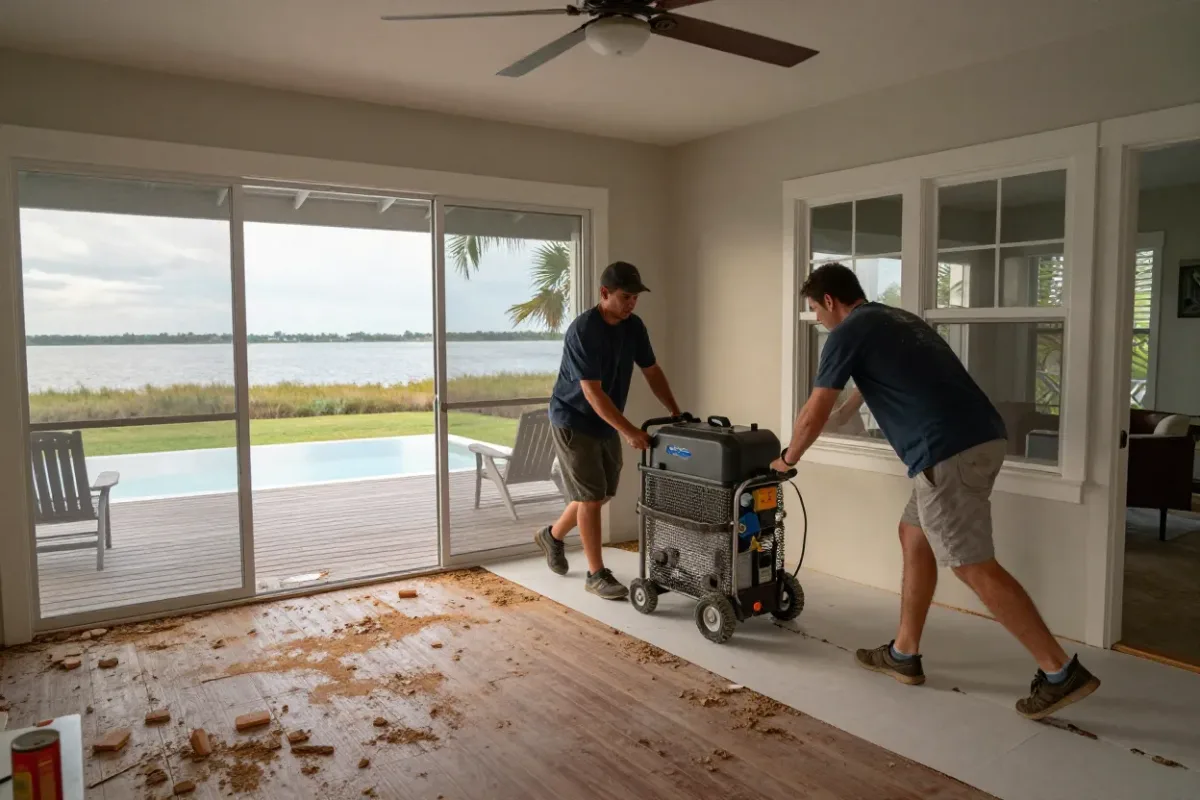
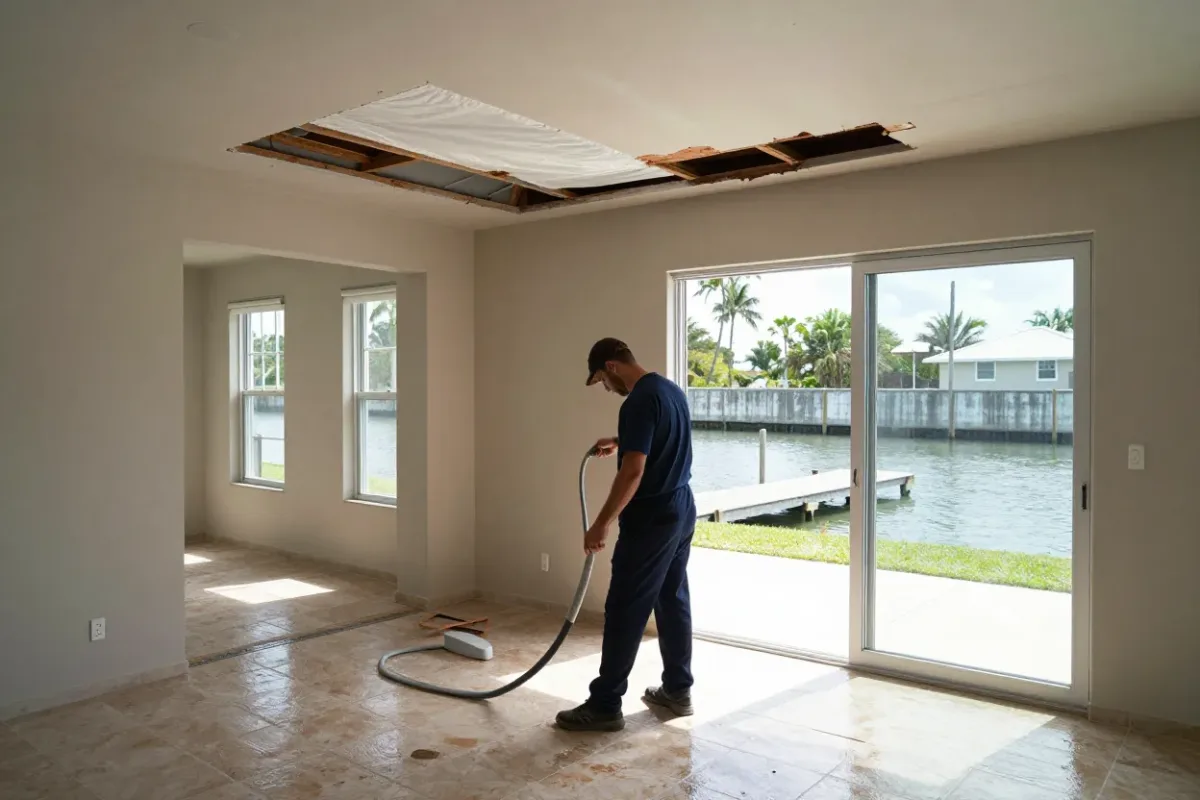
Our crews arrive with pumps and extractors for a flooded floor, tarps and drying equipment for a roof loss, and moisture meters so that mapping and drying begin on the first visit. Photos and meter readings go into your claim file from the moment we arrive. Our emergency water damage page explains what that first visit involves.
Restoration for Pre-Platted GDC Homes and Mobile Homes
Port Charlotte's housing is dominated by post-war and later single-family homes on pre-platted General Development lots, with a meaningful share of mobile homes and seasonal or vacant units. The typical site-built home is single-story block on a slab with drywall over furring, a low-slope roof and a lanai, often on a canal or near the harbor. Water in such a home wicks up the drywall from the slab and settles in cabinet bases and closets. Mobile homes hold water in their floor decks, underbelly insulation and wall panels and usually call for replacement of those parts rather than drying.
We map every loss with moisture meters and thermal imaging, remove only what cannot be dried, and dry the rest in place with commercial dehumidifiers and air movers until readings are normal. Seasonal owners get remote updates and we coordinate access through a neighbor or manager. The statewide water damage restoration service page describes each phase in detail.
Harbor Surge and River Flood Cleanup
Charlotte Harbor is a large Gulf estuary fed by the Peace and Myakka rivers, and a storm moving up it pushes surge into the southern and waterfront sections of the community. Milton's roughly five to ten feet of surge along this coast in 2024 is the most recent example. Ian in 2022 brought a different kind of flooding: extreme rainfall over the Charlotte-Sarasota area drove record flooding on both rivers, which kept rising after the wind had stopped. Irma in 2017 and Charley in 2004 round out a storm record that few Florida communities can match.
Surge is salt water carrying silt, sewage and debris, and river water is little cleaner, so flood cleanup treats both as contaminated. Silt is cleared, submerged drywall, insulation, cabinet bases, doors and flooring are removed, the slab and block are cleaned and disinfected, and air scrubbers run while the shell dries. Stay out of standing water where outlets or appliances may be submerged and call us. Our flood restoration service page covers larger losses, and the first 24 hours after a flood guide covers what to do first.
Water Damage Repair After Wind, Surge and Leaks
Roof loss is the repair story here. After Ian, many homes needed ceilings, attic insulation and upper walls replaced along with the roof itself, and we schedule that interior work to start once the roof is permanently sealed rather than under a tarp. After surge the work is new drywall from the water line down, new baseboards and doors, cabinet bases, flooring and paint. In mobile homes it may be floor decking, wall panels and underbelly insulation, and we say early whether repair or replacement makes sense.
The repair scope is built from the mitigation record so it lines up with what your adjuster has already documented, with wind, surge and pre-existing damage recorded separately. For waterfront homes that have now taken surge, we raise elevation and flood-zone permitting questions early so the rebuild accounts for them.
Mold Removal in Port Charlotte
A roof that leaked for weeks after a storm, a seasonal home that sat closed with a wet closet, a lanai that was enclosed and now leaks at the sills: these are how mold gets started in Port Charlotte. We also find it behind drywall in homes that were mucked out after surge but never dried behind the walls, in air handler closets, and in the wall cavities of mobile homes after wind-driven rain.
Our mold removal process fixes the moisture source, contains the area, removes and bags affected porous materials, HEPA-vacuums and cleans the surfaces that remain, and confirms with readings that the cavity is dry before closing it. Spraying a room or painting over growth does not solve it. Our mold remediation page and our guide to hidden mold after water damage explain more.
Common Causes of Water Damage in Port Charlotte
A harbor-front community with a long storm record, many older single-story homes and a large seasonal population sees these losses most often:
- Roof loss and shingle damage from hurricane wind, as in Charley and Ian, letting rain into ceilings and walls
- Storm surge pushed up Charlotte Harbor into the southern and waterfront sections, as in Milton
- Peace and Myakka river flooding that keeps rising after a storm passes, as in Ian
- Wind-driven rain through mobile home roofs and seams
- Slow leaks in seasonal or vacant homes that run unnoticed
- Water heater and supply line failures in post-war and later block homes
- Air conditioning condensate line clogs in closet air handlers
- Leaks at the sills of enclosed lanais and through sliding doors
How We Restore a Port Charlotte Home
Whether the roof came off in a hurricane or a supply line failed on a quiet weekday, the work follows the same eight documented steps.
- Inspection and moisture mappingWe confirm the source, classify the water and map every wet material with meters and thermal imaging, including attic insulation beneath a damaged roof and the floor systems of mobile homes.
- Extraction and silt removalStanding water is pumped and extracted, and silt left by surge or river water is cleared from the slab.
- Removal of unsalvageable materialsWet ceilings and insulation under a roof loss, and submerged drywall, cabinet bases, doors and flooring after a flood, are removed and bagged.
- Drying and dehumidificationAir movers and commercial dehumidifiers run inside the closed home, with readings logged daily until block, slab, framing and trusses are dry.
- Cleaning and disinfectionSurfaces touched by surge, river or gray water are cleaned and treated, with HEPA air scrubbers running during the work.
- DocumentationPhotographs, the moisture log and a written scope are compiled for your carrier, with wind and flood damage recorded separately.
- RepairCeilings, drywall, trim, cabinets, flooring and paint are restored once the roof is sealed, and mobile home systems are rebuilt where needed.
- Final inspectionA closing round of readings and a walkthrough confirm the home is dry and the work is complete.
Port Charlotte Areas We Serve
We respond throughout the Port Charlotte community, from the harbor-front and canal sections to the commercial hub at Murdock and the neighborhoods to the north and east, and to the surrounding Charlotte County communities.
Port Charlotte Neighborhoods
Nearby Communities
Our Port Charlotte crews also serve the neighboring communities around the harbor and along the rivers. Several have their own pages:
What to Do Right Now
These steps are safe for most homeowners and will limit the damage before the crew arrives. Skip anything that is physically difficult and let us handle it.
- Stop an indoor sourceClose the fixture valve or the main shutoff. Turn off the supply and the breaker or gas to a leaking water heater.
- Leave wet electrical equipment aloneTurn off breakers to wet rooms only if the panel is dry and you can reach it on dry ground. Never reach into water to unplug anything.
- Stay out of surge and river waterHarbor and river flood water carries sewage, fuel and debris. Keep everyone, including pets, out of it.
- Catch roof water where you canPut buckets or bins under active drips and move furniture out from under sagging ceiling areas. Do not go into the attic.
- Do not run a flooded air handlerHave a submerged unit inspected first. If the unit stayed dry, leave the system on to hold humidity down.
- Photograph before cleanupRecord the source, the water line, the roof damage and every affected room, and note the date and time.
- Call Water Damage FloridaReach us at (888) 435-4769 and tell us whether the water came from the roof, the harbor, a river or the plumbing, and whether the home is site-built or manufactured.
After a hurricane, our hurricane water damage recovery guide covers the longer road from tarps and drying to a finished rebuild.
Port Charlotte Water Damage FAQs
The roof came off part of our house and rain has been coming in. What do you do first?
We get the opening tarped if it is not already, remove the wet ceiling and attic insulation beneath it, meter the trusses and walls, and start drying. The interior rebuild waits until the roof is permanently sealed so the work is not done twice.
Our home is near the harbor. Do we need to worry about surge even if we never flooded before?
The southern and waterfront sections of the community are the ones a storm moving up Charlotte Harbor reaches first, and Milton's surge showed how far it can go. A home that has never flooded can still flood in the right storm.
The river was still rising two days after the storm. Is that expected?
Yes. Ian drove record flooding on the Peace and Myakka rivers after extreme rainfall upstream, and that water arrived after the wind had passed. Move belongings early if a river is rising toward the house and call us as soon as water gets in.
Our mobile home took water. Can it be dried out?
The wet floor deck, underbelly insulation and wall panels are usually replaced rather than dried. We inspect the structure and tell you early whether the scope points to repair or replacement.
We only live here in winter. What happens if the house floods in July?
We coordinate access through a neighbor, relative or manager, send photographs and readings as the job progresses, and handle the documentation with your carrier remotely.
How long does drying take after a roof leak?
A roof leak caught quickly often dries in a few days once the wet ceiling and insulation are out. One that ran for weeks under a tarp takes longer. We pull equipment when the daily log shows the structure is dry, never on a calendar.