Coral Gables was planned in the 1920s as a Mediterranean Revival city, and it still looks the part: a leafy historic core of themed villages and stucco homes southwest of downtown Miami, with a long southern arm of waterfront neighborhoods that reach Biscayne Bay. Water makes up the majority of the city's total area, and the city counts more than forty miles of waterways, including the Coral Gables Waterway and many residential canals. The city is candid about what that means. It cites low topography, an extensive coastline and porous limestone bedrock as reasons for its exposure to coastal flooding, shoreline erosion and saltwater intrusion, and it runs tidal monitoring stations at Matheson Hammock Park, Blue Road and the Islands of Cocoplum while modeling storm surge and king tide scenarios.
Water Damage Florida provides water damage restoration in Coral Gables 24 hours a day, with the care that historic plaster, original tile and large waterfront estates require. From emergency extraction to verified drying, mold removal and repair, call (888) 435-4769 and we will send a crew.
Emergency Water Damage Response in Coral Gables
In the historic core, the emergency is usually inside the house: an old supply line or cast-iron drain fails, a water heater in a utility room lets go, an air handler drain clogs and floods a closet, or a tile roof takes wind-driven rain into a bedroom ceiling. In the waterfront neighborhoods along the canals and inlets that connect to the bay, the emergency is as likely to be the water outside. A king tide or a storm pushes the canal over a seawall and into a garage or ground-floor room, and it arrives salty and silty. Businesses along Miracle Mile and the commercial streets call when a leak in an upper floor reaches a storefront ceiling.
Our crews arrive with extractors, pumps and drying equipment so the first visit accomplishes real work. We stop plumbing sources or coordinate with your plumber, remove standing water, and begin moisture mapping through plaster, cabinetry and slab. Photos and readings are logged from the first minute for your insurance claim.
Restoration That Respects Historic Construction
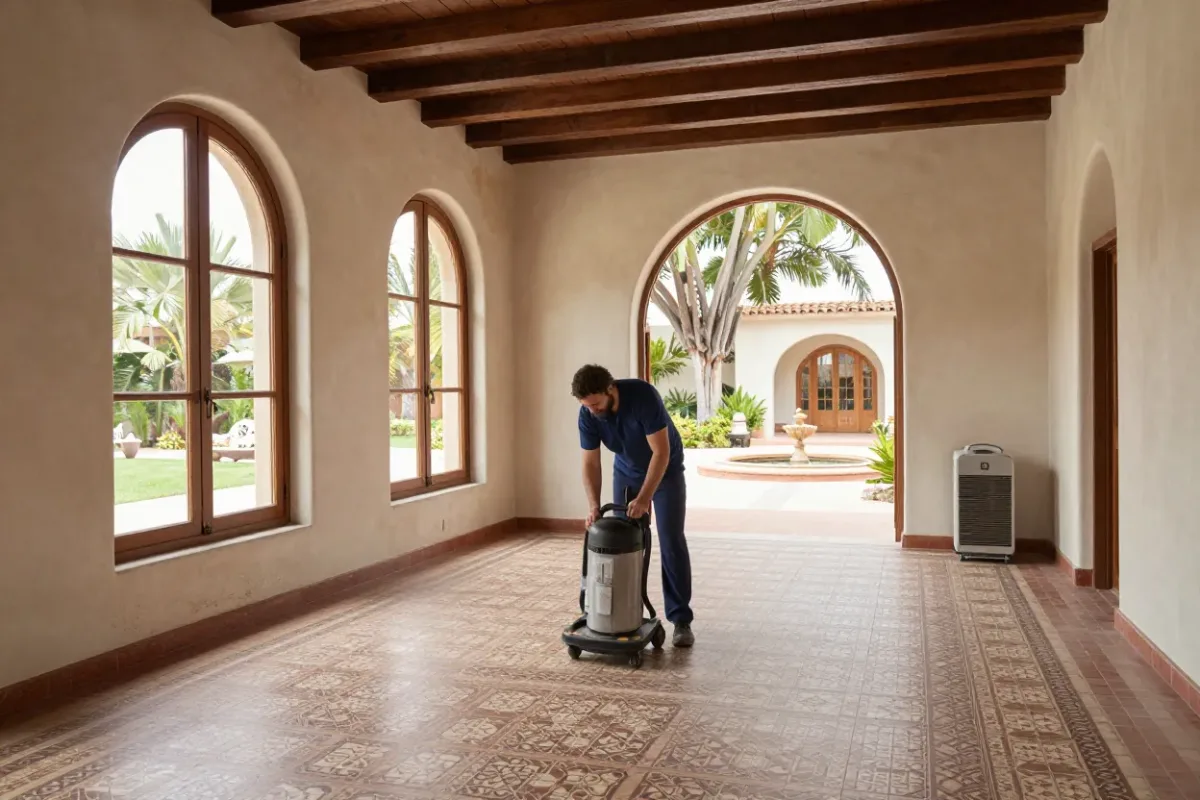
Coral Gables is known for its almost entirely Mediterranean Revival architecture, with 1920s themed villages, historic single-family homes in the core and large waterfront estates in its gated southern neighborhoods. Restoration here is as much about preservation as drying. Thick plaster over block or hollow tile, original cement and clay tile floors, pecky cypress ceilings, wood windows and built-in cabinetry are worth saving, and most can be saved when drying starts early and is done with equipment rather than demolition. We meter carefully, dry in place wherever the readings allow, and open only what is truly saturated.
The waterfront estates present a different scale: large ground floors, garages at canal level, custom finishes and complex mechanical systems. There, restoration means thorough moisture mapping of a big footprint, cleaning and corrosion checks where salt water reached metal, and drying sized to the volume of the house. In every home we verify the dry standard with readings before repair. Our water damage restoration service page explains the process.
Tidal and Canal Flood Cleanup
Waterfront neighborhoods such as Gables Estates, Cocoplum, Gables by the Sea, Old Cutler Bay and Snapper Creek are built along canals, inlets and the Snapper Creek Canal that connect to Biscayne Bay, which puts them on the front line for both king tides and storm surge. Coral Gables was among the communities affected by Hurricane Andrew in 1992, and during Hurricane Irma in 2017 surge inundation of three to five feet occurred along the Biscayne Bay shoreline between Homestead and downtown Miami. The city's tidal monitoring and surge modeling exist because this is a recurring exposure rather than a one-time event.
Bay and canal water is salty and contaminated. Our flood cleanup pumps and extracts it, removes porous materials it soaked, cleans and disinfects the slab and hard surfaces, runs air filtration, and dries the shell with equipment before rebuilding. Garages, ground-floor living areas, cabana baths and the lowest course of every wall get the most attention, and anything metal the salt water touched is flagged for inspection.
Water Damage Repair for Coral Gables Homes
Repair in the historic core means matching what was there: skim-coating and finishing plaster, resetting or replacing tile, refinishing wood, and painting in the colors the house wears. We coordinate with your contractor or architect where a historic home is involved so that repairs meet the standards the city applies to its architecture. In newer homes and condos, repair is more conventional drywall, trim, flooring and cabinetry.
For waterfront properties, repair includes replacing lower drywall with the next tide in mind, checking doors, tracks and fixtures the salt water reached, and rebuilding garages and ground floors. Every scope is tied to the mitigation photographs and moisture logs so your adjuster sees an unbroken record.
Mold Removal Behind Plaster and Under Tile
Older Coral Gables homes hide moisture well. Plaster can look dry on the surface while the block behind it holds water; tile floors set in mortar over slab can trap moisture underneath; and built-in cabinets and closets against exterior walls get little air. After a leak or a tidal event, mold tends to appear in those places weeks later, as a stain, a musty smell or a bubbling finish. In waterfront homes, the ground floor after a surge event is the most common site.
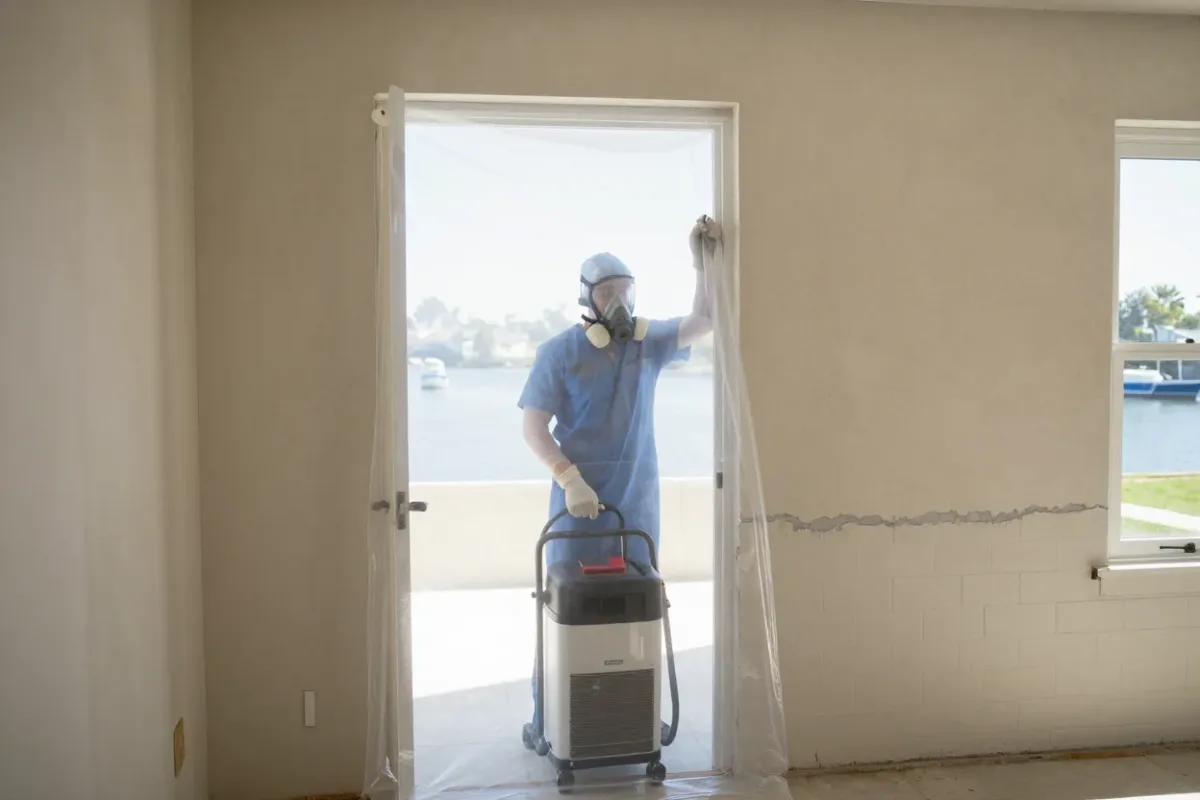
We isolate the affected rooms with sheeting and negative air, remove and bag the growth-bearing materials while protecting adjacent plaster and tile, HEPA-vacuum and clean the remaining surfaces, and dry the cavity fully before any finish work; the moisture source is corrected first. Learn more on our mold remediation page and in our guide to hidden mold after water damage.
Where the Water Comes From in Coral Gables
Porous limestone, low ground, forty-plus miles of waterways and a housing stock that spans a century produce a distinctive list of causes:
- King tides and storm surge topping seawalls into garages and ground floors along the canals and inlets
- Aging supply lines, cast-iron drains and water heaters in 1920s and mid-century homes
- Clay and barrel tile roofs admitting wind-driven rain at flashings and valleys
- Air conditioning condensate line clogs and air handler overflows in closets
- Groundwater rising through porous limestone under slabs and into ground-floor rooms during prolonged rain
- Dishwasher, washing machine and ice-maker line failures
- Leaks in upper floors of commercial buildings reaching storefronts below
- Pool and irrigation plumbing failures on large estate lots
The Restoration Process, in Order
From a leak in a Riviera bungalow to surge in a Gables Estates garage, the work follows eight steps. Each is verified before the next, and repair waits for proven drying.
- Inspection and moisture mappingWe find the source, classify the water, and map wet materials with meters and thermal imaging, including plaster, tile floors, built-ins and slab.
- ExtractionPumps clear garages and ground floors; extractors pull water from flooring, rugs and carpet.
- Removal of unsalvageable materialsSaturated drywall, insulation, carpet and cabinetry beyond recovery are removed and bagged, with historic finishes preserved wherever readings allow.
- Structural dryingAir movers and dehumidifiers run in the closed house, with readings logged daily until each material reaches its dry standard.
- Cleaning and disinfectionSurfaces touched by tidal or gray water are cleaned and treated while HEPA filtration runs.
- DocumentationPhotographs, moisture logs and a written scope go to you and your insurance carrier.
- RepairPlaster, tile, wood, drywall, cabinetry and paint are restored to match the home.
- Final verificationA closing set of readings and a walkthrough confirm the home is dry and complete.
Coral Gables Neighborhoods We Serve
We respond throughout the city, from the historic villages and the streets around Miracle Mile to the gated waterfront neighborhoods along the bay. Our crews bring equipment suited to plaster-and-tile construction, large estate floor plans and canal-level garages.
Coral Gables Neighborhoods
- Gables Estates
- Cocoplum
- Gables by the Sea
- Old Cutler Bay
- Deering Bay
- Snapper Creek
- Hammock Lakes
- Sunrise Harbour
- King's Bay
- Coral Gables Villages
- Miracle Mile
- Riviera
Nearby Communities
The same crews serve the communities that surround Coral Gables, from the city to the north to the villages along Old Cutler. Several have their own pages:
What Homeowners Should Do First
These steps are safe for most residents and protect both the house and its finishes before we arrive. Do not attempt anything that would put you in standing water.
- Close the valveShut the fixture supply or the main if the water is from plumbing. For tidal or storm water, there is nothing to close; move to the next step.
- Stay away from water near electricityDo not enter a flooded garage or room where outlets, pool equipment or cords may be wet. A breaker may be switched off only if the panel is dry and you can reach it without wading.
- Treat canal and bay water as contaminatedIt is salty and carries silt and whatever the drains held. Keep everyone, including pets, away from it and leave the cleanup to us.
- Rescue rugs, art and furnitureMove rugs, artwork, books and electronics to a dry room and lift furniture legs onto foil or blocks.
- Photograph everythingRecord the source, the water line and every affected room and item before moving anything.
- Keep the house closed and the AC onConditioned air slows mold in plaster and wood; open windows bring in humid air.
- Call (888) 435-4769Tell us the source, how long it has been wet, whether the water came from outside and whether the home is historic.
If a storm is forecast, our hurricane water damage recovery guide explains how to prepare a waterfront home and what to do afterward.
Coral Gables Water Damage FAQs
Can you dry a 1920s home without destroying the plaster and original tile?
In most cases, yes, if drying starts soon after the water event. Plaster and tile over block dry well with controlled equipment and daily monitoring. We remove only what the readings show cannot recover and document every decision for you and your insurer.
The canal came over the seawall into our garage during a king tide. What do you do?
Salt water is contaminated and corrosive. We pump it out, remove porous materials it soaked, disinfect the slab and walls, dry the space with equipment, and flag doors, tracks, fixtures and any mechanical equipment the water reached so they can be checked.
Do the city's rules for historic homes affect water damage repair?
It can affect how visible repairs are done on a historic home. We handle the mitigation and coordinate with your contractor or architect on finishes so the work meets the standards the city applies.
Our estate has a large ground floor. How long does drying take?
It depends on how much water came in, what it soaked and how long it sat. Large footprints need more equipment rather than more time, and we size the drying to the volume. Equipment comes out only when readings hold at the dry standard.
Is groundwater coming up through the slab a restoration problem?
It can be. Porous limestone lets groundwater rise during prolonged rain, and a ground-floor room can read wet from below with no visible leak. We meter the slab, dry the space and help identify the moisture path.
What do you provide for the insurance claim?
A photo record, day-by-day moisture readings and a written mitigation and repair scope. Your adjuster can ask us about any of it; the claim remains yours.