Miami Beach is a chain of natural and dredged barrier islands squeezed between the Atlantic Ocean and Biscayne Bay, and more than half of the city's area is water. The land averages roughly four feet above sea level, with parts of South Beach almost at high-tide level. Here, water damage is not only about leaking pipes and roofs: seasonal king tides push bay water up through the streets on sunny days, and a summer downpour can overwhelm the drains before the stormwater pumps catch up. Water Damage Florida provides water damage restoration in Miami Beach around the clock, for oceanfront towers, bayside condos and the historic low-rise buildings of the Art Deco district.
We handle the full sequence, from emergency water extraction through structural drying, mold removal and rebuild, in a city where many units sit seasonal or vacant and a leak can run for days unnoticed. If you have water in your unit, garage or storefront now, call (888) 435-4769 and we will get a crew moving toward the island.
Emergency Water Removal on the Barrier Islands
An emergency call from Miami Beach usually follows one of a few patterns. A water heater or washing machine hose lets go in a condo tower, and the unit below wakes up to a dripping ceiling. Tidal water backs up through a ground-floor garage or a bayside lobby during a king tide cycle. Wind-driven rain works past the roof and windows of an old building in Flamingo Park or Normandy Isles. Or a vacant seasonal unit leaks slowly until building staff notice water in the hallway. Each is urgent for the same reason: on an island with a high water table and humid air year-round, wet materials do not dry themselves.
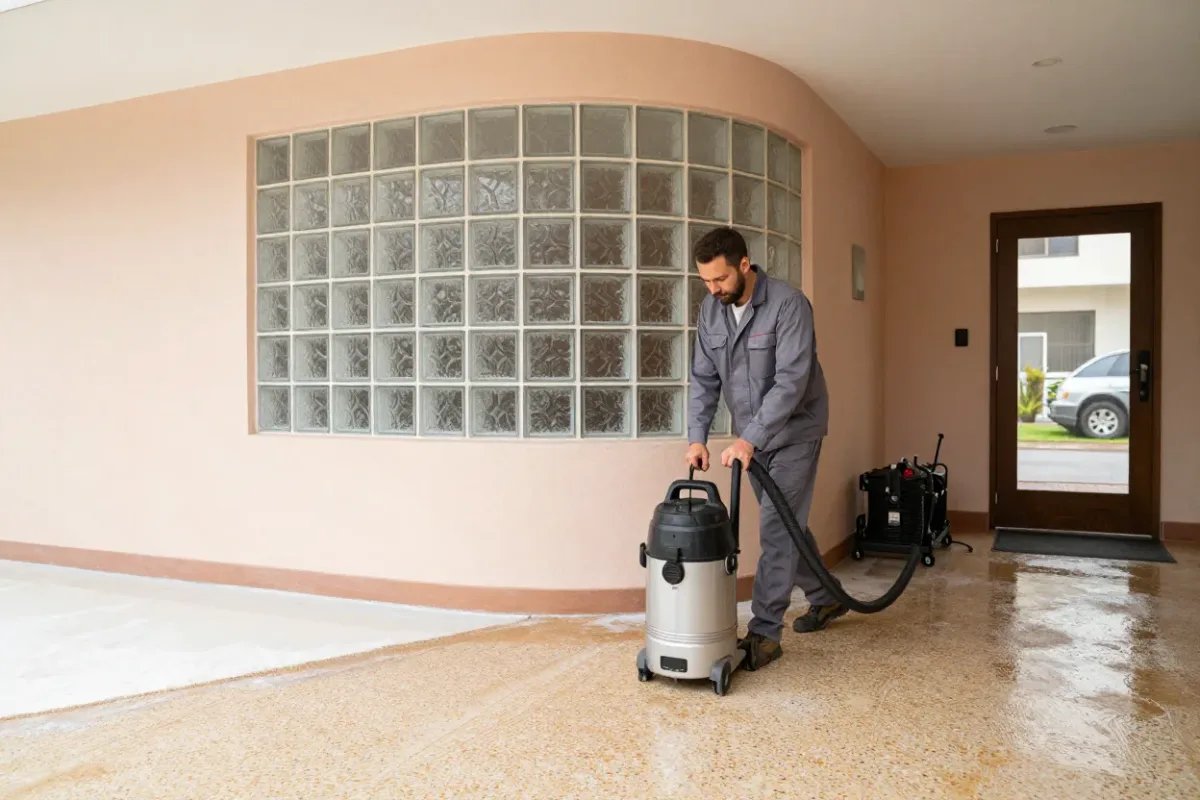
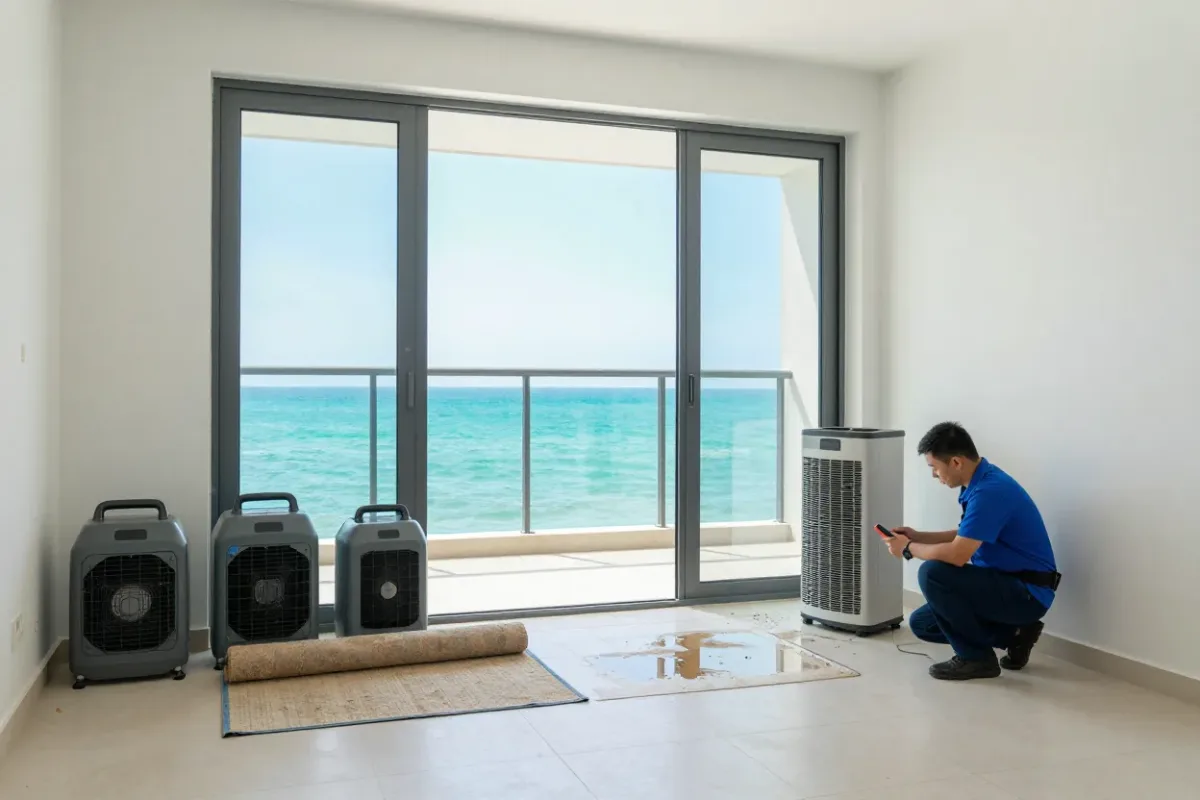
Our emergency crews cross the causeways with extraction equipment, submersible pumps for garages and elevator pits, and enough air movers and dehumidifiers to start drying on the first visit. We work with building management on access, trace water through the stack below the source unit, and begin logging moisture readings and photographs immediately so your insurance file has a clear starting point.
Restoring Art Deco Buildings and Oceanfront Condos
The Miami Beach building stock sets two very different restoration challenges. The Art Deco Historic District holds the largest concentration of Art Deco buildings anywhere, mostly built between the 1920s and early 1940s, with plaster walls, original terrazzo and wood windows that deserve careful handling. In those buildings we favor drying in place wherever moisture mapping allows it and cut only what is truly saturated, so the character of the building survives the repair.
The condominium towers built more recently are a different job: concrete slabs, metal studs, gypsum board, engineered flooring and stacked plumbing risers that carry water from one floor to the next. There, the priority is finding every wet unit and cavity, drying with low-grain refrigerant dehumidifiers in a sealed space, and verifying with moisture readings before any wall is closed. Our water damage restoration service covers both.
Tidal and Storm Flood Cleanup in Miami Beach
Flooding in Miami Beach comes in two flavors. The quiet one is the king tide, when streets and sidewalks fill with bay water without a cloud in the sky; a University of Miami study found this tidal flooding became far more frequent from the mid-2000s onward, which is why the city has installed dozens of stormwater pumps, raised roadways and temporary pump stations in its lowest neighborhoods. The loud one is a named storm. The 1926 Miami hurricane and Hurricane Cleo in 1964 hit the island directly, and Andrew, Katrina, Wilma and Irma affected it indirectly. During Hurricane Irma, ocean-side surge of two to three feet stayed confined to the immediate beachfront, and in June 2024 the city handed out sandbags while the water management district set up temporary pumps as heavy rain overwhelmed the drains.
Whether it arrives as salt water from the bay or rain that could not drain, floodwater in a Miami Beach building is treated as contaminated. Our flood cleanup removes saturated porous materials rather than trying to dry them, cleans and disinfects the hard surfaces that remain, and runs air filtration while the ground floor dries. Garages, storage cages, lobbies, elevator pits and first-floor units are where sand, salt and silt settle, and they get the closest attention.
Repairing Water-Damaged Units and Common Areas
Repair begins only after the moisture logs show every affected material has reached its dry standard. In Miami Beach that might mean replacing the lower drywall and baseboards in a Sunset Harbour condo, rebuilding a plaster section and refinishing terrazzo in a South of Fifth walk-up, or restoring the ceiling in the unit below a plumbing failure in a La Gorce tower. We match finishes closely so the repaired area does not announce itself.
Because so much of the city lives in shared buildings, repair also involves corridors, elevator lobbies and the rules that govern them. We plan around association work hours, protect hallways during material moves, and keep a written scope tied to the mitigation photos so the adjuster, the owner and the association all see the same record.
Mold Removal in a Humid Island Climate
Salt air, high humidity and a large number of units that sit closed for months make Miami Beach a place where mold follows water quickly. The typical discovery is a returning seasonal owner who opens the door to a musty smell, or a building engineer who finds staining on a corridor wall shared with an empty unit. In older buildings, mold often hides behind plaster or inside window returns that took in wind-driven rain during the last storm.
Our mold removal is a contained process: correct the moisture source, isolate the area with plastic sheeting and negative air, remove and bag affected porous materials, HEPA-vacuum and clean what remains, and dry the space fully before rebuilding. See our mold remediation page, and if a wall in your unit has ever been wet, read where hidden mold forms after water damage before painting over it.
Why Water Damage Happens Here
Low elevation, an island position between the ocean and the bay, a stock of vintage buildings and a forest of condo towers all shape the kind of water damage we see in Miami Beach. The sources we encounter most often include:
- King tide flooding that backs up through drains into garages, lobbies and ground-floor units on the bay side
- Supply lines, water heaters and washing machine hoses failing in condo towers, with water traveling down the stack
- Leaks in vacant or seasonal units that run unnoticed until a neighbor sees water
- Aging roofs, parapets and window frames on 1920s to 1940s buildings admitting wind-driven rain
- Air conditioning condensate lines and drain pans clogging during the long cooling season
- Heavy rain events that exceed drainage capacity before the stormwater pumps can keep pace
- Storm surge and wave action along the immediate oceanfront during hurricanes
How We Restore a Miami Beach Property
Our sequence is the same for a Normandy Shores bungalow or a Mid Beach high-rise, because each step protects the next. Here is what to expect.
- Inspection and moisture mappingWe find the source, classify the water, and map wet materials with meters and thermal imaging, including neighboring units and the floors below.
- Water extractionPortable and truck-mounted extractors pull water from flooring and carpet; submersible pumps clear garages, elevator pits and flooded ground floors.
- Removal of unsalvageable materialsSaturated drywall, wet insulation, swollen baseboards and flooring that cannot dry are removed and bagged, with historic finishes preserved wherever moisture readings permit.
- Drying and dehumidificationThe space is closed up and dried with air movers and low-grain dehumidifiers, with daily readings until each material reaches its dry standard.
- Cleaning and disinfectionSurfaces touched by tidal or storm water are cleaned and treated, and HEPA air scrubbers run throughout the work area.
- Documentation for your claimPhotographs, moisture logs and a written scope are assembled for you, your insurer and, where relevant, the condominium association.
- Repair and rebuildDrywall, plaster, trim, flooring, cabinetry and paint are restored to match the surrounding finishes.
- Final verificationA closing moisture check and walkthrough confirm the property is dry, clean and ready for occupancy.
Where We Work in Miami Beach
Our crews serve the entire city, from South of Fifth and the historic core of South Beach through Mid Beach and the residential islands to North Beach and the Normandy neighborhoods, with equipment suited to both vintage plaster buildings and modern towers.
Miami Beach Neighborhoods
- South Beach
- South of Fifth
- Flamingo Park
- West Avenue
- Sunset Harbour
- Mid Beach
- Bayshore
- Nautilus
- La Gorce
- North Beach
- Normandy Isles
- Normandy Shores
- Biscayne Point
- Venetian Islands
Nearby Communities
The same crews cover the mainland across the causeways and the beach towns to the north. Several of these communities have their own pages with local detail:
First Steps While You Wait for Our Crew
What you do in the first hour shapes how much can be saved. These steps are safe for most residents and building staff.
- Shut off the sourceClose the fixture valve or the unit's main shutoff. In a tower, alert building management right away so the riser can be isolated if the leak is not inside your unit.
- Keep clear of water near powerDo not walk into a flooded garage, storage room or unit where outlets, cords or equipment may be in contact with water. Switch off a breaker only if the panel is dry and reachable without stepping in water.
- Assume tidal water is contaminatedBay water and street water carry salt, silt and whatever the drains picked up. Keep people and pets out and leave the cleanup to us.
- Lift belongings off the floorMove rugs, electronics and furniture legs out of the wet area, or slip foil or plastic under pieces that cannot be moved.
- Record the sceneTake photos and a short video of the source, the water line and each affected room before anything is moved.
- Leave the air conditioning onCool, dry indoor air slows mold; opening windows to humid ocean air does the opposite.
- Call us with the detailsDial (888) 435-4769 and tell us the source, how long it has been wet, and whether other units, floors or common areas are involved.
If a storm is on the way, our hurricane water damage recovery guide and first 24 hours after a flood checklist cover what to do before and after landfall.
Miami Beach Water Damage Questions
My unit is seasonal and I am out of state. Can you handle a leak while I am away?
Yes. Many of our Miami Beach jobs begin with a call from a property manager, a neighbor or a building engineer. With your authorization and access arranged through management, we can inspect, extract, dry and document the unit and keep you updated with photos and readings while you are away.
King tide water came into our garage. Is that a restoration job or just a hose-down?
It is more than a hose-down. Tidal water is salty and contaminated; it corrodes metal, wicks into drywall and stored contents, and leaves silt behind. We extract it, remove porous material it soaked, disinfect hard surfaces and dry the space so it does not become a recurring mold problem.
Can you dry an Art Deco building without destroying the original plaster and terrazzo?
Often, yes. When we arrive early and the water was clean, plaster and terrazzo can usually be dried in place with the right equipment and monitoring. We remove only what moisture readings show cannot recover, and we document every decision so the association and your insurer can see why.
How do you deal with water that came from the unit above mine?
We treat the whole stack as one loss: coordinate with management to stop the source, inspect and dry every affected unit and the cavities between them, and keep separate documentation for each owner so their claims can proceed independently.
Do I need to open the windows to help things dry?
No. Miami Beach air is humid nearly all year, and open windows add moisture rather than remove it. Keep the building closed and the air conditioning running; our dehumidifiers do the drying.
How quickly can mold start after a leak in a closed-up condo?
In a warm, sealed unit where no one notices the leak, growth on drywall and cabinet backs can begin within a few days. That is why we begin drying on the first visit and why a vacant unit should be checked regularly during the wet season.