Despite its name, North Miami Beach has no ocean beach inside its limits. It is a compact, established mainland suburb wedged between North Miami and Aventura, lying west of the Intracoastal Waterway with Biscayne Bay to the southeast and Interstate 95 on its northwest edge, and Oleta River State Park along its waterfront side. Elevation is about ten feet, higher than the barrier islands to the east, and that shapes the kind of water problems the city sees. The dominant hazard is rain: in the June 2024 flood event, northeast Miami-Dade, which includes this city, received more than twenty inches of rain, one of the highest totals in the region. Add the tropical climate's heavy summer downpours and constant humidity, and a home here needs its roof, drains and plumbing all working at once.
Water Damage Florida provides water damage restoration in North Miami Beach around the clock, from emergency extraction after a storm to structural drying, mold removal and repair. Call (888) 435-4769 and a crew will be on the way.
Emergency Water Removal in North Miami Beach
Most emergency calls from North Miami Beach come after rain. A summer storm sits over the northeast corner of the county, the street fills, and water finds its way under a garage door or through a patio slider into a family room. Roofs on older homes give up a few shingles or a section of flashing in the wind, and a bedroom ceiling drips or drops. The rest come from inside: a water heater in a utility closet, a washing machine hose, a supply line under a bathroom sink that fails while the family is at work. On the water in Eastern Shores, the Intracoastal side adds tidal water in garages and ground-floor rooms.
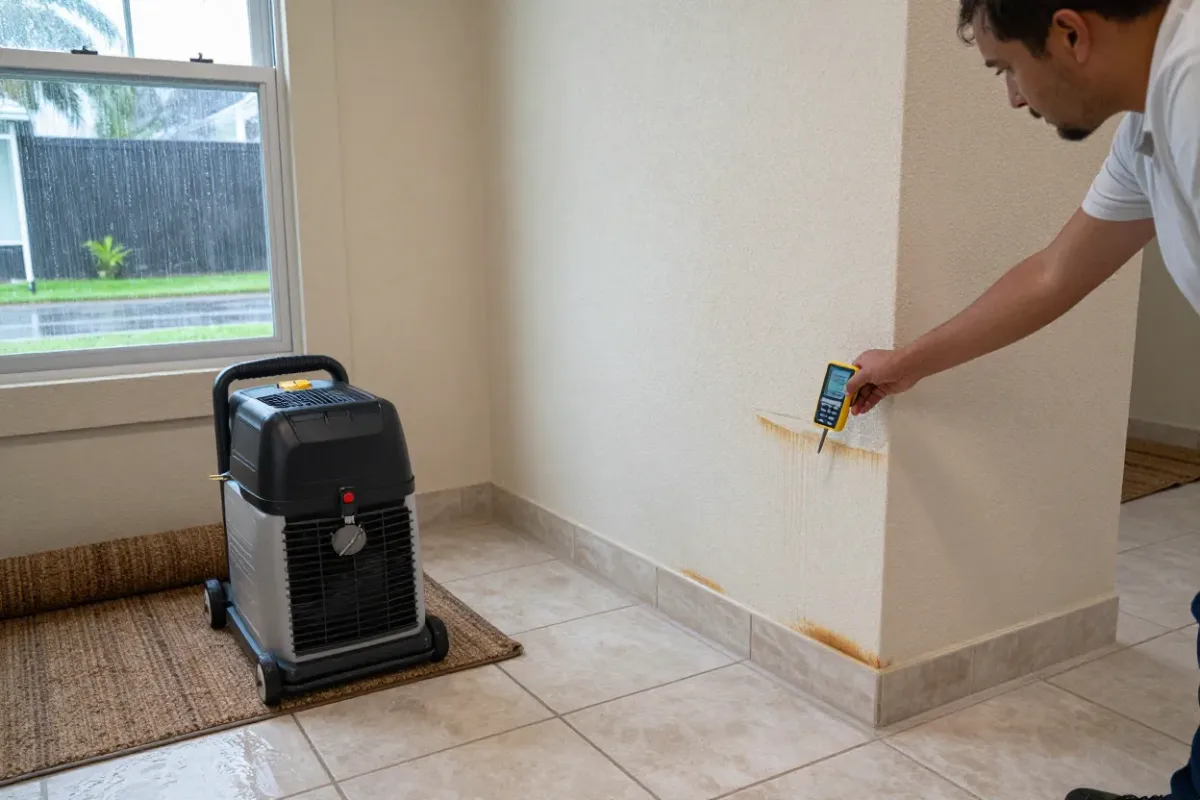
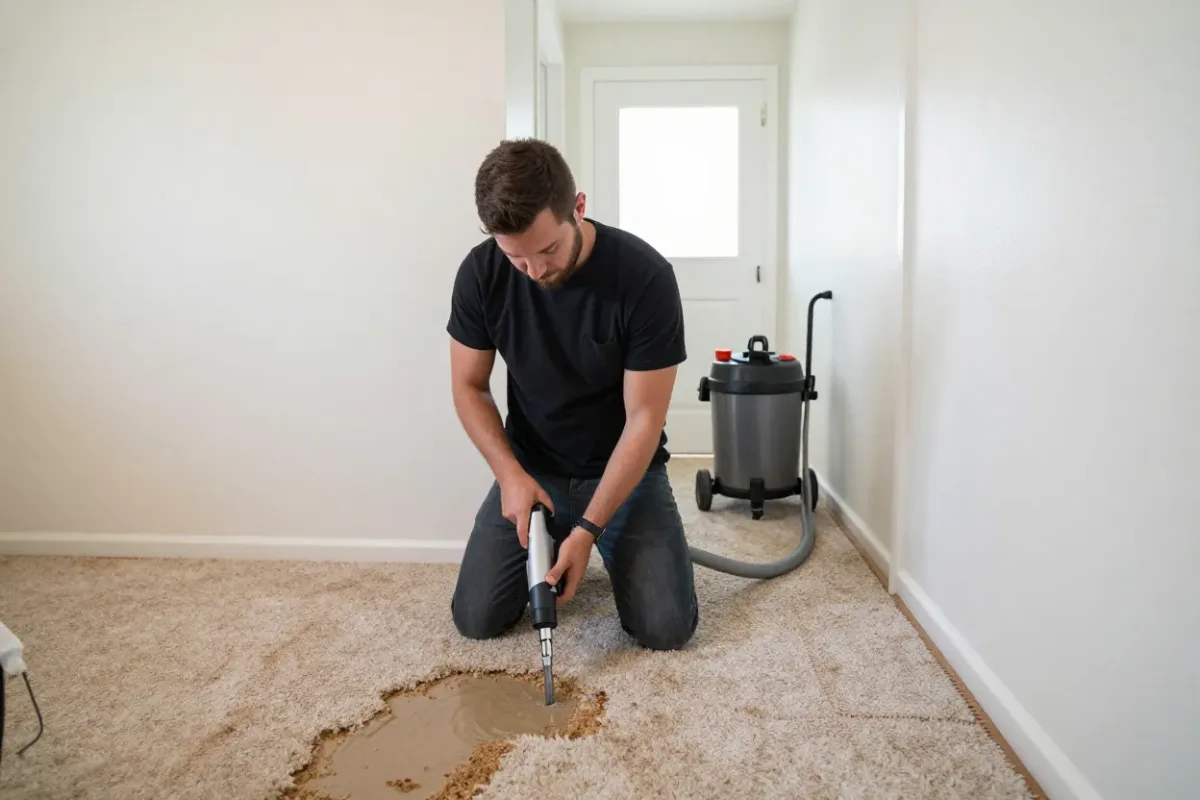
Our crews arrive with extractors, pumps and drying equipment so the first visit accomplishes something. We stop the source where it is plumbing, remove standing water, pull wet carpet and pad, and start moisture mapping through walls and cabinets. We photograph and meter as we go so your insurer gets a record that starts at arrival.
Drying and Restoring Suburban Homes
North Miami Beach is a mature residential suburb, and its housing is mostly single-family homes and low-rise apartments on slab foundations. Restoration in that setting means one clear question for every material: can it be dried, or must it be replaced? Concrete block and slab dry well with equipment. Carpet and pad that took in street water do not. Drywall that stood in water for more than a short time usually comes out along the bottom, and kitchen base cabinets that wicked from a dishwasher leak are often beyond saving.
We dry the house closed up with the air conditioning running, using air movers and dehumidifiers matched to the volume of the space, and we take moisture readings daily on drywall, framing and slab until each reaches its dry standard. Nothing is closed on the basis of appearance. Our restoration service page explains the process we follow statewide.
Flood Cleanup After Heavy Rain and High Water
The city's flood story has two chapters. The old one is the 1926 Miami hurricane, which destroyed the Fulford-Miami Speedway here and ended the local land boom. The recent one is the June 2024 flood event, when more than twenty inches of rain fell on northeast Miami-Dade and streets and homes across the area took on water. Between those two, the ordinary rhythm of summer downpours produces smaller floods every wet season, especially on low blocks and for homes whose swales and drains cannot move water fast enough. Along the Intracoastal, high water can push into waterfront garages as well.
Water that has been through a street, a swale or the Intracoastal is contaminated. Our flood cleanup pumps and extracts it, removes soaked carpet, pad, drywall and insulation, cleans and disinfects the slab and hard surfaces, and dries the structure with equipment before any rebuild. We plan the work so a family can stay in the dry rooms wherever the layout allows.
Water Damage Repair for North Miami Beach Properties
Once drying is verified, we put the home back together: new drywall and baseboards along the affected walls, replacement flooring where carpet or laminate failed, cabinet repair or replacement, ceiling drywall and insulation under roof leaks, and paint. Where a roof was the cause, we coordinate with your roofer so the ceiling is not rebuilt under an open leak. For apartments and small multi-unit buildings, we document each unit separately and work with management on access.
Every repair scope is tied to the mitigation photographs and moisture logs, so the adjuster can see the line between what the water did and what was already there.
Mold Removal in a Humid Suburb
Heavy summer rain and high humidity mean that a North Miami Beach wall that got wet and was not dried with equipment is likely to grow mold. We find it most often behind the bottom foot of drywall after street flooding, under carpet pad that was dried only from the top, at the back of kitchen and bath cabinets after a slow leak, and on ceiling drywall below a roof or air handler problem. It often surfaces weeks after the water event, as a stain, a bubbled baseboard or a smell in a closet.
Our crews seal the affected area, run negative air, take out and bag the growth-bearing drywall, pad or cabinet material, HEPA-vacuum and clean the surfaces that stay, and dry the space before repair; whatever let the water in is fixed as part of the same job. Read more on our mold remediation page, and see where hidden mold forms after water damage before painting over an old stain.
What Causes Water Damage in North Miami Beach
A rain-heavy climate, an established suburban housing stock and a waterfront edge on the Intracoastal account for most of the water damage we see here:
- Intense summer rain overwhelming swales and drains, entering garages and through patio doors on low blocks
- Roof leaks and wind-driven rain through older shingle and tile roofs
- Water heater failures in garages and utility closets
- Washing machine hoses, dishwasher supply lines and refrigerator ice-maker lines bursting
- Air conditioning condensate line clogs and drain pan overflows
- High water on the Intracoastal side reaching waterfront garages and ground floors in Eastern Shores
- Slab and under-slab pipe leaks in older homes
- Plumbing failures in low-rise apartments spreading to neighboring units
Our Restoration Process, Start to Finish
Every North Miami Beach job moves through eight steps in order. Each one is checked before the next begins, and drying is proven with readings before repair.
- Inspection and moisture mappingWe identify the source, classify the water, and map every wet material with meters and thermal imaging, including cabinets, ceilings and slab.
- ExtractionStanding water is pumped from garages and low rooms and extracted from carpet, pad and flooring.
- Removal of ruined materialsSoaked carpet and pad, saturated drywall, wet insulation and swollen cabinets are removed and bagged.
- Drying and dehumidificationAir movers and dehumidifiers run in the closed house; readings are logged daily until the dry standard is met.
- Cleaning and treatmentSurfaces touched by street, tidal or gray water are cleaned and treated while HEPA filtration runs.
- DocumentationWe compile photos, the moisture log and a written scope for you and your insurer.
- RepairWallboard, trim, floors, cabinets, ceilings and paint go back in to match the existing finishes.
- Final verificationA closing set of readings and a walkthrough with you confirm the work is complete.
Neighborhoods We Serve in North Miami Beach
We respond across the entire city, from the waterfront streets of Eastern Shores to the inland neighborhoods along the main corridors and the residential blocks near the university. Our equipment is chosen for slab-on-grade homes, low-rise apartments and the waterfront garages on the east side.
North Miami Beach Neighborhoods
- Eastern Shores
- Skylake
- Fulford
- Allen Park
- Aqua Bowl
- Corona Del Mar
- University Park
- Government Center
Nearby Communities
Our crews also serve the cities around North Miami Beach on both sides of the county line. Several have their own pages:
Six Things to Do Before the Crew Arrives
These steps are safe for most residents and will limit the damage. Skip anything that would put you in the water.
- Shut the water off at the sourceClose the fixture valve or the main. If the water is rain or tidal, there is nothing to shut; move to the next step.
- Stay out of water near outlets and appliancesDo not enter a flooded garage or room where a water heater, outlets or cords may be submerged. Turn off a breaker only if the panel is dry and you can reach it without stepping in water.
- Keep away from street and Intracoastal waterIt is contaminated. Keep family and pets out and let the crew handle it.
- Move contents to dry roomsCarry rugs, electronics and boxes out of the wet area and set furniture legs on foil or blocks.
- Photograph before moving anythingRecord the source, the water line and every affected room and item.
- Keep the house closed and call usLeave the air conditioning on, do not open windows, and call (888) 435-4769 with the source, rooms affected and how long it has been wet.
For the rest of the day, follow our first 24 hours after a flood guide.
North Miami Beach Water Damage FAQs
We are about ten feet up and not on the water. Do we really flood?
Elevation helps against tidal water, but not against rain that falls faster than the drains can carry it. The June 2024 event dropped more than twenty inches on this part of the county, and low blocks and homes with poor swale drainage took on water. Rain flooding is the most common flood we clean up here.
The rain came in under the garage door and reached the laundry room. Is that enough to call you?
Yes. Street water is contaminated, and the laundry room wall usually shares a slab with living space. We extract, remove wet drywall along the bottom, disinfect and dry both rooms so the water does not become a mold problem in a bedroom closet.
Can you save the carpet?
Carpet that took in clean water from a supply line can often be dried if we arrive early. Carpet that took in street, tidal or sewer water is removed along with the pad, because it cannot be cleaned to a safe standard.
Do you work on apartments and small rental buildings?
Yes. We coordinate with the owner or manager, trace water through shared walls and floors, and document each unit separately so each party has what they need.
How long will the equipment run in my house?
Usually several days, depending on how much water came in and what it soaked. We take readings daily and remove equipment only when the readings hold at the dry standard.
What paperwork do you provide for insurance?
A photo record, moisture readings from each day and a written scope of the mitigation and repair. You file the claim; we take the adjuster's questions whenever they come.