Hallandale Beach is a small, densely built beach city at the southern edge of Broward County, with the Atlantic on its east, Hollywood to the north, Aventura across the county line to the south, and a dense downtown running along the US-1 corridor. It sits about seven feet above sea level, and its housing runs from canal-front single-family homes on Golden Isles and Three Islands to high-rise and mid-rise condominiums along the beach and the Intracoastal. Every autumn, from roughly September through December, seasonal king tides push saltwater over seawalls and back up through storm drains in the lowest areas. Golden Isles and Golden Beach Drive flooded that way in 2017, and the city has since installed tidal check valves there.
Water Damage Florida provides water damage restoration in Hallandale Beach 24 hours a day, whether the water is salt from a king tide or storm surge, rain through a balcony door in a tower, or a plumbing failure working its way down a condominium stack. We extract, dry, remove what salt water ruins, clean up mold and rebuild, with documentation for your insurance claim from the first visit. Call (888) 435-4769, day or night.
Emergency Water Damage Response in Hallandale Beach
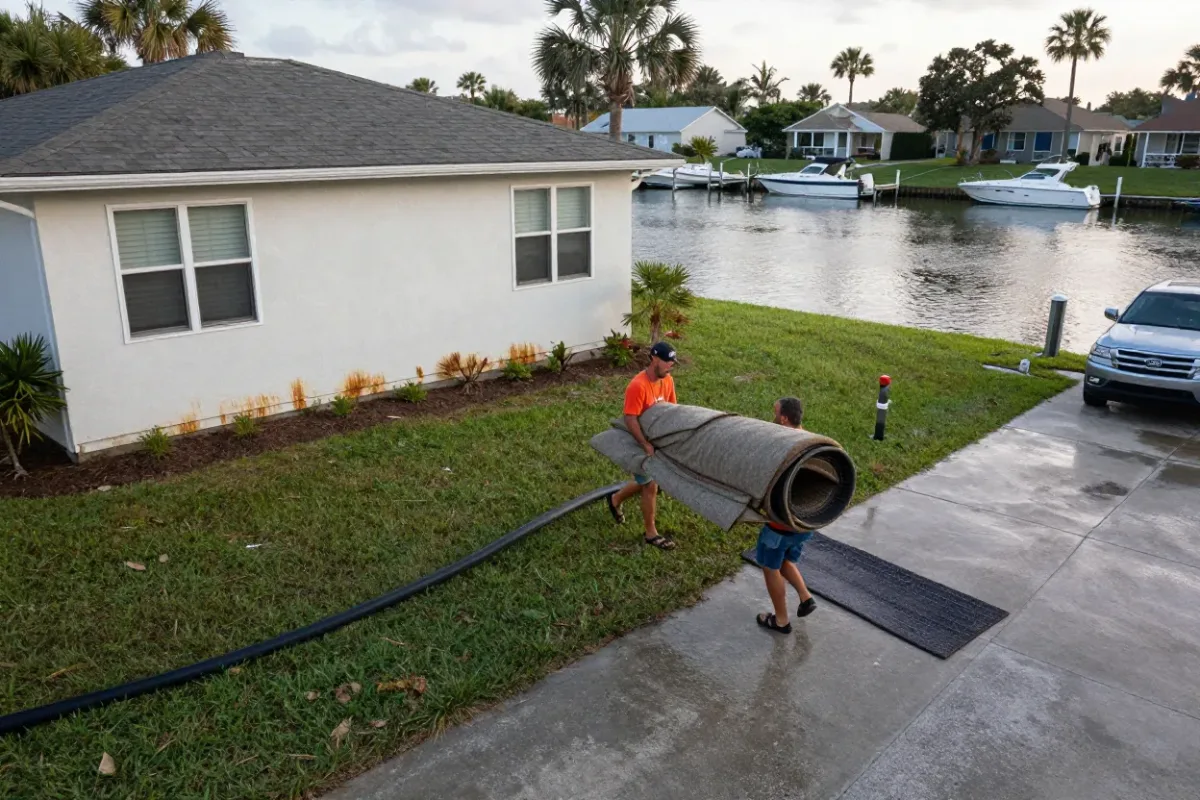
In a city this vertical, the most common emergency is water traveling down. A supply line, water heater or washing machine fails on an upper floor of a beachfront tower and the water follows the stack through ceilings, closets and elevator lobbies for several floors, often into units whose seasonal owners are out of the country. The second kind of emergency comes with the tide chart: saltwater rising over a Golden Isles seawall or bubbling up through a street drain and reaching a garage, a ground-floor room or a lobby.
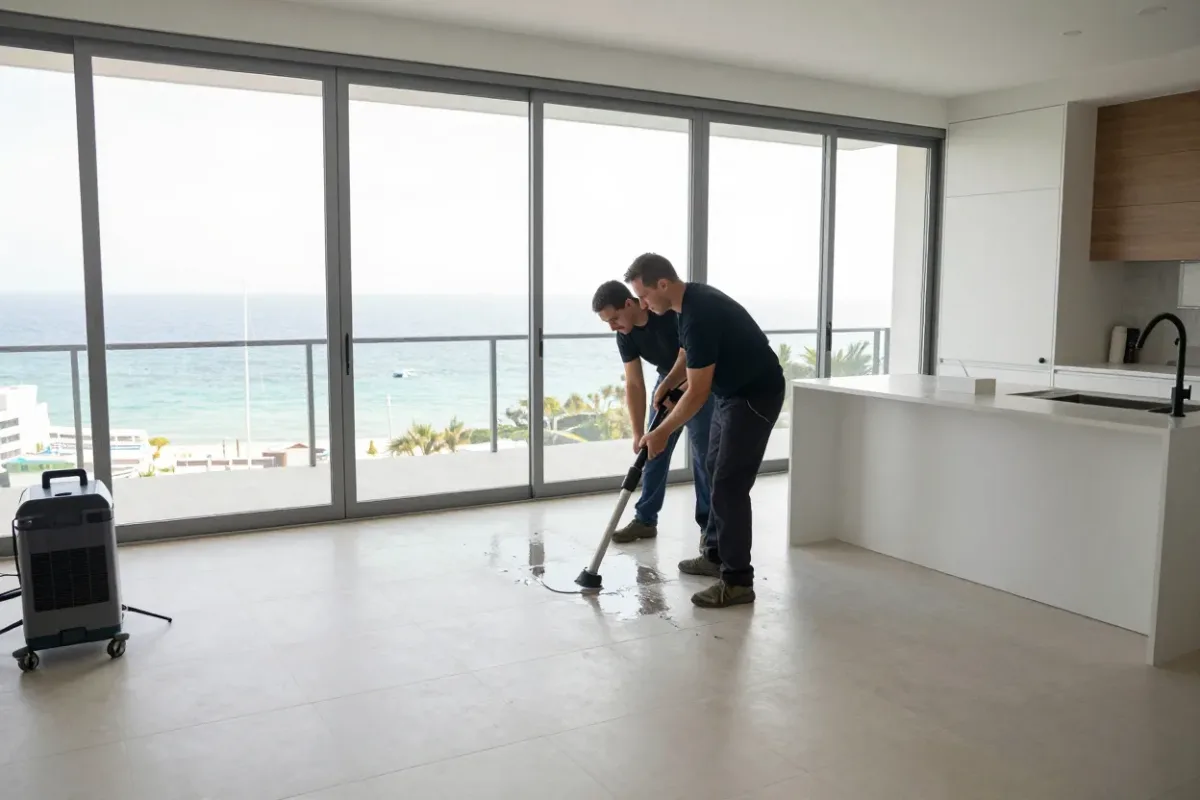
We respond with portable extractors for individual units, truck-mounted units and submersible pumps for garages and lobbies, and enough air movers and dehumidifiers to begin drying the same visit. In a tower we trace the water through the stack rather than treating only the unit that called. We photograph everything, record baseline moisture readings and note whether the water is fresh or salt, because that changes what can be saved. Our emergency water damage page describes the first hours in more detail.
Restoring High-Rise Condos and Canal-Front Homes
The two halves of Hallandale Beach's housing need different restoration plans. In the condominium towers, the structure is concrete and survives almost anything; the vulnerable materials are drywall, engineered flooring, cabinetry and the insulation behind finished walls, and the challenge is scope, since a single leak can involve a dozen units and the association's common elements. In the canal-front homes of Golden Isles and Three Islands, the enemy is salt: tidal water that reaches a slab and the base of walls corrodes fasteners and metal, leaves residue that keeps drawing moisture, and ruins porous materials that fresh water might have spared.
In both settings we map the loss with moisture meters and thermal imaging, remove what cannot be dried, and dry the rest with the building closed to the humid coastal air and dehumidifiers matched to the space. Daily readings continue until every material meets its dry standard; cleaning, treatment and repair come after that. Our water damage restoration service page explains the method.
King Tide, Storm Surge and Flood Cleanup
Hallandale Beach floods on a schedule and by surprise. The schedule is the king tide season, when the highest tides of the year push saltwater over seawalls and up through storm drains in low-lying areas; the city's climate assessment projects the number of tidal flooding days to rise sharply in the years ahead and examines how sea-level rise affects groundwater and the shoreline. The surprise is the named storm. Hurricane Irma in 2017 brought two to three feet of storm-surge flooding to Broward County's barrier islands, Hurricane Katrina in 2005 also affected the city, and the April 2023 South Florida rain event, which damaged a school in Hallandale Beach, showed that rain alone can overwhelm the drains.
Tidal and surge water is salt, and salt water is both contaminated and corrosive. Flood cleanup means removing the porous materials it touched rather than drying them, cleaning and disinfecting hard surfaces, inspecting metal fixtures, appliance bases and electrical components it reached, and running air filtration while the structure dries. Ground-floor garages, lobbies and the lowest units on the canals get the closest attention. See our flood restoration page and the hurricane water damage recovery guide for what to expect.
Repair After Salt Water and Stack Leaks
Repair in Hallandale Beach carries two extra items that inland cities rarely see. After tidal or surge water, we replace corroded door hardware, appliance bases and metal framing that salt has attacked, and we check that residue has been cleaned from the slab before new flooring goes down, since salt left behind keeps pulling moisture. After a stack leak in a tower, we rebuild ceilings, closets and wall sections floor by floor, coordinating with the association on common elements, elevator use and work hours so a dozen owners are not waiting on one approval.
The repair scope is built from the photos and daily moisture logs collected during mitigation, so your adjuster and, in a condominium, the association's adjuster can see the source, the path the water took and the damage in each unit. Documentation is kept separate by unit and by common area.
Mold Removal in a Beach City
Hallandale Beach gives mold everything it needs: salt air, tidal humidity, and a large population of seasonal units that sit closed with the air conditioning turned up for months at a time. The places we check first are the drywall behind bathroom tile and behind kitchen cabinets in a tower unit that took water from above, the lowest course of wall in a canal-front home after a king tide, closets that house an air handler, and the underside of engineered flooring that was dried on top while the slab beneath stayed damp.
Mold removal begins with correcting the moisture source, then containing the area with plastic sheeting and negative air, removing and bagging affected porous materials, HEPA-vacuuming and cleaning remaining surfaces, and drying fully before rebuilding. We never spray over growth and call it done. Our mold remediation page explains the process, and our guide to hidden mold after water damage is worth reading before repainting any wall that was once wet.
Common Causes of Water Damage Here
A low coastal city of towers, canal homes and seasonal residents, with a tide calendar and a hurricane season, sees a distinctive set of water losses. In Hallandale Beach the most frequent are:
- King tides pushing saltwater over seawalls and up through storm drains in Golden Isles and other low areas
- Storm surge reaching beachfront garages, lobbies and ground-floor units during hurricanes
- Supply-line, water heater and washing machine failures in towers, spreading down the stack
- Wind-driven rain through balcony doors, sliding glass and window seals in oceanfront buildings
- Leaks running unnoticed for months in seasonally vacant condominium units
- Condensate overflows from air handlers in interior closets through the long cooling season
- Corroded plumbing and fixtures in buildings exposed to years of salt air
- Street and storm-drain backup during extreme rain events like April 2023
How Restoration Proceeds
Whether the water came from the Intracoastal or a dishwasher, every Hallandale Beach job runs through eight stages in order, each verified before the next begins.
- Inspection and classificationWe find the source, determine whether the water is fresh or salt (tidal and surge water always count as contaminated), and map its reach through the unit, the stack or the home with meters and thermal imaging.
- ExtractionPortable and truck-mounted extractors remove water from floors; submersible pumps clear garages, lobbies and ground-floor rooms after a tide or surge.
- Removal of ruined materialsSalt-soaked drywall, insulation, carpet pad and swollen flooring are cut out and bagged, and corroded fixtures that cannot be saved are set aside for replacement.
- DryingAir movers and dehumidifiers run continuously with the building closed to the coastal air, and readings are logged daily until each material reaches its dry standard.
- Cleaning and salt removalSurfaces touched by salt or contaminated water are cleaned and disinfected, residue is removed from slabs, and HEPA filtration runs during the work.
- DocumentationPhotos, readings, an equipment log and a written scope are prepared for you, your insurance carrier and, where applicable, the association, separated by unit and common area.
- RepairDrywall, trim, flooring, cabinets, paint and corroded hardware are replaced or restored to match the property.
- Final verificationA closing round of moisture readings and a walkthrough confirm the space is dry and finished.
Hallandale Beach Areas We Serve
We cover the whole city, from the oceanfront towers and the Intracoastal to the canal homes of Golden Isles and Three Islands, the downtown along US-1 and the neighborhoods west toward Pembroke Park. Our crews bring equipment suited to a high-rise stack or a single-story waterfront home.
Hallandale Beach Neighborhoods
- Golden Isles
- Three Islands
- Beach and Oceanfront Corridor
- Central Hallandale (US-1 corridor)
- West Hallandale
- Gulfstream Park area
Nearby Communities
Our Hallandale Beach crews also respond on both sides of the Broward and Miami-Dade line. Several of these neighbors have their own pages:
What to Do Before We Arrive
A few safe actions in the first hour protect you and limit what has to be replaced. Do not attempt anything that puts you in water near electricity.
- Stop a plumbing leak at the sourceClose the fixture valve or the unit's shutoff. In a tower, call the building engineer or management immediately so the riser can be isolated and the units below warned.
- Stay out of water near powerDo not enter a flooded garage, lobby or room where outlets, cords, appliances or the panel may be in the water, and do not touch a wet panel. Cut a breaker only if it is dry and reachable.
- Treat tidal, canal and ocean water as contaminatedSaltwater from a king tide or surge carries whatever the street and the drains held. Keep people and pets out and leave the cleanup to us.
- Move belongings up and awayLift rugs, furniture and electronics off wet floors where it is safe, and slide foil or plastic under heavy pieces.
- Photograph the tide line and the sourceRecord the high-water mark, the source and every affected room before anything is discarded.
- Keep the air conditioning runningCool, dry indoor air slows microbial growth; keep balcony doors and windows closed to the humid sea air.
- Call (888) 435-4769Tell us whether the water is salt or fresh, where it came from, how long it has been wet and which floors or units are involved.
After a tide or storm, our first 24 hours after a flood guide covers the added precautions.
Hallandale Beach Water Damage FAQs
A king tide came over our seawall on Golden Isles. Is that handled like a normal flood?
It is handled as a saltwater flood, which is stricter. Porous materials the tide touched are removed rather than dried, salt residue is cleaned from the slab so it stops drawing moisture, hard surfaces are disinfected, and metal fixtures and electrical components that got wet are inspected for corrosion.
Water is dripping through my ceiling from the unit above. Who is responsible for what?
Responsibility depends on the policies and the association documents, not on us. What we do is trace the water through the stack, document the source and the damage in each unit and common area separately, and give each owner and the association a clear record so the adjusters can sort it out.
We are snowbirds and found damage when we returned. What now?
Call before you touch anything. A leak that has run for months in a closed unit has usually reached the walls, cabinets and neighboring units, and mold is likely. We contain and assess first, document for your claim, then remove, dry and rebuild.
Do the tidal check valves the city installed mean Golden Isles will not flood again?
The check valves address water backing up through the storm drains, which was part of the 2017 flooding. The city's own assessment projects tidal flooding days to increase, so waterfront owners should still expect high tides to test seawalls and low lots during the fall season.
How does salt water change what can be saved?
Fresh water from a supply line, caught early, often lets drywall, cabinets and some flooring dry in place. Salt water leaves residue that keeps materials damp and corrodes metal, so far more has to be removed and hardware replaced. Telling us which kind you have when you call helps us bring the right plan.
Do you serve Aventura and the Miami-Dade side too?
Yes. Our crews cross the county line into Aventura, Golden Beach, Sunny Isles Beach and North Miami Beach, and serve the rest of Florida through our statewide service areas.
Call for Water Damage Restoration in Hallandale Beach
Water Damage Florida provides emergency water extraction, tidal and surge flood cleanup, structural drying, mold removal and repair for Hallandale Beach towers, canal homes and businesses, 24 hours a day. Call (888) 435-4769, write to info@waterdamagefl.org, or use our contact page to reach us.
Call 888 435-4769 Contact Us