Miami Gardens is an inland suburb in north-central Miami-Dade County, reaching up to the Broward line about a dozen miles north of downtown Miami. It was assembled from several formerly unincorporated communities and is overwhelmingly a city of single-family neighborhoods, best known as the home of the county's NFL stadium. At around ten feet, its elevation is a little higher than much of coastal Miami-Dade, but the city's flood-hazard guidance is blunt about what that buys: the area is flat and low-lying, shallow groundwater rises during the rainy season, and once the ground is full it cannot absorb much more. The C-8 and C-9 canals that run through the area can overtop or back up in heavy rain, which in turn backs up the secondary canals and the neighborhood drains.
Water Damage Florida provides water damage restoration in Miami Gardens 24/7, from the flooded living rooms that follow a flash flood emergency to the everyday water heater, roof and plumbing failures in homes from Carol City to Andover. Call (888) 435-4769 and we will get a crew on the road.
Emergency Water Damage Help, Any Hour
When a severe rain event stalls over north Miami-Dade, the calls from Miami Gardens come in clusters: water over the threshold of a front door, a garage full of runoff, a rear patio slider that could not hold back the yard. Local news has documented repeated street flooding and a flash flood emergency in the city, and those are the nights a single-story home with a slab at grade has the least margin. The rest of the year, emergencies look more familiar, such as a water heater in the garage letting go, a washing machine hose bursting during a cycle, or a roof leak that turns a ceiling into a sag after a squall.
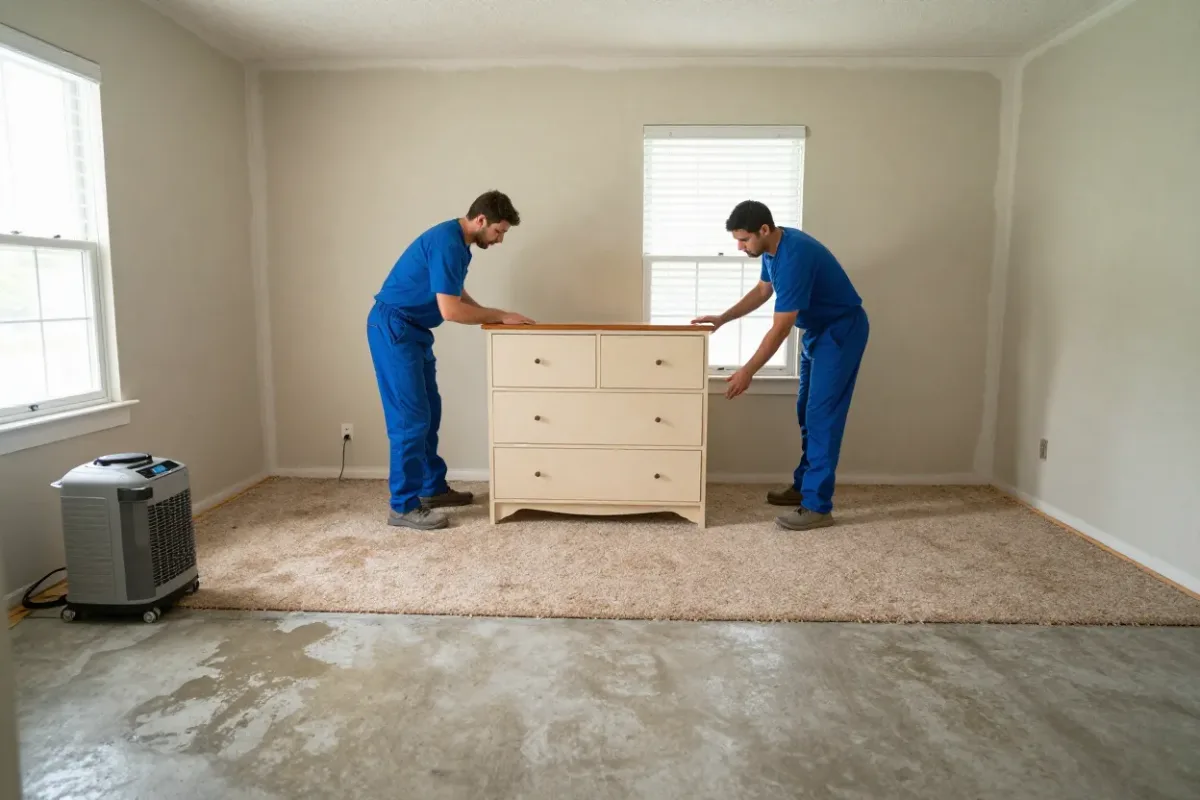
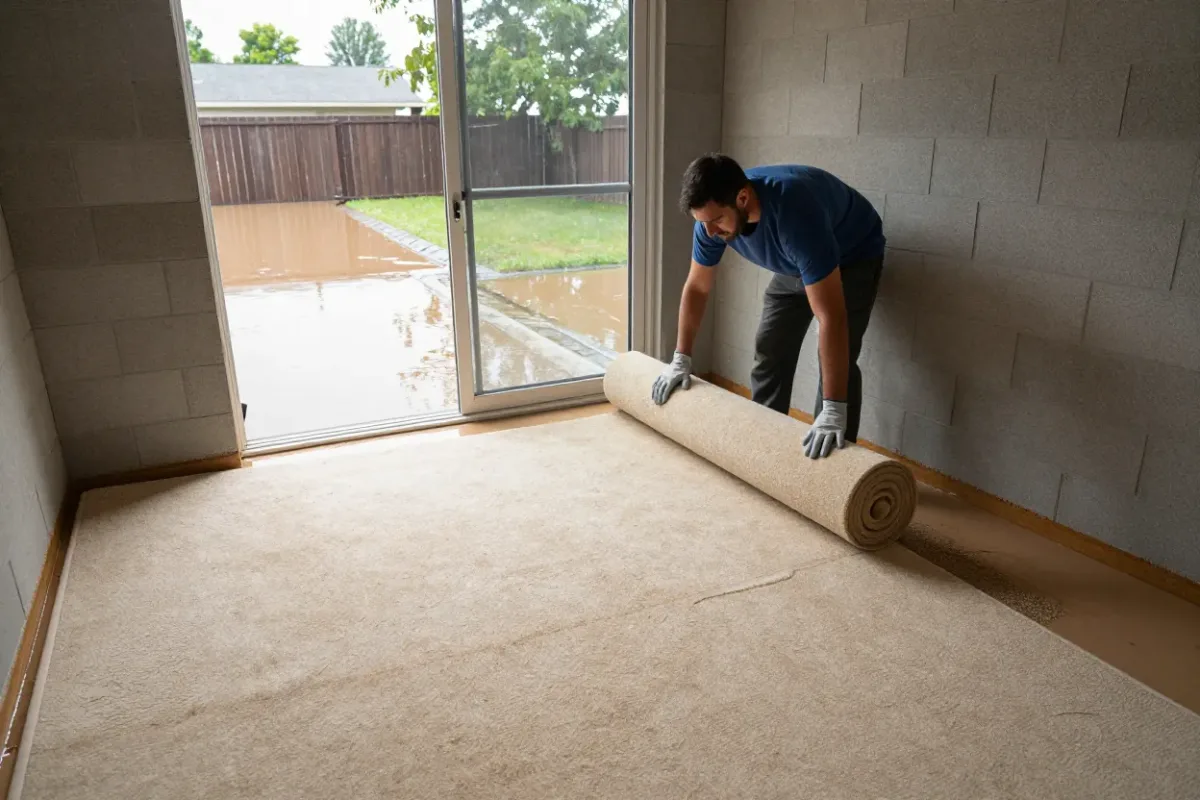
Our crews respond with pumps, extractors and drying equipment so removal and drying begin on the first visit. We identify and stop the source where it is plumbing, extract standing water, lift or remove carpet and pad, and start moisture mapping right away. Every reading and photo is logged from the start for your insurance claim. Our emergency water damage page describes what happens on that first visit.
Restoring Single-Family Homes in Miami Gardens
Because Miami Gardens is mostly single-family housing, restoration here usually means one house, one family and one set of decisions about what stays and what goes. Concrete-block walls and slabs dry well with the right equipment. Carpet and pad that took in canal or street water do not, and neither does drywall that stood in it. Kitchen and bathroom cabinets, closet floors and the shared wall between a garage and a bedroom are the places we check most carefully, because that is where water hides.
Drying is done with the house closed and the air conditioning running, using air movers and dehumidifiers matched to the size of the space, with readings taken daily until walls, framing and slab reach their dry standard. We do not hand a home back on the basis of how it looks or smells; the numbers decide. Our restoration service page explains the standards we hold to statewide.
Flood Cleanup After Canal and Street Flooding
The two storms that define flooding in Miami Gardens are Hurricane Irene in 1999 and the October 2000 No-Name storm, both of which produced prolonged flooding, business disruption and power loss here. Neither was primarily a wind event for the city; each was rain on ground that could not take it, with the C-9 Snake Creek Canal and the C-8 Canal rising until the neighborhood system backed up. The same pattern repeats on a smaller scale in ordinary severe rain events, which is why the city keeps a flood-hazard page for residents.
Water that has come through a canal, a swale or a street is contaminated, and our flood cleanup treats it that way. We extract it, remove soaked carpet, pad, drywall and insulation, clean and disinfect the slab and hard surfaces, and dry the shell of the house with equipment before rebuilding. Homes near the canals and on the low side of a block tend to see the deepest water, and garages that face the street are often the first room hit.
Water Damage Repair Once the House Is Dry
Repair in Miami Gardens homes typically covers the lower drywall and baseboards along the flooded side, new flooring where carpet or laminate failed, kitchen base cabinets that wicked water, interior doors that swelled, and paint. Where a roof leak was the cause, we address the ceiling drywall and insulation and coordinate with your roofer so the repair is not undone by the next storm.
We keep the repair scope tied to the mitigation photos and moisture logs so your adjuster can see what the water touched and when. For families living in the home during the work, we sequence rooms so bedrooms and the kitchen come back first.
Mold Removal for Miami Gardens Homes
A slab-on-grade house in a humid climate has several places for mold to start after water: under carpet pad that was dried from the top only, behind the lowest foot of drywall, inside the garage-to-bedroom wall, and at the back of base cabinets. It often shows up weeks after a flood or leak that seemed handled, as a stain, a bubbled baseboard or a musty smell in a closet.
When we remove mold, the room is sealed and placed under negative air, the affected drywall, pad and cabinet material is cut out and bagged, the surfaces that remain are HEPA-vacuumed and cleaned, and the space is dried before anything is rebuilt. Correcting the moisture source is part of the job. Read more on our mold remediation page, and see where hidden mold forms after water damage if you are unsure whether a past leak was dried properly.
Common Sources of Water Damage in Miami Gardens
Flat ground, shallow groundwater, two major canals and a housing stock of slab-on-grade single-family homes produce a predictable set of water damage causes. The ones we handle most:
- Street and yard flooding during severe rain, entering through garage doors, thresholds and patio sliders
- C-8 and C-9 canal backups that overload secondary canals and neighborhood drains
- Roof leaks and wind-driven rain through older shingle and tile roofs during squalls and tropical systems
- Water heater failures in garages and utility closets
- Washing machine hoses, dishwasher lines and refrigerator ice-maker lines bursting
- Air conditioning condensate overflows in attics and air handler closets
- Sewer backups when the drainage system is overwhelmed
- Slab and under-slab plumbing leaks in older homes
Our Eight-Step Restoration Method
Every Miami Gardens job moves through the same eight steps. The order is deliberate: drying is verified before repair, and repair is never used to hide moisture.
- Assessment and moisture mappingWe find the source, classify the water, and map every wet material with meters and thermal imaging, including slab readings and the garage-to-house wall.
- Pumping and extractionStanding water is pumped out of garages and low rooms, and carpet, pad and hard floors are extracted with portable or truck-mounted equipment.
- Tear-out of unsalvageable materialsSoaked carpet and pad, saturated drywall, wet insulation and swollen cabinet bases are removed and bagged.
- Drying and dehumidificationAir movers and dehumidifiers run in the closed house with daily moisture readings until each material hits its dry standard.
- Cleaning and disinfectionThe slab and hard surfaces touched by contaminated water are cleaned and treated while HEPA filtration runs.
- Claim documentationPhotographs, moisture logs and a written scope are assembled for you and your insurance carrier.
- RepairDrywall, baseboards, flooring, cabinets and paint are restored to match the rest of the home.
- Final walkthroughA last set of readings and an inspection with you confirm the work is finished.
Neighborhoods We Serve in Miami Gardens
We respond across the whole city, from the older streets of Carol City and Bunche Park to the lake neighborhoods around Lake Lucerne and Scott Lake and the communities up near the county line. Our equipment is chosen for slab-on-grade single-family homes, which is most of what stands here.
Miami Gardens Neighborhoods
- Carol City
- Norland
- Andover
- Bunche Park
- Lake Lucerne
- Scott Lake
- Opa-locka North
Nearby Communities
Our crews also cover the surrounding cities on both sides of the county line. These communities have their own pages with local detail:
If Water Is in Your Home Right Now
These steps are safe for most homeowners and will limit the damage before we arrive. Skip any step that would put you in the water.
- Stop plumbing at the sourceTurn off the fixture valve or the main shutoff. If the water is rain or canal runoff, skip to the next step.
- Stay out of water that may be energizedDo not enter a flooded garage or room where outlets, a water heater or cords could be in the water. Cut power at the panel only if the panel is dry and you can reach it without stepping in water.
- Treat runoff as contaminatedStreet and canal water carries whatever the drains picked up. Keep the family and pets away and let us deal with it.
- Move contents to dry roomsCarry rugs, electronics, toys and boxes to a dry part of the house and put furniture legs on foil or blocks.
- Photograph everythingRecord the source, the water line and every affected room and item before anything is moved.
- Keep the AC on and the house closedConditioned air slows mold; open windows let humid air in.
- Call for helpReach us at (888) 435-4769 with the source, the rooms affected and how long the water has been there.
For a storm on the way, read the hurricane water damage recovery guide; for the day after, see the first 24 hours after a flood.
Miami Gardens Water Damage FAQs
Our street floods every time it storms. Can you dry the house the same way each time?
We can, but each time the water comes in through the same wall, the drywall and insulation there have to be removed and replaced. During the rebuild we can talk through choices, such as tile instead of carpet in the rooms that flood or water-resistant materials on the lowest course of the wall, that make the next event less costly.
The carpet is wet but the walls look fine. Do you still need to check them?
Yes. Drywall wicks water upward from a wet slab and can read wet a foot above a dry-looking surface. We meter the walls along the whole wet footprint, not only where staining is visible.
How long does drying a flooded single-family home take?
It depends on how much water came in, how long it sat, and which materials were affected. Equipment usually runs for several days, and we take readings each day; we remove it only when the readings hold at the dry standard.
My water heater in the garage leaked and the bedroom carpet on the other side of the wall is damp. Is that connected?
Almost certainly. The garage-to-bedroom wall sits on the same slab, and water travels under the sill plate. We inspect and dry both sides of that wall on every garage loss.
Do you help with the insurance claim?
We supply the photographs, moisture logs and written scope that adjusters ask for and explain the work to them if requested. Filing and managing the claim stays with you.
Can you help a business in Miami Gardens as well as homes?
Yes. Shops, restaurants, churches and offices get the same response and the same documentation. We plan the work so the parts of the business that need to reopen are dried first.