North Miami is a bayfront city in northeast Miami-Dade, about ten miles north of downtown Miami, sitting on the western shore of Biscayne Bay at an elevation of only several feet. Arch Creek winds through the city, Oleta River State Park covers much of its bay side, and waterfront neighborhoods like Keystone Point are built on islands and canals along Little Arch Creek, which drains into the bay. The city itself says that flooding is its most common natural hazard, and it requires floodplain permits and elevation documentation for properties in FEMA Special Flood Hazard Areas. That combination of low ground, tidal water and canals means water damage in North Miami can come from the sky, the bay or the plumbing, and sometimes from two at once.
Water Damage Florida provides water damage restoration in North Miami 24 hours a day, for the postwar ranch homes that make up much of the city, the island and canal properties on the bay, and the newer mixed-use projects rising along the corridors. Call (888) 435-4769 and describe what you see; we will send a crew.
Emergency Water Damage Service in North Miami
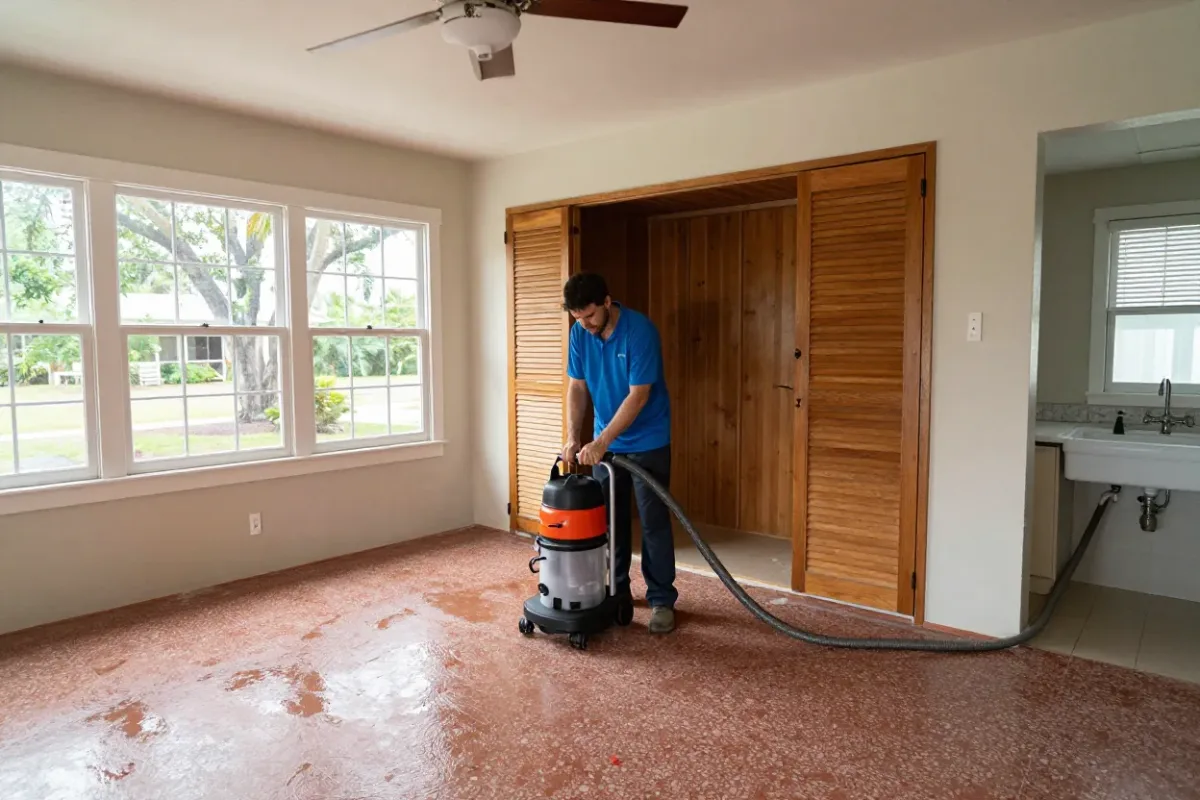
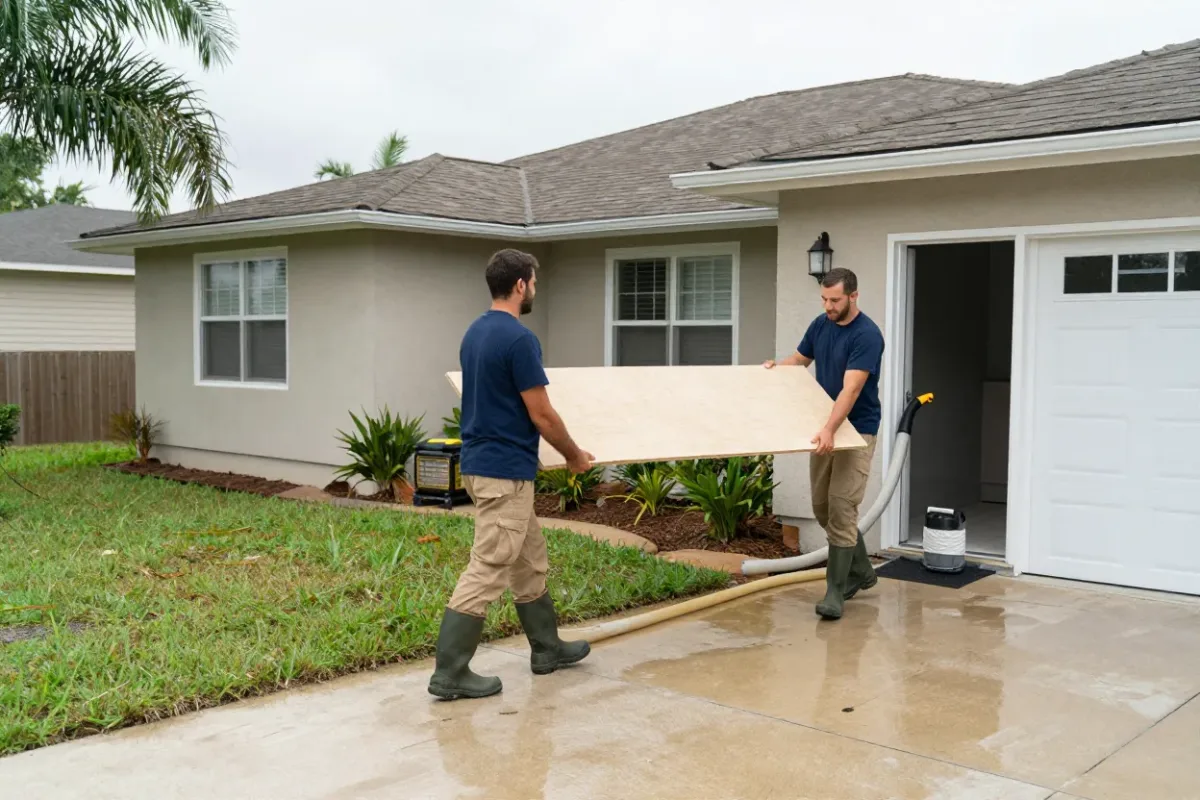
A typical emergency in an inland North Miami neighborhood is a plumbing failure in a home that dates from the city's rapid post-World War II growth, when North Miami was described as one of the fastest-growing towns in the country. Galvanized lines, cast-iron drains and aging water heaters in those houses fail without much warning, and the terrazzo floors that survive the water hide the drywall and cabinets that do not. On the waterfront, the emergency is more often the bay itself: a tidal cycle or a storm pushes water over a seawall and into a garage or a ground-floor room along a Keystone Point canal.
Our emergency crews arrive ready to pump, extract and start drying on the same visit. We stop the source or work with your plumber, remove standing water, pull carpet and pad, and begin moisture mapping right away. Photographs and readings are logged from arrival so your insurance claim starts on solid ground. Our emergency water damage page covers what to expect on that first call.
Restoring Postwar Homes and Waterfront Properties
Restoration in North Miami has to respect two kinds of construction. The mid-century block homes that fill the inland neighborhoods have terrazzo, plaster or early drywall, wood closet doors and built-in cabinetry that are worth saving when drying starts early; we favor drying in place and cut only what the meters say is beyond recovery. Newer apartments and the mixed-use development along the corridors are more conventional gypsum, metal stud and engineered flooring, where the priority is tracing water through shared walls and floors.
Waterfront homes add a third layer: salt water, seawalls and garages that sit at the level of the canal. There, drying is paired with cleaning and corrosion checks on anything metal the water reached. In every case we dry the space closed up, with dehumidifiers sized to the room, and verify with daily readings before repair. Our water damage restoration service page details the standards we use.
Flood Cleanup on Biscayne Bay and Arch Creek
North Miami's flood history reaches back to the 1926 hurricane, which halted the city's original real estate boom. More recently, bayfront areas north of downtown Miami saw two to three feet of surge inundation during Hurricane Irma in 2017, and in the June 2024 flood event northeast Miami-Dade received more than twenty inches of rain. The island and canal neighborhoods along Little Arch Creek face the tidal side of that picture, while the inland streets near Arch Creek face the rain side, when the creek and the drains cannot keep up.
Whether it is bay water or runoff, floodwater in a home is contaminated. Our flood cleanup removes it, strips the saturated carpet, drywall and insulation, cleans and disinfects the slab and hard surfaces, and dries the shell with equipment before repair. Garages, ground-floor rooms and the lowest course of every wall get the closest inspection, because that is where salt water and silt settle.
Water Damage Repair, Inland and Waterfront
In North Miami's older homes, repair commonly means replacing the bottom section of drywall or plaster, refinishing terrazzo that was under wet carpet, rebuilding kitchen and bath cabinets, and repainting. Where cast-iron drains or old supply lines caused the loss, we coordinate with your plumber so the repair is not undone by the next failure. In waterfront garages and ground floors, we replace drywall with the water event in mind and check doors, tracks and electrical fixtures that the bay reached.
Repair scopes are matched to the mitigation photos and moisture logs so your adjuster sees a clean record. For multi-unit buildings, we document each unit separately and coordinate with management on hours and common areas.
Mold Removal After Water Intrusion
North Miami's warm bay air and its stock of older homes are a combination mold likes. We find it behind plaster and drywall near the floor after tidal water, inside built-in cabinets and closets after a slow leak, on the drywall behind bathroom tile, and in air handler closets. In homes where a past leak was dried only from the surface, growth can appear weeks later as a stain, a bubbled baseboard or a musty smell.
We seal the affected rooms, run negative air, take out and bag the growth-bearing materials, HEPA-vacuum and wipe down everything left, and dry the cavity before repair; the leak or intrusion that fed it is fixed first, or the work is wasted. Our mold remediation page describes the method, and our article on hidden mold after water damage lists the spots worth checking in an older house.
Common Causes of Water Damage Here
A bayfront position, canals threading through island neighborhoods, a creek through the middle of town and a large stock of postwar homes explain most of the water damage we see in North Miami:
- Tidal and storm water topping seawalls into garages and ground floors along the canals of Keystone Point and Sans Souci Estates
- Heavy rain overwhelming drains and Arch Creek in inland neighborhoods
- Aging galvanized supply lines, cast-iron drains and water heaters in mid-century homes
- Roof and window leaks in older houses during squalls and tropical systems
- Air conditioning condensate lines clogging through the long cooling season
- Washing machine hoses, dishwashers and ice-maker lines failing
- Plumbing failures in apartments and mixed-use buildings spreading through shared walls and floors
- Sewer and storm drain backups when the system is saturated
The Restoration Sequence
Whether the water came from the bay or a bathroom, the work in North Miami follows eight steps in a fixed order so nothing gets closed up wet.
- Inspection and moisture mappingWe find the source, classify the water, and map wet materials with meters and thermal imaging, including plaster, built-ins and the slab.
- ExtractionPumps clear garages and low rooms; extractors pull water from carpet, pad and flooring.
- Removal of unsalvageable materialsSoaked drywall, plaster beyond recovery, wet insulation and ruined flooring are removed and bagged.
- Structural dryingAir movers and dehumidifiers run in the closed building, with readings logged daily until the dry standard is met.
- Cleaning and disinfectionSurfaces touched by tidal or gray water are cleaned and treated, with HEPA filtration running.
- DocumentationPhotos, moisture logs and a written scope are compiled for you and your insurer.
- RepairDrywall, plaster, terrazzo refinishing, cabinets, trim and paint are restored.
- Final inspectionA final moisture check and walkthrough confirm the home is dry and finished.
Where We Work in North Miami
We serve the whole city, from the island and canal homes on the bay to the inland neighborhoods around Arch Creek and the newer development along the corridors. Our crews bring equipment suited to mid-century block homes, waterfront garages and multi-unit buildings alike.
North Miami Neighborhoods
- Keystone Point
- Sans Souci Estates
- Biscayne Highlands
- Arch Creek
Nearby Communities
Our North Miami crews also cover the neighboring cities and villages along the bay and inland. These have their own pages:
What to Do in the First Hour
These steps are safe for most homeowners and residents and will limit what the water can ruin before we arrive.
- Close the valve if it is plumbingShut the fixture supply or the main. In an apartment, notify management so the building supply can be isolated if the leak is not in your unit.
- Do not enter water near electricityStay out of a flooded garage or room where outlets, a water heater or cords may be wet. Only cut power at the panel if it is dry and you can get to it without wading.
- Assume bay and canal water is contaminatedKeep people and pets away from it, avoid skin contact, and do not try to clean it yourself.
- Lift what you canMove rugs, electronics and boxes to a dry room; put furniture legs on foil or blocks.
- Document the scenePhotograph the source, the water line and every affected room before moving anything.
- Keep the air conditioning runningCool, dry indoor air slows mold; do not open windows to the bay breeze.
- Call (888) 435-4769Tell us the source, how long it has been wet and whether the water came from outside.
Our first 24 hours after a flood guide picks up from here.
North Miami Water Damage FAQs
Bay water came over the seawall into my garage. What should I expect from cleanup?
Salt water is contaminated and corrosive. We pump it out, remove porous materials it soaked, disinfect the slab and walls, dry the space with equipment, and flag any doors, tracks or electrical fixtures the water reached so they can be checked.
My house is from the 1950s. Can you save the terrazzo and plaster?
Usually. Terrazzo cleans and dries well, and plaster can often be dried in place if we arrive before it stays saturated for long. We remove only what the moisture readings show cannot recover, and we document the reasoning.
Do you work in the new apartment and mixed-use buildings?
Yes. We coordinate with management, trace water through shared walls and floors, protect common areas and document each unit separately so owners, tenants and the association each have what they need.
Is an old leak that dried on its own something to worry about?
It can be. A wall that dried only from the surface may still hold moisture in the cavity, and mold often shows up there weeks later. We can meter it and open a small inspection area before you repaint.
How do you know the drying is finished?
By readings, not appearance. We measure drywall, framing and slab daily and remove equipment only when the readings hold at the dry standard for that material.
Will you help with my flood or homeowner insurance claim?
We provide the photographs, moisture logs and written scope adjusters ask for and answer their questions when asked. The claim itself remains yours.