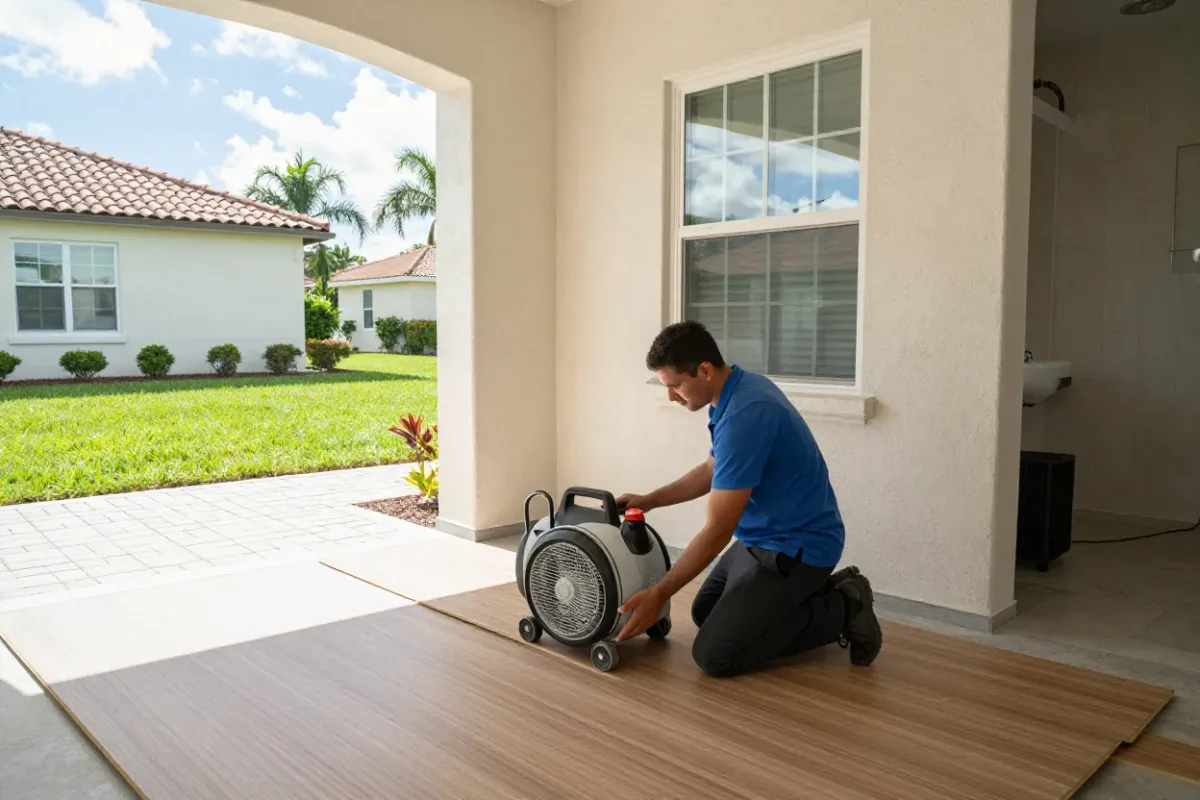
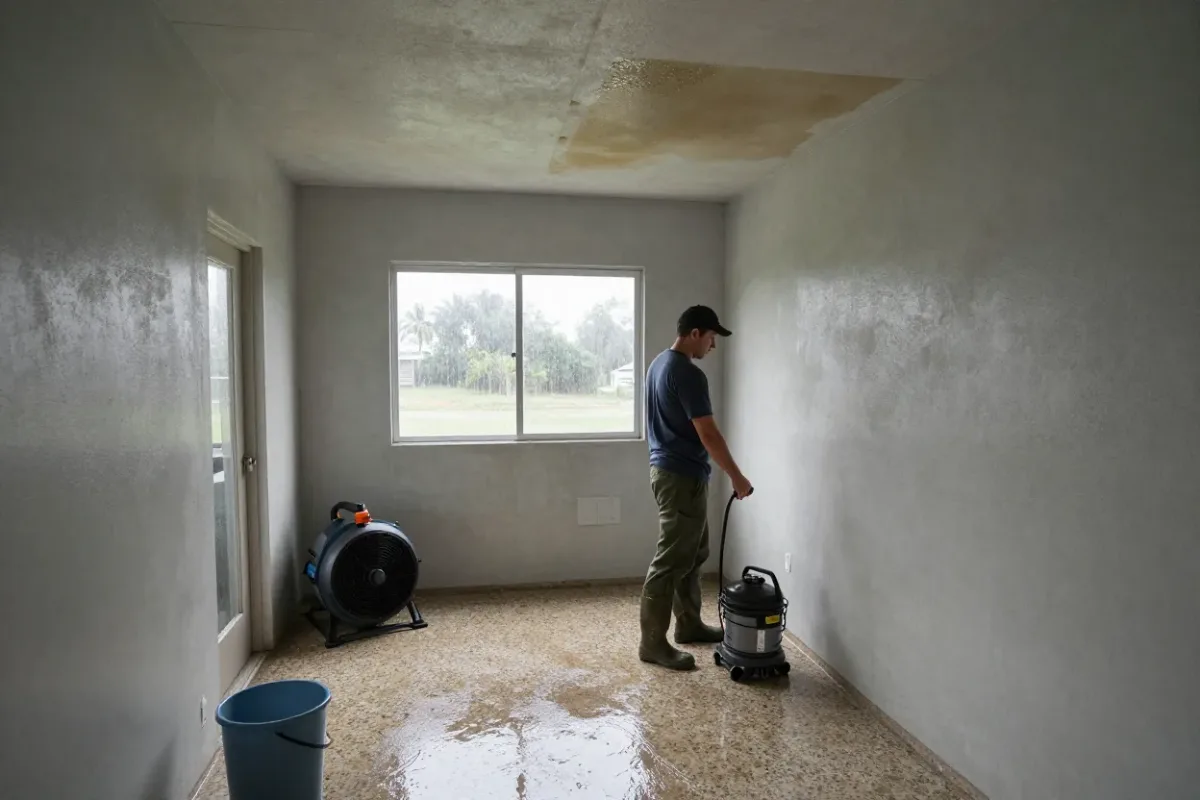
Miramar runs many miles east to west along the Miami-Dade county line but only a couple of miles north to south, and the two ends of the city could hardly be more different. The eastern quarter was built out from the mid-1960s, with the city's earliest homes being modest concrete flat-roofed houses; the western half is newer master-planned lake communities reaching toward the Everglades. The whole city sits only a few feet above sea level on drained wetland and depends on canals, lakes and regional water-control structures to keep dry. Water Damage Florida provides water damage restoration in Miramar 24 hours a day, at both ends of the city and everywhere between.
Being this far inland, Miramar's flooding comes from rain rather than surge, but the city participates in the National Flood Insurance Program's Community Rating System and points out that properties just outside mapped high-risk zones can still flood. Wind is a factor too: during Hurricane Irma in 2017 a tornado touched down near Miramar. Whatever put water in your home, call (888) 435-4769 and we will start a crew your way while we talk through the first steps.
Emergency Water Removal Across Miramar
The emergency calls from Miramar's east side tend to involve older plumbing and older roofs: a flat roof that finally let go in a summer thunderstorm, a slab leak that surfaced as a wet hallway, a water heater in a small utility closet, or a cast-iron drain that backed up. From the west side, the calls are more often about volume: a supply line on the second floor of a Sunset Lakes or Riviera Isles home that ran overnight and soaked the ceiling below, a laundry hose in Monarch Lakes, or street water that came over the driveway and into a Silver Falls garage during a stalled downpour.
Both kinds of loss need the same first visit. We pump and extract standing water, pull wet carpet and pad, take baseboards off so wall cavities can dry, and set air movers and dehumidifiers before leaving. We record moisture readings and photographs from the start so your claim opens with a clear record rather than a guess. Our emergency water damage page describes how those first hours go.
Restoration for Two Very Different Halves of One City
Restoring a home in eastern Miramar and restoring one in the western lake communities are different jobs. The older east-side houses, built from the mid-1960s and now the focus of the city's redevelopment programs, often have terrazzo or tile over slab, plaster or early drywall on block, and flat or low-slope roofs that hold water. Those materials tend to survive if we reach them early. The newer western homes typically have engineered wood or laminate floors, multiple stories, and finished ceilings under second-floor bathrooms, which means water travels farther before anyone notices.
The method is the same in both. After extraction, we map moisture with meters and thermal imaging, remove what cannot be dried, seal the space and run dehumidifiers and air movers with readings taken daily until each material meets its dry standard. Then we clean, treat where the water category calls for it, and rebuild. Our water damage restoration service page covers the scope in detail.
Heavy-Rain Flooding in an Inland City
Miramar does not get storm surge, but it was built on drained wetland at a few feet above sea level, and its stormwater has to be moved through canals, lakes and control structures managed with the South Florida Water Management District and the South Broward Drainage District. When rain arrives faster than the system can pass it along, water rises in the streets and swales, then into driveways, garages and the lowest rooms. The city's own guidance notes that homes just outside mapped high-risk flood zones can still take on water, and that matches what we see.
Street water is contaminated by the time it reaches a house, so flood cleanup means removing carpet, pad, the lowest section of drywall and any cabinet that stood in it, cleaning and treating the slab and block, and running air filtration through the drying period. Stay out of standing water in any room with outlets or appliances, and do not aim fans at it. Our flood restoration page and the first 24 hours after a flood guide have the next steps.
Repairing What the Water Damaged
Once the drying is verified, repair puts rooms back into service. On the east side that often means patching or replacing a section of ceiling below a roof leak, replacing the lowest drywall and baseboard, and repainting, while preserving terrazzo or tile that survived. On the west side it is more often a ceiling and wall below a second-floor bathroom, replacement of engineered flooring, base cabinets and trim, and paint to match.
We build the repair scope from the mitigation file, so your adjuster sees a clear line between what the water damaged and what was already there. When a roof or wind damage is part of the story, we dry and repair the interior while you arrange the exterior repair and document the path the water took for both claims.
Mold Cleanup in Miramar
In Miramar's older homes, mold most often follows a slow roof leak on a flat roof that stained a ceiling for months before anyone acted, or a slab leak that kept the base of a wall damp. In the newer western homes it follows a second-floor leak that was dried from the top while the ceiling cavity below stayed wet, or a laminate floor that was fanned dry on the surface with water still trapped underneath. Air handler closets and the backs of kitchen base cabinets show up in both.
Our mold removal runs in order: fix the moisture source, contain the area with plastic and negative air, remove affected drywall, flooring and cabinetry, HEPA-vacuum and clean what remains, and dry the space fully before rebuild. We do not spray and walk away. The mold remediation page explains the statewide process, and our guide to hidden mold after water damage covers the ceiling cavities and floor systems where it hides in two-story homes.
Common Causes of Water Damage in Miramar
Between mid-1960s housing on the east side, multi-story lake-community homes on the west and a drained-wetland setting a few feet above sea level, Miramar's water losses follow a recognizable pattern:
- Flat and low-slope roof leaks on older east-side houses during summer storms
- Second-floor bathroom and laundry supply line failures in western two-story homes, soaking the ceiling below
- Street and swale flooding from heavy rain when canals and lakes are near capacity
- Slab leaks and aging drain lines in homes from the mid-1960s
- Water heater tank failures in garages and utility closets
- Air conditioning condensate overflows in air handler closets
- Wind damage during tropical systems, including tornadoes, opening a home to rain
- Dishwasher and refrigerator line leaks that soak the back of kitchen cabinets
The Sequence We Follow
Every Miramar project moves through eight stages, and we do not skip ahead to rebuild because a wall feels dry.
- Inspection and moisture mappingWe identify the source, classify the water, and trace its reach through floors, walls and ceilings with meters and thermal imaging, including the rooms below a second-floor leak.
- ExtractionStanding water is pumped from garages and low rooms and extracted from carpet, pad and hard floors.
- Removal of what cannot be savedWet drywall, ceiling board, insulation, laminate and swollen cabinet bases are cut out and bagged so the cavities behind can dry.
- Drying and dehumidificationDehumidifiers and air movers run in a closed home with daily readings until each material reaches its dry target.
- Cleaning and treatmentSlabs and hard surfaces that contacted street water or sewage are cleaned and treated, with HEPA filtration running.
- DocumentationWe assemble the photo record, daily moisture logs, equipment list and written scope that your insurance carrier will ask for.
- RepairCeilings, drywall, baseboards, cabinets, flooring and paint are restored to match the rest of the home.
- Final verificationA last set of moisture readings and a walkthrough confirm the work is complete.
Miramar Neighborhoods We Serve
We cover the entire City of Miramar, from the older eastern neighborhoods near the county line to the lake communities in the west, and the areas around the Town Center in between.
Miramar Neighborhoods
- Sunset Lakes
- Silver Shores
- Silver Falls
- Riviera Isles
- Monarch Lakes
- Windsor Palms
- Nautica
- Harbour Lake Estates
- Country Club Ranches
- Miramar Isles
- Miramar Park
- Huntington
- Miramar Town Center
Nearby Communities
Because Miramar sits on the county line, our crews work both sides of it, and several of these neighboring communities have their own pages:
Safe Steps to Take Right Away
You can reduce the damage in the first hour without taking risks. Work through this list and leave the rest to us.
- Shut off the supplyClose the valve at the fixture or appliance, or the main shutoff if the source is unclear. For a second-floor leak, this stops the ceiling below from getting worse.
- Keep away from water near electricityDo not enter a wet room where outlets, cords or appliances may be in the water, and never touch a wet panel. Cut breakers only from a dry panel you can reach safely.
- Do not fan-dry street waterWater that came in from outside is contaminated. Fans spread it. Leave it until we arrive.
- Catch ceiling drips safelyIf a ceiling is dripping, place a bucket beneath it and move belongings out from under it. Do not poke or open a sagging ceiling yourself.
- Lift belongingsMove rugs, electronics, boxes and low cabinet contents off wet floors.
- Document everythingPhotograph the source, the water line and each affected room before anything is discarded.
- Call usReach Water Damage Florida at (888) 435-4769 with the source, the rooms and floors involved, and how long it has been wet.
If a storm opened your roof, our hurricane water damage recovery guide explains how to sequence the exterior fix and the interior drying.
Miramar Water Damage Questions
A leak upstairs in my western Miramar home stained the ceiling below. Is drying the floor enough?
No. The ceiling cavity between the floors holds water in the insulation and on top of the ceiling drywall, where it cannot evaporate on its own. We open and dry the cavity, or remove the ceiling board if it is saturated, and verify with readings before it is closed.
My east-side house has a flat roof and a stain that keeps growing. What should I expect?
A flat roof that ponds water usually leaks slowly for a long time, so the ceiling and the top of the wall below are often wetter than the stain suggests. We map the moisture, remove what is saturated, dry the framing and cavity, and repair the interior once the roof is fixed.
My home is not in a mapped high-risk flood zone. Can it still flood?
The city itself points out that properties just outside mapped zones can flood, and on drained wetland a few feet above sea level, a stalled downpour can put water in any low garage or doorway. If that happens, the cleanup is the same as for any flood: removal, cleaning, drying and verification.
What does the Hurricane Irma tornado near Miramar mean for my home?
It shows that tropical systems can open a roof or wall suddenly in an inland city. If wind damage lets rain into your attic or ceilings, the interior needs drying right away, because insulation and ceiling drywall hold moisture long after the storm passes.
Can laminate and engineered wood floors be dried in place?
Rarely. Water gets under them and cannot escape, and the boards swell or lift. Tile and terrazzo, common in the older east-side homes, usually can be dried in place when we arrive early.
Do you serve Pembroke Pines, Miami Gardens and Hialeah as well?
Yes. The same crews cover Pembroke Pines, Hollywood, West Park, Miami Gardens, Hialeah and Opa-locka, and we work statewide through our service areas.