Palmetto Bay occupies the western shore of Biscayne Bay in southern Miami-Dade County, a quiet village of mostly single-family homes between U.S. 1 and the water, with Old Cutler Road running through the middle. The village's own flood-hazard information is blunt: Palmetto Bay is susceptible to flooding from both major rain events and storm surge, and most properties are in or near FEMA Special Flood Hazard Areas. Water Damage Florida provides water damage restoration in Palmetto Bay 24 hours a day, whether the water came from the bay, the canal or a pipe inside the house.
Two storms define what residents here worry about. Hurricane Andrew caused particularly extensive destruction in this part of the county in 1992, and Hurricane Irma's surge in 2017 produced three to five feet of inundation along the Biscayne Bay shoreline south of downtown Miami. Between storms, the everyday losses are the same as anywhere: supply lines, water heaters, air handlers and roof leaks. Call (888) 435-4769 at any hour and we will start a crew toward you while we walk through what to do first.
Emergency Response for Palmetto Bay Homes
An emergency in Palmetto Bay might be a water heater flooding a utility room in Rockdale at two in the morning, a canal-side yard in East Perrine turning into a pond during a stalled thunderstorm, or a bayfront home in Cutler with salt water across the ground floor after a surge event. The first response is the same: stop what can be stopped, remove the water, and begin drying before the humid air and warm temperatures give microbial growth a foothold.
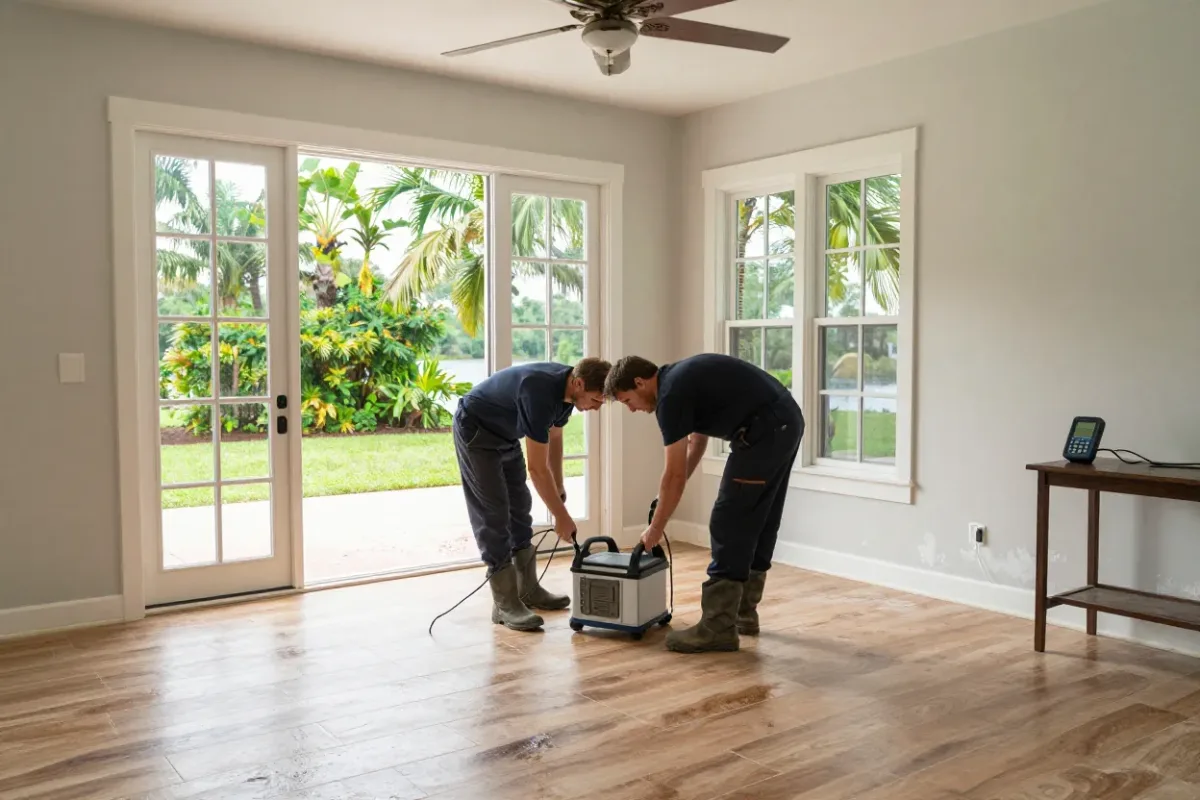
Our crews carry portable extraction equipment and submersible pumps, along with the air movers and dehumidifiers needed to start drying on the first visit. When a whole street is affected after a storm, we stage equipment so multiple homes can be worked in sequence rather than leaving neighbors waiting. Moisture readings and photographs begin at the door, because a claim that starts with a documented moisture map moves faster than one that starts with a memory of how wet things were.
Full Restoration, Not Just a Cleanup
Extraction gets the visible water out; restoration deals with the water you cannot see. In a slab-built Palmetto Bay home, moisture wicks up into drywall, migrates under tile and wood flooring, soaks the insulation behind finished walls and settles into the bottom of cabinets. We map all of it with meters and thermal imaging before deciding what dries in place and what comes out. Concrete block and slab generally recover; drywall, base cabinets and engineered flooring often do not once they have been wet for more than a short time.
Because outdoor air along the bay carries so much moisture, drying happens inside a closed house with dehumidifiers sized to the space, not with open windows. We log readings every day and compare them against dry standards for each material. Cleaning, treatment where the water category calls for it, and rebuilding follow only when those numbers hold. Our statewide water damage restoration service page explains the scope of work in more detail.
Storm Surge and Canal Flooding in Palmetto Bay
Flooding reaches Palmetto Bay from two directions. From the east, storm surge off Biscayne Bay can push salt water into homes along the shoreline, as Hurricane Irma did in 2017 with several feet of inundation along this stretch of coast. From within, local stormwater drains into the C-100 series of the Cutler Drain Canal, managed by the South Florida Water Management District, and when heavy rain exceeds what the canals and drainage pipes can carry, water backs up into streets and yards.
Salt water and canal water are both treated as contaminated, and salt water is also corrosive. Flood cleanup here means removing wet drywall, insulation, carpet and pad rather than trying to dry them, cleaning and disinfecting the slab, block and hard surfaces, flushing silt out of garages and ground-floor rooms, and running air filtration through the drying period. Metal fixtures, appliances and electrical components that stood in salt water should be inspected before they are put back into service. Our flood restoration page and the first 24 hours after a flood guide cover what to expect.
Repair After Water Damage in Palmetto Bay
Repair begins once the moisture logs confirm the structure has reached its dry target. On a surge or canal loss, that usually means a new lower section of drywall and baseboard through the affected rooms, replacement of kitchen and bathroom base cabinets that sat in water, new flooring where the old floor failed, and paint. On an interior plumbing loss, the scope is often narrower: one wall, one closet, one section of floor.
We build the repair scope from the same photos and readings gathered during mitigation, so the line between water damage and pre-existing conditions is clear to you and to your adjuster. Palmetto Bay's homes are largely single-family, which simplifies access, but many sit on generously landscaped lots; we plan equipment placement and debris staging to protect the yard and driveway as much as the interior.
Mold Cleanup on the Bay
Homes close to Biscayne Bay live with salt air and high humidity all year, and a wall that was ever wet does not need much encouragement to grow mold. After a flood, the usual places are the back of the lowest drywall course, the underside of base cabinets, the insulation in exterior walls and the interior of closets that were closed during the drying period. After a plumbing leak, it is the wall shared by a bathroom and a bedroom, or the floor of an air handler closet.
Our mold removal process is containment first, then removal of affected porous materials, HEPA vacuuming and cleaning of what remains, and complete drying before reconstruction. We correct the moisture source before any of that, because growth returns to a damp wall no matter how well it was cleaned. The mold remediation page covers our approach statewide, and this guide to hidden mold is worth reading before you repaint a wall that was wet during a storm.
Common Sources of Water Damage in Palmetto Bay
A bayfront location, a canal-fed drainage system and the ordinary plumbing of single-family homes combine to produce a predictable set of water damage calls in Palmetto Bay:
- Storm surge from Biscayne Bay entering shoreline homes, garages and ground floors during hurricanes
- Backups and overflow from the Cutler Drain Canal (C-100) system when heavy rain exceeds drainage capacity
- Street and yard flooding during major rain events, with water entering through doors and garages
- Roof and window leaks from wind-driven rain
- Water heater and washing machine hose failures
- Air conditioning condensate overflows in homes that run cooling nearly year-round
- Corroded or failed supply lines in homes exposed to salt air
- Pool and irrigation line breaks that saturate the ground against the foundation
Our Step-by-Step Process
Every Palmetto Bay project moves through the same eight stages. The order protects the outcome: nothing is rebuilt until the drying is proven.
- Inspection and water classificationWe find the source, classify the water as clean, gray or contaminated (bay and canal water always count as contaminated), and map the wet area with meters and thermal imaging.
- Pumping and extractionSubmersible pumps clear deep water in garages and low rooms, followed by extraction of water from floors, carpet and the base of walls.
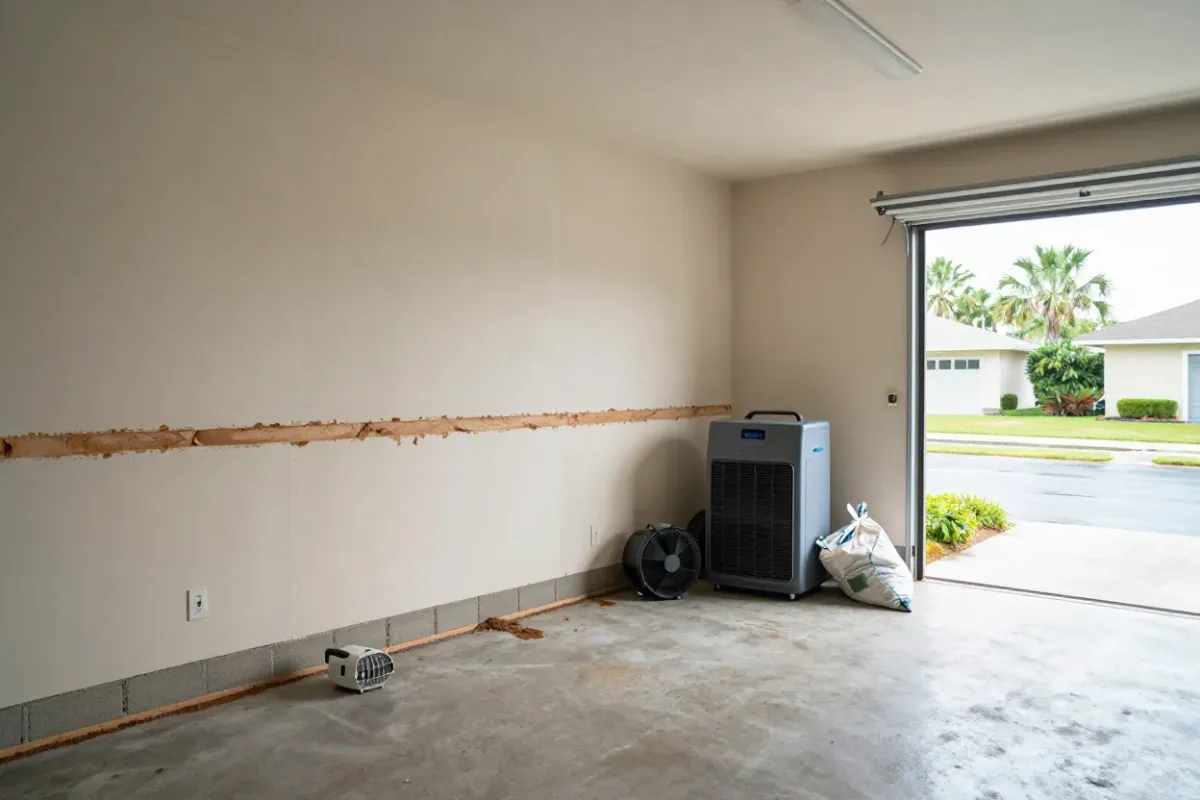
- Tear-out of unsalvageable materialsDrywall, insulation, cabinets and flooring that were saturated or touched by surge or canal water are removed and bagged.
- Structural dryingDehumidifiers and air movers run inside the closed home while daily readings track every affected material to its dry target.
- Cleaning, disinfecting and silt removalSlabs, block walls and hard surfaces are cleaned and treated, silt is flushed out, and HEPA air filtration runs throughout.
- Claim documentationA photo record, moisture logs, equipment records and a written scope are compiled for your insurance carrier.
- ReconstructionDrywall, baseboards, cabinetry, flooring and paint are replaced to match the rest of the home.
- Verification walkthroughFinal moisture readings and a walkthrough with you confirm the home is dry and the work is complete.
Palmetto Bay Areas We Serve
We serve the entire Village of Palmetto Bay, from the bayfront along Old Cutler Road to the neighborhoods west toward U.S. 1, including the former Cutler and East Perrine areas the village was created from.
Palmetto Bay Neighborhoods
- Cutler
- East Perrine
- Rockdale
Nearby Communities
The same crews cover the communities around Palmetto Bay in southern Miami-Dade, and several have their own service pages:
What to Do While You Wait for Us
These steps are safe for a homeowner and make a real difference in how much can be saved. Skip anything that would put you in contact with flood water or electricity.
- Stop the water if the source is insideClose the fixture shutoff or the main valve. If water is coming from the bay, the canal or the street, there is nothing to shut off; focus on the steps below.
- Treat surge and canal water as unsafe to touchKeep everyone, including pets, out of it. Do not wade through it to retrieve belongings and do not try to clean it up yourself.
- Leave electricity alone if anything is wetNever step into water to reach a breaker panel or unplug an appliance. If the panel is dry and reachable on dry floor, you may switch off the affected circuits.
- Raise what you can from dry groundMove electronics, documents and furniture out of wet rooms if you can do so without entering the water.
- Take photos and videoRecord the water line on the walls, the source if visible, and every affected room before cleanup begins.
- Keep the house closed and the AC runningCool, conditioned air slows mold growth far better than open windows in bayside humidity, provided the system is safe to run.
- Call Water Damage FloridaDial (888) 435-4769 and tell us whether the water is from inside or outside, how deep it got and which rooms are affected.
After a hurricane, our hurricane water damage recovery guide explains what the first week of recovery usually looks like.
Palmetto Bay FAQs
Salt water from the bay got into my ground floor. What has to be replaced?
Porous materials that salt water reached, including drywall, insulation, carpet, pad and most base cabinets, are removed rather than dried. Slabs, block and tile are cleaned and treated. Appliances, outlets and metal fixtures that stood in salt water should be inspected because salt keeps corroding after the water is gone.
The canal behind my house overflowed but the water never came inside. Should I still call?
It is worth a moisture check. Water that stood against the exterior walls or under a door can wick into the slab edge and the lowest drywall without ever pooling visibly inside. A quick survey with meters tells you whether there is anything to dry.
Most of Palmetto Bay is in or near a flood hazard area. Does that affect your work?
It affects how we document. Homes in mapped flood zones often carry separate flood coverage with its own adjuster and requirements, so we record water lines, sources and material removal carefully and keep flood-related and non-flood-related damage distinguishable in the file.
How long does drying take after a flood?
It depends on how much material was removed and how long things were wet. Once the saturated materials are out, the remaining structure usually dries over a period of days, and we confirm it with readings rather than guessing.
Can you help with a plumbing leak, not just storm damage?
Yes. Most of our calls in any given month are interior losses: supply lines, water heaters, air handlers and shower pans. The process is the same, with far more material typically saved because the water is clean.
Do you serve the communities around Palmetto Bay too?
Yes. Our southern Miami-Dade crews cover Cutler Bay, Pinecrest, Kendall, Palmetto Estates, West Perrine and the surrounding area, and we work across the state through our service areas.