Homestead sits at the far southern end of Miami-Dade County, between Biscayne National Park to the east and Everglades National Park to the west, with the Redland farming district around it and Homestead Air Reserve Base on its eastern edge. The city is very flat and only a few feet above sea level, and its own flood information page does not soften the picture: storm surge from hurricanes and tropical storms is the primary threat because of the closeness of Biscayne Bay, tidal flooding affects low coastal spots, heavy rain can overwhelm the canals and the urban drainage system where pavement has replaced absorbent ground, and every property in the city falls in some FEMA-mapped flood zone.
Water Damage Florida provides water damage restoration in Homestead 24/7, from emergency water extraction in a flooded townhome to structural drying, mold removal and rebuild after a storm. Whether you live in one of the post-Andrew master-planned communities or in the older downtown along Krome Avenue, call (888) 435-4769 and we will start a crew south.
Emergency Response at the Southern End of the County
Homestead is the last city before the Keys, and when a storm threatens it is often the first to feel it. The emergency calls we get here after weather tend to involve water that came in from outside: surge or tidal water in a garage near the bay side, rain through a roof or a garage door, canal water rising into a yard and then a lanai. The rest of the year, the calls are the ones every growing city produces, such as a supply line failing in a newer two-story home, a water heater in a garage closet, or a slab leak under an older house downtown.
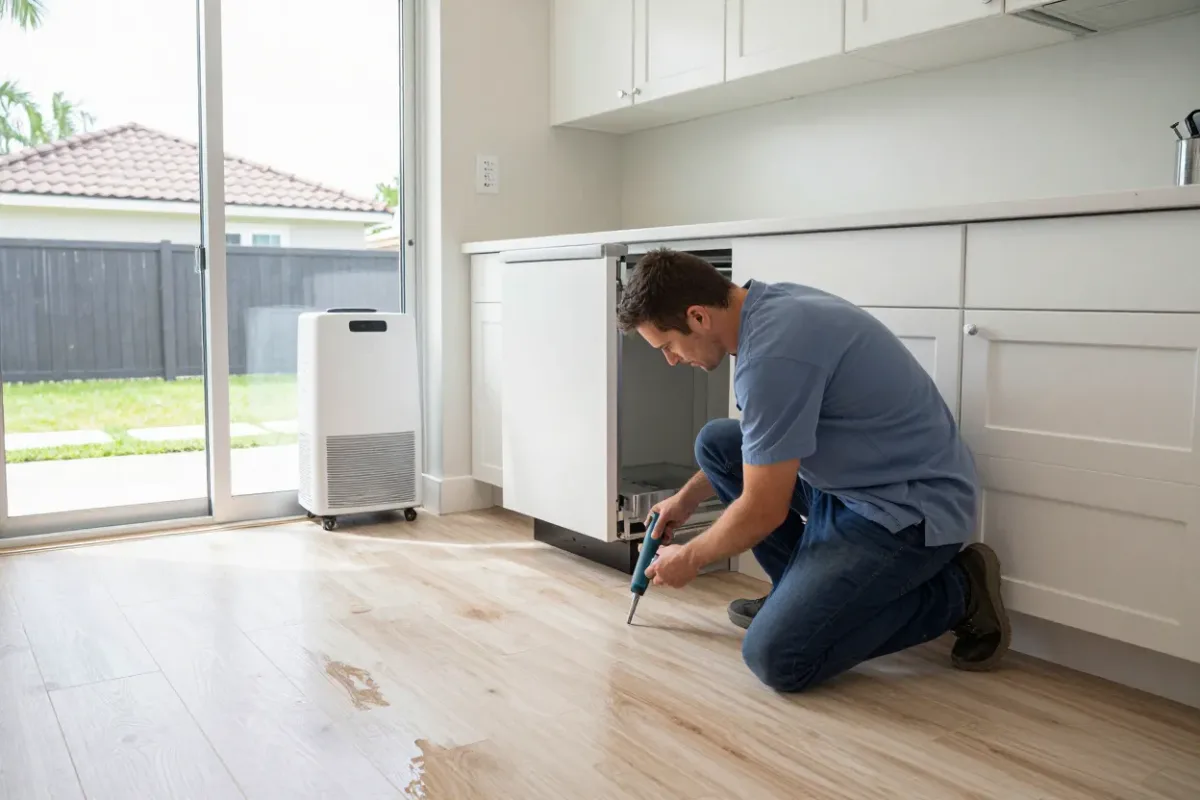
Our crews respond with pumps, extraction units and drying equipment so the first visit accomplishes real work rather than a look. We stop plumbing sources, pump and extract standing water, pull carpet and pad, and begin mapping moisture through walls and cabinets. Photos and readings are documented from the start so your claim has a clear record.
Restoration in Post-Andrew Subdivisions and Downtown
Homestead's housing tells its own story. Hurricane Andrew destroyed nearly all of the city's mobile homes in 1992 and devastated the town and the former air force base, and much of today's housing consists of subdivisions and master-planned communities built afterward to modern codes, alongside the older historic downtown along Krome Avenue. In the newer homes, restoration usually centers on drywall, insulation, wood-look tile and laminate, kitchen cabinets, and the second-floor bathrooms whose leaks show up on the ceiling below. Downtown, we work around older block construction, plaster and long-standing commercial buildings.
After extraction, we decide what dries in place and what must come out, then dry the building closed up with air movers and dehumidifiers sized to the space, taking readings daily until each material meets its dry standard. Our water damage restoration service page explains the standards we apply everywhere in the state.
Flood and Storm Surge Cleanup in Homestead
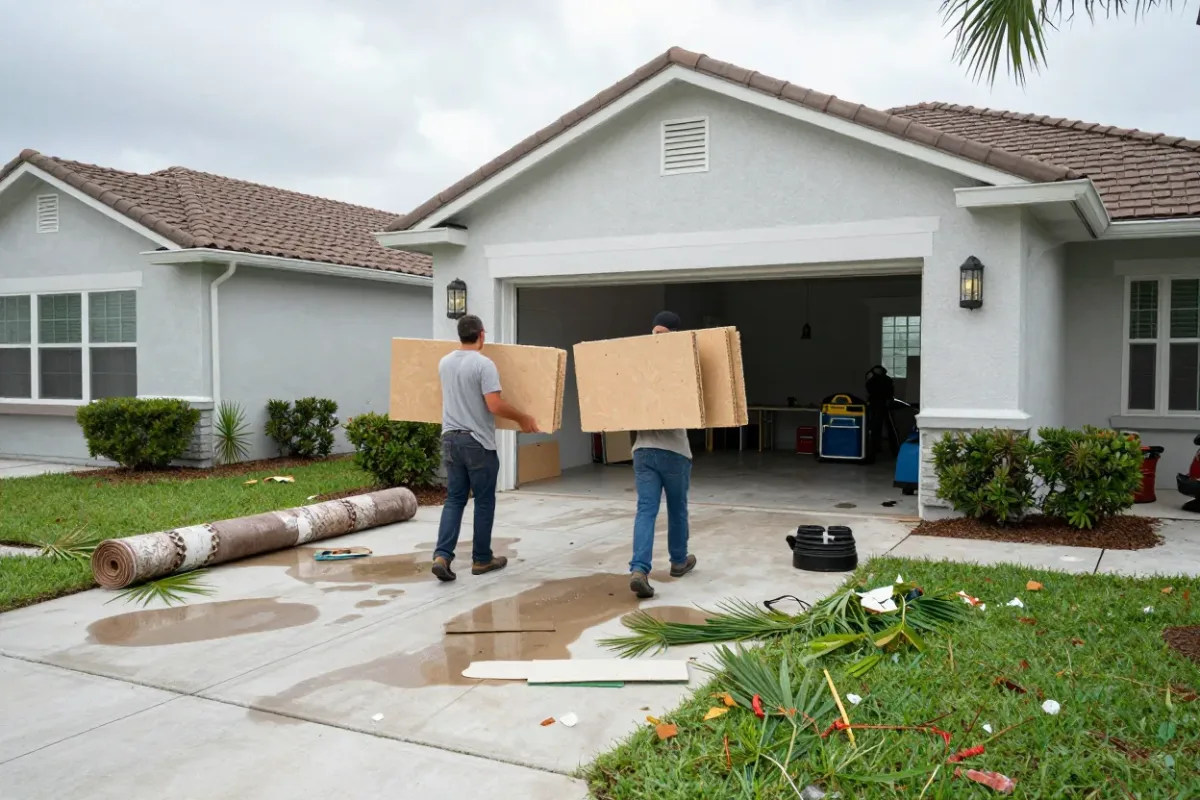
Hurricane Andrew made landfall in this area in 1992 and remains the reference point for everything the city plans for. Since then, Hurricane Katrina in 2005 and Hurricane Irma in 2017 both caused flooding in the city. The threats the city names are the ones we clean up after: surge and tidal water on the bay side, and rain that exceeds the capacity of the canals and street drains inland. Both leave contaminated water behind, and both find the low points of a house first: the garage, the lanai, the ground-floor rooms and the walls that sit on the slab.
Our flood cleanup removes the water and then removes what it ruined, including carpet, pad, saturated drywall, insulation and cabinets that stood in it. Hard surfaces are cleaned and disinfected, air filtration runs during the work, and the shell is dried with equipment before anything new goes in. After a wide storm we prioritize homes where a family is trying to stay in place, and we tell you honestly whether that is possible.
Rebuilding After Water Damage
Repair in Homestead's newer neighborhoods generally means new lower drywall and baseboards, replacement of failed flooring, rehanging or replacing kitchen and bath cabinets, ceiling work under second-floor bathrooms, and paint. In homes that took storm water through a roof or a garage door, we also address insulation and check that the framing and sill plates are dry and sound before closing anything.
Every repair scope is tied to the mitigation photographs and moisture logs so the adjuster can see exactly what the water affected. For businesses on Krome Avenue and the commercial corridors, we sequence the rebuild to get the customer-facing space back first.
Mold Removal in Homestead Homes
In a warm, humid city at the edge of the Everglades, materials that stay wet grow mold. In Homestead we most often find it behind the lowest course of drywall after storm water, inside kitchen and bath cabinets after a slow leak, on the ceiling drywall below an upstairs bathroom, and in the garage wall shared with a bedroom. Growth often appears weeks after the water event that caused it, once the surface looked dry but the cavity was not.
Our mold removal is done under containment with negative air, removes and bags the affected materials, HEPA-vacuums and cleans what remains, and dries the space before repair, and it always includes fixing the moisture source. More on the method is on our mold remediation page, and our note on hidden mold after water damage explains why a dry-looking wall can still be a problem.
Why Homestead Properties Get Water Damage
A bayfront position, flat ground at the edge of two national parks, and a housing stock of mostly newer subdivisions shape the sources we see. The most common:
- Storm surge and tidal water reaching garages and ground floors near the bay side during hurricanes and tropical storms
- Heavy, prolonged rain overwhelming the canals and street drains, especially where pavement has replaced absorbent ground
- Roof, soffit and garage door failures in high wind, letting rain into attics and garages
- Supply line, water heater and second-floor bathroom leaks in two-story subdivision homes
- Dishwasher, washing machine and ice-maker line failures
- Air conditioning condensate line clogs and overflowing drain pans
- Slab and under-slab pipe leaks in older downtown buildings
- Sewer backups when the drainage system is saturated
Step-by-Step: What Restoration Looks Like
From a leaking dishwasher in Waterstone to surge in a garage near the bay, the work follows the same eight steps in the same order.
- Inspection and moisture mappingWe locate the source, classify the water, and map every wet material with meters and thermal imaging, including cabinets, ceilings below upstairs baths, and slab readings.
- Water extractionPumps clear garages and low rooms; extractors pull water from carpet, pad and hard flooring.
- Removal of ruined materialsSaturated drywall, insulation, carpet, pad and cabinets that cannot dry are removed and bagged so the structure can breathe.
- Drying and dehumidificationAir movers and dehumidifiers run in the closed house, with daily readings until the dry standard is reached.
- Cleaning and sanitizingSurfaces touched by surge, canal or gray water are cleaned and treated, and HEPA air scrubbers run throughout.
- Documentation for the claimPhotos, moisture logs and a written scope go to you and your insurance carrier.
- RepairDrywall, trim, flooring, cabinets and paint are restored to match the home.
- Final checkA closing round of moisture readings and a walkthrough confirm the job is done.
Homestead Communities We Serve
We cover all of Homestead, from the master-planned communities on the east and south sides to the historic downtown and the streets out toward the Redland. Our crews arrive equipped for both modern two-story construction and the older block buildings near Krome Avenue.
Homestead Neighborhoods
- Keys Gate
- Waterstone
- Oasis
- Portofino
- Malibu Bay
- Baywinds
- Audubon
- Downtown Homestead
Nearby Communities
The same crews serve the farm country and the communities north along the bay and south toward the Keys. Several have their own pages:
Homeowner Steps Before We Arrive
In the first hour, these actions protect your home and your safety. Do nothing that would put you in the water.
- Shut off the plumbing sourceClose the fixture valve or the main. If the water is from a storm, there is no valve to close; move on.
- Keep away from water near powerDo not step into a flooded garage or room where the water heater, outlets or cords may be submerged. Only turn off a breaker if the panel is dry and you can reach it without entering water.
- Treat surge and canal water as contaminatedIt carries salt, silt and everything the drains collected. Keep your family and animals away from it; our crew will deal with it.
- Get belongings up and outMove rugs, boxes, electronics and furniture to a dry room or onto blocks.
- Photograph before you touchCapture the source, the water line and each affected room and item.
- Keep the house closed with the AC onIf power is available, conditioned air slows mold; open windows bring in humidity.
- Call (888) 435-4769Give us the source, the rooms affected, whether storm water was involved and how long it has been wet.
Before a storm, read our hurricane water damage recovery guide; after one, the first 24 hours after a flood checklist walks you through the day.
Homestead Water Damage FAQs
My home was built after Andrew. Does that mean it handles water better?
Post-Andrew construction is built to a stronger wind code, which helps keep roofs on. It does not make drywall, insulation, cabinets or laminate flooring waterproof. Once water is inside, a newer home needs the same extraction and verified drying as an older one.
Every property in Homestead is in a flood zone. Does that change what you do?
It changes what you should expect. Flood water from surge or canals is contaminated and requires removal of porous materials rather than drying in place. It also means your flood and homeowner policies may respond differently, so our documentation separates what the water did from what caused it.
Do you come out after a hurricane when the whole city is affected?
Yes. Our crews are statewide, so we bring in people and equipment from outside the affected area. After a wide storm we prioritize occupied homes and properties where water is still inside.
The ceiling under my upstairs bathroom is stained. Is that water damage or just an old mark?
Meter it before you paint it. A stain that reads wet or that grows after showers points to an active leak in the bath above, and the ceiling cavity may already hold moisture. We open, dry and repair those routinely.
Can you dry a home in the Redland or outside the city limits?
Yes. We serve the surrounding communities and farm country as well as the city proper.
What do you give me for the insurance claim?
Photographs, daily moisture logs and a written scope of the mitigation and repair. The claim itself stays in your hands, and we answer the adjuster's questions when asked.