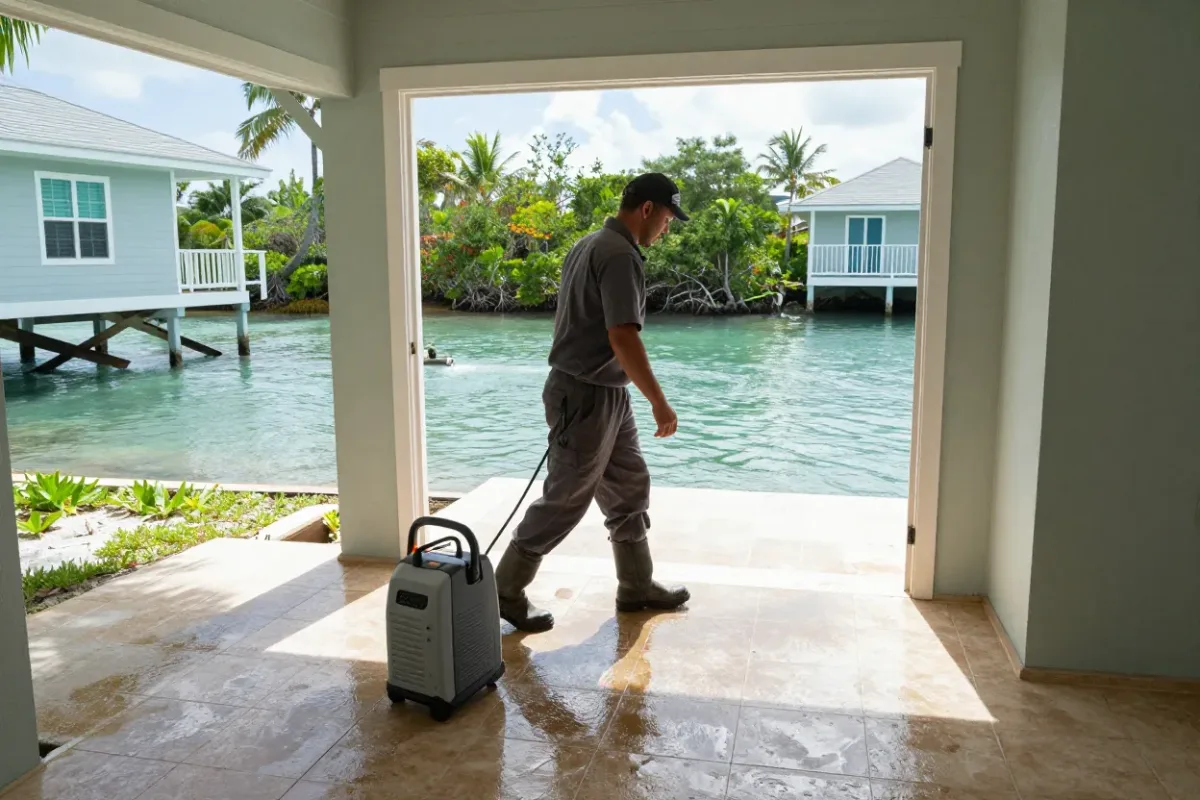
Key Largo is the first and largest island of the Upper Keys, an hour south of Miami on the Overseas Highway, and almost everything about water damage here is shaped by how little land separates a home from the sea. The community sits only a few feet above sea level, its highest ground is a low ridge along the island's spine, and much of the housing lines canals and shorelines facing either Florida Bay or the Atlantic. When water gets into a house here, it is often salt water, it is always accompanied by humidity, and there is a fair chance nobody is home to notice. Water Damage Florida provides 24/7 water damage restoration for Key Largo, from one flooded ground level to a whole-house dry-out after a storm.
Because nearly forty percent of the housing here is seasonal or vacant, many of our Key Largo calls come from owners who are far away, from property managers walking a rental before a guest arrives, or from a neighbor who saw water running out from under a door. We can meet a caretaker, photograph everything for an absent owner, and keep you informed by phone and email while the work is done. Call (888) 435-4769 at any hour and we will start a crew toward the Keys.
Emergency Response for Island Homes and Rentals
An emergency in Key Largo rarely looks like one on the mainland. It is more often a water heater or washing machine hose that failed in a closed-up vacation home and ran for days, a ground-level enclosure that took canal water on a windy king tide, or wind-driven rain through a sliding door track during a tropical system. The moisture has had time to soak into cabinets, closets and the lowest course of drywall before anyone calls, so our first job on arrival is to find the true extent of the wetting, not just the visible puddle.
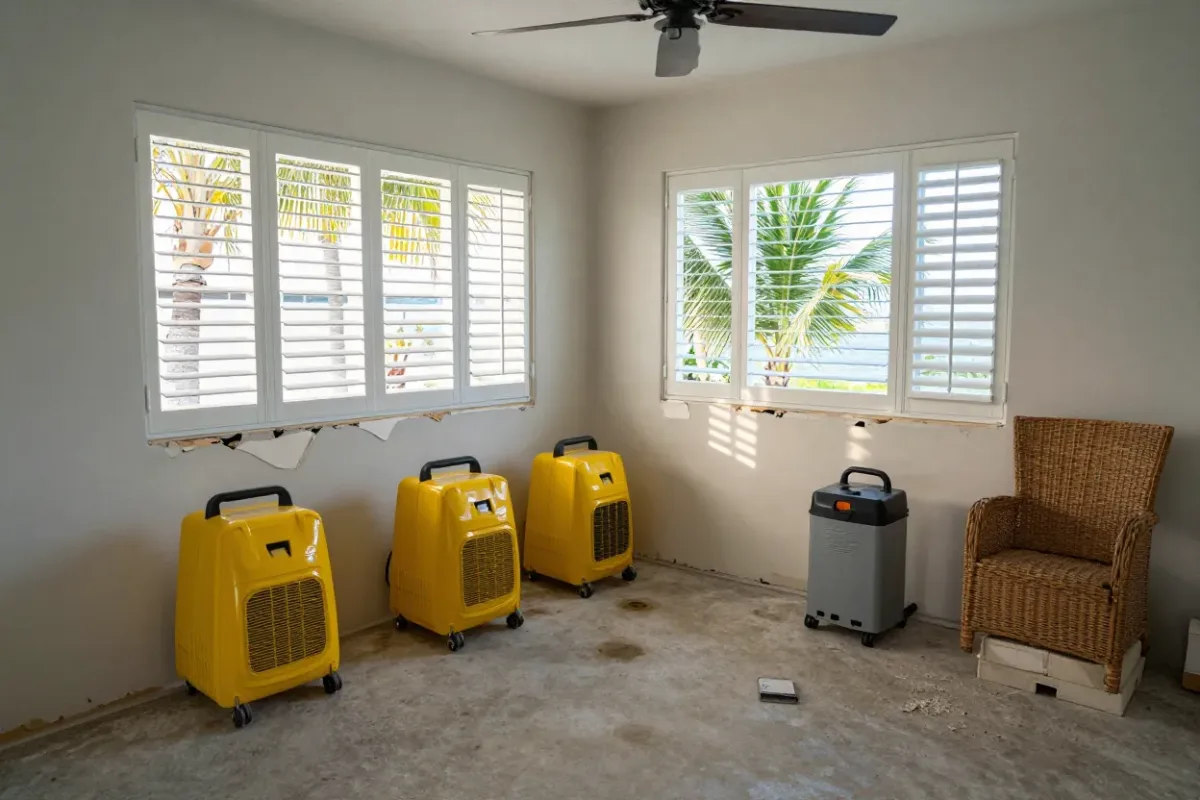
Crews come to the island with submersible pumps for flooded ground levels, portable extractors for interior rooms, and air movers and dehumidifiers so drying begins on the first visit rather than after a second trip down the highway. If salt water is involved we also plan for rinsing and corrosion control on fixtures and hardware. Our emergency water damage page explains what happens in the first hours and what we need to know when you call.
Restoring Waterfront and Elevated Homes in the Upper Keys
Restoration on Key Largo means working with a housing mix that ranges from older ground-level concrete-block houses to newer elevated homes with enclosed space below. Elevated homes tend to lose their lower enclosures first; ground-level homes take water straight through the door. We map every wet material with moisture meters and thermal imaging, decide what can be dried in place, and remove only what genuinely cannot be saved. Cabinet toe-kicks, laminate flooring, wet insulation and the bottom two feet of drywall are the usual casualties; block walls and slab floors typically dry well once the finishes are opened up.
Drying a house in the Keys is a closed-building operation. Outside air is humid year-round, so we run refrigerant dehumidifiers with the house shut, size the equipment to the space, and log readings daily until each material reaches its dry standard. For seasonal owners we handle this without anyone needing to be present, then send the moisture log and photos before the rebuild starts so decisions about finishes can be made from wherever you are.
Surge and Tidal Flood Cleanup in Key Largo
The community's flood history is defined by Hurricane Irma in 2017, which pushed four to six feet of surge inundation into the Upper Keys, badly flooded homes near Largo Sound and along the ocean side, and left the area south of Key Largo without power, water or sewer for a time. But flooding here is not only a hurricane event. Streets have held standing seawater for weeks when seasonal king tides combine with persistent winds off Florida Bay, and the Keys are described as among the most sea-level-rise-vulnerable communities in the country. Even with the offshore barrier reef providing real surge protection, seawater at the doorstep is a recurring fact of life on the island.
Seawater is treated as contaminated water, and salt adds a corrosion problem on top of the usual ones. Flood restoration after surge or tidal intrusion means pumping out what remains, removing saturated porous materials rather than trying to dry them, rinsing salt residue from block and slab, cleaning and disinfecting hard surfaces, and inspecting the electrical components, appliances and metal hardware the water reached. Boats and lifts are outside our scope, but the storage rooms, garages and ground-floor enclosures beside them are exactly where we spend the most time after a storm.
Water Damage Repair Once the Structure Is Dry
Repair begins only after moisture readings confirm the structure is dry; rebuilding over damp block or framing in this climate is how a house ends up smelling musty a month later. Typical Key Largo repairs include replacing cut drywall and baseboards, rehanging or replacing lower cabinets, reinstalling flooring, repainting, and replacing doors and trim that swelled in the humidity. In elevated homes we also rebuild the finishes in lower enclosures, which take the brunt of surge and are often the first thing an owner sees on return.
We coordinate the repair scope with your adjuster using the moisture logs and photographs gathered during mitigation, so there is a clear line between what the water did and what was there before. For rentals we schedule around bookings, and for second homes we can finish the rebuild and send a final walkthrough by video.
Mold Removal in Seasonal and Year-Round Homes
A house that sits closed and unoccupied in the Keys, especially one where the air conditioning was set high or switched off to save money, gives mold everything it needs after even a small leak. On the island the usual trouble spots are the drywall behind bathroom tile, the backs of kitchen base cabinets, closets sharing a wall with the air handler, and the lowest drywall in any ground-level room that ever took tidal water.
Our mold remediation approach is to correct the moisture source first, contain the affected rooms with plastic sheeting and negative air, remove and bag the contaminated porous materials, HEPA-vacuum and clean what remains, and dry the space fully before anything is rebuilt. We do not paint over growth. If a room in your home was ever wet and simply dried on its own, read about where hidden mold forms after water damage before the next repaint.
Why Homes on the Island Get Water Damage
The pattern of losses in this community follows its geography and its ownership: a low island between Florida Bay and the Atlantic, houses on canals and shorelines, and a large share of homes that sit empty for months at a time. The sources we see most often include:
- Seawater surge and king-tide flooding into ground-level rooms, garages and enclosures below elevated homes
- Supply lines, water heaters and appliance hoses that fail in unoccupied seasonal homes and run unnoticed
- Wind-driven rain through sliding glass door tracks, windows and roof penetrations during tropical systems
- Air conditioning condensate line clogs and drain pan overflows in homes running cooling year-round
- Humidity damage when the AC is shut off or fails while a house sits closed for the season
- Roof and flashing failures after storm winds, discovered only when the ceiling stains
- Slow leaks under sinks and behind refrigerators in rental units that turn over frequently
How a Key Largo Water Damage Job Runs
Every project follows the same sequence whether the owner is standing in the driveway or watching from another state. The order protects both the house and the insurance claim.
- Inspection and moisture surveyWe locate the source, classify the water as clean, gray or seawater, and map the full extent of wetting with meters and thermal imaging, including enclosures and closets that look dry.
- Pumping and extractionSubmersible pumps clear flooded ground levels and garages; portable extractors pull water from tile, carpet and pad inside the living space.
- Removing what cannot be savedSaturated drywall, wet insulation, swollen cabinet bases and flooring that will not dry are cut out and bagged so the block and framing behind them can breathe.
- Closed-building dryingAir movers and refrigerant dehumidifiers run with the house shut against Keys humidity, and readings are logged daily until every material meets its dry standard.
- Cleaning and salt removalSurfaces touched by seawater or contaminated water are rinsed, cleaned and treated, and air filtration runs while the work is done.
- Documentation for the claimPhotos, the moisture log and a written scope are compiled and sent to you and your carrier, which matters most when the owner could not be on site.
- RebuildDrywall, trim, cabinets, flooring, doors and paint are restored to match the rest of the home.
- Final moisture checkA last set of readings and a walkthrough, in person or by video, confirm the house is dry and ready for you or your guests.
Where We Work on Key Largo
We serve the whole Key Largo community, from the bayside canal subdivisions facing Florida Bay to the oceanside streets near Largo Sound and the reef, and the quieter stretches toward North Key Largo and Tavernier.
Nearby Communities
Our Keys crews also cover the neighboring islands and the South Miami-Dade communities on the mainland side of the Overseas Highway. Several of these have their own pages:
If You Find Water in Your Home
Whether you are standing in the house or hearing about it from a caretaker, these steps limit the damage without putting anyone at risk.
- Shut off the supply if it is a plumbing leakClose the fixture valve or the main at the house. If you are away, ask your property manager or neighbor to do this first.
- Keep out of water that may be energizedDo not walk into a flooded ground level or garage if outlets, cords, a pump or the panel could be touching water. Only switch off breakers at a panel that is dry and reachable without stepping in water.
- Treat canal and bay water as contaminatedSeawater carries silt, fuel and sewage after a storm. Keep people and pets out of it and do not try to clean it with household fans or mops.
- Raise what you canLift furniture, rugs and electronics off wet floors and put foil or blocks under pieces that must stay.
- Photograph before touchingTake wide and close photos of the water line, the source and each affected room, and note the date and time you found it.
- Leave the air conditioning onCool, dry air slows microbial growth; do not open the house to humid outside air while you wait.
- Call and tell us who will meet the crewReach us at (888) 435-4769 with the source, how long it has likely been wet, and how we will get in if you are off the island.
Before a storm, read our hurricane water damage recovery guide; after one, the first 24 hours after a flood checklist covers what to do while you wait for the roads to reopen.
Key Largo Water Damage Questions
I live out of state and my Key Largo house has a leak. Can you handle it without me there?
Yes. We routinely work with caretakers, property managers and neighbors for access, document everything with photos and moisture logs, and keep you updated by phone and email. You approve the scope remotely and we send a final walkthrough by video.
Seawater got into our ground-floor enclosure during a king tide. Is that a real water damage job?
It is. Salt water is contaminated and corrosive, so porous materials it touched need to come out, block and slab need to be rinsed and dried, and any electrical, appliances and hardware it reached should be inspected. Waiting for it to dry on its own is how an enclosure ends up with mold and rust.
Our home was flooded during Hurricane Irma and repaired. Should we worry about anything now?
If drying was verified with moisture readings before the walls were closed, usually not. If the repair was rushed, a musty smell, soft baseboards or staining near the floor are reasons to have the lower wall cavities checked.
How long will drying take in this humidity?
Most clean-water losses dry in a few days once the house is closed and equipment is running; seawater and long-unnoticed leaks take longer because more material has to be removed first. We give you a timeline after the moisture mapping and adjust it against the daily readings.
Can you also help with the rental unit next door that took water from the same storm?
Yes. We can assess neighboring properties on the same trip and document each one separately so every owner has their own record for their own claim.