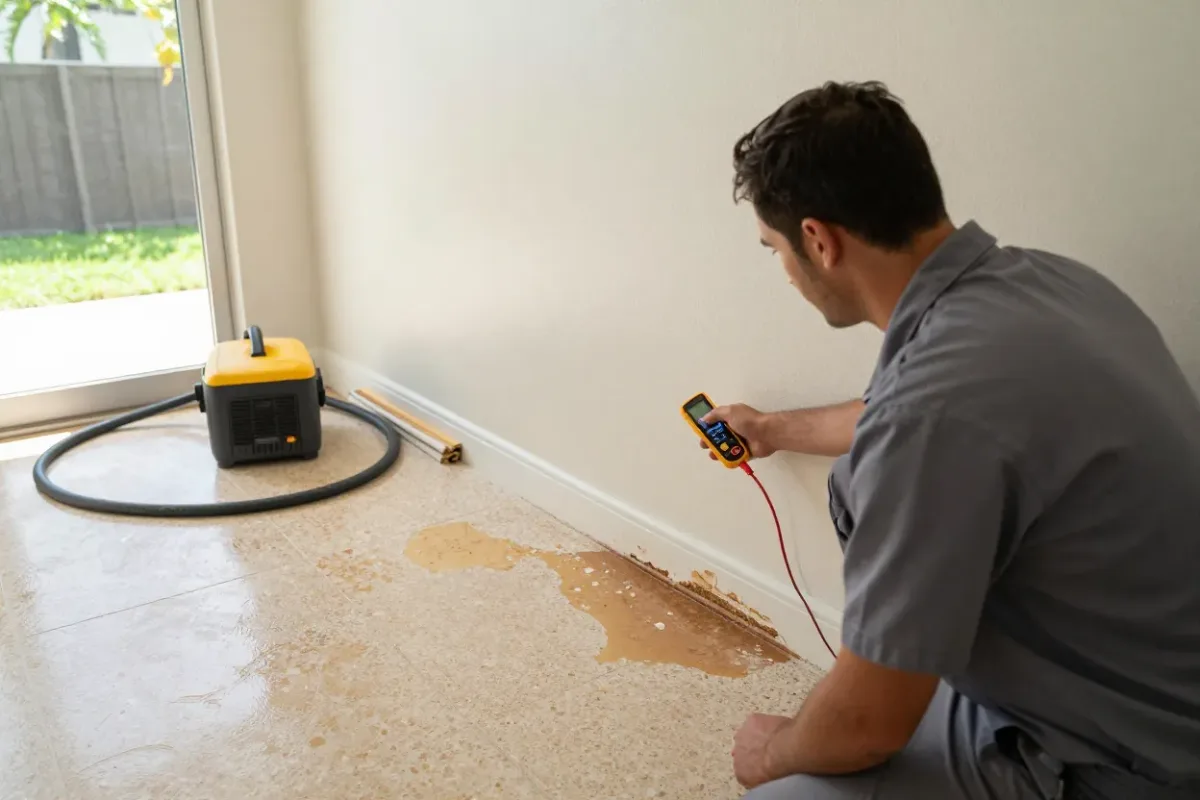
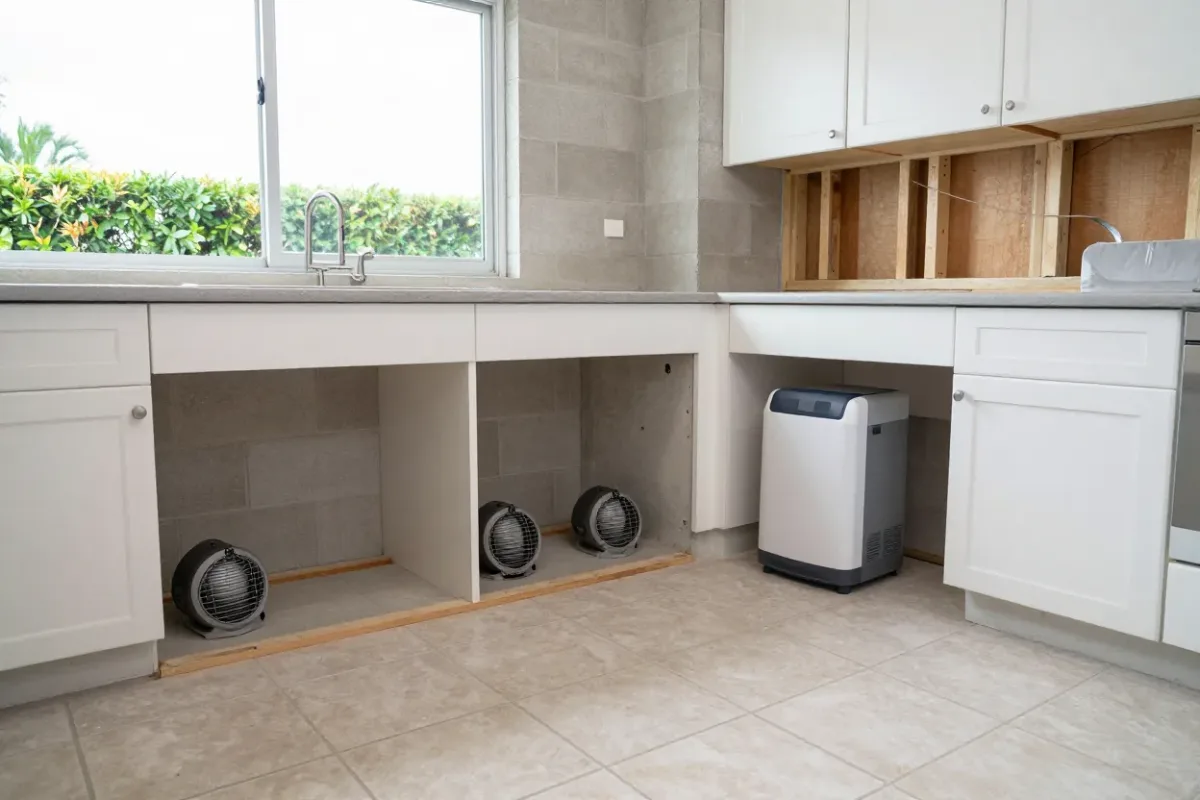
Kendall is a broad, flat swath of suburban southwest Miami-Dade County, bounded by Snapper Creek on the north, Old Cutler Road on the east and the Everglades to the west, and sitting only about seven feet above sea level. The subdivisions that replaced its groves and pine rockland from the 1950s onward were built on slabs, which means a leak has nowhere to go but sideways into drywall, cabinets and flooring. Water Damage Florida provides water damage restoration in Kendall around the clock, from emergency extraction to verified structural drying, mold removal and repair.
The Kendall area also carries a specific history: Hurricane Andrew tore through it in 1992, destroying many homes and businesses, and a great deal of the housing you see today was rebuilt or repaired in the years that followed. That mix of original mid-century construction and post-Andrew rebuilds is part of why we inspect each home on its own terms rather than assuming what is behind the walls. If water is coming in right now, call (888) 435-4769 and we will get a crew moving while we talk you through the first steps.
Emergency Water Damage Help Across Kendall
The emergency calls we take from Kendall are mostly plumbing and appliance failures inside single-family homes: a water heater that let go in a garage or utility closet, a washing machine supply hose that split, a slab leak that has been quietly soaking the floor for a week, or an air handler condensate line that backed up into a hallway closet. During the wet season and hurricane months, roof and window intrusion joins the list, and because the area is so flat and low, a hard rain can also leave water sitting against a house long enough to seep under a door or through a garage slab.
Whatever the cause, the first visit is about stopping the loss from spreading. We arrive with portable extractors and submersible pumps, pull standing water, lift or remove wet flooring and baseboards where needed, and set air movers and dehumidifiers before we leave. We photograph and take moisture readings from the start so your insurance file begins with a clear picture. Our statewide emergency water damage page explains what happens on that first call in more detail.
Restoring Mid-Century Homes and Post-Andrew Rebuilds
Restoration in Kendall means working with two generations of construction side by side. Homes built in the 1950s and 1960s often have terrazzo or tile over a slab, plaster or early drywall, and original cabinetry; homes rebuilt or heavily repaired after Hurricane Andrew tend to have newer roofs, windows and interior finishes. Each dries differently. Terrazzo and tile can usually be saved when the water underneath is drawn out early; laminate flooring, particleboard cabinet boxes and wet insulation usually cannot.
After extraction, we map exactly how far the water traveled using moisture meters and thermal imaging, then set a drying plan sized to the rooms involved. South Florida's humidity does not let materials dry on their own, so the house stays closed, the air conditioning runs, and dehumidifiers pull moisture out of the air while air movers push it out of the materials. We take readings daily and do not call a room dry until the numbers say so. Our water damage restoration service page covers the full scope of what we handle.
Flood Cleanup in Kendall After Heavy Rain
Kendall is inland, so storm surge is not the concern it is along the bay. The flooding we see here comes from rainfall on flat ground: summer thunderstorms and tropical systems that outrun the drainage, streets and swales that fill, and water that finds its way into garages, ground-floor rooms and enclosed patios. Homes near Snapper Creek and the Snapper Creek Canal on the northern edge of the area can be affected when the canal is running high during a long rain event.
Water that has crossed a yard or a street picks up soil, fertilizer, oil and whatever else was on the ground, so we treat it as contaminated. That changes the job: wet carpet, pad and the lowest section of drywall come out rather than being dried, hard floors and framing are cleaned and treated, and air filtration runs during the work. If you have standing water in the house, stay out of it until you know the power to that area is off, and read our first 24 hours after a flood guide while you wait for us.
Repairs That Follow Verified Drying
Repair starts only after the moisture readings confirm the structure is dry, because putting new drywall over a damp block wall is how a home ends up with a second problem in a few months. Typical Kendall repair work involves replacing the lower section of drywall and baseboards, rebuilding or rehanging kitchen and bathroom cabinets, replacing flooring that delaminated or cupped, and repainting so the repaired area disappears into the rest of the room.
We use the moisture logs, photos and written scope from the mitigation phase to define the repair, which keeps the line clear between what the water damaged and what was already there. For homeowners working through a claim, that record answers most of the questions an adjuster will ask. Where a home has older plaster or original terrazzo worth preserving, we plan the repair around saving it rather than defaulting to replacement.
Mold Removal in Kendall Homes
The Kendall pattern for mold is a slow leak that was never dramatic enough to notice: a slab leak under a hallway, a refrigerator water line dripping behind the cabinet, a shower pan that failed years ago, or an air handler closet with a chronically damp floor. Warm, humid air and a closed house do the rest. Growth usually shows up at the base of walls, behind base cabinets, on the back of closet drywall and around the air handler.
Our mold cleanup starts by finding and fixing the moisture source, because removal without that is temporary. We contain the area with plastic and negative air, remove affected drywall, cabinetry backs and insulation, HEPA-vacuum and clean what remains, and dry the space before anything is rebuilt. The mold remediation page describes our statewide approach, and our guide to hidden mold after water damage lists the places it tends to hide in slab-built Florida homes.
Why Water Damage Happens Here
Kendall's water damage risk is shaped by slab-on-grade suburban construction, a very flat and low landscape, and a long wet season. The sources we see most often include:
- Slab leaks in copper supply lines under older subdivision homes, often noticed only as a warm spot or a rising water bill
- Water heater tank failures in garages and interior closets
- Air conditioning condensate line clogs and overflowing drain pans in air handler closets
- Washing machine, dishwasher and refrigerator supply line failures
- Roof leaks and wind-driven rain through windows and sliding doors during tropical weather
- Rainwater pooling against the house and entering through garages, doors and enclosed patios
- High water in Snapper Creek and the canal along the northern edge during long rain events
- Shower pan and tub overflow leaks that soak the wall shared with a bedroom or closet
How a Kendall Water Damage Job Runs
We follow one sequence on every job and do not skip ahead, because the verification steps are what keep a rebuilt room from getting wet again.
- Assessment and moisture surveyWe locate the source, determine whether the water is clean or contaminated, and trace how far it has spread through the slab, walls and cabinets with meters and thermal imaging.
- ExtractionStanding water is pulled with portable extractors, and submersible pumps clear garages and low rooms where rain has collected.
- Removing what cannot be savedSoaked drywall, wet insulation, delaminated flooring, carpet pad and swollen cabinet bases are cut out and bagged so the structure behind them can dry.
- Drying and dehumidificationAir movers and dehumidifiers are placed to match the room layout, and daily readings track each material until it reaches its dry target.
- Cleaning and antimicrobial treatmentSurfaces that contacted contaminated water are cleaned and treated, and HEPA filtration runs while the work is in progress.
- Documentation for your claimPhotos, moisture logs, equipment records and a written scope are assembled for your records and your insurance carrier.
- RebuildDrywall, baseboards, cabinets, flooring and paint are restored so the repaired area matches the rest of the home.
- Final moisture checkA closing walkthrough with fresh readings confirms the space is dry and finished.
Where We Work in the Kendall Area
We cover the whole Kendall community, from the Dadeland area at its eastern end to the subdivisions stretching west toward the Everglades, and the neighboring communities on all sides. Because Kendall is unincorporated, boundaries blur with surrounding areas; if you are unsure whether your address counts as Kendall, it does not matter to us, just call.
Kendall Neighborhoods
Nearby Communities
Our southwest Miami-Dade crews also serve the communities that surround Kendall, and several of them have their own pages with local detail:
First Steps Before the Crew Arrives
You can limit the damage in the first hour without taking any risks. Do what is on this list and leave the rest to us.
- Shut off the water at the sourceClose the valve behind the toilet, under the sink or at the water heater. If you cannot find the source, close the main shutoff near the meter or where the line enters the house.
- Keep clear of water near outlets and appliancesDo not walk through water that may be in contact with an outlet, a cord, the water heater or the air handler. Only switch off breakers if the panel itself is dry and you can reach it without stepping in water.
- Do not run box fans on rain or ground waterWater that came in from outside is not clean. Fans spread it into the air. Leave the area closed and let the air conditioning run.
- Get belongings off the floorLift rugs, boxes and electronics, prop furniture legs on foil or plastic, and pull items out of the bottom of closets.
- Record the damagePhotograph the source, the extent of the water and each affected room before anything is thrown away.
- Note when it startedWrite down when you first noticed the water and anything you know about how long it has been leaking; it changes how we approach drying.
- Call usReach Water Damage Florida at (888) 435-4769 with the source, the rooms involved and whether the water is still running.
If a storm is involved, the hurricane water damage recovery guide walks through the days after landfall.
Kendall Water Damage Questions
My house was rebuilt after Hurricane Andrew. Does that change how you dry it?
It can. Post-Andrew rebuilds often have newer roofing, windows and interior materials that behave differently from the original mid-century finishes still found in many Kendall homes. We inspect what is actually in the walls and floors rather than assuming, and we set the drying plan based on those materials.
How do I know if I have a slab leak?
Common signs are a warm patch on the floor, a water bill that climbs with no change in use, the sound of running water when everything is off, or moisture appearing at the base of a wall with no visible source. We can confirm it with moisture readings and thermal imaging and dry the affected area while the plumbing repair is arranged.
Can terrazzo or tile floors be saved after water damage?
Usually, if drying starts soon after the loss. The concern is the water trapped beneath and around the floor, which we draw out with directed airflow and dehumidification. Laminate, engineered wood and carpet pad are far less forgiving and are often removed.
Do you work on condos and townhomes in the Dadeland area as well as houses?
Yes. Multi-unit work means coordinating with the association and checking the units beside and below the source, since water rarely stays in the unit where it started. We document each unit separately so every owner has what they need.
The water is from rain that came in through the garage. Is that treated like a pipe leak?
No. Water that traveled across the ground carries soil and contaminants, so porous materials it touched are removed rather than dried in place, and hard surfaces are cleaned and treated. A clean supply-line leak allows much more to be saved.
Is Kendall within your normal service area?
Yes. Our crews cover all of southwest Miami-Dade, including Kendall, Pinecrest, Palmetto Bay, Kendale Lakes and the communities toward Coral Gables and South Miami, and we serve the rest of Florida through our statewide service areas.