Fort Walton Beach is a compact city that sits low. Its mainland lies along Santa Rosa Sound at modest elevation, its Okaloosa Island district faces the Gulf across the Brooks Bridge, and Destin is a short distance east across the water. Sandwiched between Eglin Air Force Base and Hurlburt Field, it is a military-oriented community with established single-family neighborhoods on the mainland and condominiums and resort lodging on the island. That low elevation on the sound and the Gulf-facing island give the city direct surge exposure, and the record shows it: Hurricane Eloise in 1975 and Hurricane Opal in 1995 brought surge in the range of thirteen to fourteen feet with heavy beach and structural damage.
Water Damage Florida provides 24/7 water damage restoration in Fort Walton Beach, for surge and rain intrusion after storms and for the plumbing and roof failures that happen in any city between storms. Call (888) 435-4769 whenever you find water in your home or unit, and we will dispatch a crew and tell you what to do first.
Emergency Water Damage Response in Fort Walton Beach
The most recent large-scale emergency here was Hurricane Sally in 2020, when the Fort Walton Beach area recorded over fourteen inches of rain and NWS Mobile documented sustained tropical-storm winds, downed trees and localized inundation along Highway 98 in Okaloosa County. Before that, Hurricane Erin in 1995, Hurricane Earl in 1998, Hurricane Ivan in 2004 and Hurricane Dennis in 2005 all affected the city. What those events share is rain and wind arriving together, so homes take water through roofs and windows at the same time that yards and streets fill.
The household emergencies between storms are simpler but just as urgent: a water heater in a mainland garage, a supply line in a rental during a tenant turnover, a condo unit leaking into the one below. Our first visit extracts standing water, removes wet carpet pad and lower drywall where needed, sets air movers and dehumidifiers and starts the photographs and moisture readings your insurer will want. Our emergency water damage page explains the first response in more depth.
Restoring Mainland Homes and Island Condominiums
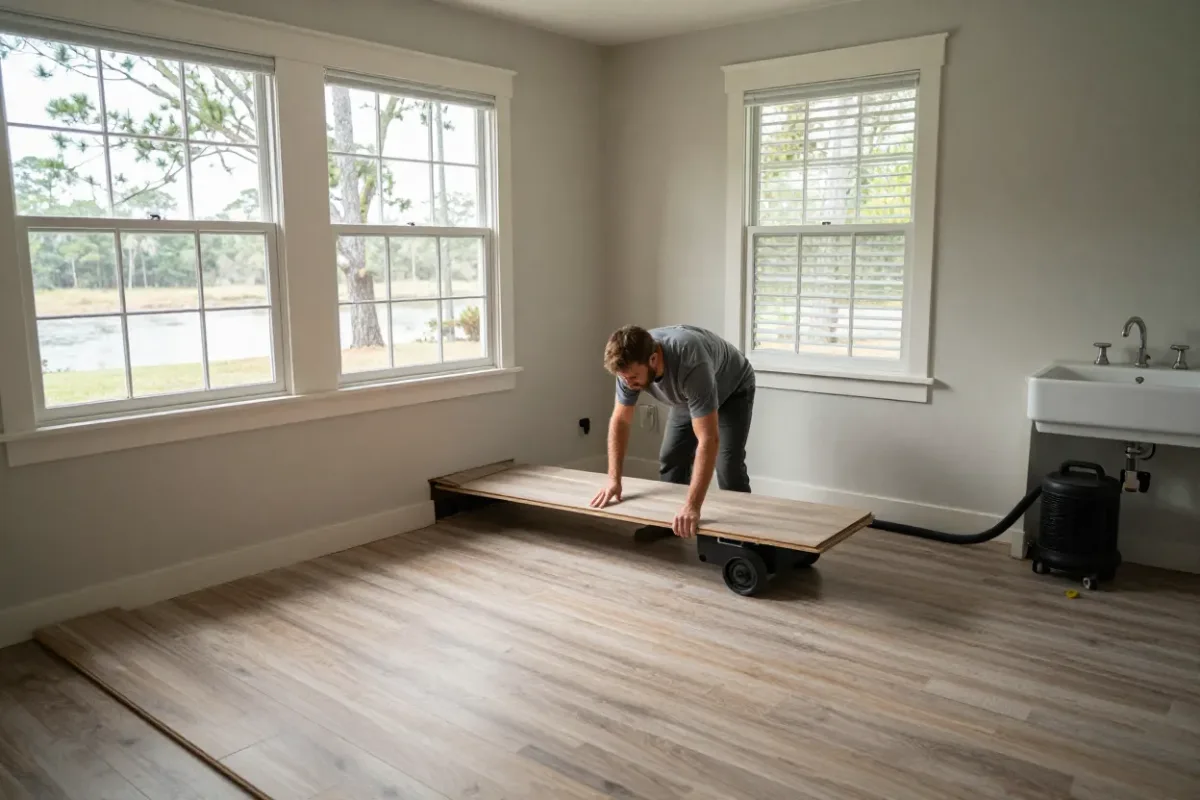
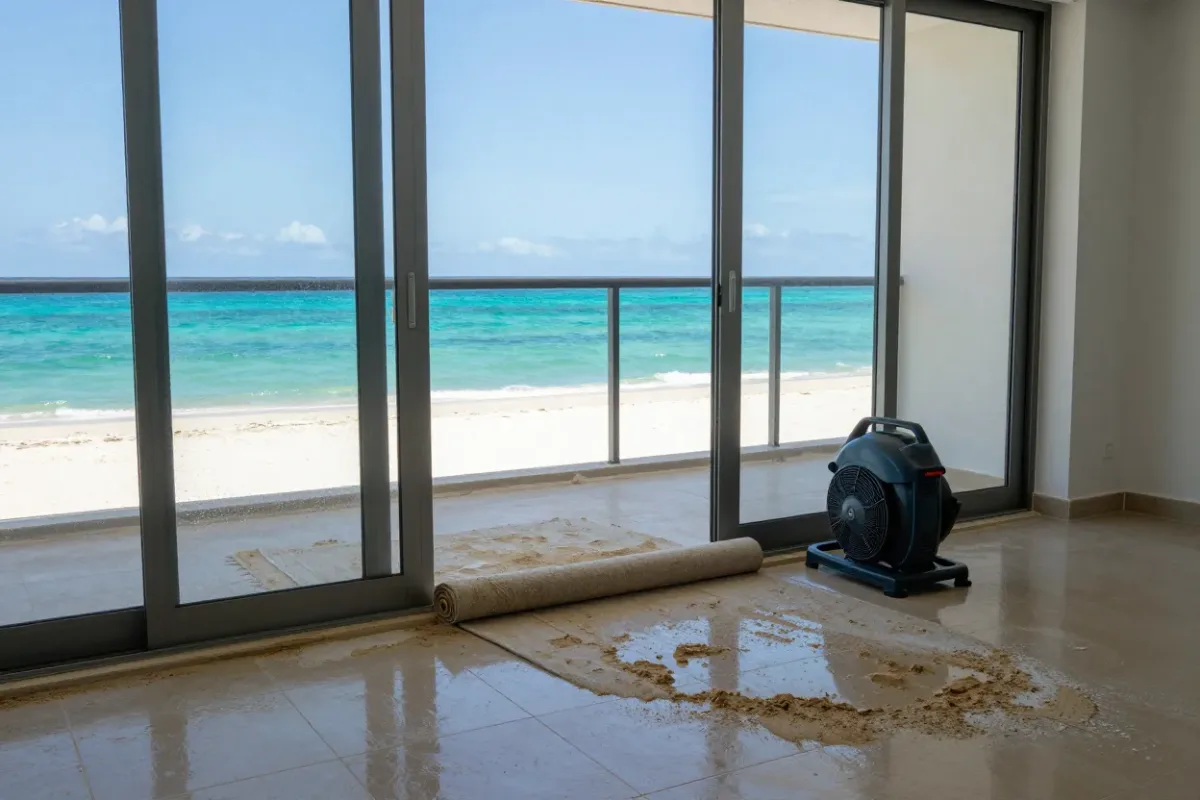
The mainland and the island call for different approaches. Fort Walton Beach's mainland neighborhoods are mostly established single-family homes, many of them single-story block construction on slabs, where water that gets in tends to spread across the floor and up the lower walls. Okaloosa Island is dominated by condominiums and resort lodging, where a leak travels down through stacked units, balcony doors take wind-driven rain, and salt air works on every seal. In both cases we map wet materials with meters and thermal imaging, dry in place what the readings allow and remove what they do not.
Drying runs in a closed building with dehumidifiers sized to the space, and it is logged until every monitored material reaches its dry standard. After that comes cleaning, antimicrobial treatment where sound water was involved, and the rebuild. For condominiums we coordinate with the association on access and common-area protection. Our water damage restoration page goes into each of these stages.
Flood Cleanup After Surge and Heavy Rain
Flooding reaches Fort Walton Beach from the sound, from the Gulf and from the sky. The state's report on Opal documented dune erosion and structural damage along this stretch of coast, and the surge figures from Eloise and Opal show what a major strike can push into the low mainland. Sally's fourteen-plus inches of rain showed the other side: inundation along Highway 98 without a major surge, simply from water that could not drain fast enough off flat, low ground.
Sound and Gulf water is salty and contaminated, and rain runoff that has crossed roads is no cleaner. Flood cleanup means removing the drywall, insulation, carpet and pressboard it soaked, disinfecting hard surfaces, inspecting the electrical components it reached and running air filtration while the building dries. If your home is wet now, start with our first 24 hours after a flood guide, then call; the flood restoration page explains the rest.
Water Damage Repair Once Drying Is Verified
Repair in Fort Walton Beach's mainland homes usually means new lower drywall and baseboards, rebuilt cabinet bases, replacement flooring over the slab, ceiling repairs under roof damage and repainting. In island condominiums it adds balcony door thresholds, shared-wall drywall and finishes that match the association's standards, with work scheduled around building rules on hours and elevator use.
The scope of repair comes from the moisture logs and photographs gathered during mitigation, so your adjuster sees exactly what the water affected. For military households facing a transfer or deployment, we keep the file complete so decisions can be made remotely, and we document each condo unit separately when a loss spans several.
Mold Removal in Fort Walton Beach
Mold in this city follows the water: a mainland slab home where surge or runoff was mopped up but the lower walls were never dried; an island condo where a balcony door seal failed and the carpet stayed damp between guests; a rental where a slow leak went unreported for months. Gulf humidity and salt air slow natural drying, and a long power outage after a storm leaves a home warm and humid for days, which is all growth needs.
Our mold work begins with the leak or seal that caused it. Then the area is sealed off with sheeting under negative pressure, HEPA scrubbers run, the affected drywall and other porous material is bagged and removed, the remaining surfaces are cleaned, and the space is dried before any finish work. Our mold remediation page has more on the approach, and where hidden mold forms after water damage is worth a look if a condo wall was stained after the last storm.
Frequent Causes of Water Damage Here
A low city on a sound with a Gulf-front island, a large stock of older block homes, many rentals and a long storm history has a predictable set of water problems. In Fort Walton Beach we most often see:
- Storm surge from Santa Rosa Sound and the Gulf reaching low mainland and island properties
- Heavy rainfall, as during Sally, ponding on flat ground and along Highway 98
- Wind-driven rain through balcony doors and windows in Okaloosa Island condos
- Leaks traveling between stacked condominium units
- Roof and flashing failures on aging single-story homes
- Water heater, supply line and washing machine hose failures in rentals
- Trees and limbs downed onto roofs in tropical-storm winds
- Air conditioning condensate overflows in units left closed during the off-season
The Steps We Follow on Every Job
Whether the loss is a flooded mainland ranch or a wet island condo, the job follows eight steps in a fixed order. Each is completed before the next begins.
- Inspection and moisture mappingWe find the source, judge whether the water is clean, salty or contaminated, and trace it with meters and thermal imaging through walls, slabs and adjoining condo units.
- ExtractionStanding water is vacuumed and pumped out of rooms, garages and ground-floor units.
- Removal of unsalvageable materialsSoaked drywall, insulation, carpet pad and swollen cabinetry are cut out and bagged so the structure behind can dry.
- Structural dryingAir movers and dehumidifiers run inside the closed building, with readings logged each visit until slab, framing and drywall are dry.
- Cleaning and treatmentSurfaces reached by sound water or runoff are cleaned and treated, with air filtration running throughout.
- DocumentationPhotos, moisture logs and a written scope are compiled for you, the association where applicable, and your insurer.
- RepairDrywall, trim, cabinets, flooring and paint are restored to match the rest of the home or unit.
- Final inspectionClosing moisture readings and a walkthrough confirm the space is dry and finished.
Fort Walton Beach Areas We Serve
We respond throughout the city, from the older downtown along US 98 and the mainland neighborhoods on the sound to the condominiums of Okaloosa Island across the Brooks Bridge.
Fort Walton Beach Neighborhoods
- Downtown Fort Walton Beach
- Okaloosa Island
- Elliott's Point
- Kenwood
- Garniers Beach
- Ferry Park
- South Bayou
- Seabreeze
- Oakland
- Northgate Estates
Nearby Communities
Our crews also cover the rest of southern Okaloosa County and the neighboring coastal communities. Several have their own service pages:
First Steps While You Wait
A few safe actions in the first hour protect you and limit the damage before our crew arrives.
- Stop the water if you canClose the fixture valve or the main for a plumbing leak. In a condo, alert management so the riser can be isolated.
- Stay out of water near electricityDo not enter a flooded room or garage if outlets, appliances or the panel may be in contact with water. If the panel is dry and you can reach it without crossing water, switch off the affected circuits; otherwise leave it.
- Treat sound, Gulf and street water as contaminatedKeep people and pets away, avoid contact, and do not run fans across it.
- Lift belongingsMove rugs, electronics and paper off wet floors and put foil or blocks under furniture that must stay.
- Photograph everythingRecord the source, the waterline and every affected room before anything is moved.
- Leave the air conditioning runningConditioned air slows mold growth while you wait; opening the house to Gulf humidity does the opposite.
- Call Water Damage FloridaReach us at (888) 435-4769 with the source, how long it has been wet and whether other units are affected.
For the days after a hurricane, our hurricane water damage recovery guide is a useful companion.
Fort Walton Beach Water Damage FAQs
Do you handle condominiums on Okaloosa Island?
Yes. We coordinate with the association and management, trace water through stacked units, protect hallways and elevators, and document each unit separately so every owner has a complete record.
My mainland home is on a slab. How does water damage spread there?
On a slab, water spreads across the floor and wicks up the lower walls, so laminate, vinyl plank and the bottom of the drywall are the first casualties. We meter the slab and walls to find how far it traveled and dry or remove accordingly.
Is water from Santa Rosa Sound treated differently from a pipe leak?
It is. Sound water is salty and contaminated, so porous materials it soaked are removed and hard surfaces disinfected, and fixtures and wiring it reached are inspected. A clean leak caught early can often be dried in place.
We are a military family and may PCS before repairs are done. Can you still work with us?
Yes. We maintain a complete file of photographs, readings and scope that you can share with your insurer from anywhere, and we arrange access through the person you designate.
How long does drying take in this climate?
It depends on the materials and how long they were wet, but Gulf humidity usually adds time compared with an inland home. We dry in a closed building and stop only when moisture readings, not appearance, confirm the structure is dry.
Do you serve Mary Esther, Shalimar and the rest of the area?
We do. Our crews cover Mary Esther, Shalimar, Valparaiso, Niceville and Ocean City, as well as Destin, Navarre, Crestview and Pensacola, and the rest of the state through our service areas.