Nearly half of Pensacola's official area is water. The city sits on Pensacola Bay with Escambia Bay to the north and Santa Rosa Island shielding the bay from the Gulf, and the land climbs from the bayfront on a series of bluffs and hills. That slope matters: much of the city stands above likely surge levels, which concentrates the worst flooding on the bayfront and bayou-side lowlands. But rain does not care about elevation. An April 2014 event dropped more than twenty inches in a single day and produced flooding worse than anything the city had seen in a very long time, and a June 2012 flood affected the city as well.
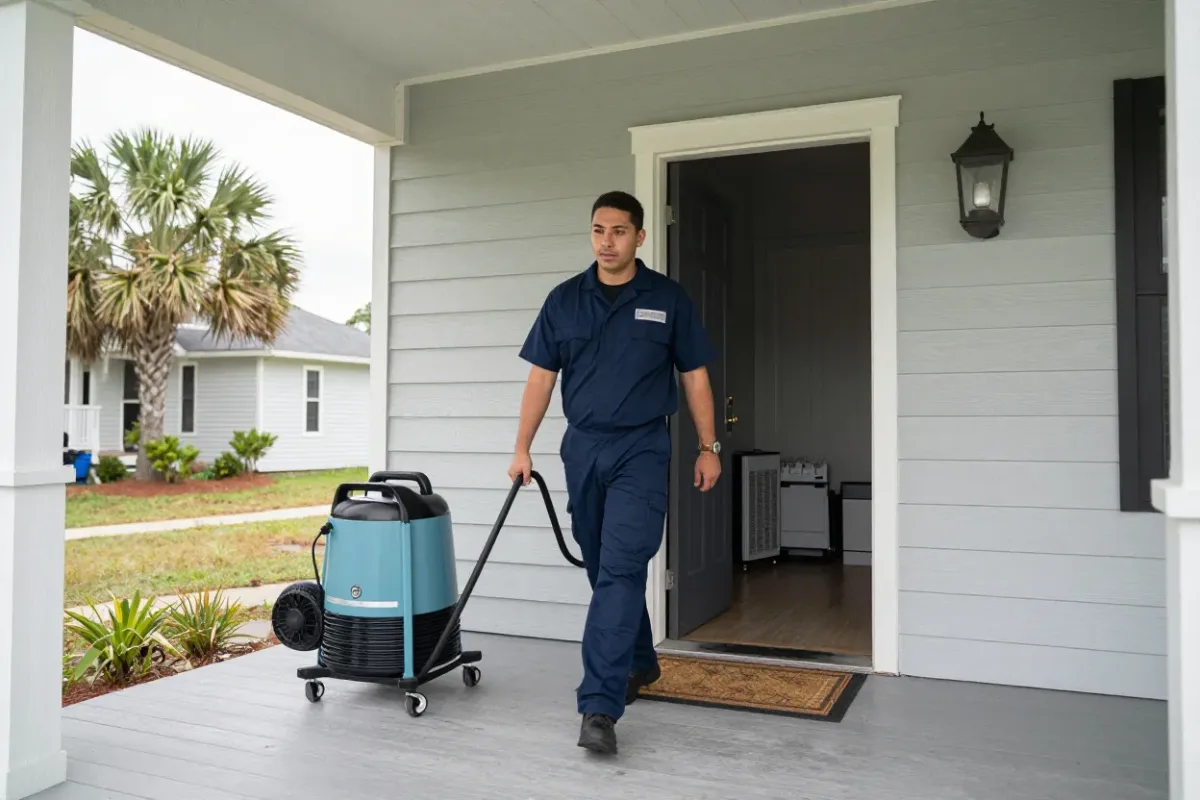
Water Damage Florida provides 24/7 water damage restoration in Pensacola, from the historic districts of North Hill, Seville and East Hill to the mid-century neighborhoods farther from the water. We handle surge cleanup in bayfront homes, rain intrusion through the roofs of century-old houses, and the everyday plumbing failures that happen in any city. Call (888) 435-4769 at any hour to get a crew moving.
Emergency Water Damage Response on the Bay
Pensacola's emergencies come in two scales. The citywide ones are storms: Hurricane Ivan in 2004 put the city on the eastern eyewall and drove surge into Escambia Bay that destroyed the I-10 Escambia Bay Bridge and the fishing bridge beside the Three Mile Bridge, destroying more than ten thousand area homes and heavily damaging tens of thousands more. Hurricane Sally in 2020 flooded downtown, and NOAA recorded one of the highest water levels ever measured at the Pensacola Bay gauge, with the worst inundation on the bay and sound sides rather than the open Gulf beach. The household-scale emergencies are the ordinary ones: a water heater in a Cordova Park garage, a roof leak over a North Hill bedroom, a supply line under a Scenic Heights kitchen sink.
Either way, the first visit is about stopping the spread. We extract standing water, pull wet carpet pad, open baseboards where drywall has wicked, set air movers and dehumidifiers, and begin photographs and moisture readings so your insurance record starts on day one. Our emergency water damage page has more on that first visit.
Restoring Historic Districts and Mid-Century Neighborhoods
Pensacola has one of the largest concentrations of historic housing on the Gulf Coast. North Hill is a National Register district with several hundred historic buildings, and Seville and East Hill add more. These are wood-frame houses with heart-pine floors, plaster walls, high ceilings and, often, crawlspaces, and they are worth the extra care of drying in place rather than gutting. The mid-century suburban neighborhoods that ring the older core are mostly slab-on-grade with drywall and modern flooring, where fast extraction and controlled drying do most of the work. Wikipedia notes the city has few high-rises, so most of our multi-unit work is in medium-rise buildings and small condominiums.
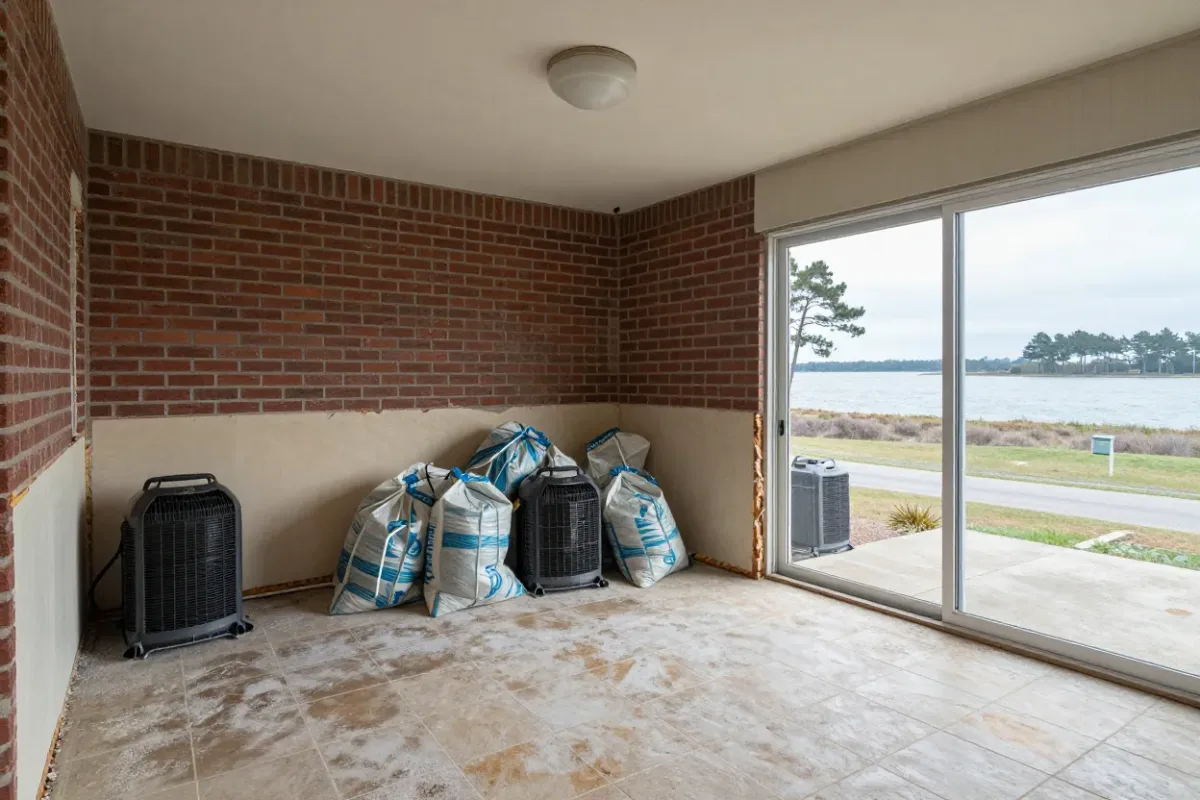
We map wet materials with meters and thermal imaging, remove what cannot be dried, and run dehumidifiers and air movers in a closed building until the readings say the structure is dry. Cleaning and antimicrobial treatment come next where bay water was involved, and the rebuild after that. Our water damage restoration page covers each phase.
Flood Cleanup After Surge and Extreme Rain
Pensacola floods from both the bay and the sky. Surge from Ivan and Sally reached homes along the bayfront and the bayou-side lowlands, while the April 2014 rain event overwhelmed drainage across the city regardless of elevation. Earlier storms in the record, from Hurricane Frederic in 1979 through Hurricane Erin and Hurricane Opal in 1995 and Hurricane Dennis and Hurricane Katrina in 2005, each left their own share of wind and water damage. Homes on the bay and sound sides carry the concentrated surge exposure; homes on the hills carry the rain and roof exposure.
Bay water is salty and contaminated, and floodwater that has crossed streets is no cleaner. Flood cleanup therefore means removing the drywall, insulation, carpet and pressboard it soaked, cleaning and disinfecting hard surfaces, inspecting electrical components it reached, and running air filtration while the structure dries. If you are looking at floodwater now, our first 24 hours after a flood guide covers the immediate steps and the flood restoration page covers the rest.
Repairs After the Structure Is Dry
Repair in Pensacola ranges from replacing the lower course of drywall and baseboards in a surge-flooded brick ranch to refinishing heart-pine floors and patching plaster in a North Hill house. Common tasks include rebuilding cabinet bases, replacing subfloor in crawlspace homes, re-laying flooring, repairing ceilings under storm-damaged roofs and repainting. Where salt water reached fixtures and wiring, those components are inspected and replaced as needed before walls are closed.
The repair scope is built from the moisture logs and photographs gathered during mitigation so your adjuster can see exactly what the water affected. In condominiums and medium-rise buildings we coordinate with management and document each unit separately.
Mold Removal in Historic and Modern Homes
Humid Gulf air, salt spray and a large stock of old wood houses give mold plenty of opportunity in Pensacola. Crawlspaces under historic homes stay damp after heavy rain, roof and flashing leaks run down inside plaster walls unnoticed, and any ground floor that took bay water and was mopped rather than properly dried will grow mold behind the baseboards. Long power outages after a storm make it worse, because the house sits warm and humid for days.
We start by finding and correcting the moisture source, then contain the area, run HEPA air filtration, remove and bag contaminated porous materials, clean the remaining surfaces and dry the space completely before any rebuild. Details are on our mold remediation page, and where hidden mold forms after water damage is worth reading before you repaint a wall that was once wet.
Common Causes of Water Damage in Pensacola
A port city on a bay, with hills above and lowlands below, old wood houses and a long hurricane record, sees a particular mix of water losses. In Pensacola the sources we encounter most are:
- Storm surge from Pensacola Bay and Escambia Bay reaching bayfront and bayou-side homes
- Extreme rainfall events that overwhelm drainage even on higher ground
- Wind-driven rain through aged roofing, windows and siding on historic houses
- Damp crawlspaces beneath raised wood-frame homes
- Trees falling onto roofs during hurricanes
- Water heater, supply line and washing machine failures in mid-century homes
- Plumbing leaks that travel between units in medium-rise buildings
- Air conditioning condensate overflows in the long humid season
How We Handle a Water Loss on the Bay
Whether the water came from the bay or a water heater, the job follows the same eight steps in the same order. Nothing is rebuilt until the readings say it is dry.
- Inspection and mappingWe identify the source, judge whether the water is clean, salty or contaminated, and trace it with meters and thermal imaging through walls, floors, crawlspaces and adjoining units.
- ExtractionStanding water is pumped and vacuumed out of living spaces, garages and under-floor areas.
- Removal of unsalvageable materialSurge-soaked drywall, insulation, carpet pad and swollen cabinetry are cut out and bagged, while heart-pine floors and plaster in historic homes are kept wherever drying can save them.
- Drying and dehumidificationAir movers and dehumidifiers run inside the closed house and in the crawlspace where needed, with readings logged until every material is dry.
- Cleaning and disinfectionSurfaces reached by bay water or runoff are cleaned and treated, with air filtration running throughout.
- DocumentationPhotographs, daily readings and a written scope are assembled for you and your insurer, noting whether the water was bay surge, rain or plumbing.
- RebuildDrywall, trim, cabinets, subfloor, flooring and paint are restored to match the rest of the home.
- Final checkA closing round of moisture readings and a walkthrough confirm the work is finished.
Pensacola Areas We Serve
We respond throughout the city, from the downtown and the historic districts to the bayfront neighborhoods and the suburban areas on the hills to the north. Crews know the difference between a raised Victorian in North Hill, a bayfront home in East Pensacola Heights and a brick ranch in Cordova Park, and they bring equipment suited to each.
Pensacola Neighborhoods
- Downtown Pensacola
- Seville Historic District
- North Hill
- East Hill
- Old East Hill
- Belmont-DeVilliers
- Cordova Park
- East Pensacola Heights
- Scenic Heights
- Brownsville
- Spanish Highlands
- Bay Cliff Estates
- Mallory Heights
Nearby Communities
Our Pensacola crews also cover the rest of Escambia County and the communities east along the coast. Several have their own pages:
- Navarre
- Fort Walton Beach
- Destin
- Warrington
- West Pensacola
- Ferry Pass
- Brent
- Ensley
- Bellview
- Myrtle Grove
- Goulding
- Gulf Breeze
- Milton
- Pensacola Beach
- Perdido Key
Immediate Steps for Pensacola Homeowners
A few safe actions in the first hour make a real difference to how much of your home can be saved.
- Stop the water if it is plumbingClose the fixture valve or the main shutoff. In a condominium or apartment, alert management so the building supply can be isolated.
- Keep out of water near electricityDo not enter a flooded room, garage or crawlspace if outlets, appliances or the panel may be in contact with water. Shut off the affected circuits only if the panel is dry and you can get to it without going through water.
- Treat bay water and runoff as contaminatedKeep family and pets away from it, do not clean it by hand, and do not run fans across it.
- Move belongings upLift rugs, electronics and paper off wet floors and slide foil or blocks under furniture that must stay.
- Photograph everythingCapture the source, the waterline and every affected room before anything is moved.
- Keep the air conditioning running if you canCool, dry air slows mold; do not open windows to humid bay air.
- Call usReach Water Damage Florida at (888) 435-4769 with the source, how long it has been wet and whether other units are affected.
After a named storm, our hurricane water damage recovery guide covers the days that follow.
Pensacola Water Damage FAQs
My house is on the hill, well above the bay. Do I still need to worry about flooding?
Surge is unlikely to reach you, but rain is another matter. The April 2014 event flooded parts of the city regardless of elevation, and roof, window and drainage failures put water in homes at any height. Elevation reduces one risk, not all of them.
Is bay water handled differently from a burst pipe?
Yes. Bay water is salty and contaminated, so porous materials it reached are removed, hard surfaces are disinfected, and fixtures and wiring it touched are inspected. A clean plumbing leak caught early allows far more to be dried in place.
Can you dry a North Hill house without destroying the heart-pine floors and plaster?
Usually, if we start soon after the loss. We meter the floors and framing, dry them under controlled conditions and remove only what is truly unsalvageable. Original materials are replaced as a last resort.
My crawlspace is wet after the storm. Does that matter?
It does. A damp crawlspace keeps moisture against the subfloor and framing and leads to growth and rot. We dry crawlspaces with dedicated equipment and confirm subfloor readings before calling the house dry.
Do you work in condominiums and medium-rise buildings?
We do. We coordinate with management, trace water through adjoining units, protect common areas and document each unit separately.
Do you cover Pensacola Beach, Gulf Breeze and the rest of the area?
Yes. Our crews serve all of Escambia County, including Warrington, Ferry Pass, Brent, Ensley, Bellview, Myrtle Grove and Perdido Key, plus Pensacola Beach, Gulf Breeze, Milton and the communities east toward Navarre and Fort Walton Beach.