Fort Pierce is the St. Lucie County seat and one of the older working port cities on the Treasure Coast, built on the Indian River Lagoon where the Fort Pierce Inlet opens to the Atlantic. That position gives the city its marina and its beaches on Hutchinson Island, but it also puts homes in the path of wind, surge and the kind of tropical rainfall that has set state records here. Water Damage Florida provides 24/7 water damage restoration in Fort Pierce, from a burst supply line in a Lincoln Park bungalow to block-wide storm intrusion after a hurricane.
Our crews cover the mainland neighborhoods, the downtown waterfront and the barrier island side of the city, and they arrive with extraction, drying and containment equipment on the truck. If you are looking at wet floors or a sagging ceiling right now, call (888) 435-4769; we will walk you through the immediate steps and dispatch a team any hour.
Emergency Response for Fort Pierce Homes and Businesses
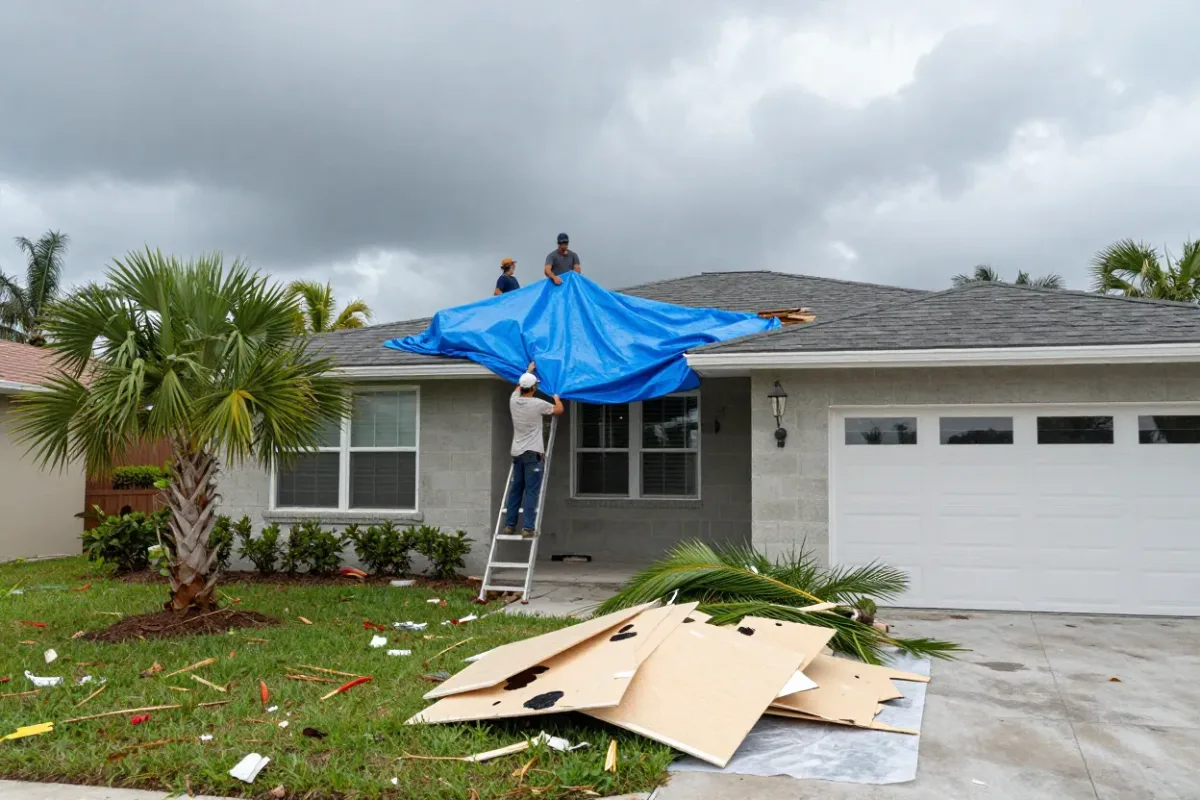
Fort Pierce has seen what a bad season looks like. Hurricane Frances destroyed the municipal marina in 2004 and produced the highest wind gust recorded in the state here, and Hurricane Jeanne followed weeks later, wrecking dozens of boats at the inlet with its high water. The highest rainfall total in Florida during Hurricane Irma was measured near the city, and in October 2024 a tornado spawned by Hurricane Milton tore through the area. Emergency water damage here is often wind-driven: a roof section peeled back, a window blown in, rain running through an attic and ceilings for hours before anyone can get inside.
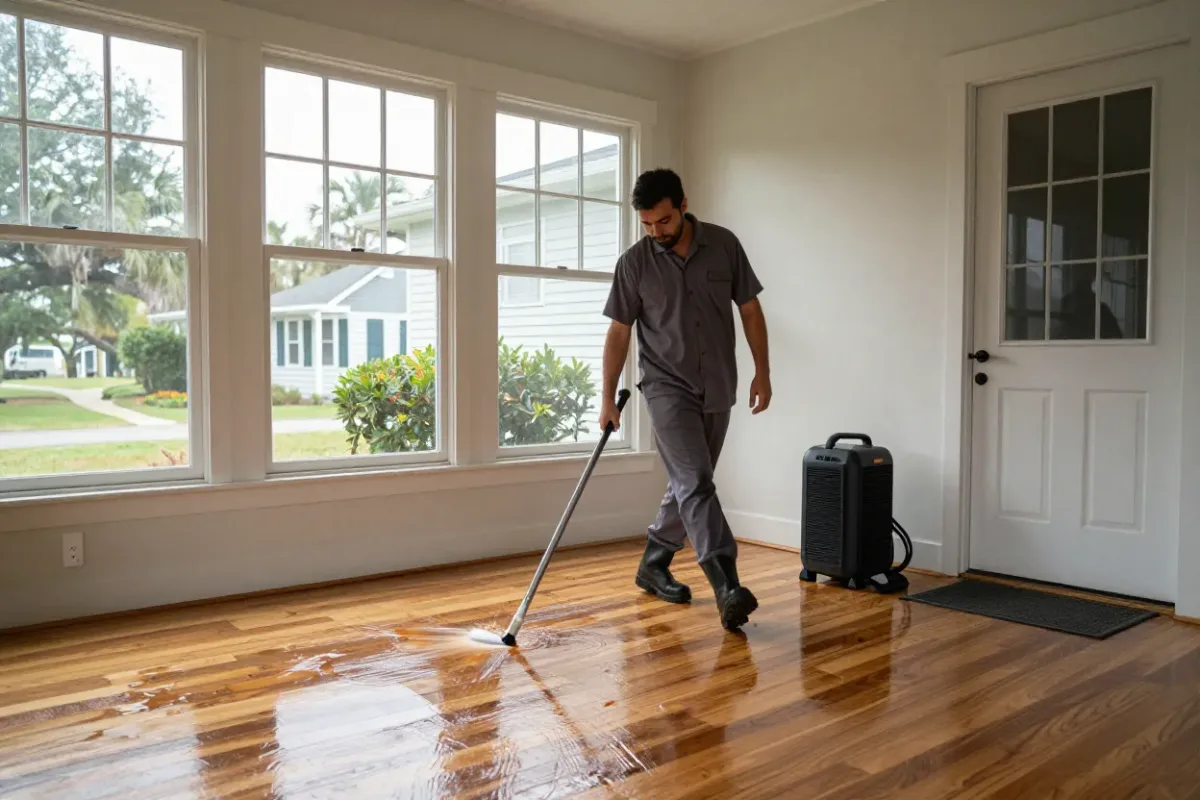
When we take an emergency call we ask where the water is coming from, whether it is still coming, and whether power in the affected area is off. Then we roll with pumps, extractors, air movers, dehumidifiers and tarping materials. Stopping the intrusion, pulling standing water and getting air moving on the same visit keeps a one-room problem from spreading into framing and insulation. Every moisture reading and photo from that first visit goes into the documentation we prepare for your insurance claim.
Full Water Damage Restoration on the Treasure Coast
Restoration starts once the emergency is contained and continues until the home is dry, clean and rebuilt. Fort Pierce has a large stock of older houses, including the historic Lincoln Park district north of Moore's Creek, and older construction changes how we work. Original wood floors, plaster walls and older framing hold water differently than drywall over concrete block, and they can often be saved when drying starts early and is monitored closely. We map every wet surface with moisture meters and thermal imaging before deciding what stays and what comes out.
St. Lucie County also has a documented presence of mobile-home and retirement communities such as Spanish Lakes, where a leak under a manufactured home can soak the belly board and subfloor without much showing inside, so our work there focuses on the floor system. Whatever the building type, drying is verified with moisture readings rather than by touch or the calendar, and only then do cleaning and repair begin. Our statewide water damage restoration service page explains the full scope.
Flood Cleanup After Lagoon, Inlet and Storm Water
Flooding in Fort Pierce comes from the lagoon as well as the sky. Hurricane Ian in 2022 brought minor flooding on Old Dixie Highway and pushed lagoon water over the docks at North Causeway Island Park, and Jeanne's high water at the inlet showed how far storm-driven water can climb along the waterfront. Tropical Storm Fay in 2008 and Irma in 2017 delivered the other kind of flooding, with rain totals that overwhelmed yards, streets and low slab homes. The city is also managing chronic beach erosion south of the inlet with an ongoing shore-protection project, a reminder that the barrier island side takes the brunt of the ocean.
Any water that came from the lagoon, a storm drain or the street is handled as contaminated. We remove wet drywall, insulation, carpet and pad rather than trying to dry them, disinfect the hard surfaces that remain, and run air filtration during the work. Salt water also corrodes wiring and appliance components it touched, so we flag those for inspection. If flood water is in your home now, stay out of it and read our guide to the first 24 hours after a flood while you wait for the crew.
Repairing Water-Damaged Homes in Fort Pierce
Repair is the rebuild that follows verified drying: new drywall and baseboards, ceiling patches where storm water came through, replaced or refinished flooring, cabinet resets, insulation and paint. In the older neighborhoods around downtown and Lincoln Park, repair often includes matching plaster textures, trim profiles and wood floor species so the finished room does not look like a patch.
Because the census shows a notable share of vacant units in the city, we frequently handle repairs for owners who are not on site, including seasonal residents and landlords. We coordinate access, send progress photos and provide the moisture logs and scope documents your adjuster needs without you having to be in Fort Pierce for every step.
Mold Removal After Water Damage
Fort Pierce's coastal humidity gives mold an easy start on any material that stays wet for more than a few days. After a storm, the usual trouble spots are attic insulation under a leaking roof, the top edge of walls below a wet ceiling, and the subfloor of manufactured homes. After a plumbing leak, the back of a vanity, the toe-kick under kitchen cabinets and the drywall behind a washer are the common finds.
Our mold removal follows a set order: fix the moisture source, isolate the area with containment and negative air, remove and bag affected porous materials, HEPA-vacuum and clean what remains, and dry the space to verified readings before anything is rebuilt. We do not paint over growth. Read about our approach on the mold remediation page and learn where hidden mold forms after water damage.
What Causes Water Damage in Fort Pierce
The calls we receive from Fort Pierce reflect an older city on an exposed stretch of coast: aging plumbing and roofs, a waterfront that takes surge and wind, and a rainy season that occasionally produces record totals. The most common sources include:
- Roof, soffit and window failures during hurricanes, tornadoes and tropical squalls
- Storm surge and lagoon water pushing into waterfront and inlet-area properties
- Extreme rainfall events that overwhelm yards, driveways and low slab foundations
- Aging galvanized and copper supply lines in older mainland homes
- Water heater tank failures in garages, closets and utility rooms
- Leaks beneath manufactured homes in the county's mobile-home communities
- Air conditioning condensate overflows during the long cooling season
- Sewer and storm drain backups when heavy rain saturates the system
How We Restore a Fort Pierce Property
Every job moves through the same eight stages, in the same order. The sequence exists because drying that is not verified, or a rebuild that starts too early, is how a wall ends up wet again months later.
- Assessment and moisture surveyWe locate the source, categorize the water, and trace how far it has traveled using meters and thermal imaging, including attic spaces and the underside of manufactured homes.
- Pumping and extractionStanding water is pumped out and floors are extracted with truck-mounted or portable units, with special attention to salt-laden water from the lagoon or inlet.
- Removal of unsalvageable materialSoaked drywall, wet insulation, carpet pad, swollen laminate and storm-damaged ceiling sections are cut out and bagged so the framing behind them can breathe.
- Drying and dehumidificationAir movers and dehumidifiers are set for the size of the space and left running with the home closed to humid outside air, and readings are logged until each material reaches its dry target.
- Cleaning and treatmentSurfaces reached by contaminated water are cleaned and disinfected, and air scrubbers filter the air during and after demolition.
- Documentation for your claimPhotos, moisture logs, equipment records and a written scope of work are assembled for you and your insurance carrier.
- RebuildDrywall, plaster, trim, flooring, cabinets and paint are restored, with historic finishes matched where the home calls for it.
- Final verificationA last round of moisture readings and a walkthrough with you confirm the property is dry, finished and ready to occupy.
Fort Pierce Neighborhoods and Areas We Cover
We serve the whole city, from the historic mainland neighborhoods to the marina district downtown and the residences on the Hutchinson Island side of the inlet, with equipment suited to a wood-framed bungalow near Moore's Creek as well as a concrete-block home by the Intracoastal Waterway.
Areas Within Fort Pierce
- Lincoln Park
- Downtown Fort Pierce
- Hutchinson Island
Nearby Communities on the Treasure Coast
The same teams that respond in Fort Pierce also cover the surrounding communities in St. Lucie, Indian River and Martin counties. Several have their own local pages:
First Steps When Water Gets In
What you do before the crew arrives can limit the damage considerably. These steps are safe for most homeowners in Fort Pierce and take only a few minutes.
- Shut off the sourceClose the fixture valve or the main water shutoff if the leak is from plumbing. If it is storm intrusion, wait until the wind has passed before anyone goes near the roof.
- Keep away from water near electrical sourcesNever step into standing water that could be touching outlets, cords, appliances or the panel. Only switch off breakers if the panel is dry and you can reach it without wading.
- Assume outdoor water is contaminatedLagoon, inlet, storm drain and street water carries salt, silt and sewage. Keep family members and pets out of it and leave the cleanup to us.
- Get belongings off the floorMove rugs, boxes, electronics and furniture to a dry room, or set furniture legs on blocks or foil if they cannot be moved.
- Document before you touch anythingPhotograph the source, the water line on the walls, and each affected room. Short video helps too. Do this before moving furniture or pulling up flooring.
- Leave the air conditioning onCool, conditioned air slows mold growth in Fort Pierce's humidity. Do not open windows to speed things up; the outside air is usually wetter than the inside.
- Call us with the detailsDial (888) 435-4769 and tell us the source, roughly when it started, and whether the water is clean or from outside. We will advise you and dispatch a crew.
Preparing for the next season? Our hurricane water damage recovery guide covers what to do before, during and after a storm reaches the coast.
Fort Pierce Water Damage Questions
My roof was damaged in a storm and rain has been coming in for hours. What should I do first?
Stay away from the leaking area until the wind is done, then move belongings out from under the drip. Call us as soon as it is safe; we can tarp the roof, remove the saturated ceiling and insulation, and start drying the rooms below on the same visit.
Can an older Fort Pierce home with wood floors and plaster walls be dried without gutting it?
Often, yes. Plaster and solid wood dry more slowly than drywall but tolerate it well when the drying is started early and controlled. We use moisture readings on the specific material rather than a fixed timeline, and we only remove what cannot be brought back to a dry standard.
Do you handle water damage under manufactured and mobile homes?
Yes. Leaks under a manufactured home tend to soak the belly wrap, insulation and subfloor before anything shows inside. We open and dry the floor system from below, replace what is ruined, and verify the subfloor is dry before the floor covering goes back.
Is water from the Indian River Lagoon treated the same as a burst pipe?
No. Lagoon and inlet water is salty and contaminated, so materials it soaked are removed rather than dried, surfaces are disinfected, and electrical components it touched are flagged for inspection. A clean plumbing leak caught quickly allows far more to be saved.
I own a seasonal or vacant property in Fort Pierce. Can you handle the job while I am away?
We regularly work with owners who are not on site, coordinating access and sending photos and moisture logs as the job progresses so your claim can move without you being here.
Do you also serve Port St. Lucie, Vero Beach and the rest of the Treasure Coast?
We do. Our crews cover St. Lucie County and the neighboring counties, and Water Damage Florida serves the entire state; see our service areas for other communities.