Port St. Lucie is one of the most populous cities in Florida, a sprawling planned city on the Treasure Coast that the General Development Corporation carved out of a largely uninhabited tract beginning in the late 1950s. It is overwhelmingly residential, dominated by single-family homes on GDC-platted quarter-acre lots, with the North Fork of the St. Lucie River winding through the middle and newer master-planned communities such as Tradition and St. Lucie West on the western side. The city sits on the mainland, inland from the Indian River Lagoon and the barrier islands, so for most homes the flood threat is not surge but rain: the city is flat, low and built on a grid of drainage swales and canals, and when a storm stalls, those swales fill and the streets follow.
Water Damage Florida provides water damage restoration in Port St. Lucie 24 hours a day, whether the water came up the driveway during a tropical storm, through a roof, or from a pipe inside the wall. Call (888) 435-4769 and a crew will be on the way while we walk you through the first steps.
Emergency Water Damage Response in Port St. Lucie
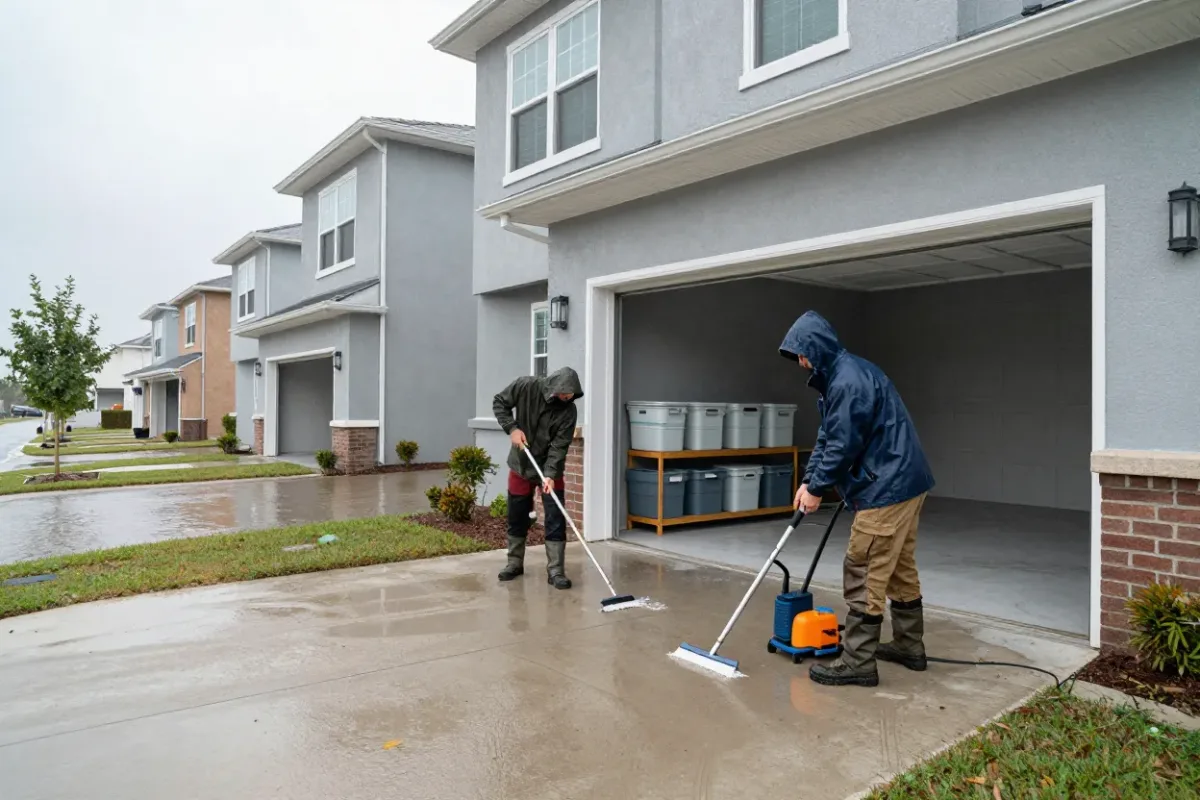
Most Port St. Lucie emergencies happen on an ordinary day. A water heater in the garage of a 1980s ranch home lets go overnight; a supply line under a bathroom sink fails while the family is at work; an air conditioner condensate line clogs in August and the drain pan overflows into a closet. The city's spread-out layout means a small leak can run for hours before anyone notices, and in a single-story home water crosses tile and laminate quickly. During storms the pattern changes: rain outpaces the swales, street water rises to the driveway and comes under the garage door, and wind takes roofing and lets rain into bedrooms.
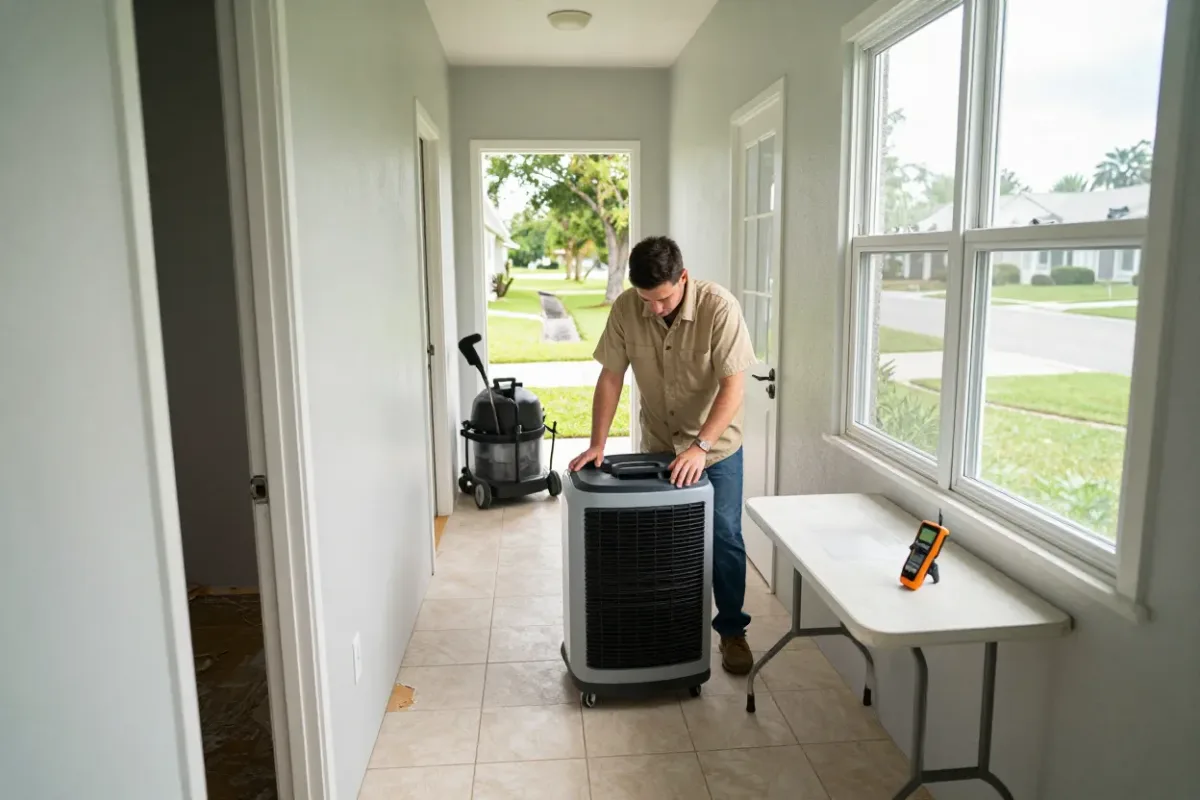
Crews come loaded with extractors, pumps, air movers, dehumidifiers and moisture meters, and drying is under way before the first visit ends. We photograph the source and record initial readings before anything is moved, so your insurance file starts with a clear record. Our emergency water damage page explains how the first hours unfold.
Restoration for GDC-Era Homes, New Communities and Manufactured Housing
Port St. Lucie's housing has distinct generations. The original GDC-platted neighborhoods hold single-story block homes on quarter-acre lots, many with tile or terrazzo floors, original drywall and aging plumbing. The master-planned communities on the west side, including Tradition, described as the largest fully entitled residential development, and St. Lucie West, bring newer two-story homes with upstairs baths and laundries and engineered flooring. The county also has a documented presence of mobile-home parks, where floors, walls and underbellies respond to water very differently from a block house.
We map the loss with moisture meters and thermal imaging, remove only what cannot be dried, and run dehumidifiers and air movers inside the closed home with readings logged daily until every material reaches its dry standard. Where the water was contaminated we clean and treat before rebuilding. Each of those phases is laid out on our water damage restoration service page.
Flood Cleanup When the Swales and Streets Fill
Port St. Lucie's flood history is a history of rain. Hurricanes Frances and Jeanne in 2004 and Wilma in 2005 all hit the city, and Jeanne damaged or destroyed thousands of homes across St. Lucie County, including many in mobile-home parks. Tropical Storm Fay in 2008 stalled over the region and flooded roughly eight thousand homes countywide. During Hurricane Ian in 2022, street flooding closed intersections in the city including Torino Parkway at Midway Road and Floresta Drive at Ardsley Drive. The North Fork of the St. Lucie River adds its own pressure, receiving very large freshwater discharges from the C-23 canal that the city is working to divert and store at McCarty Ranch Preserve.
Water that has crossed a street, a swale or a yard is treated as contaminated. Flood cleanup means removing the drywall, insulation, carpet and cabinet bases that were submerged, cleaning and disinfecting the slab and framing, and running air filtration while the structure dries. In a manufactured home it also means checking the floor system and underbelly, where water collects out of sight. Keep out of standing water, away from wet electrical equipment, and call us; our flood restoration service page explains how a larger loss is managed.
Water Damage Repair Across the City
Repair begins when the drying log confirms the home is dry. In a GDC-era ranch home that usually means new lower drywall and baseboards, replacement of laminate or carpet that could not be saved, cabinet bases and paint. In a two-story home in Tradition or St. Lucie West it is often a ceiling repair below an upstairs bath, wall patching and flooring. After street flooding it can be the lower two feet of every interior wall in the affected rooms plus garage drywall. In a manufactured home it may include subfloor sections and underbelly repair.
The repair scope is built from the same photos and moisture logs gathered during mitigation, so your adjuster sees one consistent record and can separate water damage from anything that was already worn. We explain each line item before work starts.
Mold Removal in Port St. Lucie
In a hot, humid climate with a long wet season, any Port St. Lucie wall cavity left damp after a leak will support growth within days. We find it most often behind bathroom tile and vanities in older homes, in the ceiling below an upstairs laundry in newer two-story homes, inside air handler closets and garages, at the base of walls after street flooding, and in the floor systems of manufactured homes where water pooled unseen.
Our mold removal starts with the moisture source, then contains the area with sheeting and negative air, removes and bags affected porous materials, HEPA-vacuums and cleans the remaining surfaces, and confirms the space is dry before it is closed. Fogging a room and repainting is not on our list of options. More on our approach is on the mold remediation page, and our guide to hidden mold after water damage lists the places it hides.
Common Causes of Water Damage in Port St. Lucie
A flat, spread-out city of single-family homes, drained by swales and canals and exposed to stalled tropical systems, sees a particular set of losses. The causes we respond to most often are:
- Heavy-rain street and swale flooding that comes under garage doors and across lanais during stalled storms
- Water heater, supply line and washing machine hose failures in GDC-era block homes
- Upstairs bathroom and laundry leaks in newer two-story homes in Tradition and St. Lucie West
- Air conditioner condensate line clogs and drain pan overflows during the summer
- Roof and soffit damage from hurricane winds that lets rain into bedrooms and living areas
- Slab leaks and aging drain lines under homes built in the 1970s and 1980s
- Plumbing and floor-system leaks in manufactured homes that collect in the underbelly
- Rising river and canal water reaching low yards and outbuildings near the North Fork after prolonged rain
- Sprinkler and pool equipment failures that soak exterior walls at the slab edge
Our Restoration Process in Port St. Lucie
A burst pipe in River Park and a rain-flooded garage in Tradition follow the same eight steps, each verified before the next begins.
- Inspection and moisture mappingWe locate the source, classify the water, and trace it with meters and thermal imaging through floors, walls, ceilings and, in manufactured homes, the floor system.
- ExtractionExtractors and pumps remove standing water from garages, floors and lanais before drying equipment is set.
- Removal of unsalvageable materialsSoaked drywall, insulation, carpet pad, swollen laminate and cabinet bases that cannot be dried are cut out and bagged.
- Drying and dehumidificationWith the house closed up, dehumidifiers and air movers run around the clock and readings are logged every day until each material is back to its dry standard.
- Cleaning and treatmentSurfaces touched by street, swale or contaminated water are cleaned and treated, with HEPA filtration running throughout.
- DocumentationPhotos, moisture logs and a written scope are compiled for you and your insurance carrier.
- RepairNew drywall, ceiling patches, trim, cabinet bases, flooring and paint bring the affected rooms back to match the rest of the house.
- Final inspectionWe take one more round of moisture readings and walk the job with you before calling it finished.
Port St. Lucie Areas We Serve
We serve the whole City of Port St. Lucie, from the original GDC neighborhoods on both sides of the North Fork to the master-planned communities on the western side of the city.
Port St. Lucie Neighborhoods and Communities
- Tradition
- St. Lucie West
- River Park
- Spruce Bluff
Nearby Communities
Our Port St. Lucie crews also cover the rest of the Treasure Coast. Several neighboring communities have their own local pages:
What to Do Until the Crew Arrives
These steps are safe for most Port St. Lucie homeowners and will hold the damage down in the first hour.
- Shut off the waterClose the fixture valve or the main shutoff, usually near the street or at the side of the house. For a water heater, turn off its supply and its power.
- Stay clear of water near electricityDo not wade through water to reach a panel or an outlet. Only flip breakers if the panel itself is dry and you can stand on dry floor to do it.
- Treat street and swale water as contaminatedKeep children and pets away from it, avoid skin contact, and leave the cleanup to us.
- Get belongings off the floorMove rugs, furniture and electronics to a dry room and put foil or plastic under anything that must stay.
- Photograph before you cleanRecord the source, the water line and every affected room, including the garage and any ceiling below an upstairs leak.
- Use the air conditioning wiselyIf the air handler stayed dry, keep it running to control humidity. If water reached the unit, leave it off until someone has looked at it.
- Call (888) 435-4769Tell us the source, how long the water has been present and whether it came from the street, the roof or inside the house.
For a storm event, our hurricane water damage recovery guide and first 24 hours after a flood checklist cover the days that follow.
Port St. Lucie Water Damage FAQs
Our street flooded during a tropical storm and water came into the garage and one bedroom. Is that a flood claim or a water damage claim?
That depends on your policies, not on us. What we do is document the source and the water line carefully, remove and dry what the water touched, and give you a record that supports whichever claim applies.
Do you work on manufactured and mobile homes?
Yes. We check the floor system and underbelly as well as the walls, since water collects there out of sight, and we dry and repair the affected sections.
Our home was built in the 1980s on one of the original lots. What should we expect after a slab leak?
Slab leaks often run for a while before they show, so we map the whole floor and the lower walls before deciding what to remove. Tile and terrazzo usually survive; drywall, baseboards and any laminate over the slab often do not.
The ceiling below our upstairs laundry is stained and soft. What now?
Keep people out from under it and call us. We relieve any trapped water safely, open the cavity, dry the framing and repair the ceiling once readings are back to normal.
How long will drying take?
A small clean-water leak found the same day is often dry in a few days. A flooded garage or a ceiling cavity takes longer. We remove equipment when the daily readings say the materials are dry, not on a fixed schedule.
Do you serve Fort Pierce, Stuart and the rest of the Treasure Coast?
Yes. Fort Pierce, White City, Stuart, Palm City, Jensen Beach, Lakewood Park and Vero Beach are all within our regular coverage. The complete list is on our service areas page.